
Since I'm in Pudecherry, India, let me tell you a bit about the world's unluckiest astronomer, one Guillaume Le Gentil. This is a crazy story, so pull up a chair. 1/

The year is 1760, and our man sets out from Paris as part of an international effort to observe the 1761 transit of Venus. 2/
His destination is the French colonial city of Pondicherry (now Puducherry), on the southeast coast of India. 3/
A "transit" is when one of the inner planets crosses the face of the sun, the planetary equivalent of a solar eclipse. 4/
Transits of Mercury are relatively common, but transits of Venus are among the rarest of astronomical phenomena, occurring only every 243 years, in pairs eight years apart. 5/
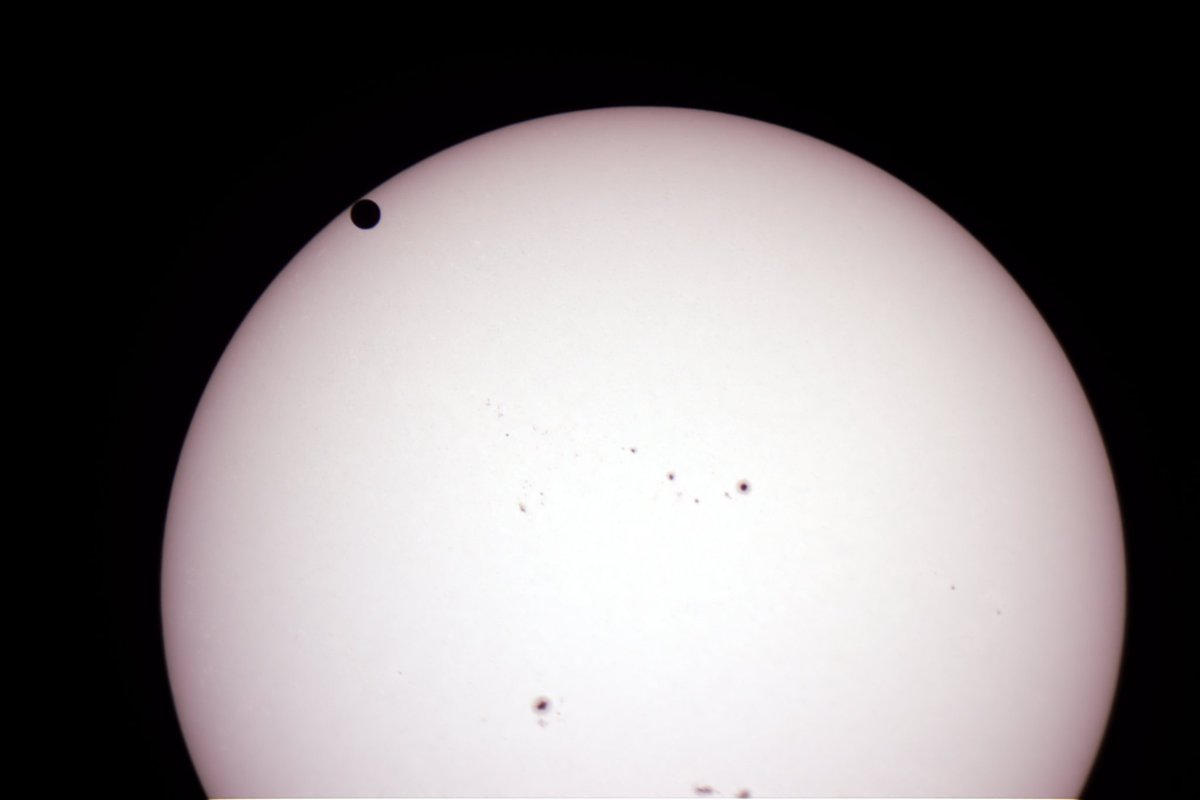
Here's a picture I took of the most recent transit, on 5 June 2012. It's partner was in 2004. The next will not be until the year 2117. 6/
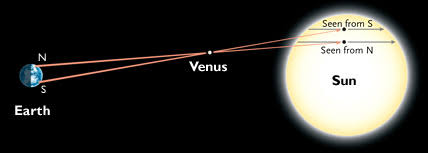
It was none other than the great Edmund Halley who realized the significance of Venusian transits: they provide a method to measure the distance from the Earth to the sun. 7/
By observing the transit from different points on Earth, it is a simple matter of triangulation to determine the distance. 8/
An international effort was mounted to observe the transit of 1761. This included the first voyage of James Cook, who observed the event from Tahiti, and our guy Le Gentil, who set out for Pondicherry. 9/
Le Gentil said from France to the island of Mauritius in 1760, then on to India, but his journey was interrupted by the Seven Years War. 10/
While he was en route to India, the British took the French colonial city of Pondicherry, forcing him to turn back fir Mauritius. 11/
Still at sea on June 6 1761, he was unable to make his measurement from the pitching deck of the ship. 12/
Was this the end for Le Gentil? Hell no, not our boy. 13/
So dedicated was he to the cause of science, he resolved to remain in Mauritius for seven years, then depart a second time to observe the transit of 1769, this time from the Philippines. 14/
In the meantime, his site in the Philippines had been occupied by the Spanish, and the hostile Spanish governor refused him landing. Luckily for our man, the French had retake Pondicherry from the British, and he sailed again for India. 15/
This time he met a warm welcome in the city, arriving on 27 March 1768. The governor provided him a site to build an observatory, and workers to do the job. 16/
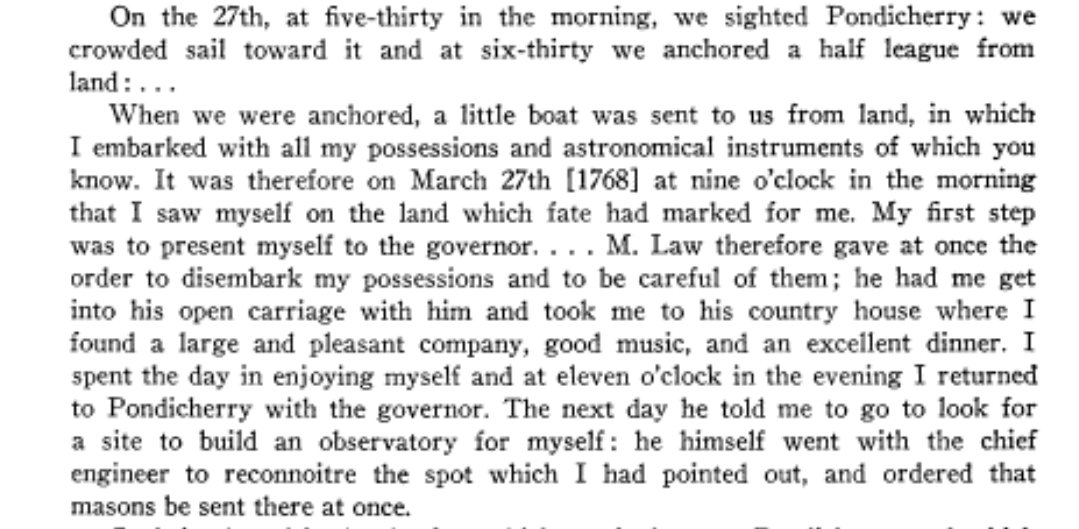
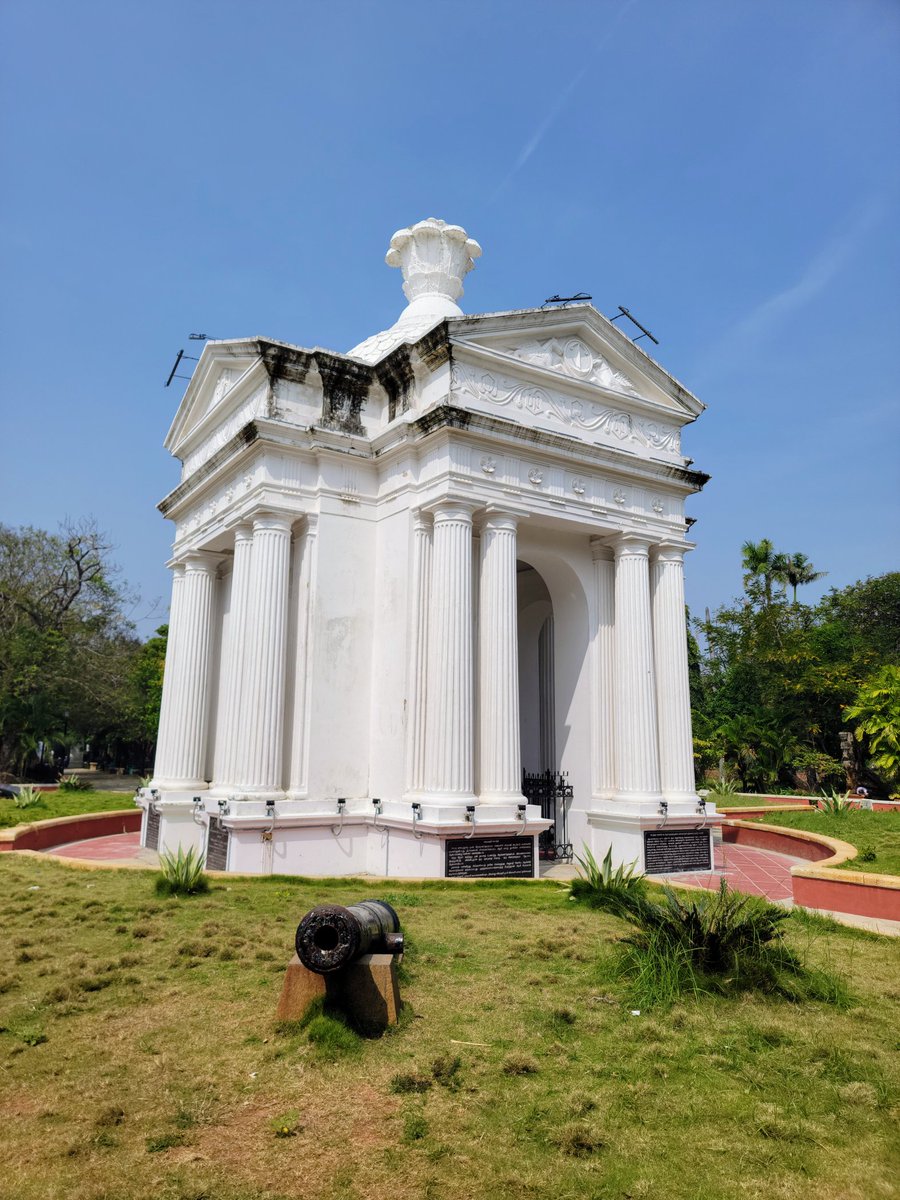
The exact site is unknown, but Le Gentil describes it as the place of a ruined fort, likely Fort Louis, now a park in Puducherry, a few blocks from where I now write. 17/
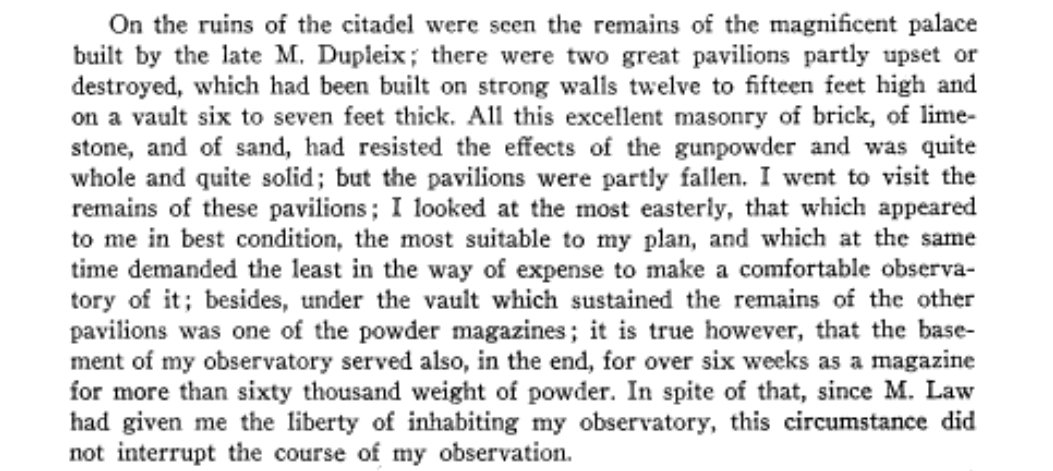
Here is his account of the site. 18/
Construction was rapid, and Le Gentil had months to spare before the transit of Venus on 4 June 1769. 19/
He spent his time learning the sophisticated techniques of the local Tamil astronomers, who had successfully developed a technique for predicting lunar eclipses to within 25 minutes. 20/
Finally, the day arrived, for which h our guy had devoted the last 9 years of his life, under great hardship. But it was not to be. 21/
A sudden monsoon set upon the city, and clouds covered the sun just before the transit commenced. 22/
"Such is the fate of astronomers," he wrote. "I had gone more than ten thousand leagues; it seemed that I had crossed such a great expanse of seas, exiling myself from my native land ... 23
... only to be the spectator of a fatal cloud which came to place itself before the Sun at the precise moment of my observation, to carry off from me the fruits of my pains and of my fatigue…" 24/
But this devastating blow was not the end of our boy's problems. Oh no. Fate was not so kind. 25/
His return voyage was beset by dysentery, and he was forced to convalsece on Mauritius until July of 1770, whereupon he set our for home. 26 /
Little did our man know, none of his letters home all this time had successfully made it to their destination, lost at sea and in war. 27/
His ship home was forced to land in Spain, and he faced an arduous overland journey to Paris. 28/
When he reached France in October of 1771, he found he had been declared dead, his wife remarried, his estate plundered, and his position in the Royal Society gone. He came home a ghost. 29/
I have long wanted to come here myself to honor the man, who lost eleven years of his life, his fortune, his position, and his love to astronomy. Let us doff our chapeaus and drink a toast to Guillaume Le Gentil. 30/30
Loading suggestions...