

@kadagxwaday @PhDniX Off topic, but I've read that Persian bacca بچّه was possibly borrowed from an Indic language itself. Compare with Hindi bacchā (Skt. vatsaka) for "cow's calf." In that case, it would be a loan from Middle Indo-Aryan into Persian and back into Hindi.
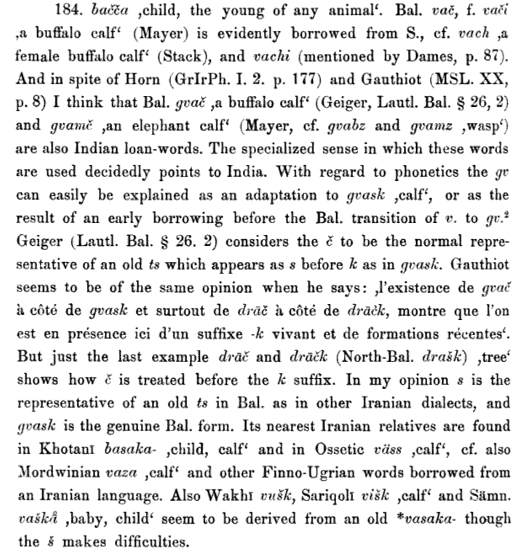
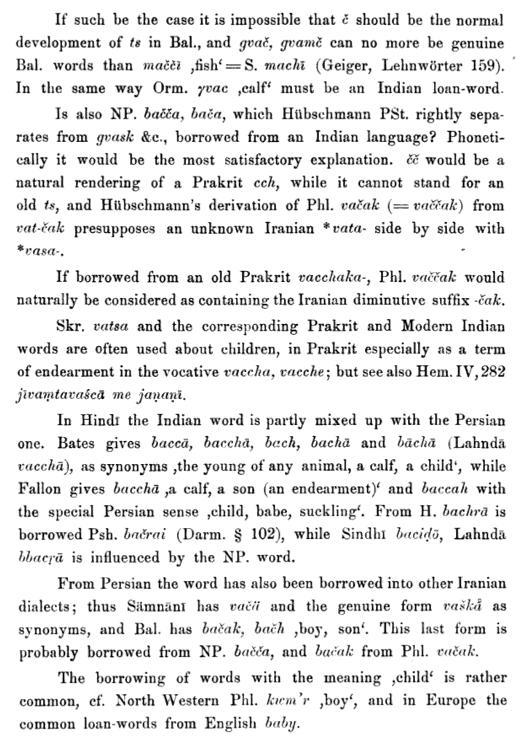
@kadagxwaday @PhDniX The phonemes ts /t̪s̪/ (and also śc /ɕt͡ɕ/ and ps /ps/) merge with cch /tː͡ɕʰ/ as per Prakrit grammarians, with certain exceptions, e.g., ūsu(v)o<utsukaḥ.
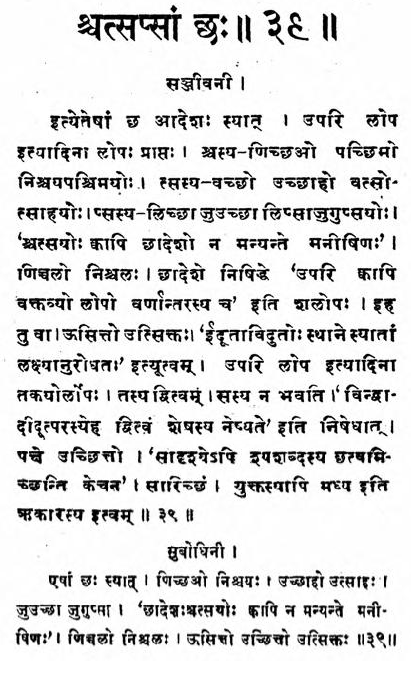
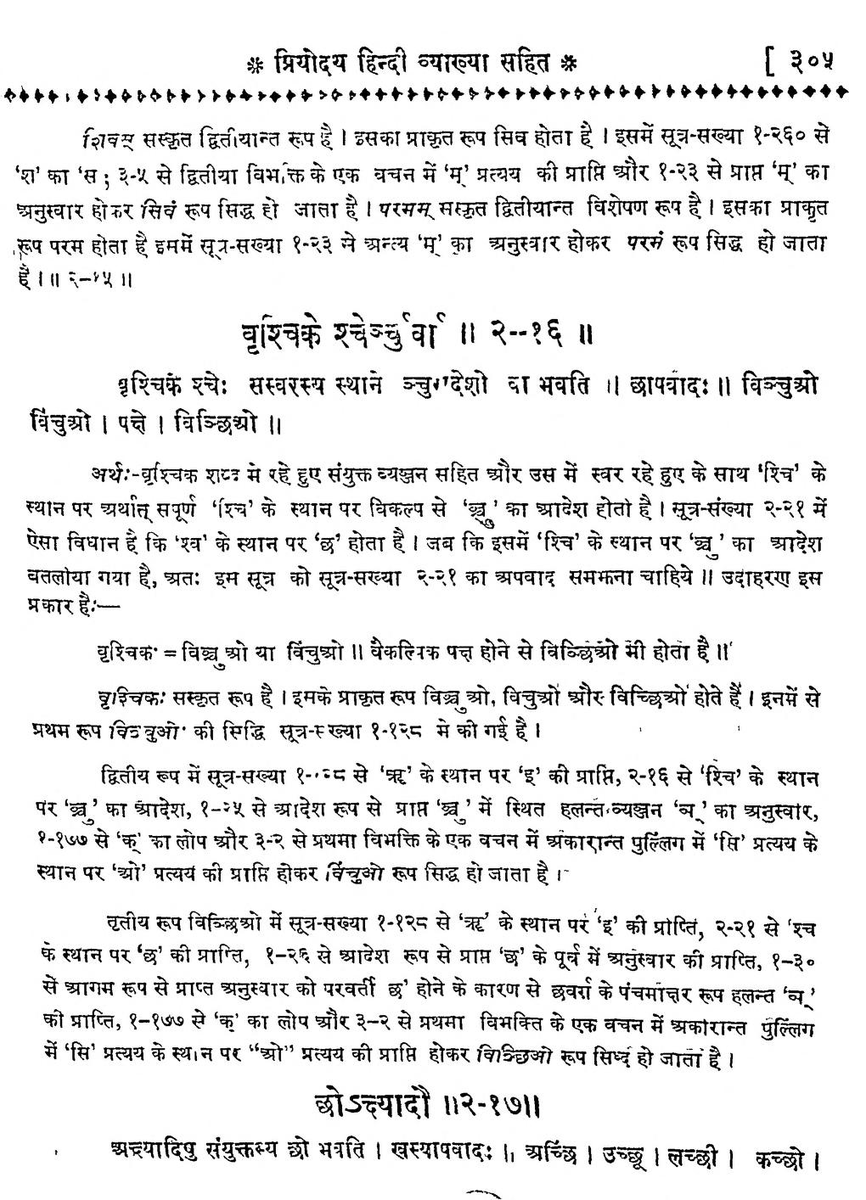
@kadagxwaday @PhDniX I'm not entirely sure if vṛścika is an exception. Unlike Vararuci (who only says vṛścike ñchaḥ), Hemacandra does apavāda of ñcʰu by vṛścike ścer ñcur vā, and in his view the correct Pkt. forms are viñcua, viṃcua, and viñcʰia (last one involves application of "it kṛpādau").
@kadagxwaday @PhDniX Yet in many modern Indo-Aryan languages, both the "u" and "i" forms can show aspiration (e.g. Hindi biccʰū/bicʰuā, Punjabi viccʰū, Sindhi vicʰū̃, Gujarati viṃcʰū, Nepali biccʰi, Bangla biccʰu etc.).
@kadagxwaday @PhDniX My guess is that the difference can be attributed to grammarians privileging Maharashtri Prakrit (cf. Marathi viñcū, Konkani viṁcu, iṁcu) over the other literary Prakrits.
@kadagxwaday @PhDniX Perhaps at the time of Vararuci the aspirated form was still in use, but by the time Kramadīśvara, Hemacandra, Trivikrama, and Mārkaṇḍeya it was lost.
Loading suggestions...