

The typical coffee farm applies an excessive amount of synthetic nitrogen – between 200 -300 kgs per hectare, a rate on par with high-yielding corn, the crop with the highest nitrogen demand.
But that's not the most surprising part...
But that's not the most surprising part...

Up to 65% of the nitrogen (N) applied on coffee farms is lost to leaching or volatilization.
The N that leaches through the soil profile makes its way into groundwater and waterways, contaminating the farmers' water sources along with surrounding communities.
The N that leaches through the soil profile makes its way into groundwater and waterways, contaminating the farmers' water sources along with surrounding communities.
The volatilization of synthetic N contributes nitrous oxide to the atmosphere.
Nitrous oxide has an atmospheric warming potential 265x greater than CO2.
Coffee-growing regions are already experiencing climate instability.
Who knew coffee was contributing to its own demise?
Nitrous oxide has an atmospheric warming potential 265x greater than CO2.
Coffee-growing regions are already experiencing climate instability.
Who knew coffee was contributing to its own demise?
One unique characteristic of coffee farming is the lack of irrigation infrastructure on most farms.
Coffee trees rely on predictable rainfall cycles and water stored in the soil to produce a crop of cherries each year.
Coffee trees rely on predictable rainfall cycles and water stored in the soil to produce a crop of cherries each year.
An essential part of what makes this possible is the high soil organic matter in the tropical coffee soils that serves as a sponge to hold and release water to plants as needed.
Each one percent of soil organic matter can store 144,000 liters of water per hectare.
Each one percent of soil organic matter can store 144,000 liters of water per hectare.
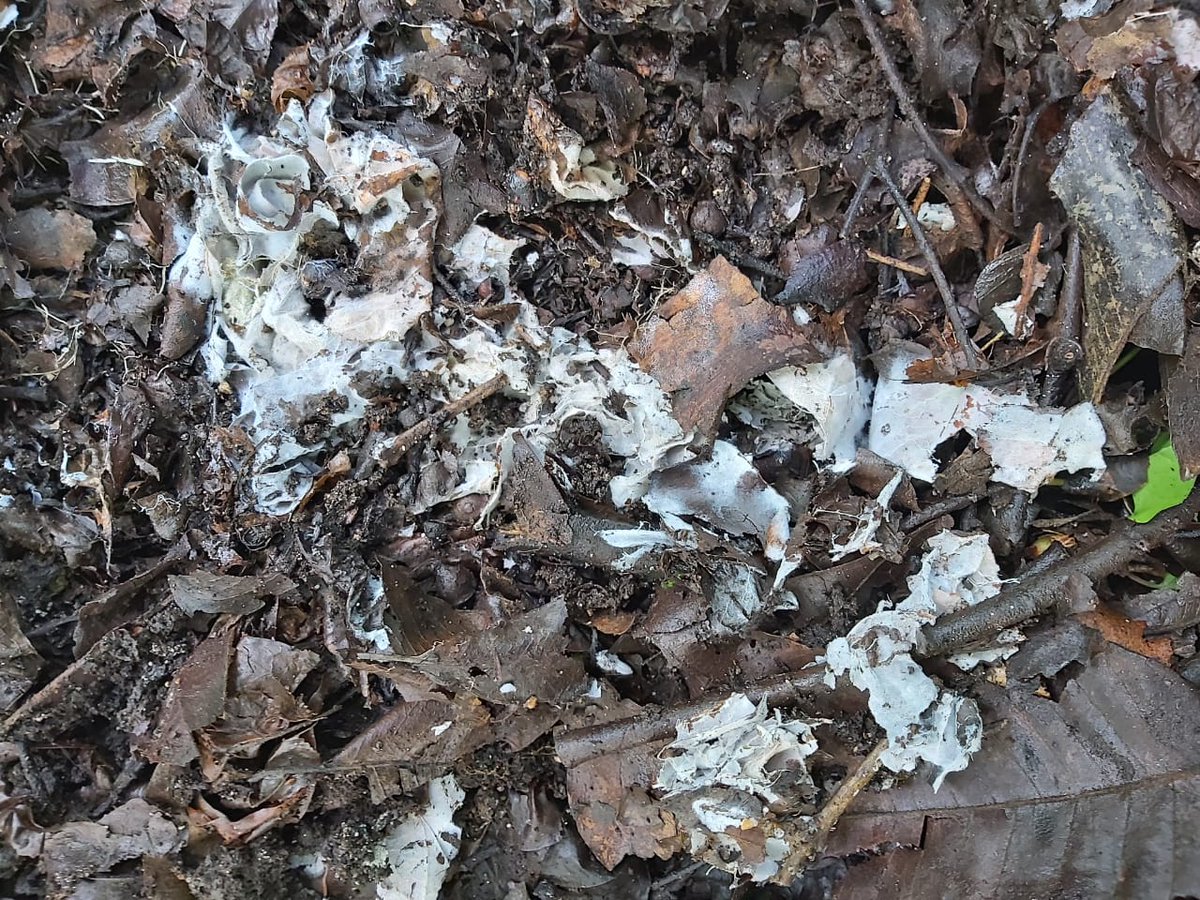
Between rain events and during the dry season, coffee trees can access the water stored in the soil through capillary action; the same way water moves up through a straw resting in a glass.
Synthetic N fertilizers were once thought to contribute to, or at least maintain soil organic matter (SOM).
However, several recent long-term studies show that these fertilizers caused a net decline in SOM even with massive additions of residues (organic matter) to the soil.
However, several recent long-term studies show that these fertilizers caused a net decline in SOM even with massive additions of residues (organic matter) to the soil.
Prolonged use of synthetic N drastically reduces the water holding capacity on coffee farms, leaving them parched and lacking resilience in the face of drought and extreme weather.
But that's not all...
But that's not all...
Coffee is one of the few crops compensated based on quality.
Under optimal nutritional conditions, abundant secondary metabolites are produced by coffee trees and end up in the fruit and seed, thus determining the unique flavor profiles that make each coffee special.
Under optimal nutritional conditions, abundant secondary metabolites are produced by coffee trees and end up in the fruit and seed, thus determining the unique flavor profiles that make each coffee special.
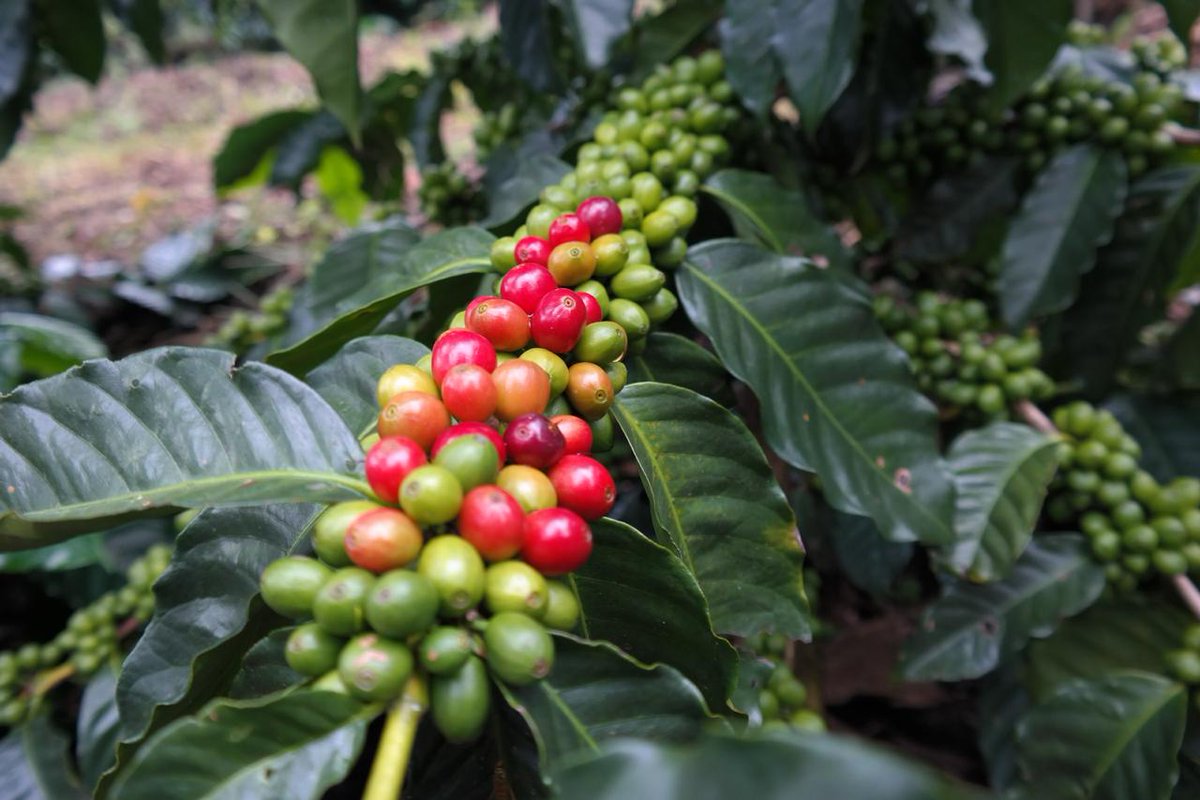
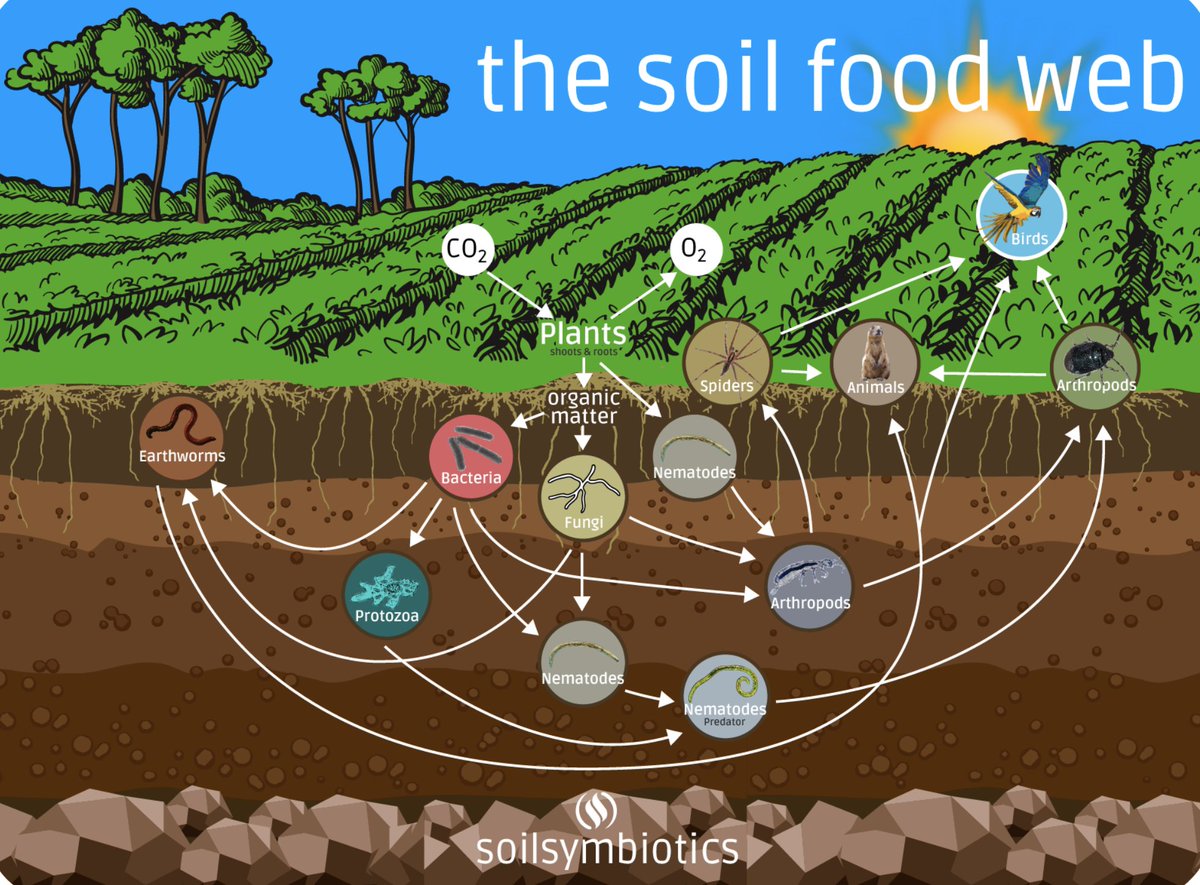
The key to creating optimal nutritional conditions is assuring the availability of a broad spectrum of minerals for plant uptake, mediated by a thriving web of soil microorganisms.
The exorbitant rates of synthetic nitrogen used on coffee farms impede the uptake of essential nutrients like calcium, potassium, boron, copper, and several other key mineral nutrients related to coffee quality.
Elevated N levels in plant sap decrease the levels of phenolic compounds and other secondary metabolites responsible for creating each coffee’s unique flavor signature
These same flavor-giving compounds impart immune-boosting qualities to plants that ward off disease and pests
These same flavor-giving compounds impart immune-boosting qualities to plants that ward off disease and pests
The most detrimental impact synthetic fertilizers have on soil is the decimation of beneficial microorganisms responsible for nutrient cycling, building soil structure, and providing immune support to plants.
It's important to note that nitrogen is an essential plant nutrient, and in no way am I dismissing this fact.
It becomes problematic when applied in the wrong form and at the wrong rate, like in the case of coffee production. The adverse effects outweigh any benefits.
It becomes problematic when applied in the wrong form and at the wrong rate, like in the case of coffee production. The adverse effects outweigh any benefits.
Unlike other agricultural commodities, coffee thrives in the understory of other trees and can be interplanted with countless other crops.
This gives farmers the unique opportunity to generate multiple revenue streams and generate an abundance of on-farm fertility.
This gives farmers the unique opportunity to generate multiple revenue streams and generate an abundance of on-farm fertility.
Inga edulis and Erythrina poeppigiana are two nitrogen-fixing shade trees commonly used as shade trees on coffee farms.
These trees, along with their bacteria counterparts, convert atmospheric N into a biological form of N that plants can use.
These trees, along with their bacteria counterparts, convert atmospheric N into a biological form of N that plants can use.
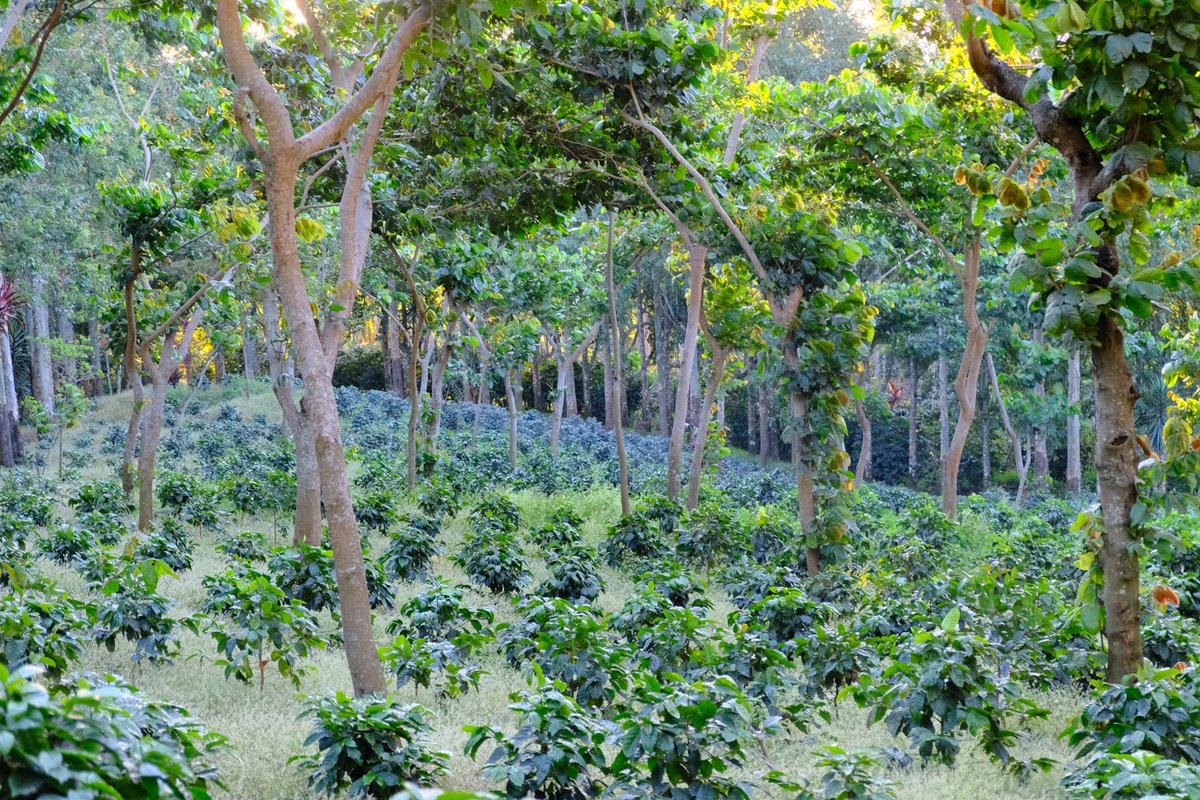
Through this process, common nitrogen-fixing shade trees can contribute 60-350 kg/ha of nitrogen from leaf litter and residues and another 30-60 kg/ha of N from symbiotic fixation in the rhizosphere. (Source – Coffee: Growing, Processing, Sustainable Production, 2nd Edition)
This can exceed the recommended rates of synthetic nitrogen, yet in a more plant-available form that doesn’t leach or volatilize and comes with the added benefit of significantly increased soil organic matter, enhanced nutrient cycling, and improved water holding capacity
In order to fully benefit from the wonder of biological nitrogen fixation, farmers need to understand the interplay between soil minerals, the physical structure of the soil, and beneficial soil microorganisms.
A coffee farm that I've worked with for several years recently completed a transition away from synthetic N inputs.
After decades of applying an average of 200 kgs per ha, the farm now applies zero synthetic N.
After decades of applying an average of 200 kgs per ha, the farm now applies zero synthetic N.
Nitrogen is supplied by a small amount of compost, bio-stimulants, symbiotic N fixation, specialized diazotrophic inoculants, and a functional soil food web.
This approach takes up a tiny fraction of the farm's former synthetic nitrogen budget.
This approach takes up a tiny fraction of the farm's former synthetic nitrogen budget.
The quality and flavor of the coffee, especially lower altitude coffees, have greatly improved.
Yields are up due to better overall nutrition and a drastic drop-off in disease and pest pressure.
Formerly nutrient-deficient leaves are a deep green with a waxy sheen.
Yields are up due to better overall nutrition and a drastic drop-off in disease and pest pressure.
Formerly nutrient-deficient leaves are a deep green with a waxy sheen.
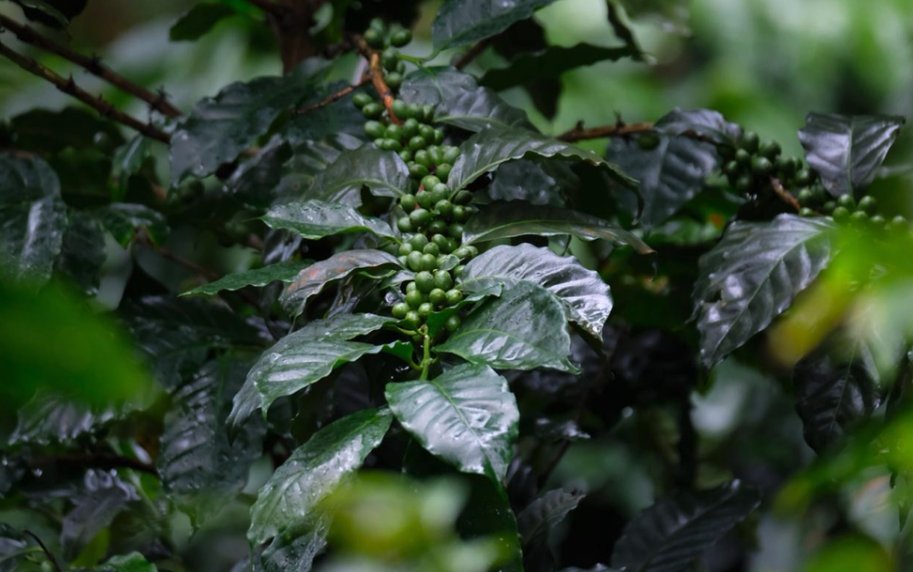
Coffee leaf rust was a major issue on this farm. Infection rates were historically between 20 - 40% with the use of fungicides.
Now infection rates are below 5% without the use of fungicides.
Now infection rates are below 5% without the use of fungicides.
This is only the start of what's possible when we take an integrated, principle-based approach to growing coffee.
It all starts with questioning common assumptions and standard practices.
It all starts with questioning common assumptions and standard practices.
Loading suggestions...