
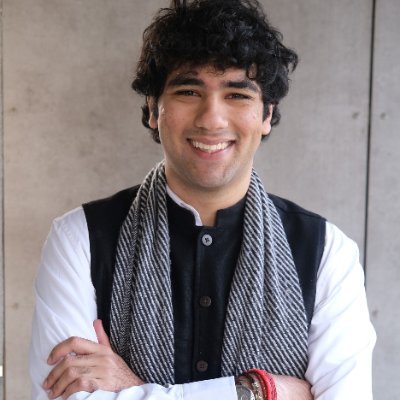
Interviewed Ambassador Vijay Gokhale recently
- India's former Foreign Secretary and Ambassador to China
- One of 🇮🇳's finest 🇨🇳 watchers with 30+ years exp.
We spoke about:
- Whether 🇨🇳🇮🇳 border is intractable
- How 🇨🇳 sees 🇮🇳
- Future of 🇮🇳🇨🇳 ties
5 key takeaways🧵👇(1/11)
- India's former Foreign Secretary and Ambassador to China
- One of 🇮🇳's finest 🇨🇳 watchers with 30+ years exp.
We spoke about:
- Whether 🇨🇳🇮🇳 border is intractable
- How 🇨🇳 sees 🇮🇳
- Future of 🇮🇳🇨🇳 ties
5 key takeaways🧵👇(1/11)
(2/11)
Takeaway 1: India & China are now in a state of "armed co-existence" across the LAC
-Border standoff since summer 2020, and Galwan clashes in June that year, have created an "active LAC"
-While there has been limited disengagement, no decrease in 🇨🇳 regular troops
Takeaway 1: India & China are now in a state of "armed co-existence" across the LAC
-Border standoff since summer 2020, and Galwan clashes in June that year, have created an "active LAC"
-While there has been limited disengagement, no decrease in 🇨🇳 regular troops
(3/11)
Takeaway 2: How things changed on the border
-Amb. Gokhale tells me that 🇮🇳&🇨🇳 made positive steps to resolve crisis between 1990 - 2005
-1993 & '96 border agreements, 2005 agreement on guiding principles to resolve border
BUT
Things began to change post 2006
Takeaway 2: How things changed on the border
-Amb. Gokhale tells me that 🇮🇳&🇨🇳 made positive steps to resolve crisis between 1990 - 2005
-1993 & '96 border agreements, 2005 agreement on guiding principles to resolve border
BUT
Things began to change post 2006
(4/11)
After 2006:
-China began issuing stapled visas to 🇮🇳 citizens from J&K and Arunachal Pradesh
-Denied visa to Northern Army Commander Lt. Gen. Jaswal who had command over J&K
-Referred to Arunachal as "South Tibet"
After 2006:
-China began issuing stapled visas to 🇮🇳 citizens from J&K and Arunachal Pradesh
-Denied visa to Northern Army Commander Lt. Gen. Jaswal who had command over J&K
-Referred to Arunachal as "South Tibet"
(5/11)
What changed?
Amb. Gokhale argues that 🇨🇳 feels comfortable when there's a balance of power
After 1990, 🇨🇳 felt threatened since Soviet Union had collapsed & US was sole superpower
In an effort to reduce threats, 🇨🇳 worked w.🇮🇳 on border
What changed?
Amb. Gokhale argues that 🇨🇳 feels comfortable when there's a balance of power
After 1990, 🇨🇳 felt threatened since Soviet Union had collapsed & US was sole superpower
In an effort to reduce threats, 🇨🇳 worked w.🇮🇳 on border
(6/11)
Gokhale: 🇨🇳 did just enough to ensure that there was peace without making real concessions
What changed?
-Post 2008 crisis, 🇨🇳 felt US was in decline so reduced threat
- 🇨🇳 had grown stronger than 🇮🇳 economically & militarily
Meaning:🇨🇳 no longer needed to settle border
Gokhale: 🇨🇳 did just enough to ensure that there was peace without making real concessions
What changed?
-Post 2008 crisis, 🇨🇳 felt US was in decline so reduced threat
- 🇨🇳 had grown stronger than 🇮🇳 economically & militarily
Meaning:🇨🇳 no longer needed to settle border
(7/11)
Takeaway 3: Despite Galwan, 🇮🇳🇨🇳 border dispute not unsolvable
-Political mechanism through Special Reps exists
-Historical data exchange b/w both side
-Roadmap to settling boundary laid down in 2005 Agreement
What we need: Mutual trust which🇨🇳 will need to rebuild
Takeaway 3: Despite Galwan, 🇮🇳🇨🇳 border dispute not unsolvable
-Political mechanism through Special Reps exists
-Historical data exchange b/w both side
-Roadmap to settling boundary laid down in 2005 Agreement
What we need: Mutual trust which🇨🇳 will need to rebuild
(8/11)
Takeaway 4: What 🇨🇳 needs to do to begin rebuilding trust
- Recognise that the boundary is a central part of ties; not small localised issue as 🇨🇳 likes to say
- Address massive trade deficit b/w 🇮🇳 &🇨🇳
- Accept 🇮🇳's Indo-Pacific concept & not dismiss Indo-Pac as US plot
Takeaway 4: What 🇨🇳 needs to do to begin rebuilding trust
- Recognise that the boundary is a central part of ties; not small localised issue as 🇨🇳 likes to say
- Address massive trade deficit b/w 🇮🇳 &🇨🇳
- Accept 🇮🇳's Indo-Pacific concept & not dismiss Indo-Pac as US plot
(9/11)
That last point deserves some explanation
Amb. Gokhale argues that 🇨🇳 sees "Indo-Pacific" as a construct used by US to contain 🇨🇳
Beijing also believes "naive" 🇮🇳 is signing up to the Indo-Pac because of US pressure
🇨🇳 doesn't see 🇮🇳 as independent pwr but as US lackey
That last point deserves some explanation
Amb. Gokhale argues that 🇨🇳 sees "Indo-Pacific" as a construct used by US to contain 🇨🇳
Beijing also believes "naive" 🇮🇳 is signing up to the Indo-Pac because of US pressure
🇨🇳 doesn't see 🇮🇳 as independent pwr but as US lackey
(10/11) Takeaway 5: 🇮🇳&🇨🇳 are entering into "decade of uncertainty"
-🇨🇳 will keep edge over 🇮🇳 nxt decade
BUT
-🇨🇳's growth slowing while 🇮🇳's growth is picking up. Gap will narrow & 🇨🇳 may need to compromise again w. stronger 🇮🇳
Delhi will need to be vigilant militarily
-🇨🇳 will keep edge over 🇮🇳 nxt decade
BUT
-🇨🇳's growth slowing while 🇮🇳's growth is picking up. Gap will narrow & 🇨🇳 may need to compromise again w. stronger 🇮🇳
Delhi will need to be vigilant militarily
(11/11) Grateful to @VGokhale59 for his time and his thoughts on Sino-Indian relations
His books are:
1. Tiananmen: Making of a Protest
2. After Tiananmen: The Rise of China
3. The Long Game: How China negotiates with India
All three are well worth a read & several re-reads
His books are:
1. Tiananmen: Making of a Protest
2. After Tiananmen: The Rise of China
3. The Long Game: How China negotiates with India
All three are well worth a read & several re-reads
Loading suggestions...