

VOLATILITY HARVESTING STRATEGY
Crypto assets are considered risky because of their volatility.
But what if you can learn to leverage it in your favour???
The Volatility Harvesting (VH) strategy does exactly that!
Follow me and I will teach to ride volatility🚀
Ready?!
🧵👇
Crypto assets are considered risky because of their volatility.
But what if you can learn to leverage it in your favour???
The Volatility Harvesting (VH) strategy does exactly that!
Follow me and I will teach to ride volatility🚀
Ready?!
🧵👇
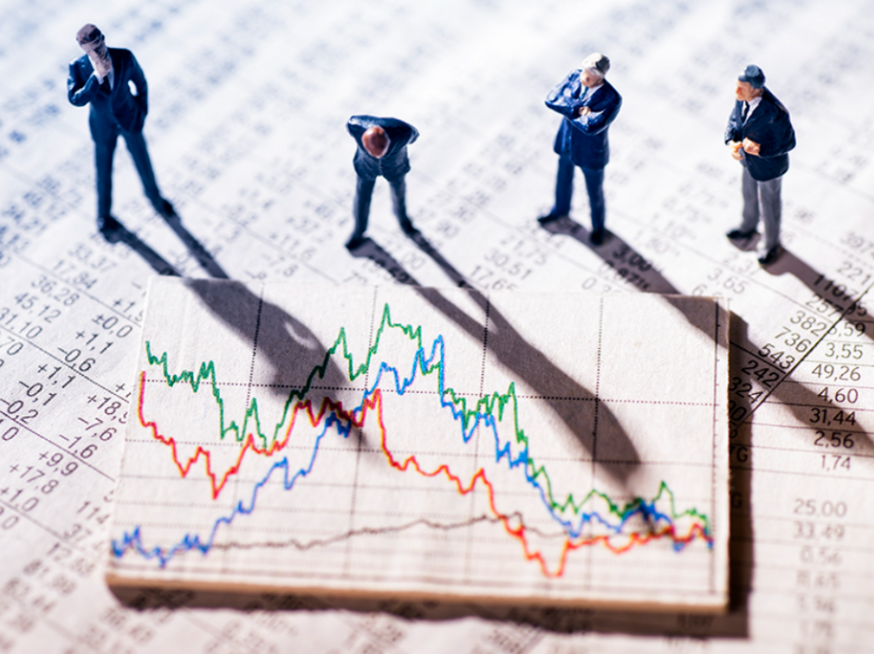
1/
You are going to learn:
1⃣ Limits of dollar cost averaging (DCA)
2⃣ Principles behind Volatility Harvesting
3⃣ Practical implementation of the strategy
You are going to learn:
1⃣ Limits of dollar cost averaging (DCA)
2⃣ Principles behind Volatility Harvesting
3⃣ Practical implementation of the strategy
2/
1⃣ 1. Limits of DCA
Dollar cost averaging (DCA) is a popular technique that consists of buiyng a certain amount of tokens periodically, regardless the price.
Example: I want to invest $10,000 in Bitcoin. I buy $100 worth of Bitcoin every day for 100 days.
That’s it.
1⃣ 1. Limits of DCA
Dollar cost averaging (DCA) is a popular technique that consists of buiyng a certain amount of tokens periodically, regardless the price.
Example: I want to invest $10,000 in Bitcoin. I buy $100 worth of Bitcoin every day for 100 days.
That’s it.
3/
The rationale?! I don’t know what the price will do. It can go a little bit up, then a little bit down… who knows?!
So I split my buy order into lots of little orders. If the price trends down, I will get a more favourable average purchase price.
The rationale?! I don’t know what the price will do. It can go a little bit up, then a little bit down… who knows?!
So I split my buy order into lots of little orders. If the price trends down, I will get a more favourable average purchase price.
4/
Why I called DCA a technique, and not a strategy?😏
Because DCA doesn’t tell you when to sell, or at least rebalance your holdings. It’s just a technique to accumulate tokens.
Why I called DCA a technique, and not a strategy?😏
Because DCA doesn’t tell you when to sell, or at least rebalance your holdings. It’s just a technique to accumulate tokens.
5/
2⃣ Principles behind Volatility Harvesting
Volatility harvesting is a concept that was elaborated by gigabrain mathematician Claude Shannon.
The strategy that can be derived is an extension and generalization of DCA.
I am going to explain the concept with a simple example.
2⃣ Principles behind Volatility Harvesting
Volatility harvesting is a concept that was elaborated by gigabrain mathematician Claude Shannon.
The strategy that can be derived is an extension and generalization of DCA.
I am going to explain the concept with a simple example.
6/
Imagine a token going up and down continuosly, staying around some value.
Example: buy a token at $100, then the following days token price will be $101, $99, $101,…
You are not having any return from your investment.
What happens if you instead rebalance the portfolio?
Imagine a token going up and down continuosly, staying around some value.
Example: buy a token at $100, then the following days token price will be $101, $99, $101,…
You are not having any return from your investment.
What happens if you instead rebalance the portfolio?
7/
You started with $100. When the token goes up by $1, you sell one dollar equivalent of the token.
You know have $100 invested in token and $1 in cash.
When the price goes down to $99, your portfolio value will be $100: $99 the value of the token plus $1 in cash! 😁
You started with $100. When the token goes up by $1, you sell one dollar equivalent of the token.
You know have $100 invested in token and $1 in cash.
When the price goes down to $99, your portfolio value will be $100: $99 the value of the token plus $1 in cash! 😁
8/
The difference: buy and hold is down $1, while rebalanced portfolio is flat.
When the price goes up again to $101, you sell $1 worth of the token and your portfolio now is worth $102!
The nice thing is that if the price drops,let’s say to 97$, we have some cash to buy lower!
The difference: buy and hold is down $1, while rebalanced portfolio is flat.
When the price goes up again to $101, you sell $1 worth of the token and your portfolio now is worth $102!
The nice thing is that if the price drops,let’s say to 97$, we have some cash to buy lower!
9/
If volatility is higher, the effect of rebalancing is even more powerful! Think about what happens to a rebalanced portfolio for a token that moves to $110, then $90, then again $110.
With a simple rebalancing rule, we turned volatility in our favour!🧙♂️
If volatility is higher, the effect of rebalancing is even more powerful! Think about what happens to a rebalanced portfolio for a token that moves to $110, then $90, then again $110.
With a simple rebalancing rule, we turned volatility in our favour!🧙♂️
10/
The phenomenon explained in this example is what is called volatility harvesting (I actually simplified it quite a bit to avoid math 🙂 ).
The main takeways are:
🔸 It is important to rebalance the portfolio
🔸It is useful to have some cash in the portfolio
The phenomenon explained in this example is what is called volatility harvesting (I actually simplified it quite a bit to avoid math 🙂 ).
The main takeways are:
🔸 It is important to rebalance the portfolio
🔸It is useful to have some cash in the portfolio
11/
3⃣ Practical implementation
We can derive a simple but very effective investment strategy (which I call VH) from the points above.
For simplicity I will assume that you want to invest $10,000 only in one coin, Bitcoin.
3⃣ Practical implementation
We can derive a simple but very effective investment strategy (which I call VH) from the points above.
For simplicity I will assume that you want to invest $10,000 only in one coin, Bitcoin.
12/
The rules are:
1. Invest only 50% in Bitcoin, keep the other 50% in cash.
2. Rebalance the portfolio whenever your portfolio weights differ from the 50%/50% more than a certain threshold.
The rules are:
1. Invest only 50% in Bitcoin, keep the other 50% in cash.
2. Rebalance the portfolio whenever your portfolio weights differ from the 50%/50% more than a certain threshold.
13/
Rule 1. is quite simple. We can use DCA to buy $5,000 worth of Bitcoin, good idea.
Rule 2. might seem more obscure, let’s elaborate more on that.
The allocation of your portfolio are not fixed.
Example: Bitcoin goes down 10%, then your initial $5,000 are now worth $4,500.
Rule 1. is quite simple. We can use DCA to buy $5,000 worth of Bitcoin, good idea.
Rule 2. might seem more obscure, let’s elaborate more on that.
The allocation of your portfolio are not fixed.
Example: Bitcoin goes down 10%, then your initial $5,000 are now worth $4,500.
14/
Your total portfolio value now is $9,500 ($4,500 in Bitcoin plus $5,000 in cash).
Your allocations are: 47.4% in Bitcoin and 52.6% in cash.
The deviation from the 50/50 allocation is: (50%-47.4%)+(52.6%-50%) = 5.2%
Your total portfolio value now is $9,500 ($4,500 in Bitcoin plus $5,000 in cash).
Your allocations are: 47.4% in Bitcoin and 52.6% in cash.
The deviation from the 50/50 allocation is: (50%-47.4%)+(52.6%-50%) = 5.2%
15/
We could decide to rebalance when the deviation is more than 5%.
That means we should buy 2.6%*9500 = $247 of Bitcoin.
Our portfolio after rebalance is: $4,747 Bitcoin and $4,753 cash.
Allocation is 50% Bitcoin, 50% cash.
We could decide to rebalance when the deviation is more than 5%.
That means we should buy 2.6%*9500 = $247 of Bitcoin.
Our portfolio after rebalance is: $4,747 Bitcoin and $4,753 cash.
Allocation is 50% Bitcoin, 50% cash.
16/
If Bitcoin keeps dumping, we will buy more Bitcoin following the above rule.
This is similar to DCA, but we will always have some cash in portfolio to buy the dip!
What happens when Bitcoin pumps?
If Bitcoin keeps dumping, we will buy more Bitcoin following the above rule.
This is similar to DCA, but we will always have some cash in portfolio to buy the dip!
What happens when Bitcoin pumps?
17/
Our rebalancing rule will force us to sell some!
You see the scheme?!
🔸 Buy low😉
🔸 Sell high😌
🔸 Never run out of cash😯
Our rebalancing rule will force us to sell some!
You see the scheme?!
🔸 Buy low😉
🔸 Sell high😌
🔸 Never run out of cash😯
18/
Let’s compare VH strategy versus buy and hold in different market conditions.
◾️Market downtrending
VH strategy will outperform because it is not fully invested.
Let’s compare VH strategy versus buy and hold in different market conditions.
◾️Market downtrending
VH strategy will outperform because it is not fully invested.
19/
◾️Market going sideways
This were VH really shines. With market moving in a range, VH will continue to rebalance…
Buying low, selling higher… Means profits!
◾️Market going sideways
This were VH really shines. With market moving in a range, VH will continue to rebalance…
Buying low, selling higher… Means profits!
20/
◾️ Market uptrending
VH strategy will underperform buy and hold, as it is only half invested and keep selling as the price goes up.
In 2 out of 3 market conditions, VH strategy will outperform!!!
◾️ Market uptrending
VH strategy will underperform buy and hold, as it is only half invested and keep selling as the price goes up.
In 2 out of 3 market conditions, VH strategy will outperform!!!
21/
The VH strategy has two parameters: weight of cash (set at 50% above) and the rebalancing threshold (set at 5% above).
You can play with numbers.
Lowering cash holding will lead to a more aggressive strategy.
The VH strategy has two parameters: weight of cash (set at 50% above) and the rebalancing threshold (set at 5% above).
You can play with numbers.
Lowering cash holding will lead to a more aggressive strategy.
22/
Lowering the rebalancing threshold leads to more frequent rebalancing but also to higher trading fees.
I think that 50% and 5% are good parameters, working fine, but you are free to experiment.
You can apply the strategy also to a diversified basket of tokens.
Same rules.
Lowering the rebalancing threshold leads to more frequent rebalancing but also to higher trading fees.
I think that 50% and 5% are good parameters, working fine, but you are free to experiment.
You can apply the strategy also to a diversified basket of tokens.
Same rules.
23/
Summarizing.
Volatility harvesting strategy is a strategy based on two simple rules.
It’s main benefits are:
🔹it buys low and sells high
🔹 it never runs out of cash
🔹 it outperforms buy and hold in 2 out of 3 market scenarios
Now volatility is your friend, degens! 🥳
Summarizing.
Volatility harvesting strategy is a strategy based on two simple rules.
It’s main benefits are:
🔹it buys low and sells high
🔹 it never runs out of cash
🔹 it outperforms buy and hold in 2 out of 3 market scenarios
Now volatility is your friend, degens! 🥳
Loading suggestions...