
Morgan Housel on what we can learn about:
• Competition
• The power of incentives
• The sustainability of moats
from a Japanese Zen Buddhist concept called "Shoshin," meaning "The Beginner's Mind"
"Buddhism has a concept called beginner's mind..."
[1/13]
• Competition
• The power of incentives
• The sustainability of moats
from a Japanese Zen Buddhist concept called "Shoshin," meaning "The Beginner's Mind"
"Buddhism has a concept called beginner's mind..."
[1/13]
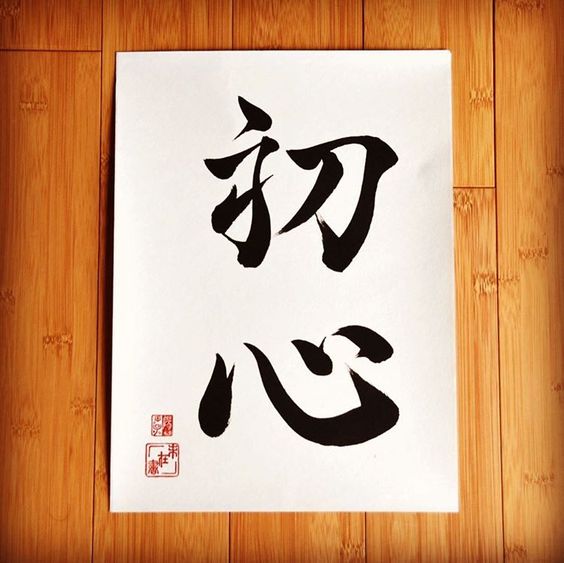
which is an active openness to trying new things and studying new ideas, unburdened by past preconceptions, like a beginner would.
Knowing you have a competitive advantage is often the enemy of beginner's mind, because doing well reduces the incentive to explore other...
[2/13]
Knowing you have a competitive advantage is often the enemy of beginner's mind, because doing well reduces the incentive to explore other...
[2/13]
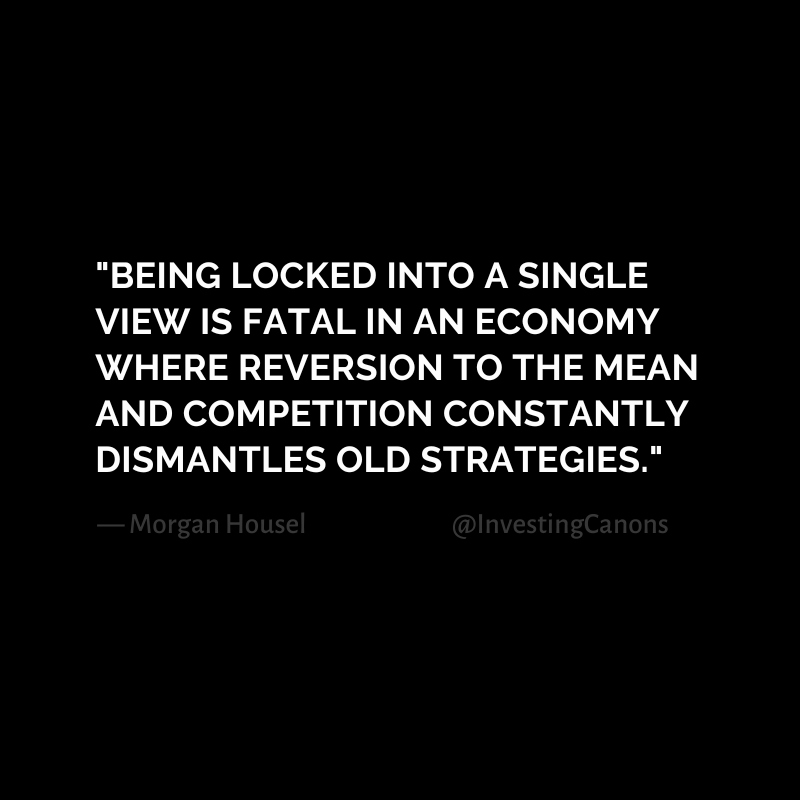
ideas, especially when those ideas conflict with your proven strategy. Which is dangerous. Being locked into a single view is fatal in an economy where reversion to the mean and competition constantly dismantles old strategies."
Beginner's Mind is the antidote to...
[3/13]
Beginner's Mind is the antidote to...
[3/13]
getting disrupted—but it's extremely difficult:
"The only thing harder than gaining a competitive edge is not losing that advantage when you have one. That’s as true for careers and investment strategies as it is for business. And since people are naturally optimistic...
[4/13]
"The only thing harder than gaining a competitive edge is not losing that advantage when you have one. That’s as true for careers and investment strategies as it is for business. And since people are naturally optimistic...
[4/13]
there’s a tendency to put more thought into finding an edge than not losing it once you find one."
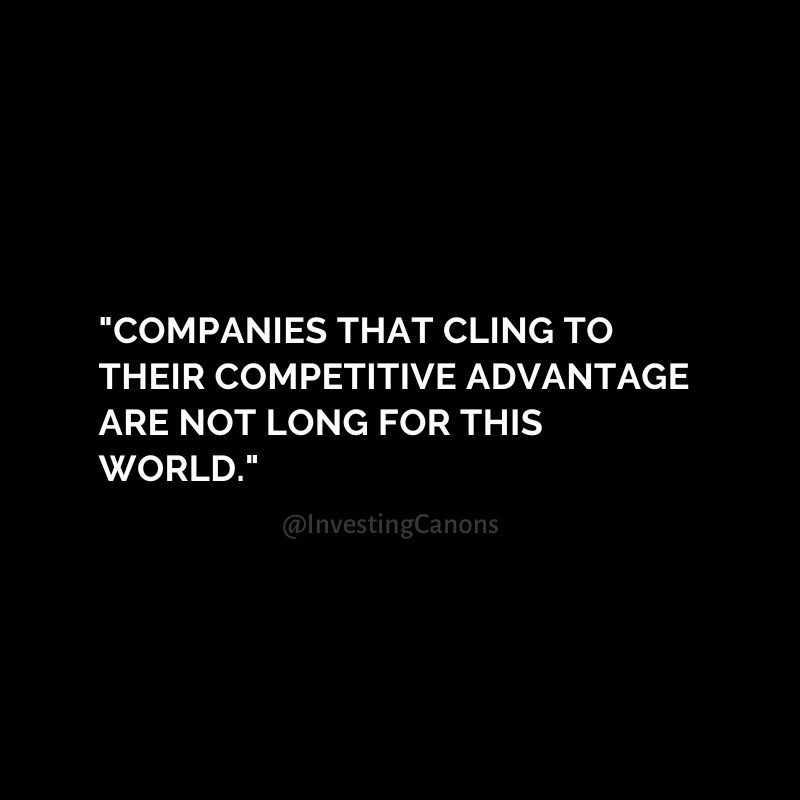
Companies that cling to their competitive edge are not long for this world...
So, the key is to look for management...
[5/13]
Companies that cling to their competitive edge are not long for this world...
So, the key is to look for management...
[5/13]
with a Beginner's Mind. Warren Buffett has said this is the most important question:
"If you are evaluating a business year-to-year, the number one question you want to ask yourself is: could the competitive advantage have been made stronger and more durable—and that's...
[6/8]
"If you are evaluating a business year-to-year, the number one question you want to ask yourself is: could the competitive advantage have been made stronger and more durable—and that's...
[6/8]

more important than the Profit & Loss for a given year."
How do you identify management with a Beginner's Mind?
Let's look at a CEO who Warren Buffett thinks highly of...
[7/13]
How do you identify management with a Beginner's Mind?
Let's look at a CEO who Warren Buffett thinks highly of...
[7/13]
“Bob Iger is a home run hitter. I mean he is really, really good. And he’s a great guy on top of that.”
Bob Iger has navigated enormous technological change while at CEO of Disney.
2 factors Iger attributes to his success:
[8/13]
Bob Iger has navigated enormous technological change while at CEO of Disney.
2 factors Iger attributes to his success:
[8/13]
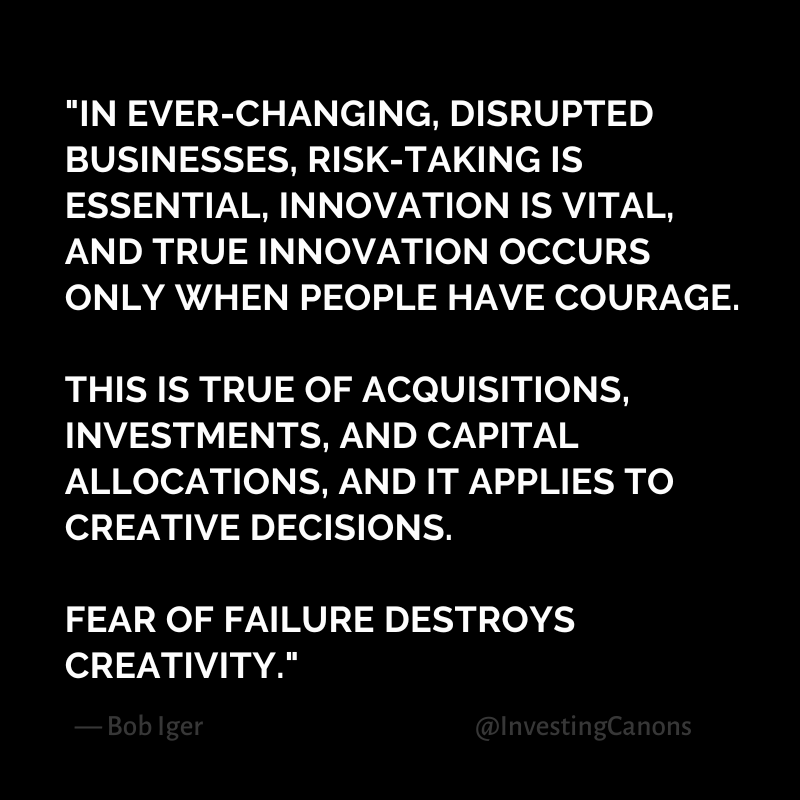
1.) Willingness to Fail
"If you want innovation, you need to grant permission to fail."
Innovation requires experimentation and experimentation creates failures
Bezos: "If you double the number of experiments you do per year, you’re going to double your inventiveness."
[9/13]
"If you want innovation, you need to grant permission to fail."
Innovation requires experimentation and experimentation creates failures
Bezos: "If you double the number of experiments you do per year, you’re going to double your inventiveness."
[9/13]
2.) Culture of Curiosity
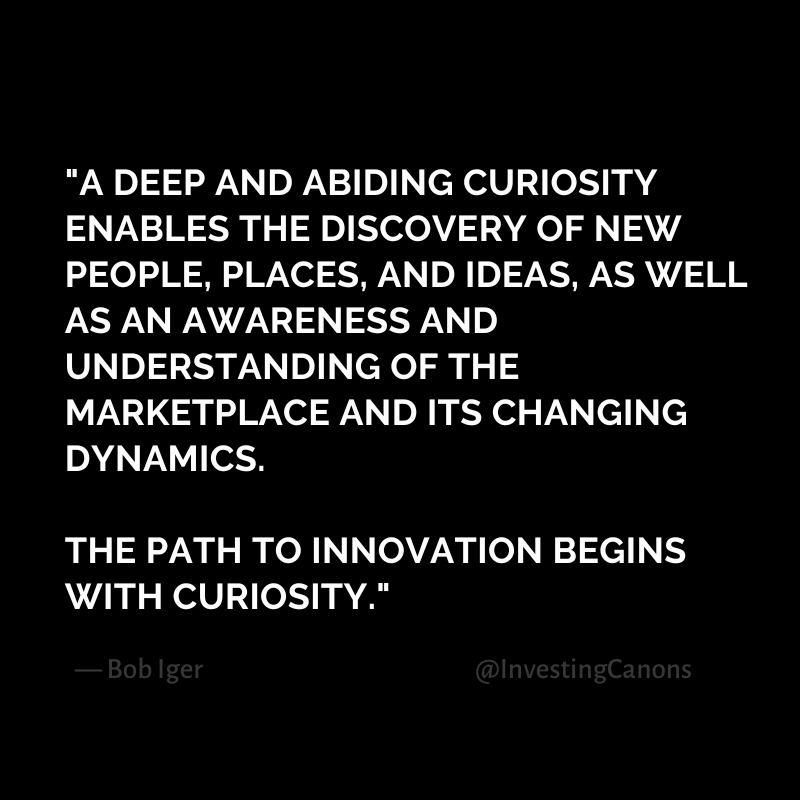
"The path to innovation begins with curiosity."
Innovation requires curiosity. What kills curiosity?
Iger: "I know why companies fail to innovate. It’s tradition. Tradition generates so much friction, every step of the way."
Tradition kills.
[10/13]
"The path to innovation begins with curiosity."
Innovation requires curiosity. What kills curiosity?
Iger: "I know why companies fail to innovate. It’s tradition. Tradition generates so much friction, every step of the way."
Tradition kills.
[10/13]
That's what "Shoshin" or a "Beginner's Mind" can teach us about competition, incentives, and the durability of moats...
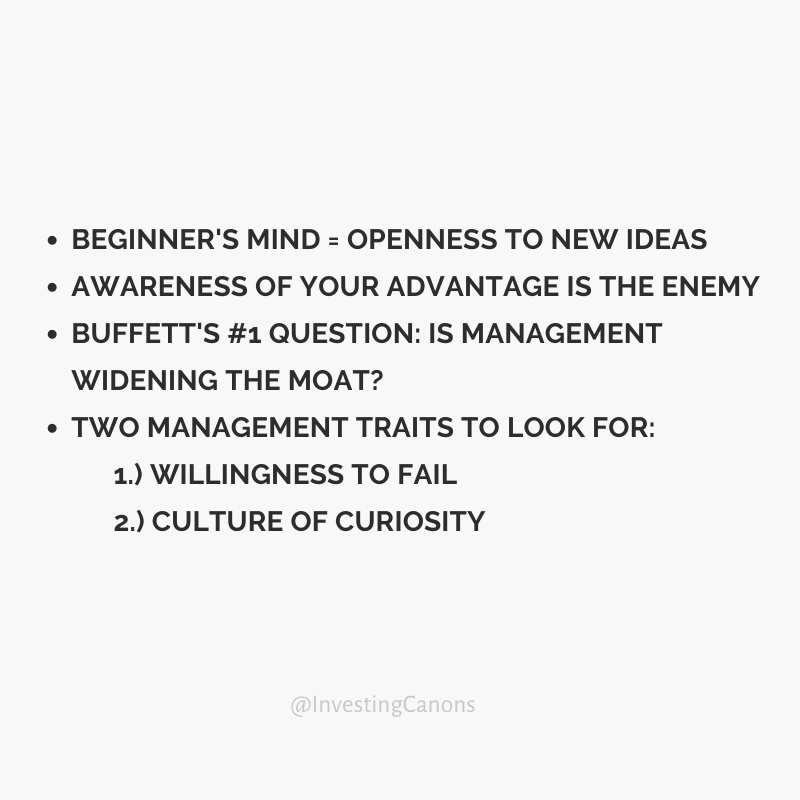
Here's what we learned:
[11/13]
Here's what we learned:
[11/13]
Three things:
1.) For more from @morganhousel :
collabfund.com
2.) For more on Iger from @mastersinvest:
mastersinvest.com
1.) For more from @morganhousel :
collabfund.com
2.) For more on Iger from @mastersinvest:
mastersinvest.com
3.) If you would like more content like this:
• Retweet the first tweet (below) to share
• Follow me @InvestingCanons
[13/13]
• Retweet the first tweet (below) to share
• Follow me @InvestingCanons
[13/13]
Loading suggestions...