

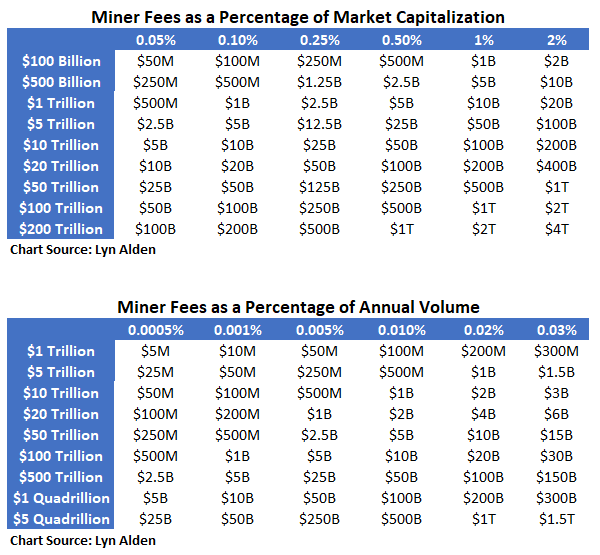
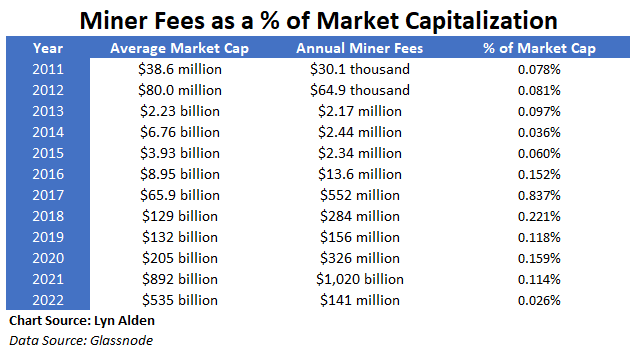
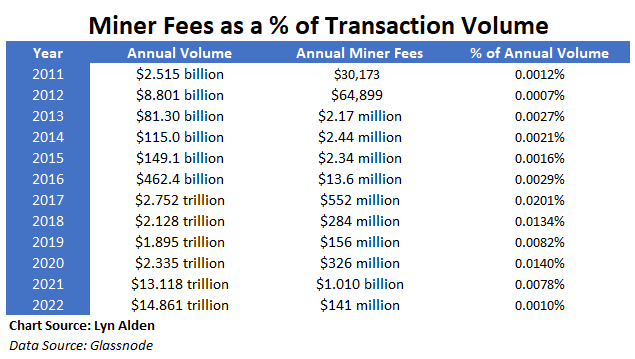
Bitcoin mining revenue grows more slowly than market cap and transfer volume, as the block subsidy winds down and trends towards transaction fees only.
This is what people get wrong when they incorrectly think that bitcoin's energy usage is an exponential problem.
This is what people get wrong when they incorrectly think that bitcoin's energy usage is an exponential problem.
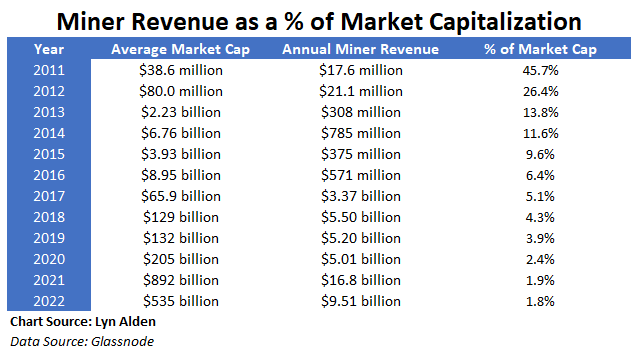
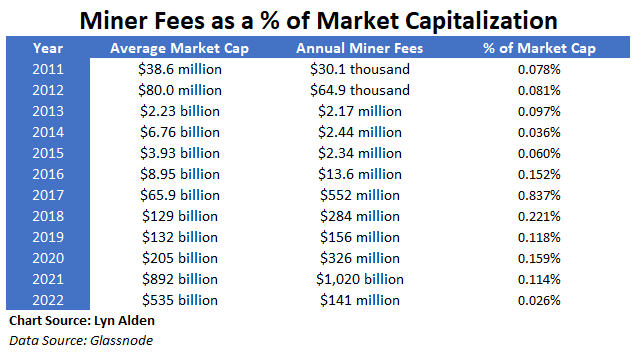
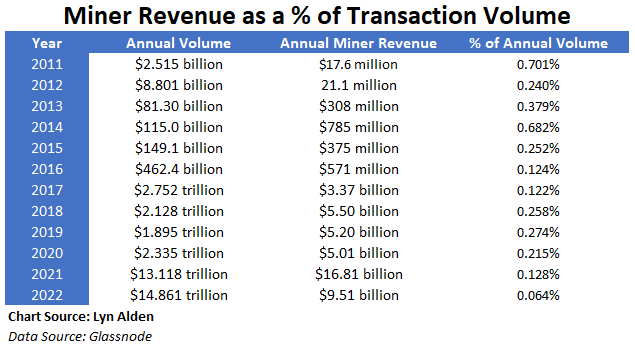
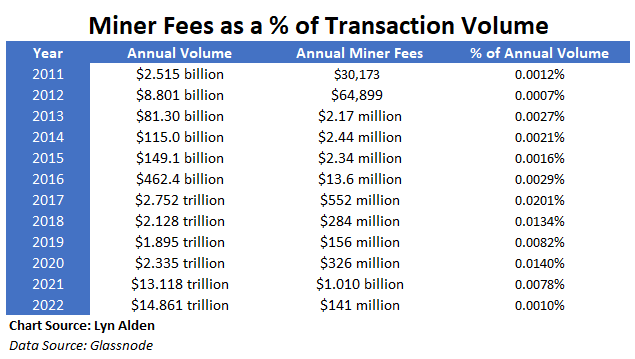
The Bitcoin network processed nearly $15 trillion worth of transfer volume in 2022.
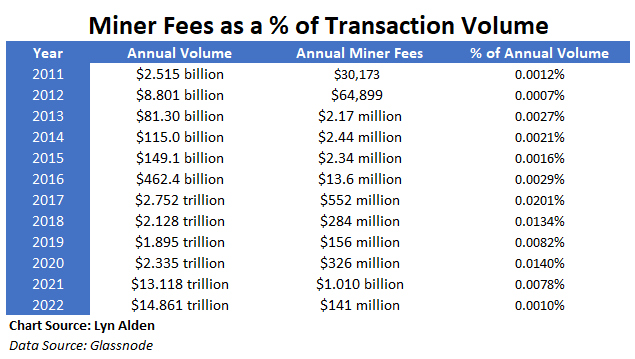
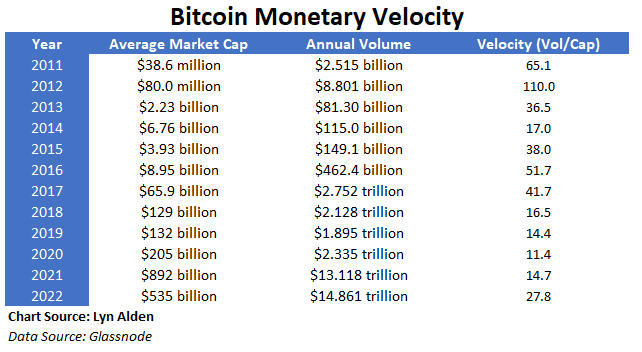
Bitcoin's annual monetary velocity is pretty volatile.
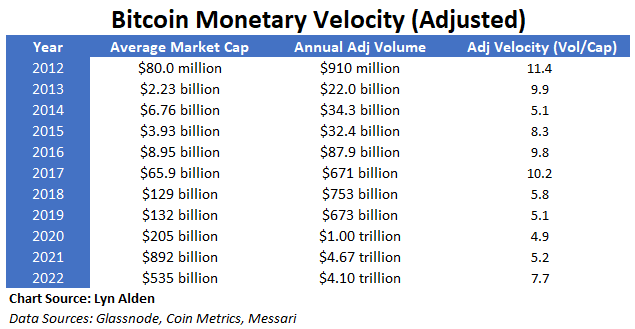
If you adjust it to exclude quick hops for things like mixers and exchange shuffling (e.g. the Coin Metrics' version), it's a lot less volatile.
If you adjust it to exclude quick hops for things like mixers and exchange shuffling (e.g. the Coin Metrics' version), it's a lot less volatile.
Some people argue that Bitcoin uses (or will use) too much energy.
Ironically, other people argue that Bitcoin eventually won't use enough energy to be secure, once the block subsidy mostly goes away.
(Both camps tend to advocate for other blockchains.)
Ironically, other people argue that Bitcoin eventually won't use enough energy to be secure, once the block subsidy mostly goes away.
(Both camps tend to advocate for other blockchains.)
Ever since the Segwit soft fork was introduced, whenever bitcoin fees get high, it results in a new spike of Segwit adoption- the network gets more efficient over time.
Eventually, this'll get maxed out. If volume keeps climbing, it would start creating upward fee pressure.
Eventually, this'll get maxed out. If volume keeps climbing, it would start creating upward fee pressure.
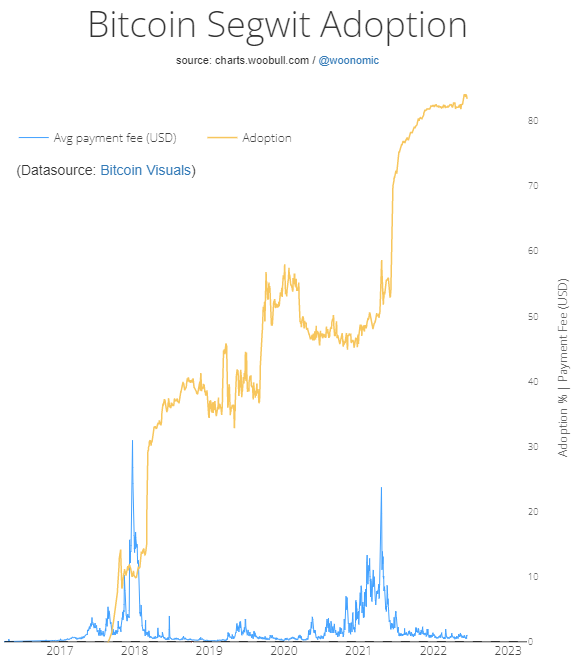
A lot of people who think bitcoin will become insecure due to lack of fees, don't take into account Segwit adoption- they seem to think transfer volume is stagnant.
Volume is growing a lot, but in an increasingly efficient way.
Volume is growing a lot, but in an increasingly efficient way.
From here, higher layers of the Bitcoin stack (e.g. the Lightning network and/or federated environments) will need to do the scaling, or perhaps some future soft forks.
Fee pressure, if/when it occurs, can drive adoption of those upper layers and incentivize new development.
Fee pressure, if/when it occurs, can drive adoption of those upper layers and incentivize new development.
In the long run, it's the combo of adoption and efficiency improvements that matters.
-If Bitcoin adoption stagnates, its energy usage will stagnate and decline.
-If Bitcoin adoption continues, then it will use a decent amount of energy but in an increasingly efficient way.
-If Bitcoin adoption stagnates, its energy usage will stagnate and decline.
-If Bitcoin adoption continues, then it will use a decent amount of energy but in an increasingly efficient way.
Either way, the network's energy usage is limited by the amount of utility it provides.
People often extrapolate a brief period of time into infinity, but that's not how things work. The network's design for the long run is different than its design for the bootstrapping phase.
People often extrapolate a brief period of time into infinity, but that's not how things work. The network's design for the long run is different than its design for the bootstrapping phase.
Loading suggestions...