

On-page SEO is the #1 opportunity to generate tons of FREE traffic for your e-commerce brand.
I helped a beauty brand scale to $500k/month in the last 12 months using these 5 on-page SEO strategies.
Use these if you want to scale organically!
A thread... 🧵
I helped a beauty brand scale to $500k/month in the last 12 months using these 5 on-page SEO strategies.
Use these if you want to scale organically!
A thread... 🧵
1. Include target keyword in the meta title
The meta title is the most important on-page SEO elements.
If you simply add your target keyword to start of your meta title, you'll see a boost in rankings for that keyword.
It's that powerful.
The meta title is the most important on-page SEO elements.
If you simply add your target keyword to start of your meta title, you'll see a boost in rankings for that keyword.
It's that powerful.
Check this out:
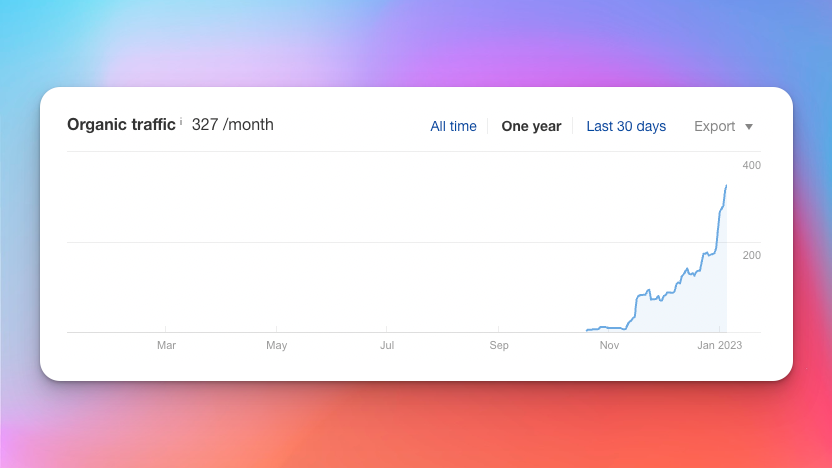
We ONLY optimized this page by updating the meta title.
Nothing else.
We're waiting for help from this brand's devs to make changes to the page's title and content.
(They're slow)
And yet, traffic went from 0 to 327 clicks per month in a couple of months.
We ONLY optimized this page by updating the meta title.
Nothing else.
We're waiting for help from this brand's devs to make changes to the page's title and content.
(They're slow)
And yet, traffic went from 0 to 327 clicks per month in a couple of months.
2. Include target keyword in the H1 tag
The H1 tag is the title tag of a page.
If you're trying to rank a blog post, make sure your target keyword is in the blog post's title.
If you're trying to rank a product page, making sure your target keyword is in the product's title.
The H1 tag is the title tag of a page.
If you're trying to rank a blog post, make sure your target keyword is in the blog post's title.
If you're trying to rank a product page, making sure your target keyword is in the product's title.
Incorporating a keyword in a product's title can be tough, so I like to use this frame work for an H1 tag:
Product Title | Target Keyword
So for example, if you're selling magnesium gummies, you could make the title:
Keval's Amazing Magnesium | Magnesium Gummies
Product Title | Target Keyword
So for example, if you're selling magnesium gummies, you could make the title:
Keval's Amazing Magnesium | Magnesium Gummies
3. Include the target keyword in the H2 tag
The H2 tag is like the H1 tag except it's not the title of the page.
It's the sub-heading on a page.
If you're trying to rank a blog post, make sure you're breaking up content using sub-headings and add your keyword in one of them.
The H2 tag is like the H1 tag except it's not the title of the page.
It's the sub-heading on a page.
If you're trying to rank a blog post, make sure you're breaking up content using sub-headings and add your keyword in one of them.
If you're trying to rank a product page, try to incorporate H2 sub-headings within your product's description.
Then simply include your target keyword within one of those sub-headings.
Then simply include your target keyword within one of those sub-headings.
4. Include the target keyword in the URL
Regardless of what you're ranking — blog post, product page, collection page — you should make the page's URL the target keyword.
This will keep the URL short and sweet, which is good for UX and SEO.
Regardless of what you're ranking — blog post, product page, collection page — you should make the page's URL the target keyword.
This will keep the URL short and sweet, which is good for UX and SEO.
The worst thing you can do with the URL is make it super long.
For example:
/benefits-of-magnesium
is better than
/10-incredible-benefits-of-magnesium
For example:
/benefits-of-magnesium
is better than
/10-incredible-benefits-of-magnesium
5. Include keywords naturally throughout the page
Lastly, you'll want to include your target keyword throughout the page's content.
There's no number you need to hit.
Just include the keyword wherever it naturally fits.
Lastly, you'll want to include your target keyword throughout the page's content.
There's no number you need to hit.
Just include the keyword wherever it naturally fits.
A pro-tip is to try and include the target keyword in the opening and closing sentence of the page.
Don't be afraid to use variations of your keywords as well.
Google is able to tell when keywords or phrases essentially mean the same thing.
Don't be afraid to use variations of your keywords as well.
Google is able to tell when keywords or phrases essentially mean the same thing.
And that's it!
If you follow those five tips, your on-page SEO will pretty effective.
And you'll start seeing lifts in organic traffic, as optimizing on-page SEO is the most effective way to take advantage of low hanging fruit opportunities.
If you follow those five tips, your on-page SEO will pretty effective.
And you'll start seeing lifts in organic traffic, as optimizing on-page SEO is the most effective way to take advantage of low hanging fruit opportunities.
Loading suggestions...