

Why did Claude Monet paint the same water lilies in his garden more than 250 times?
Well, for Monet, they were different every time...
Well, for Monet, they were different every time...

When the Impressionists broke free from the French artistic establishment in the 1870s, their guiding principle was that painting should be done outdoors.
Rather than in the studio, under carefully orchestrated lighting, as was done in the Parisian Academies of the 19th century:
Rather than in the studio, under carefully orchestrated lighting, as was done in the Parisian Academies of the 19th century:
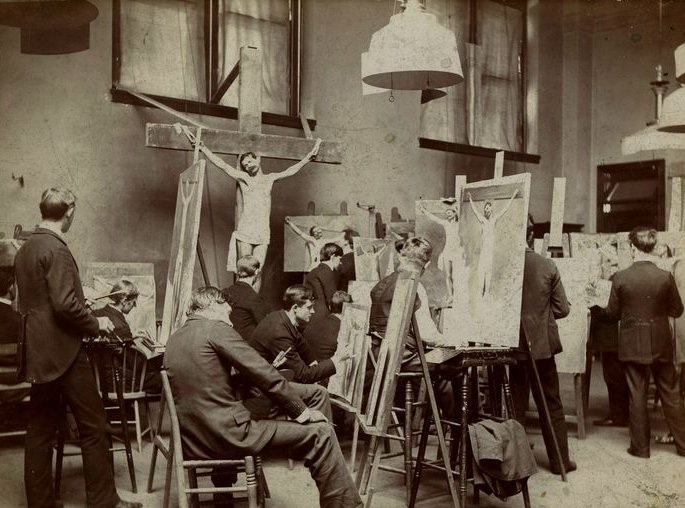
So Manet, Monet, Sisley, and Bazille (soon joined by Renoir, Pissarro, and others) rejected the neoclassical teachings of the Academy, based on the ideals of the Renaissance.
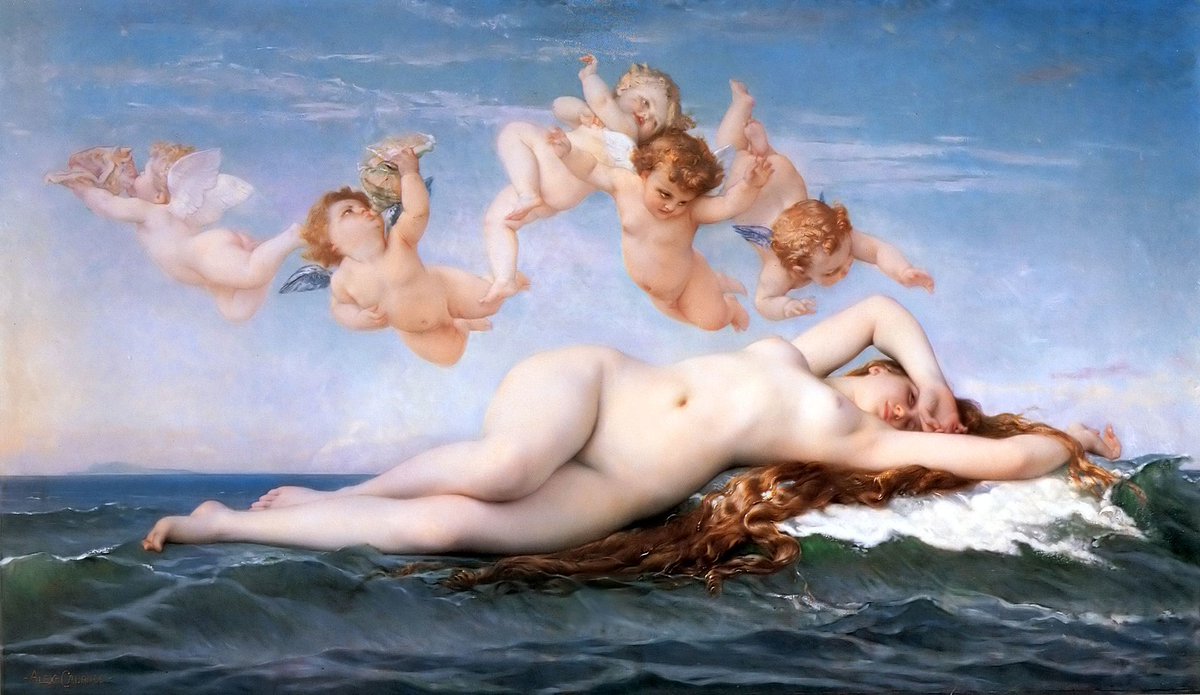
For them, works by painters like Cabanel and Bouguereau were facsimiles, not realistic at all.
For them, works by painters like Cabanel and Bouguereau were facsimiles, not realistic at all.
They went outdoors to see what the real world was like.
This wasn't a rejection of art's focus on representing reality; rather, they sought to represent reality as it really appears to us every day, glimpsed and always moving, caught in harsh sunlight, shade, or both.
This wasn't a rejection of art's focus on representing reality; rather, they sought to represent reality as it really appears to us every day, glimpsed and always moving, caught in harsh sunlight, shade, or both.
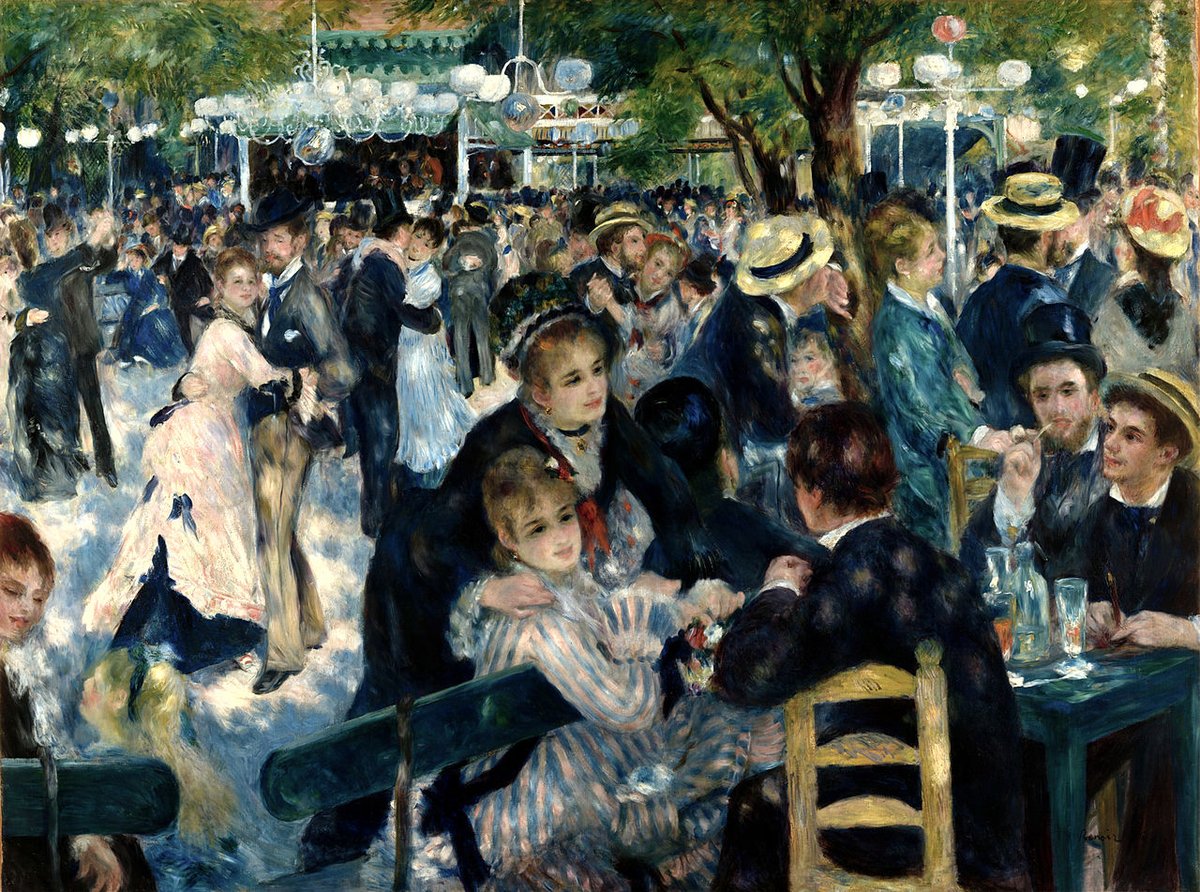
For them reality couldn't exist as the fixed vision of a posing model and a studio.
Outside, in natural light, they replaced black with blue as art's primary colour and realised that things were always changing.
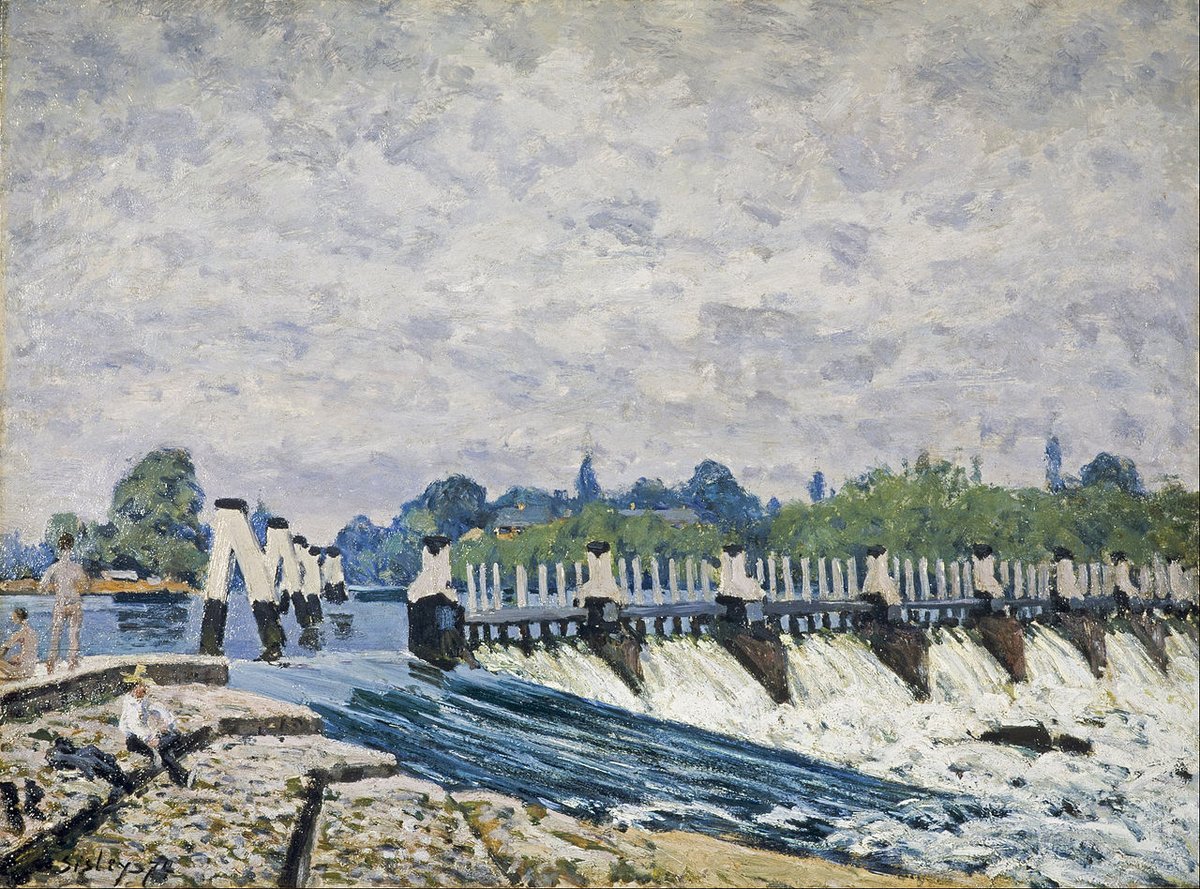
Whether in snow, as in Alfred Sisley's 1874 view of Moseley Pier:
Outside, in natural light, they replaced black with blue as art's primary colour and realised that things were always changing.
Whether in snow, as in Alfred Sisley's 1874 view of Moseley Pier:
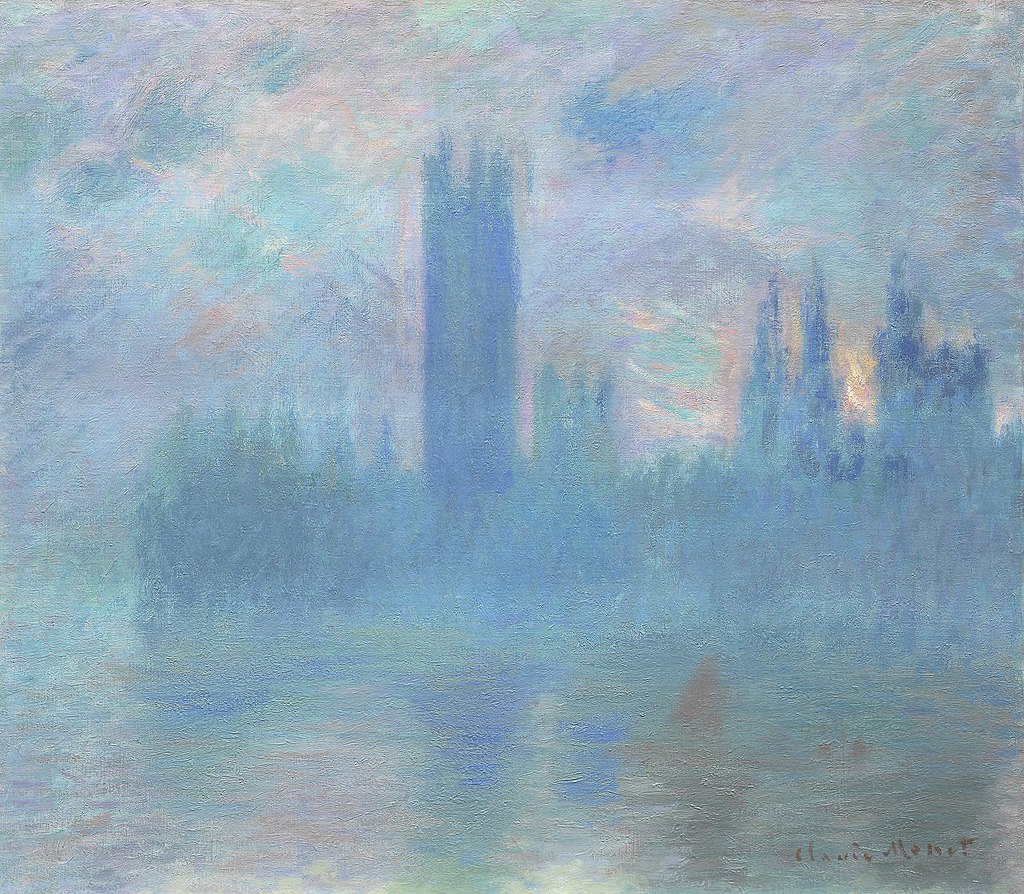
Or through fog, as in Monet's series on the Palace of Westminster in London:
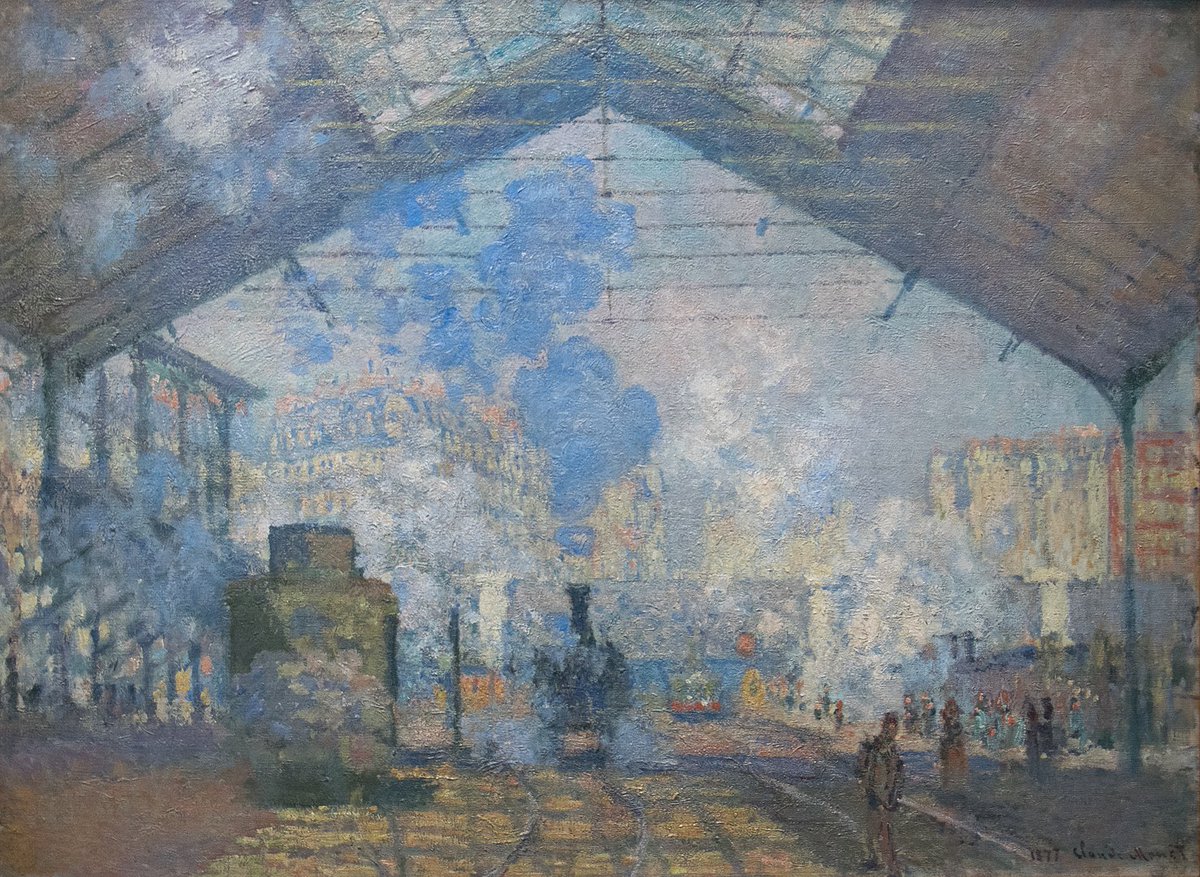
Or through smoke, as in Monet's paintings of the Saint-Lazare train station in Paris:
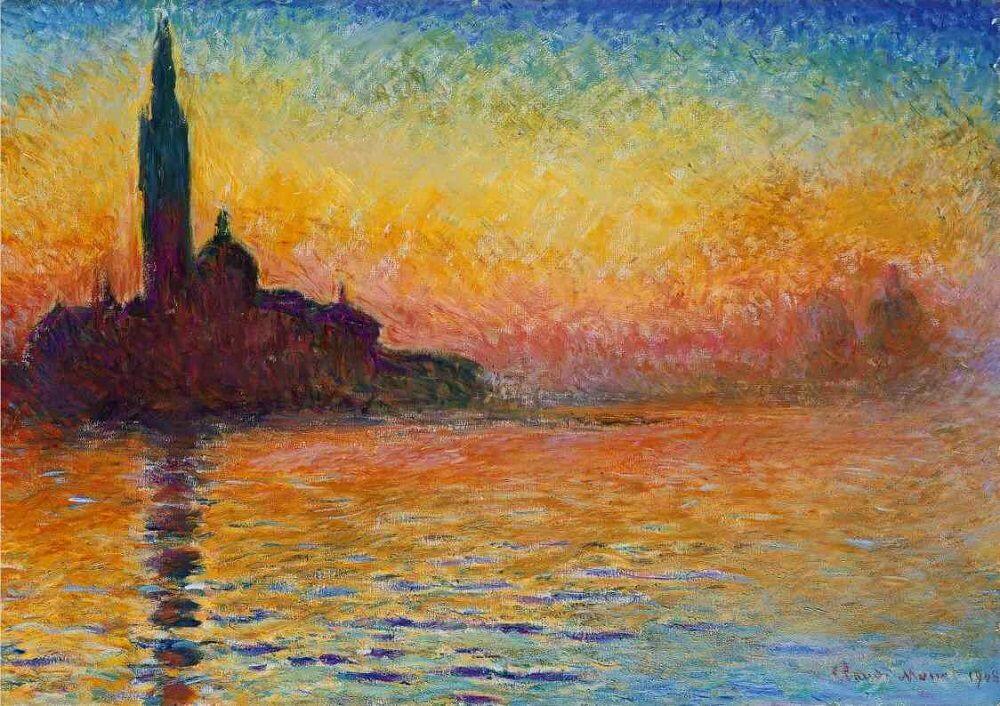
Or in the reflections of the water, as in Monet's many paintings of Venice, like the San Giorgio Maggiore at Dusk, from 1908:
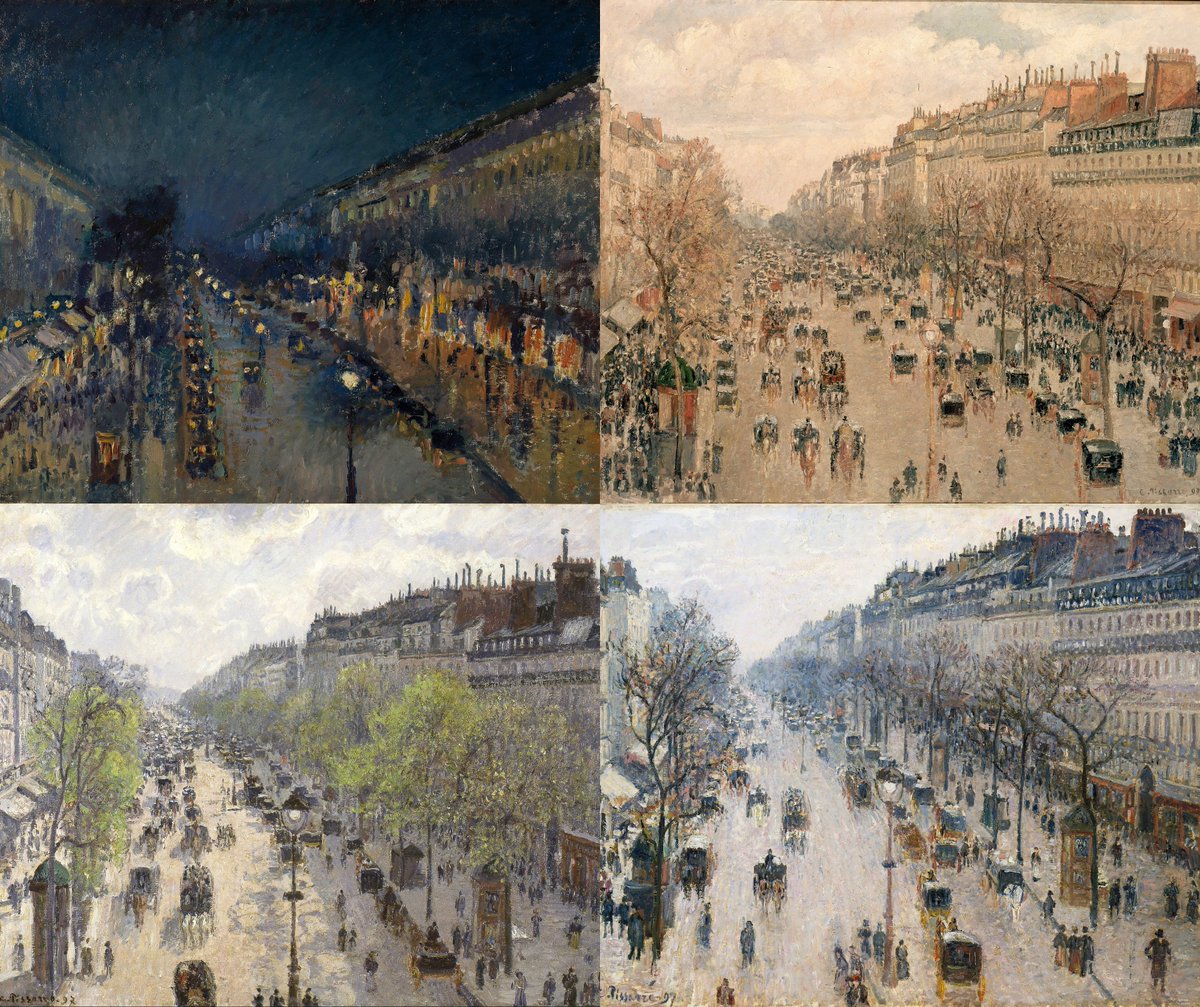
The world was an ever-changing thing to the Impressionists, as epitomised in Camille Pissarro's paintings of the same view from a Montmartre hotel window in Paris in different seasons and at different times of the day:
Claude Monet took this idea further than any other member of the Impressionist movement.
He saw the importance of light and its impact on colour in how we perceive the world around us. The same object, scene, or person appeared differently depending on the time of day.
He saw the importance of light and its impact on colour in how we perceive the world around us. The same object, scene, or person appeared differently depending on the time of day.
He bought a house in Giverny, northern France, and designed his own garden there.
It had a pond filled with waterlilies and a Japanese-style footbridge.
It had a pond filled with waterlilies and a Japanese-style footbridge.
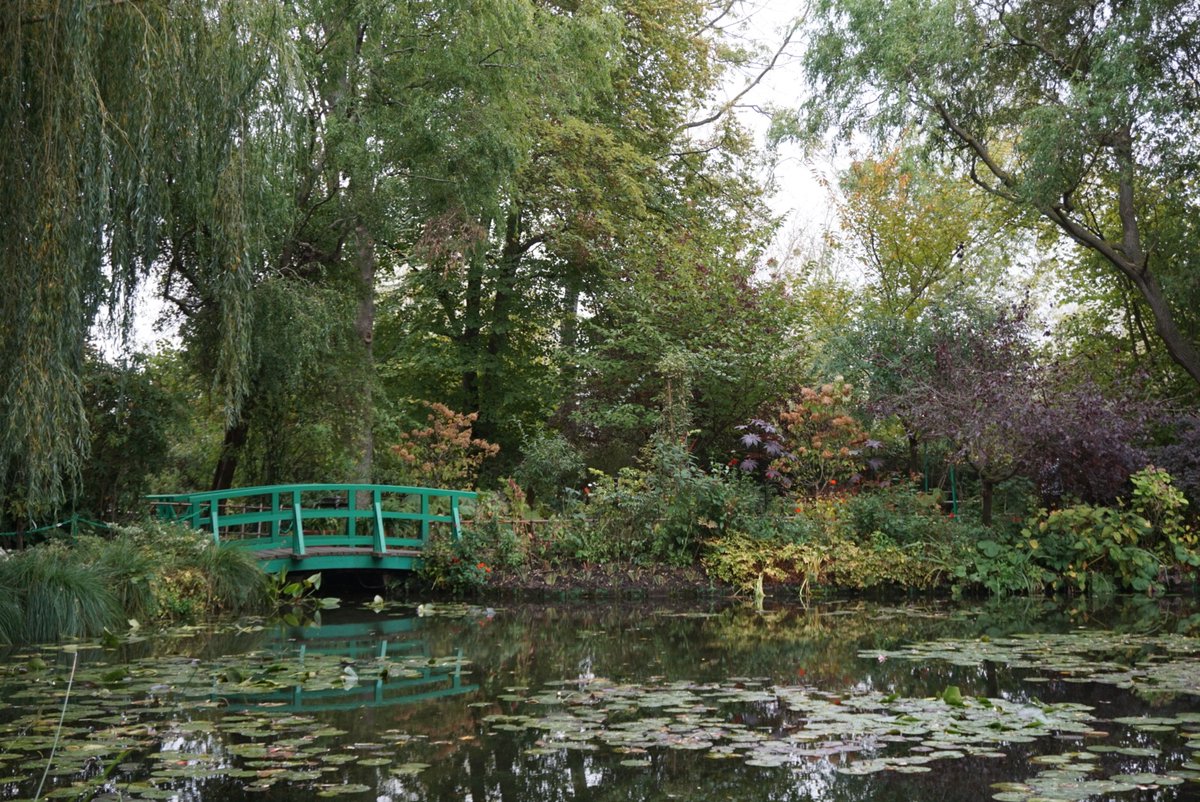
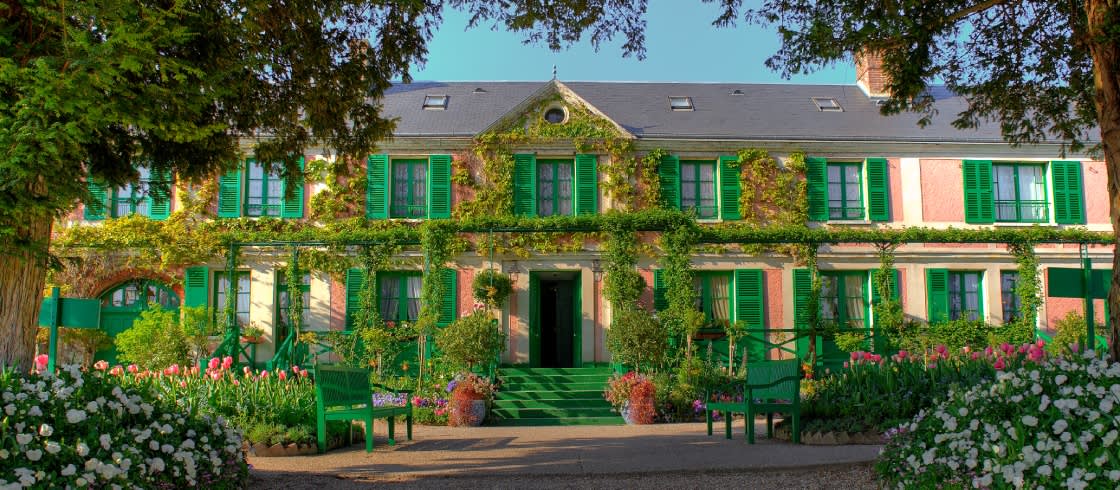
This Japanese bridge was, perhaps, a nod to the vast influence wielded by Japanese art over the Impressionist movement.
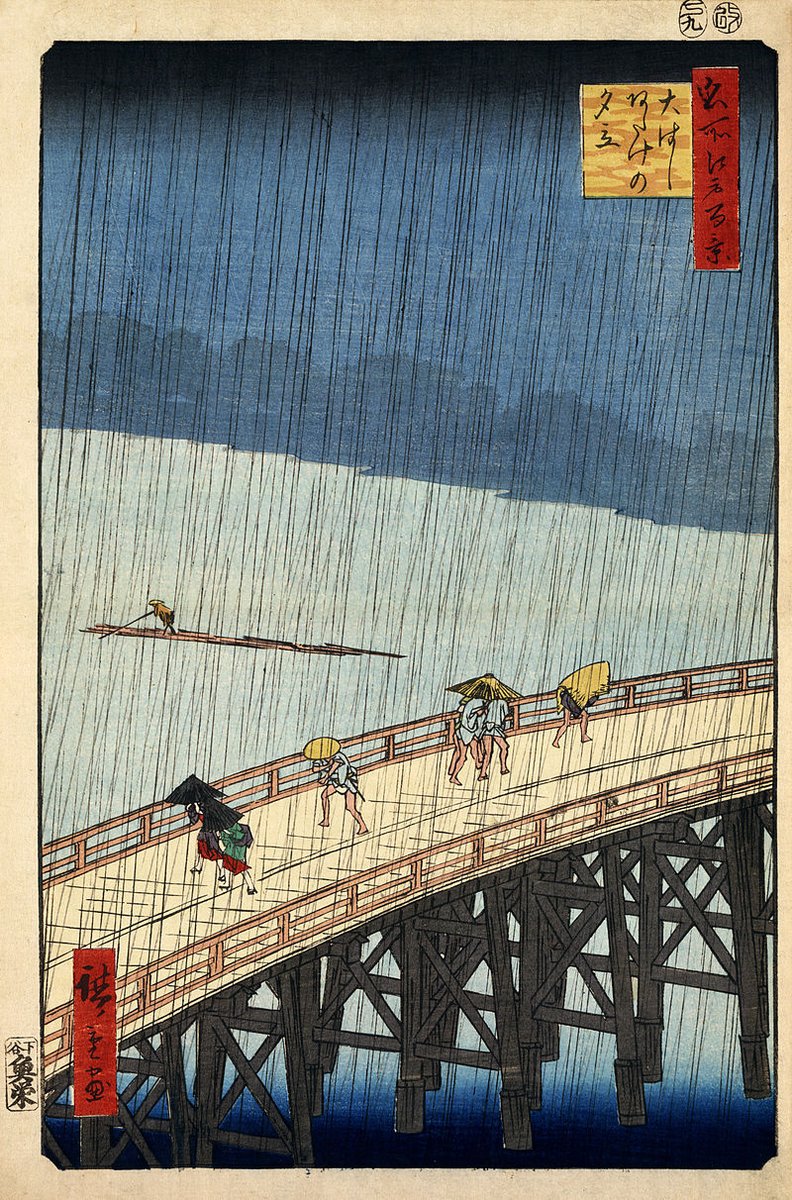
After Commodore Perry forcibly opened Japan to trade in the 1850s, Japanese prints flooded the Western world.
After Commodore Perry forcibly opened Japan to trade in the 1850s, Japanese prints flooded the Western world.
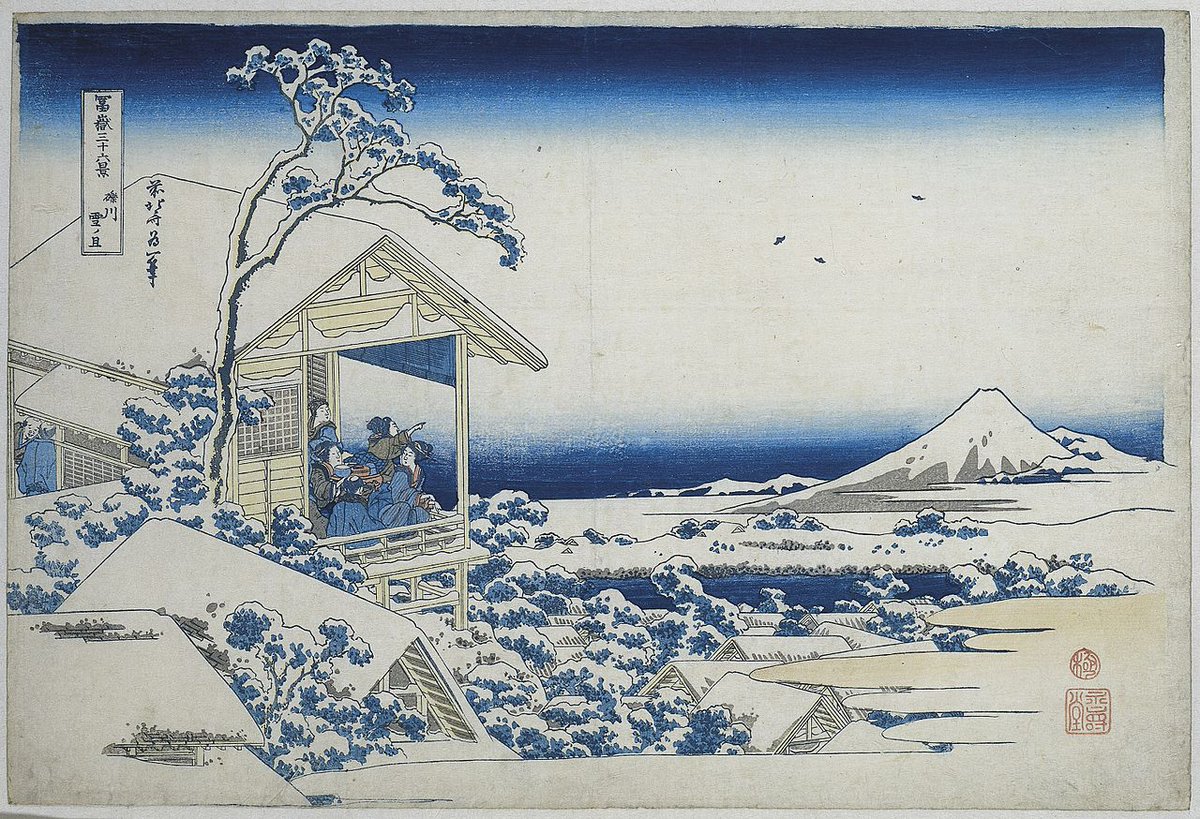
These Japanese prints by masters like Hokusai and Hiroshige were the opposite of French Academic Art.
They were unpretentious and filled with colour and life; they depicted ordinary people and used unusual angles.
The Impressionists were inspired.
They were unpretentious and filled with colour and life; they depicted ordinary people and used unusual angles.
The Impressionists were inspired.
In any case, Monet immersed himself in nature, planting thousands of flowers and trees at his house in Giverny and over the course of 43 years painted the lilies in his pond and its bridge more than 250 times.
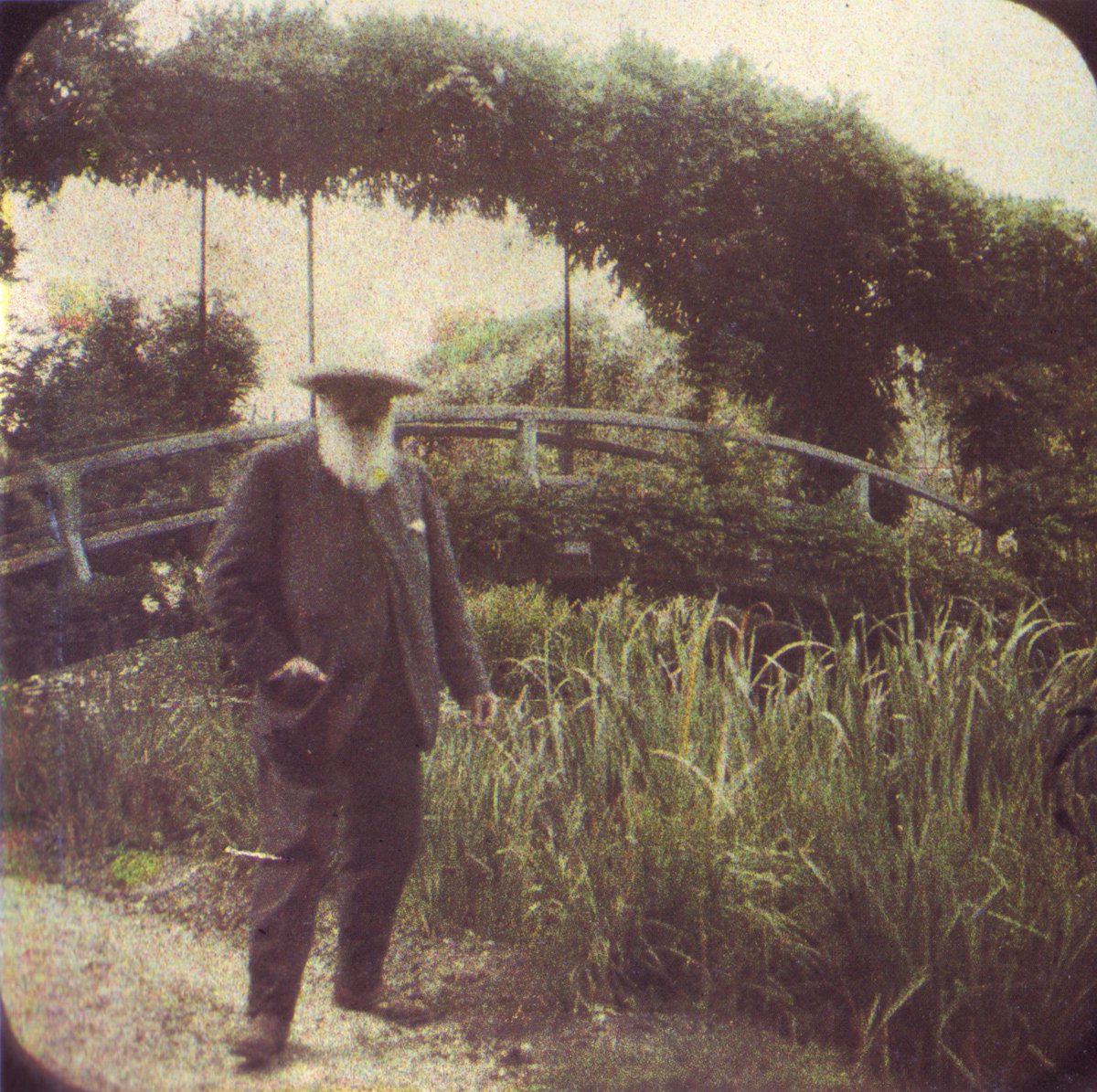
Here he is, in his home studio, at work on one of his vast canvasses:
Here he is, in his home studio, at work on one of his vast canvasses:
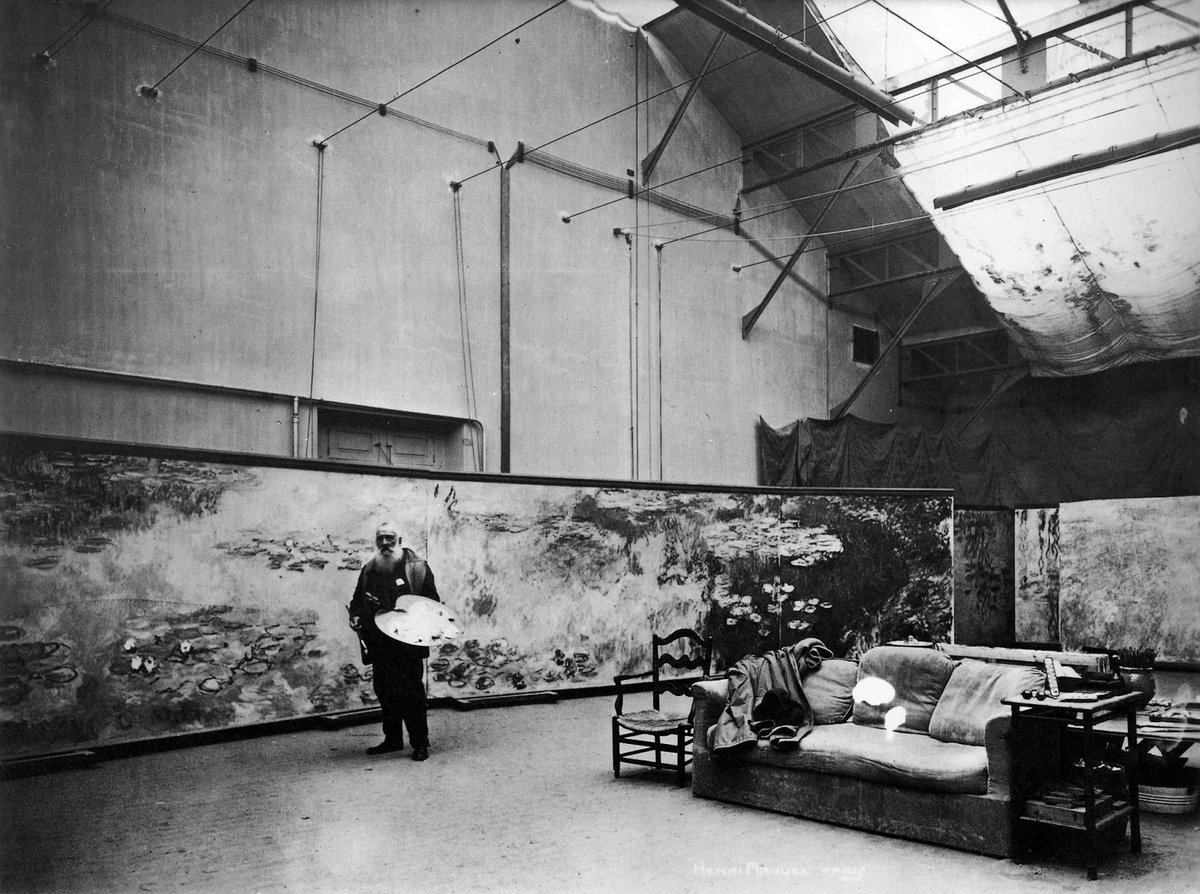
The founding principle of Impressionism was taken to its logical conclusion in Monet's Giverny paintings: that light changes the world and how we perceive it.
Consider these four paintings, each done in 1917. Though, ostensibly, they depict the same thing, they are not the same.
Consider these four paintings, each done in 1917. Though, ostensibly, they depict the same thing, they are not the same.
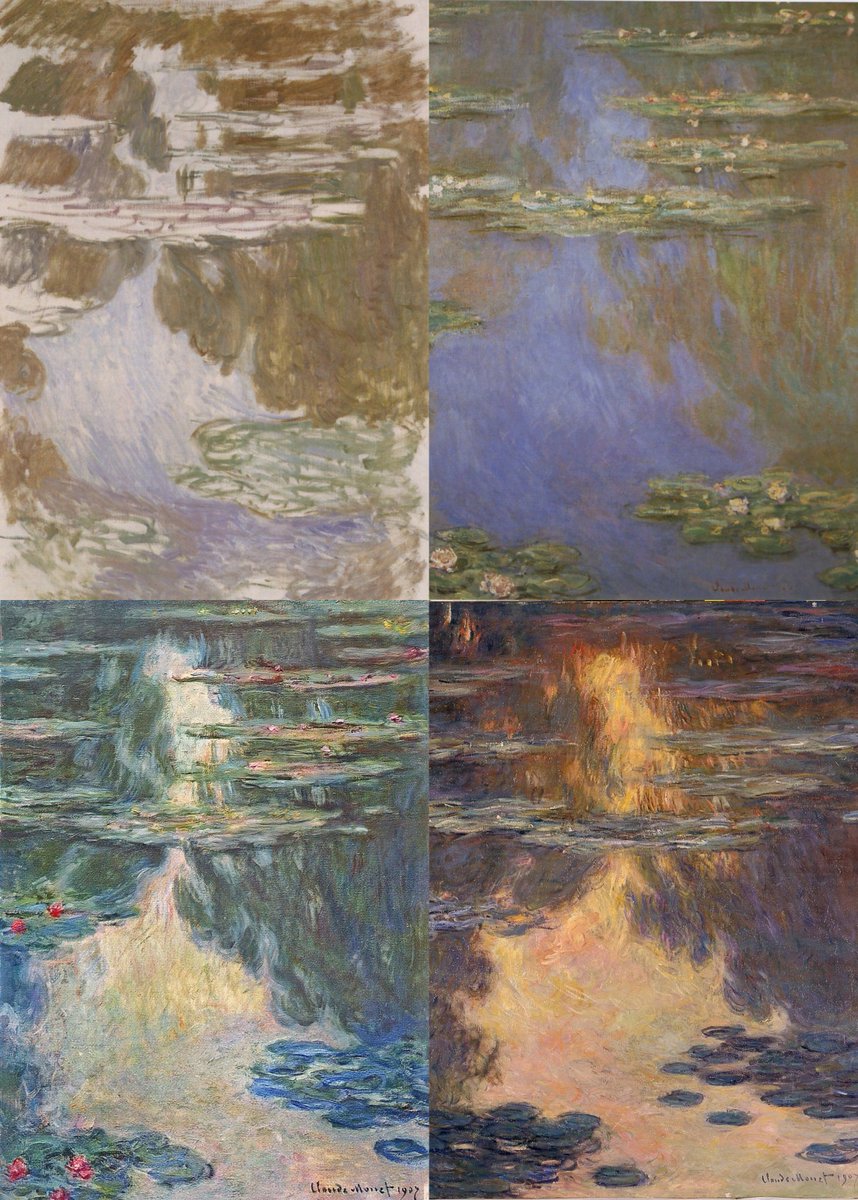
Or, rather than lilies, consider four different paintings of the Japanese footbridge in his garden.
The time of day and year gave his garden an entirely different appearance and mood, a new set of colours to be captured.
The world was different from moment to moment.
The time of day and year gave his garden an entirely different appearance and mood, a new set of colours to be captured.
The world was different from moment to moment.

Monet suffered from cataracts late in his life. Though we might think that impaired his sight, for Monet that simply allowed him to perceive the world differently.
A world seen through failing vision is no less legitimate than one seen with perfect vision.
A world seen through failing vision is no less legitimate than one seen with perfect vision.
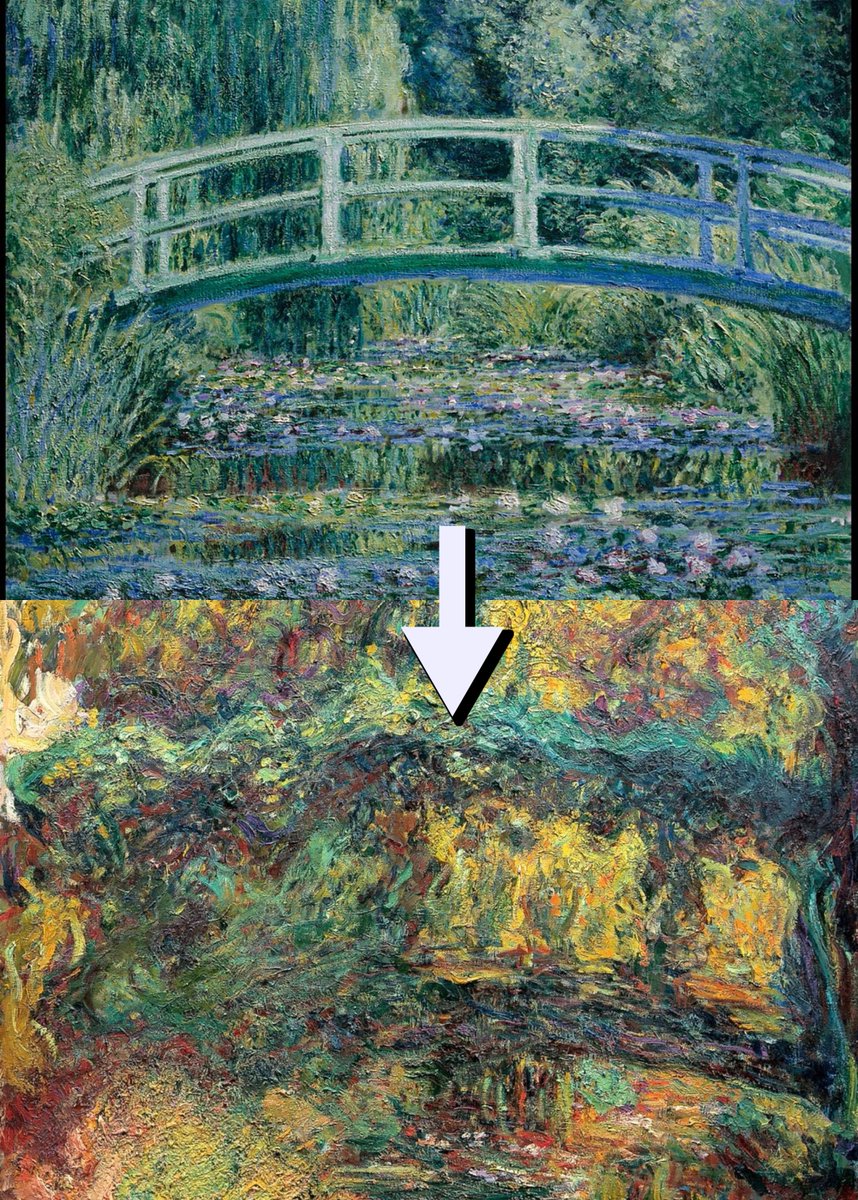
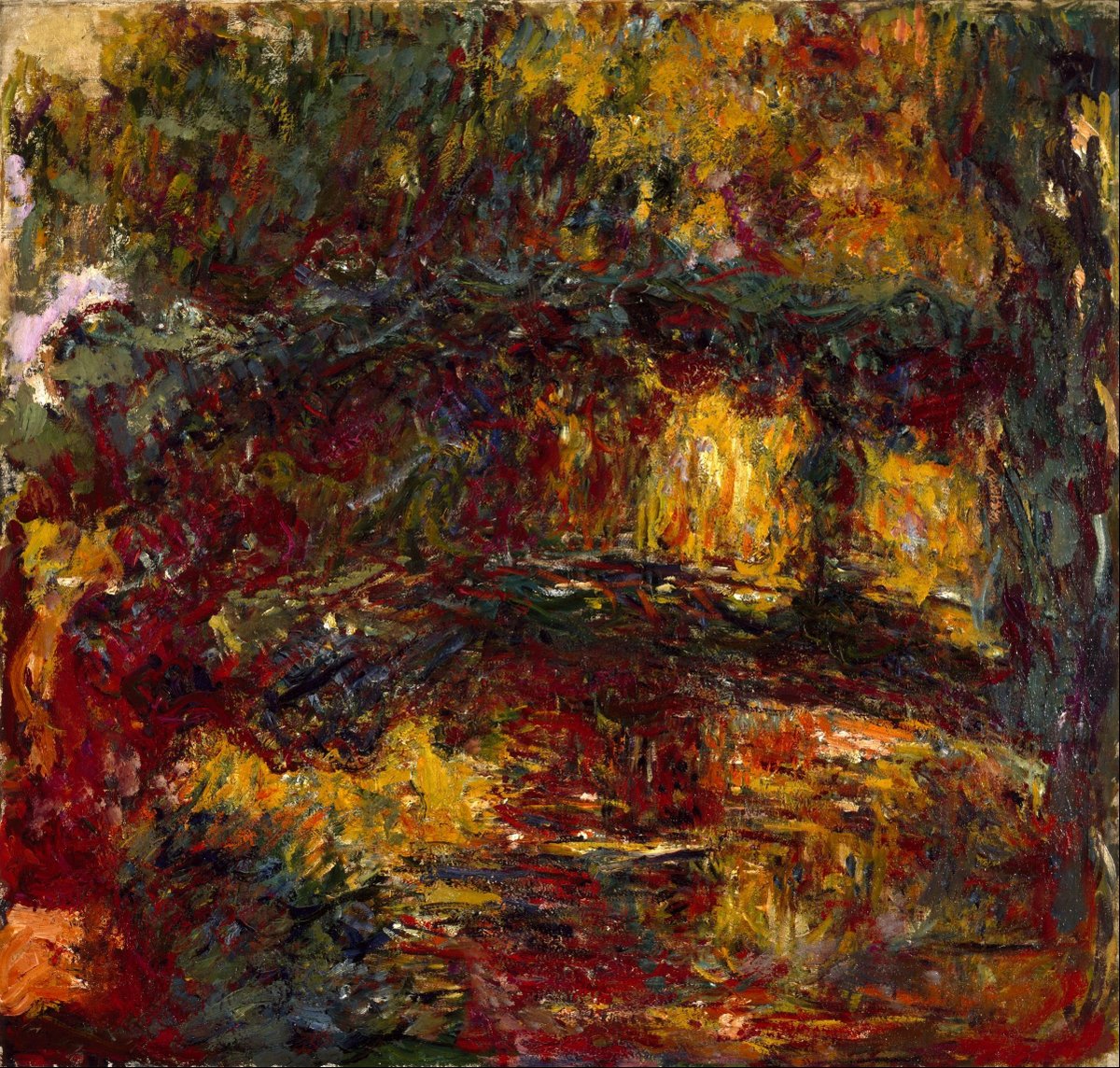
By 1925 the degradation in Monet's sight was severe. His art became far darker and far less clear, almost abstract in its transformation of solid forms into shapeless masses of colour and light.
But this, like the rest, was his impressionism of reality at that moment.
But this, like the rest, was his impressionism of reality at that moment.
When Claude Monet was still a young man and, with his fellow painters, put on an exhibition of their work in 1874, one critic parodied the title of Monet's 1871 painting "Impression, Sunrise", and disparagingly labelled them the "Impressionists", intended as an insult.
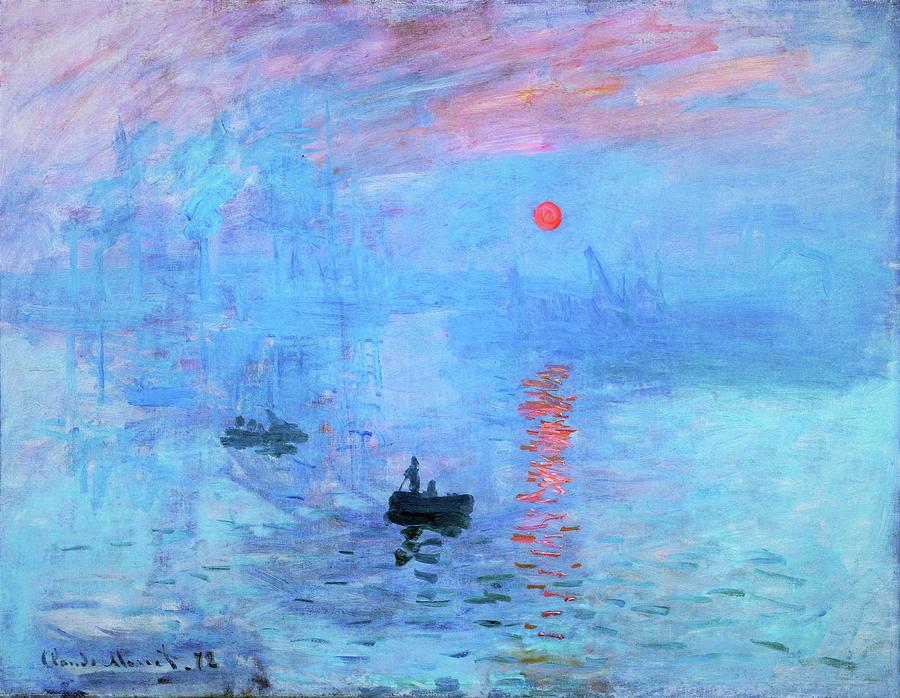
Art, like so much, is unpredictable. Nobody could have known in the 1870s that this unusual French artist would one day stand forthrightly among the world's most beloved painters, and that his fascination with waterlilies would become one of humanity's greatest artistic gifts.
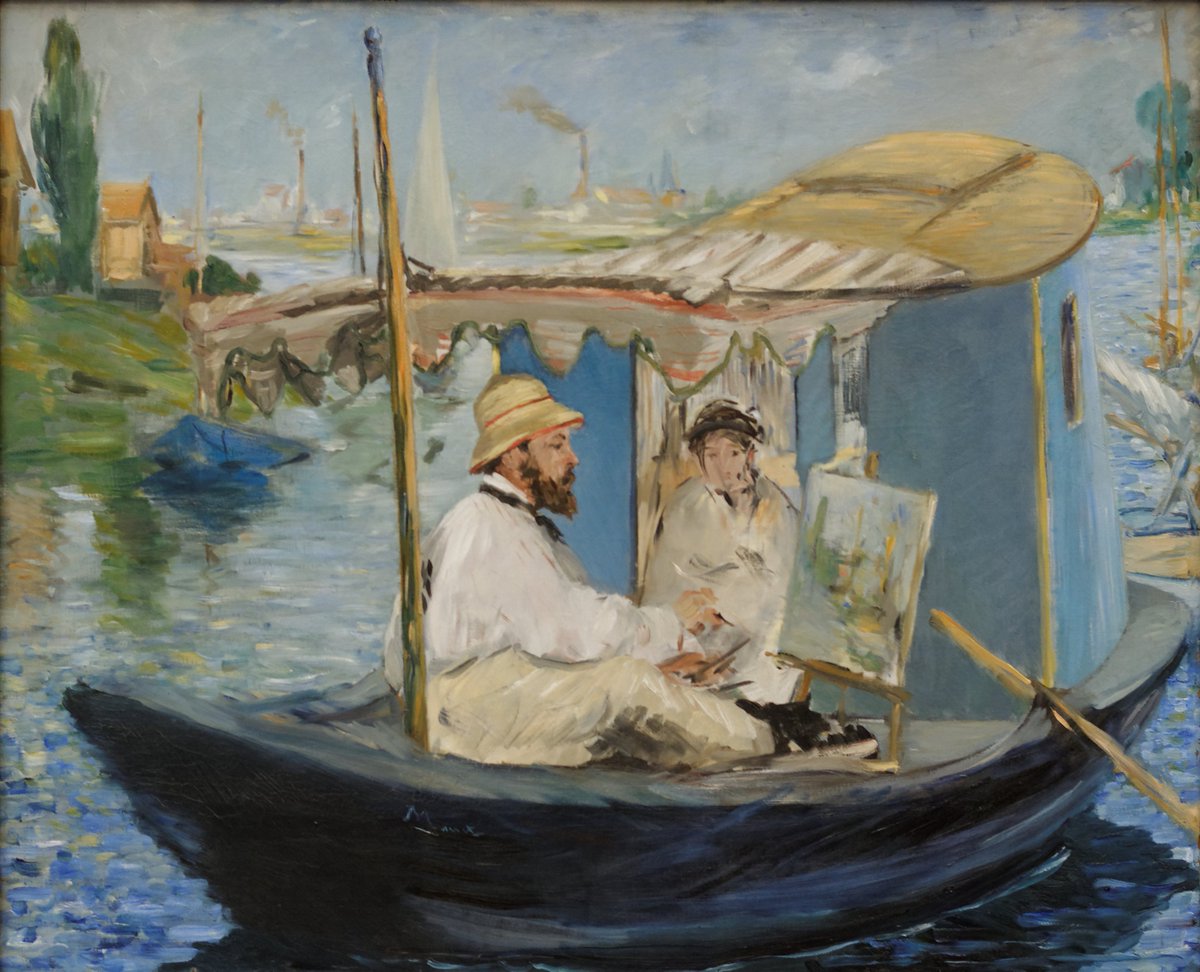
And here he is, captured by Manet in a portrait rather ironically entitled "Claude Monet in his Studio", from 1874.
Monet's studio was, of course, the natural world - a place filled with endless transfigurations of colour and mood... and that's what Impressionism was all about.
Monet's studio was, of course, the natural world - a place filled with endless transfigurations of colour and mood... and that's what Impressionism was all about.
Loading suggestions...