
This thread by Bayt Al Fann is doing the rounds about the early collection of the Quran. It presents the traditionally accepted Islamic narrative. But how does modern scholarship think about this history?
A scholarly companion thread to this thread. 🧵
A scholarly companion thread to this thread. 🧵
The question on whether the prophet was actually illiterate is a contentious issue. In any case, modern scholarship is convinced that "ʾummī" did not mean "illiterate" and mostly convinced that it menat "gentile". See Shaddel's excellent paper on this.
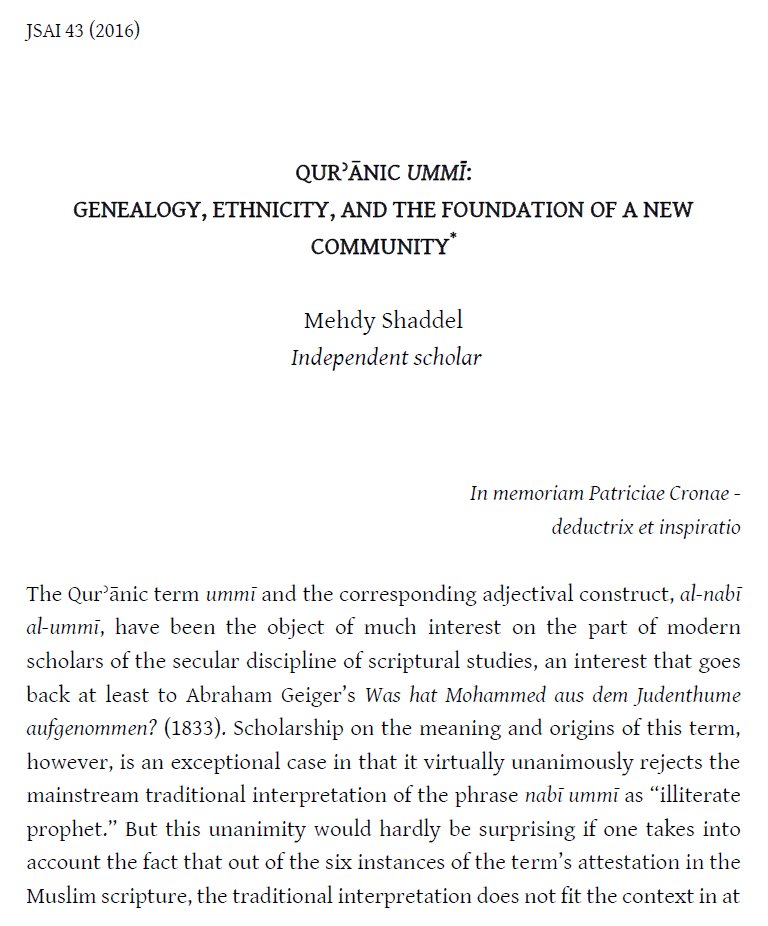
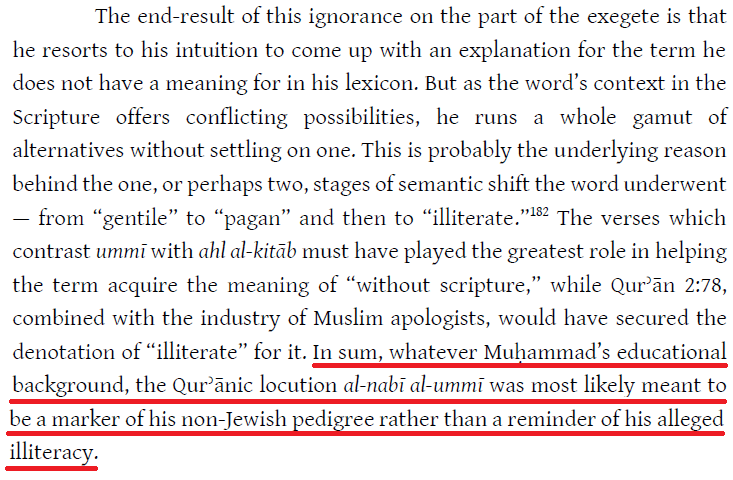
While it is of course true by modern standards that 7th c. Arabia was mostly illiterate, even from the traditional sources nothing gives us the impression that it was exceptionally so.
Many of Muhammad's closest companions are presented as literate.
Many of Muhammad's closest companions are presented as literate.
Not just Ibn Masʿūd, ʾUbayy and ʿAlī (who had personal copies of the Quran) but even his wife ʿĀʾišah and of course Zayd b. Ṯābit who figures prominently in the collection of the Quran.
More and more pre-islamic inscriptions are being found in the Hijaz.
More and more pre-islamic inscriptions are being found in the Hijaz.
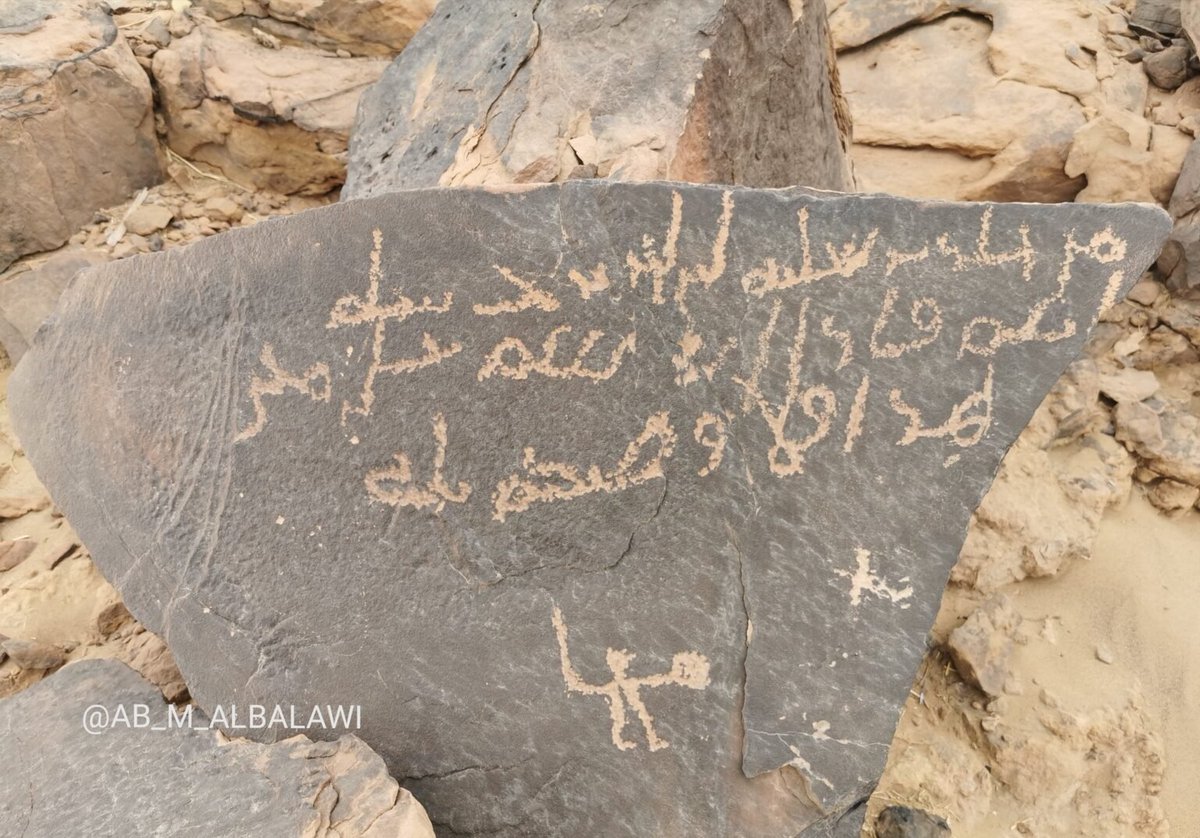
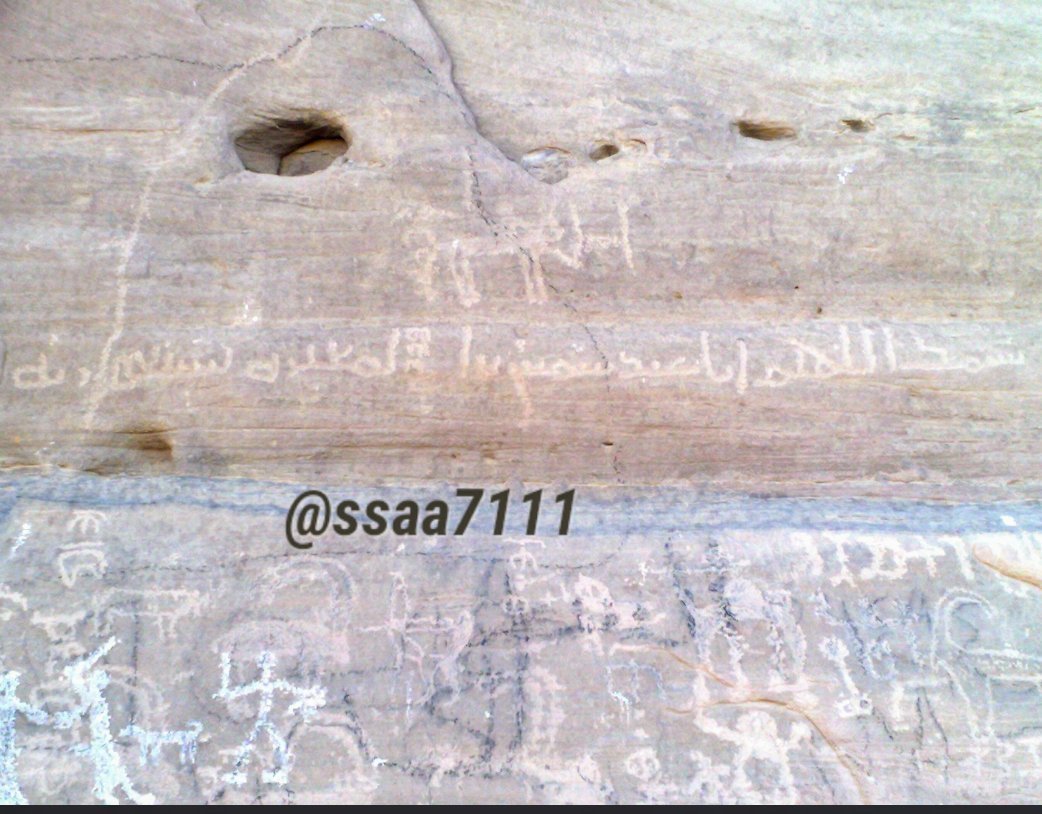
The fact that narratives are presented that prominently feature writing for the aid in memorization, would make absolutely no sense if writing did not have a good use for a significant portion of the population.
The next part of the thread, which explores the standard (but by no means only!) narrative about the compilation of the Quran. Which started with the first caliph ʾAbū Bakr and ends up with the official ʿUṯmānic version.
This part of the narrative is mostly inaccessible for historical inquiry. If ʾAbū Bakr had a compilation of the Quran made, we simply cannot access it anymore. In any case it seems clear that Uthmanic compilation was more than just re-copying that copy (if it existed).
But if there's any truth to the narrative at all -- this part which clearly implies the existence of personal written copies of the Quran, definitely challenges the idea of a purely oral/memory based transmission.
The fact that such elaborate authentication methods were needed of course implies that there were some differences in wording. Something that is indeed confirmed by the Islamic tradition which records hundreds of variants in codices of companions.
It is clear that Ibn Masʿūd had his own copy of the Quran, and that copy actually survived the Uthmanic canonization. People in the 2nd and 3rd century AH still give first person reports from what one could find in copies of his codex. It differed from the standard text.
Verse division is something that wasn't established with the standardization of the text, but was rather something that grew and developed over time. As a result, a modern Muṣḥaf you by today in North-Africa will ont have the 6236 verses.
While the ʾAbū Bakr compilation is historically questionable, we are on much firmer ground with Uthman due to manuscript evidence: there clearly was a compilation event around the year 650, where four copies were made and sent across the Islamic empire.
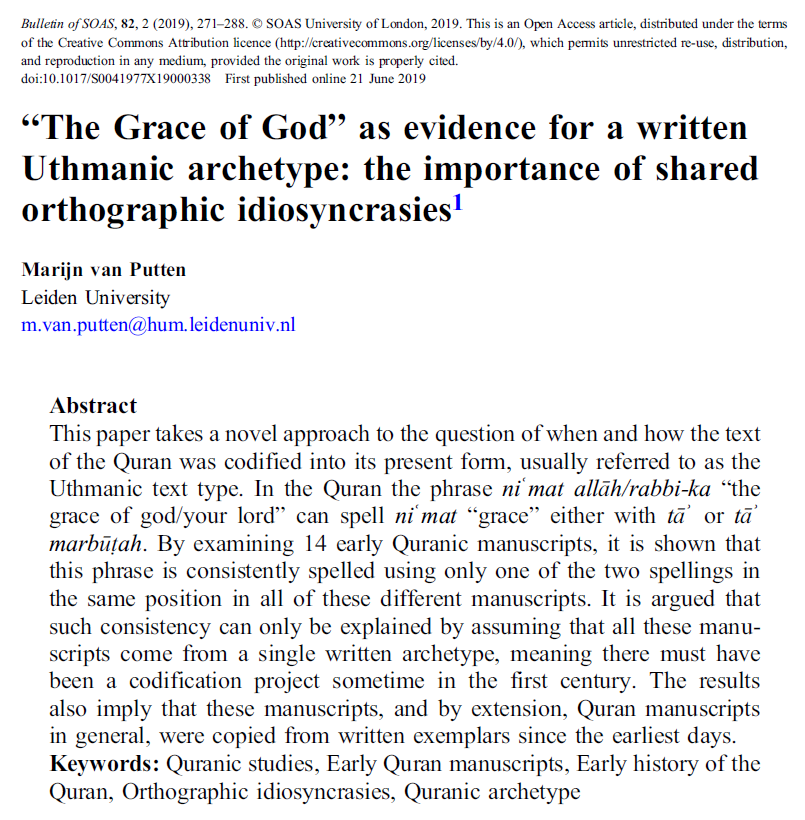
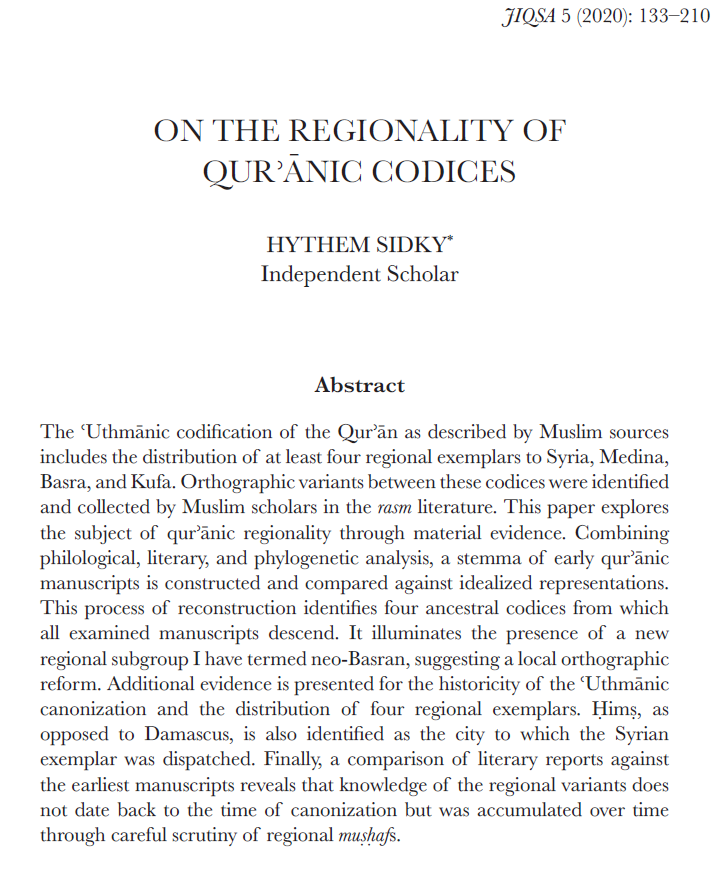
The thread presents Uthman's compilation of the Quran as an attempt to get all muslims to agree on one pronunciation. If that was the goal, it was a failure. Even today, Muslims recite according to 10 distinct reading traditions.
Indeed, Uthman's canonization was a huge success, and soon after, most groups accepted the new standard text.
In Kufa (Iraq) people seem to have continued reciting according to Ibn Masʿūd's pre-Uthmanic version at least until the second century AH.
In Kufa (Iraq) people seem to have continued reciting according to Ibn Masʿūd's pre-Uthmanic version at least until the second century AH.
"Identical" is a little bit debatable. Some questions of spelling have changed over the centuries. But for all intents and purposes, this is accurate.
This is misleading. It is not "some researchers" that suggest it is written in the 8th-9th century. Every single researcher of Quranic manuscripts agrees this manuscript can't have been Uthman's Quran and is centuries later
This is also misleading. Not a single researcher believes this manuscript was commissioned by Uthman. It's 8th if not 9th century. We have several older near-complete Qurans! Most notably another manuscripts held at the Topkapi museum: Karatay no. 3: M. 1
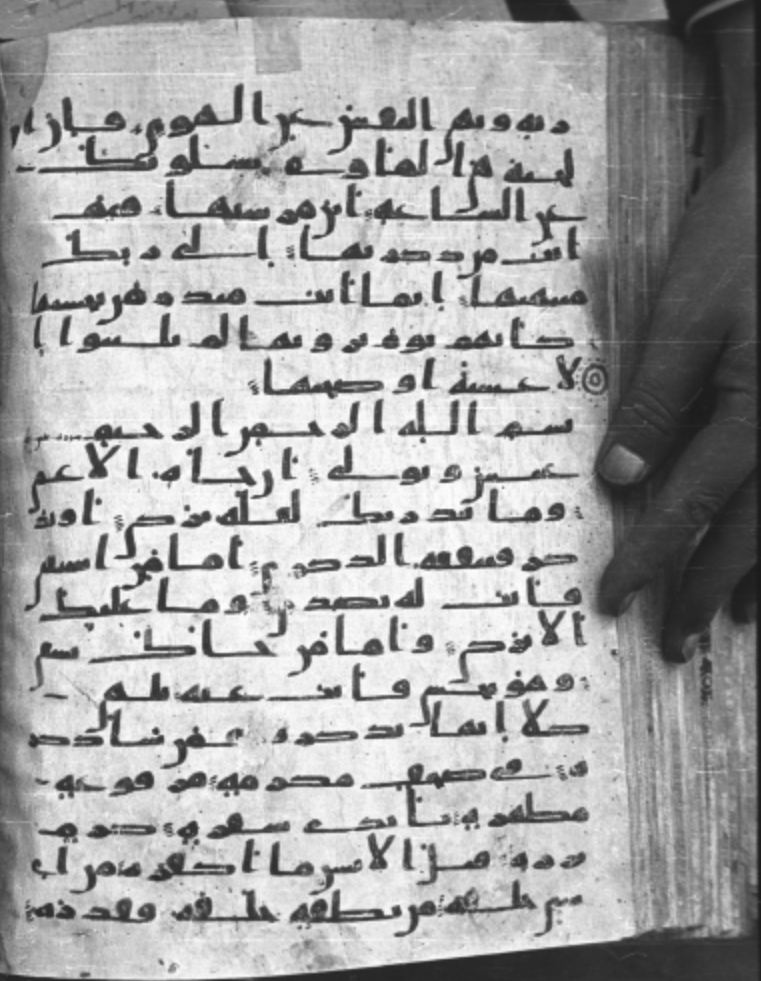
This tweet is skips over a rather vital piece of information as to the importance of this manuscript:
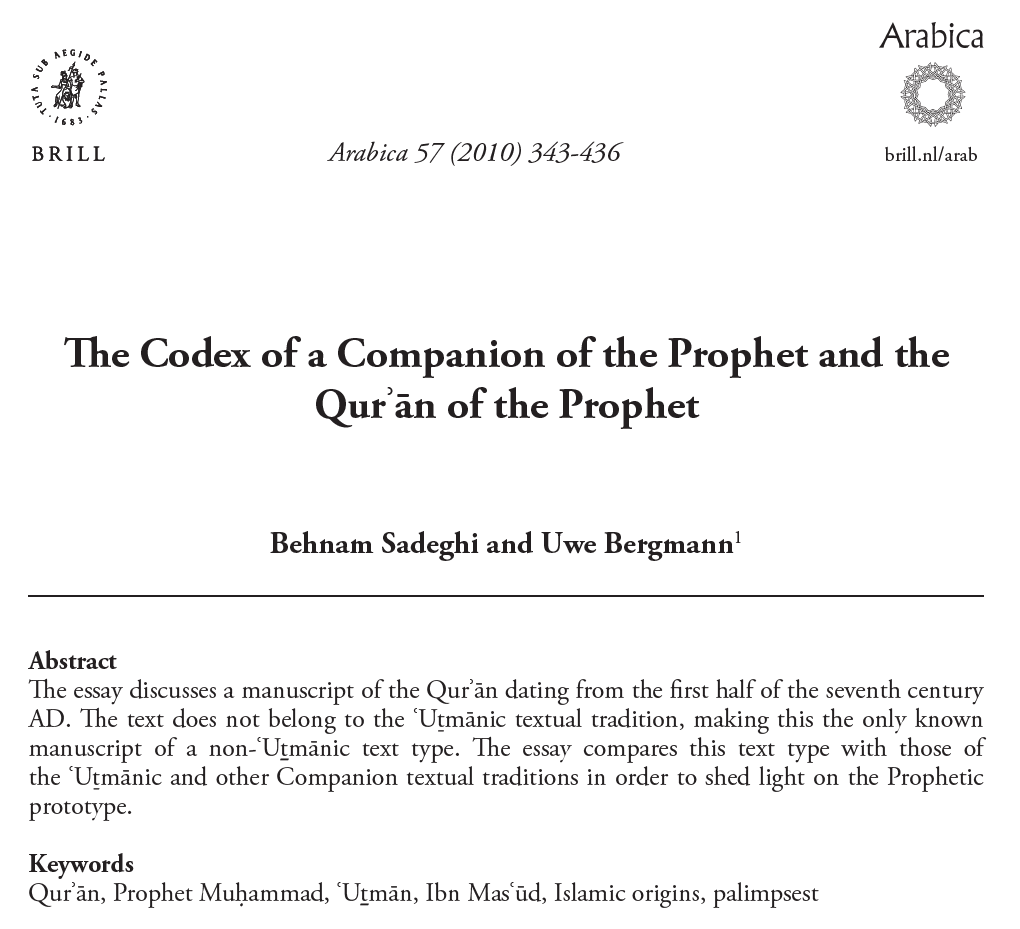
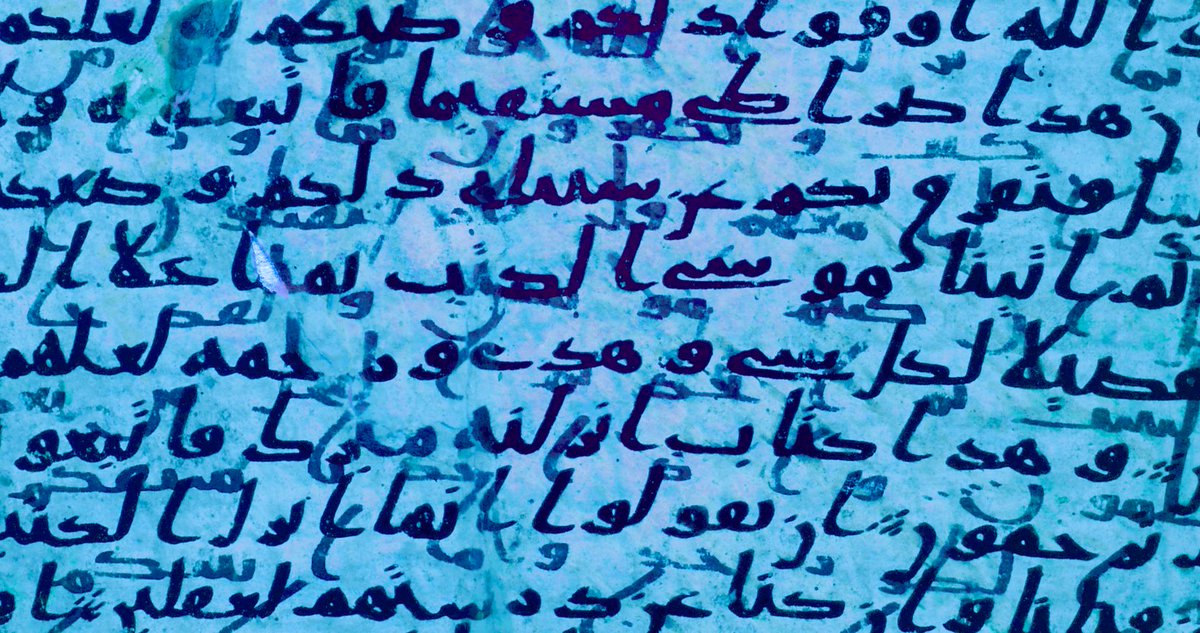
The Sanaa Manusripts DAM 01-27.1 contains the standard text of the Quran today, but was written over an older (erased) text.
The Sanaa Manusripts DAM 01-27.1 contains the standard text of the Quran today, but was written over an older (erased) text.
That erased text (which can be recovered with UV light) is ALSO Quran, but it is a non-canonical version of the text. This manuscript is our only material witness of a pre-Uthmanic companion codex, and therefore of vital importance to the history of the Quranic text!
The Tübingen manuscript is clearly of the Uthmanic text type, so definitely postdates the Uthmanic canonization.
The Codex Parisino-Petropolitanus, like the Tübingen manuscripts is an Uthmanic text. Sadly it has never been radiocarbon dated. But most, if not all, researchers agree that it must be one of our very earliest witnesses of the Uthmanic text type.
The Birmingham manuscript belongs to a section found in the Paris national Library: Arabe 328c, which add another 16 leaves to this Quran. So it's not just 2 leaves.
Despite the early radiocarbon dating, it's clearly a copy of the Uthmanic standard text.
Despite the early radiocarbon dating, it's clearly a copy of the Uthmanic standard text.
Very few researchers believe that it is the oldest Quran manuscript (the Sanaa Palimpsest is much more likely a contender for that). But it's certainly a very early one! Certainly a 7th century manuscripts.
I hope this thread didn't come off as too grumpy. The thread shows off some beautiful manuscripts, and gives a nice introduction to the traditional history of the compilation of the Quran. But, here and there a bit more precision and detailing is certainly in order!
Loading suggestions...