

Its nearly 11 months since Russia’s invasion of Ukraine began. While we are currently in a lower tempo period, both sides are planning offensives for 2023. Today I begin a two-part exploration of the considerations for planning & conducting large-scale campaigns in 2023. 1/24 🧵
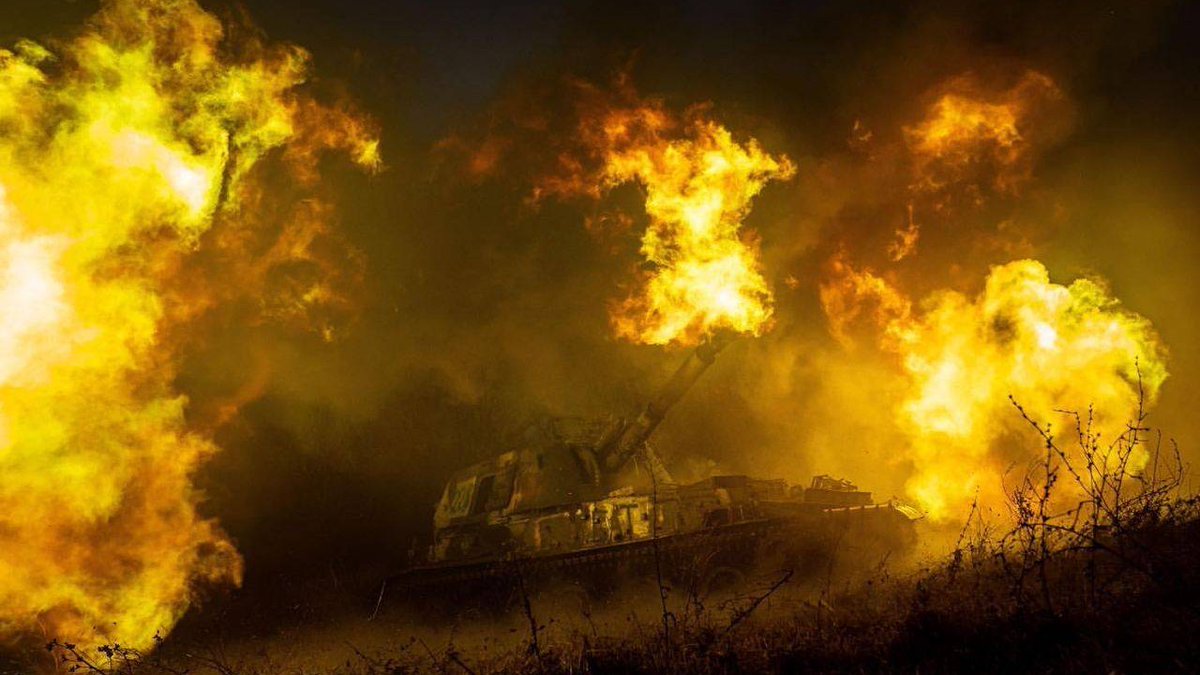
2/ What I won’t be doing is predicting where these offensives might take place. Despite this, the extensive preparations for these activities are characterised by several common considerations, which I will examine.

3/ The context for these offensives is that Russia has lost the initiative in this war at every level. While it can mount surges of drone and missile attacks, even these will decline in effectiveness as Ukraine’s AD capacity builds up.
4/ Russia needs to conduct offensives to seize territory annexed in 2022, convince domestic audiences of the worth of the Special Military Operation, gradually attrit the Ukrainian armed forces – and justify the mobilisation of its personnel and industry over the last few months.
5/ Russia’s capacity to do so is limited in the short term however. They have sustained massive personnel and equipment losses in the past 10 months. The ongoing mobilisation efforts will not have provided the same quality formations and equipment as those they have lost.
6/ But, with the influx of mobilised personnel, Russia will have some capacity for offensive activities in 2023. Importantly, it also appears to have the political will to do so. It just doesn’t have the same resources to do so as it had in February 2022. edition.cnn.com

7/ Ukraine starts the year in better shape than Russia. The Ukrainian Armed Force have momentum, and they are being provided with an array of new equipment such as wheeled gun systems, IFVs, SP artillery and munitions to enable mobile, offensive operations.
8/ As Gen Zaluzhnyi has noted in late 2022, “we have made all the calculations—how many tanks, artillery we need…it’s more important to focus on the accumulation of resources for the more protracted & heavier battles next year.” economist.com

9/ In exploring how both sides are likely to think about the offensives to come in 2023, I will use the following seven considerations: purpose; design; timing; location; resources; adaptation; and politics. This part will cover the first 4 considerations.
10/ Purpose. Purpose matters at every level of military endeavour. The 2023 campaigns will have a desired purpose. For the Russians, it will be to secure ground that supports the 2022 annexations. Part of their purpose will also be to play for time, hoping the West tires of war.
11/ For Ukraine, purpose is very clear & has been explicitly described by President Zelensky. It is to clear the Russians from all Ukrainian territory, and to free Ukrainians in occupied areas. Purpose is important in planning. It is vital in leadership & execution of operations.
12/ Design. Operational design is an important element of military professionalism. With good operational design, commanders and their staffs’ sequence and orchestrate tactical goals and actions to meet strategic and political objectives.
13/ For Ukraine, they will need a design that considers how many offensives at once, and how each consecutive advance is sequenced. This design considers main effort, supporting efforts, command and control and opportunities to exploit breakthroughs.
14/ A vital aspect of campaign design is the prioritization for allocation of forces, logistic support, intelligence, transport, and inter-service collaboration. At least in theory, campaigns should be integrated and joint rather than service oriented.
15/ Any Ukrainian operational design would seek to avoid what the Russians have tried to do during their invasion – advance on multiple fronts simultaneously without an obvious main effort and no unity of effort. Good operational design will also underpin tactical mission command
16/ Timing. In war, the ability to exploit time is one of the most important considerations in the planning and execution of military activities. Colin Gray writes that “every military plan at every level of war is ruled by the clock.”
17/ For the Ukrainians, they will be wargaming the best time to shift its Kreminna offensive to a wider campaign. This is a significant activity, requiring excellent intelligence on Russian reserves, combat forces, logistics, and priorities. rferl.org

18/ Timing for offensives on both sides will be influenced by the ability to concentrate the numbers of forces required for close combat, engineer support (the advance takes a lot of engineers), artillery support, air support, communications, logistics, psyops, EW, etc.
19/ On both sides, timing for the coming offensives will also be driven by the level of attrition of enemy forces, weather (especially cloud obscuration), phases of the moon (darkness still matters) as well as political considerations (examined later in this thread).
20/ Finally, timing will be dictated by each sides ability to degrade their adversaries logistics networks, supply holdings (especially munitions), reserves (think HIMARS on troop barracks) as well as their C2 in the lead up to an offensive.
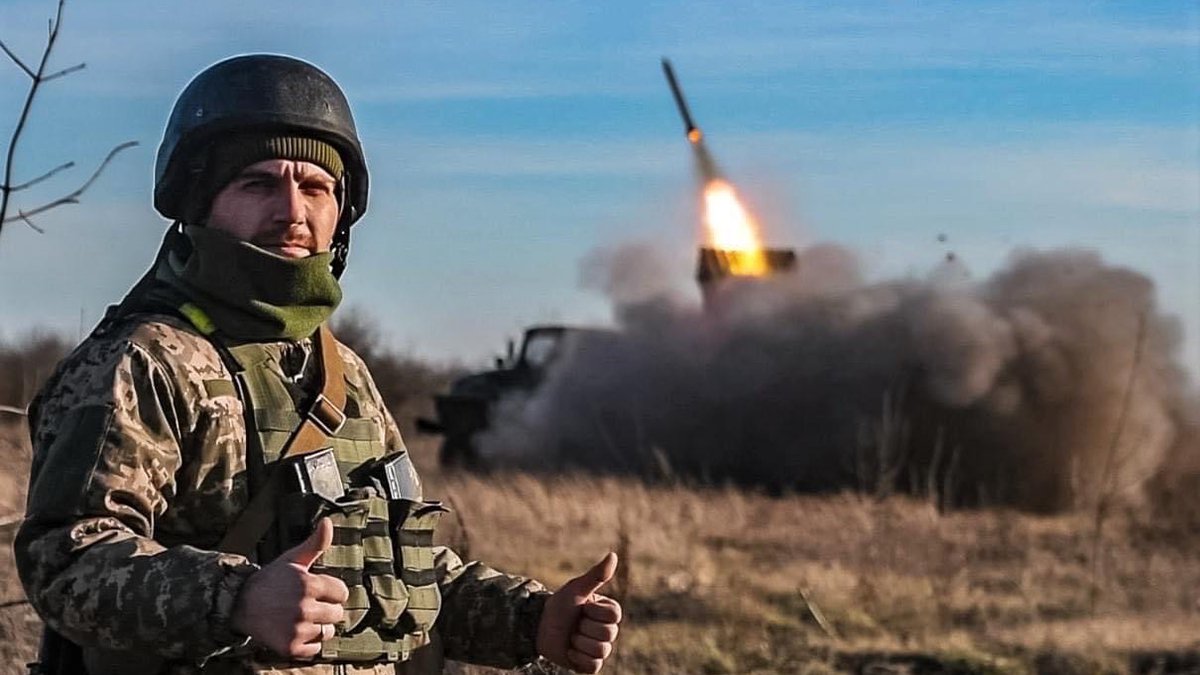
21/ Location. The location of any offensive will be an important consideration. Which part of Ukraine offers the most potential for gains in territory for the Ukrainian forces that might be available? And where are significant concentrations of Russian forces located?
22/ Terrain will be the ‘going’ is important planning consideration. Will the offensive be conducted over close terrain or open terrain. Will there be towns and cities, and can these by bypassed? Each will drive the pace of advancing troops, their formations and logistic support.

23/ That concludes Part 1 of my exploration of how both sides might think about planning their offensives in Ukraine in 2023. Part 2 will follow in the next day, and it will explore the final three considerations: resources; adaptive campaigning; and politics. End.
24/ Thank you to the following whose images and links were used in this thread: @Militarylandnet @War_Mapper @CNN @TheEconomist @markomihkelson @KyivIndependent @IAPonomarenko @RFERL @francisjfarrell @DefenceU @washingtonpost
Loading suggestions...