

🧵Anti-cholesterol drugs ("statins") are hugely popular, with sales of $1 TRILLION over the years!
All based on fake science ("cholesterol bad") & fake stats.
If 100 people take statins for 3 years... 97% will NOT get heart attack.
With no medication, that number is 98.1%!
All based on fake science ("cholesterol bad") & fake stats.
If 100 people take statins for 3 years... 97% will NOT get heart attack.
With no medication, that number is 98.1%!
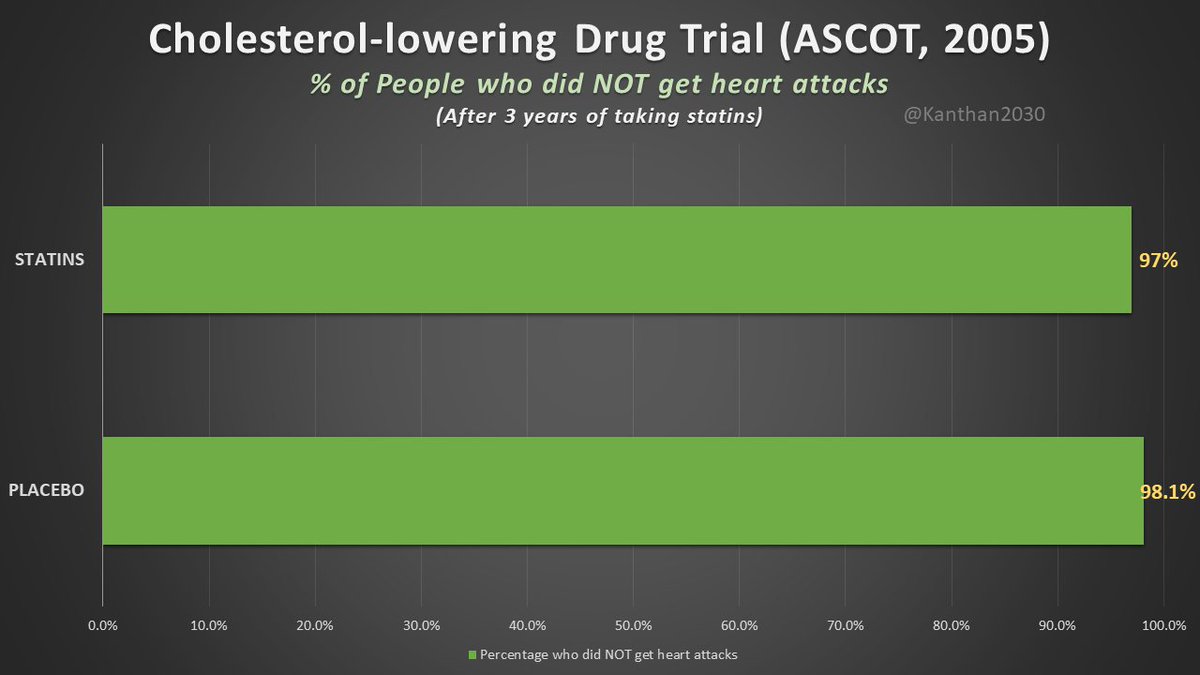
So, the absolute reduction in risk is 1.1%.
Another way to think about it: If 104 people people take statins every day for three years... ONE heart attack will be avoided.
Let's do some math:
Another way to think about it: If 104 people people take statins every day for three years... ONE heart attack will be avoided.
Let's do some math:
In the US, statins cost $1500 a year per person.
So, in the above example, the total spending would be 104 x 1500 x 3 = $468,000.
$468,000 to avoid ONE heart attack!
But here's the kicker:
So, in the above example, the total spending would be 104 x 1500 x 3 = $468,000.
$468,000 to avoid ONE heart attack!
But here's the kicker:
Statins have lots of side effects, including diabetes and kidney failure!
So, add the costs for all these side effects, the society spends probably $1 million in the hope of avoiding a single heart attack.
That's $1 million revenue for Big Pharma.
So, add the costs for all these side effects, the society spends probably $1 million in the hope of avoiding a single heart attack.
That's $1 million revenue for Big Pharma.
Numerous studies have shown no clear relations between cholesterol versus heart attacks or strokes or even life expectancy.
In fact, most people who have heart attacks have cholesterol within the normal range.
In fact, most people who have heart attacks have cholesterol within the normal range.
Cholesterol is in fact essential for a healthy life. Our body (liver) produces about 1200 mg of cholesterol every day -- the amount in 6 egg yolks!
But pay-for-play researchers & their corporate sponsors spread fake science, which duly get amplified by media and doctors. End🧵
But pay-for-play researchers & their corporate sponsors spread fake science, which duly get amplified by media and doctors. End🧵
Oops, sorry, in the first tweet, I got the statins and placebo switched! Here is the correct chart:
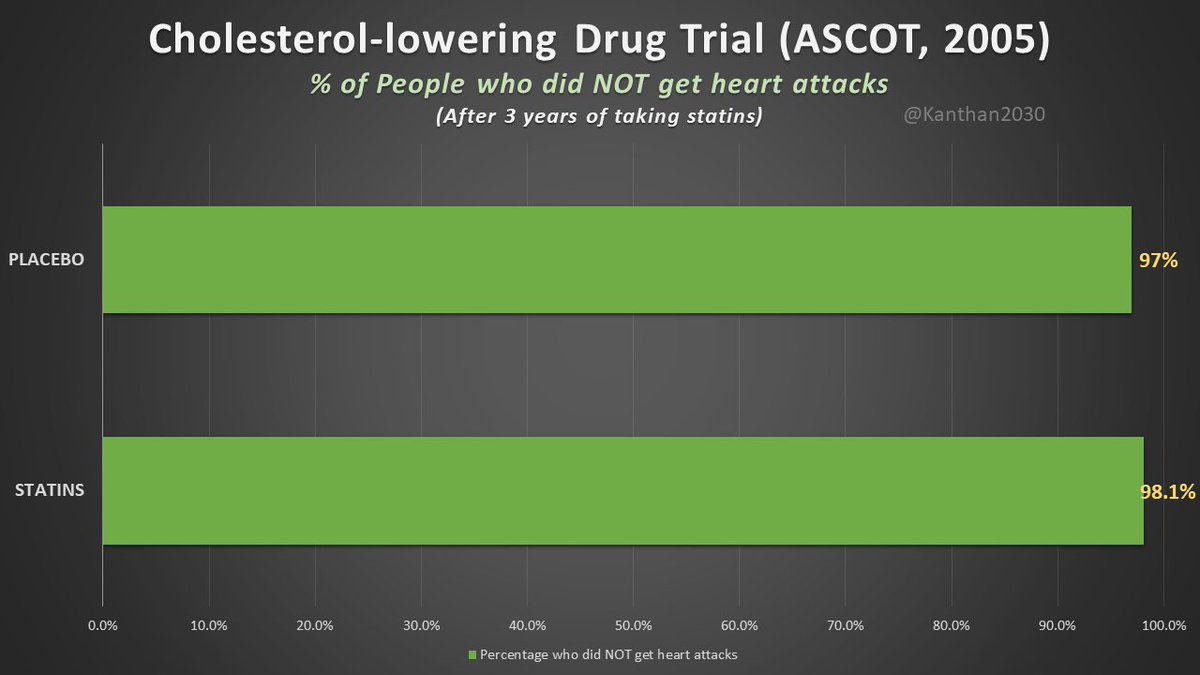
By the way, this trial was massive — had 10,000 people with high cholesterol.
If you have some time, check out this awesome video by David Diamond. He explains this study and many more.
youtu.be
If you have some time, check out this awesome video by David Diamond. He explains this study and many more.
youtu.be
Loading suggestions...