

Some folks cited these passages by Lenin as evidence he disagreed that neocolonialism is a more profitable form of exploitation.
Actually, these quotes do not conflict with that claim.
A (short, I promise) thread 🧵
Actually, these quotes do not conflict with that claim.
A (short, I promise) thread 🧵


I already wrote about why and how Lenin’s theory of imperialism requires clarification now that the mechanisms of exploitation changed.
I think these quotes are a lot easier to reconcile.
I think these quotes are a lot easier to reconcile.
In the first, Lenin identifies the hypocrisy of the British imperialists in complaining about the expense of their colonies, yet later doubling down on direct conquest.
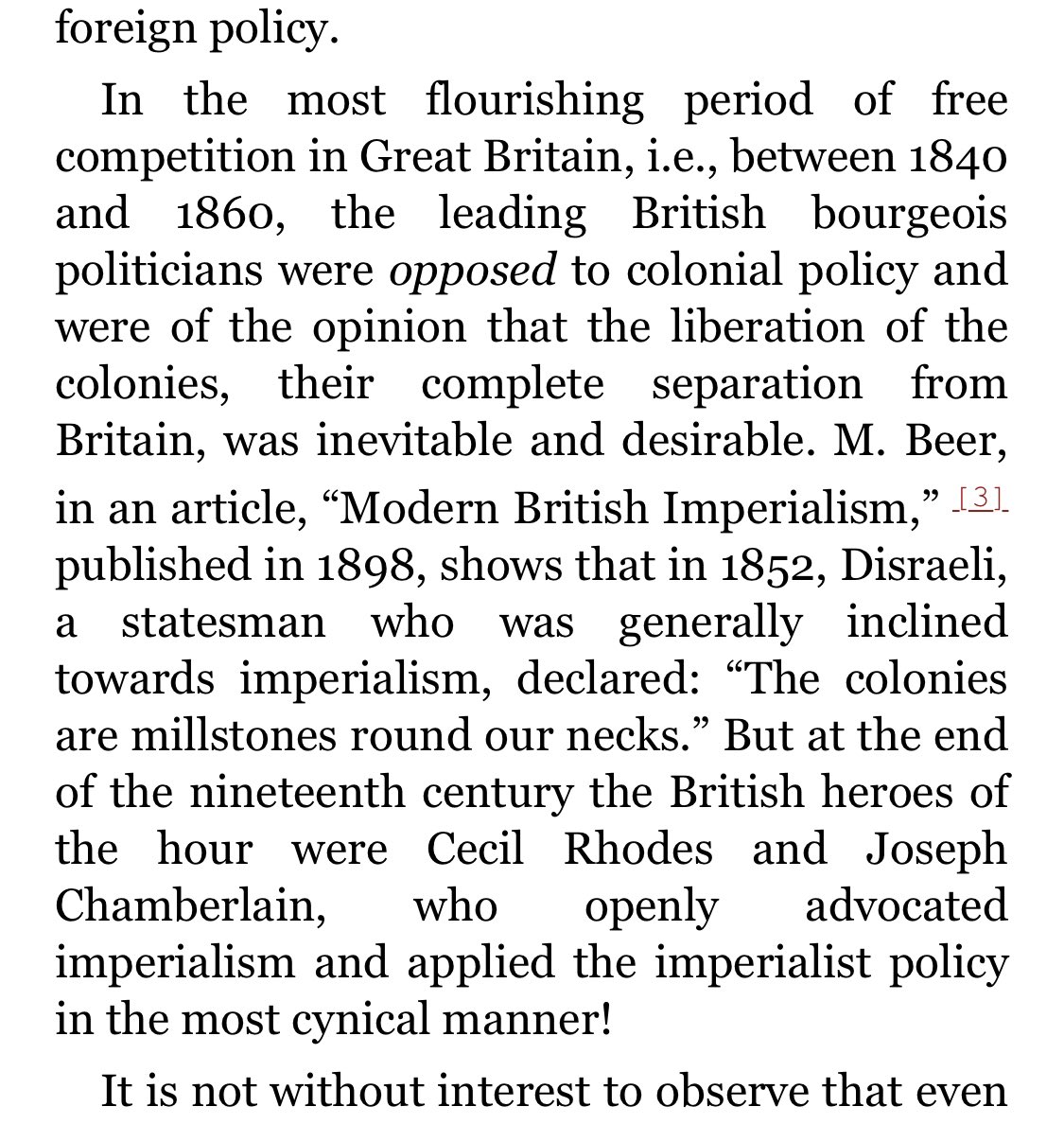
That’s exactly the tendency I mentioned here. The imperialists PREFERRED to neocolonize, but COULDN’T, because of inter-imperialist rivalry.
Here Lenin refers to neocolonialism as a “middle stage”, suggesting that it was LESS profitable.
But at the time, that was probably true.
But at the time, that was probably true.
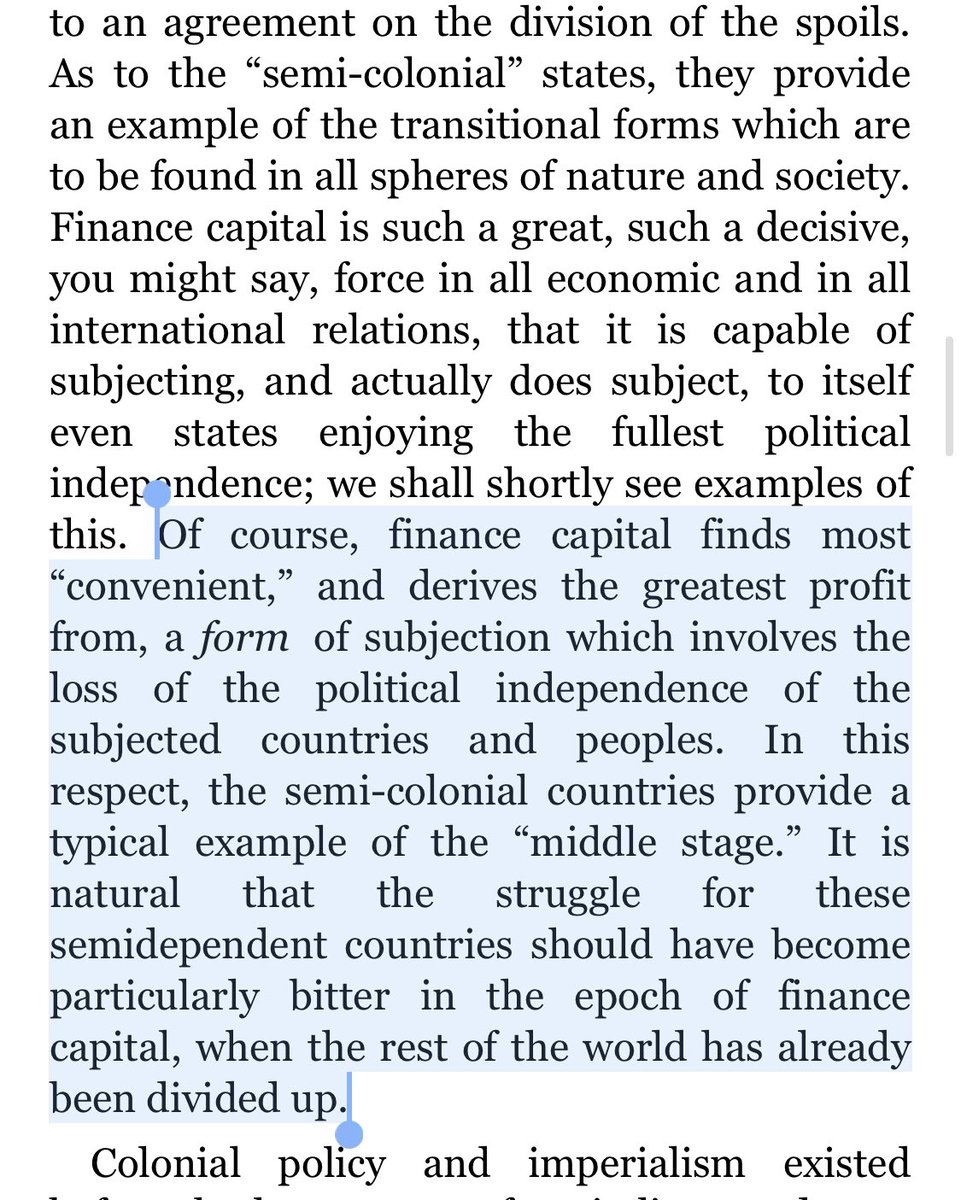
The neocolonies he’s talking about (Turkey, Iran, and China) had NEVER been DIRECTLY colonized by a capitalist empire. They were ancient feudal societies that had been suborned into exploitation, NOT direct colonies that later became independent.
I’m not aware of any studies comparing the two. But it makes a lot of sense to me that a neocolony would tend to generate more profit if it had gone through a period of direct colonization FIRST.
Colonization entailed a massive restructuring of production to serve the empire’s interest, one that was far easier to effect under direct administration.
Usually, the replacement of food crops with cash crops, like in Sudan:
Usually, the replacement of food crops with cash crops, like in Sudan:
Once you’re trapped into exclusively producing sugar or cotton, the further you develop into capitalism, the more your population grows and the more dependent you get on food imports.
Food becomes another lever of control.
Food becomes another lever of control.
The United States exports a huge amount of food. That’s no accident.
It’s not easy to get out this trap. Western finance has intentionally sabotaged domestic food production in former colonies across the entire world.
It’s not easy to get out this trap. Western finance has intentionally sabotaged domestic food production in former colonies across the entire world.
So it’s no surprise that as neocolonies, they generate even MORE profit for the imperialists than before.
The data agrees with me. Arrighi:
The data agrees with me. Arrighi:
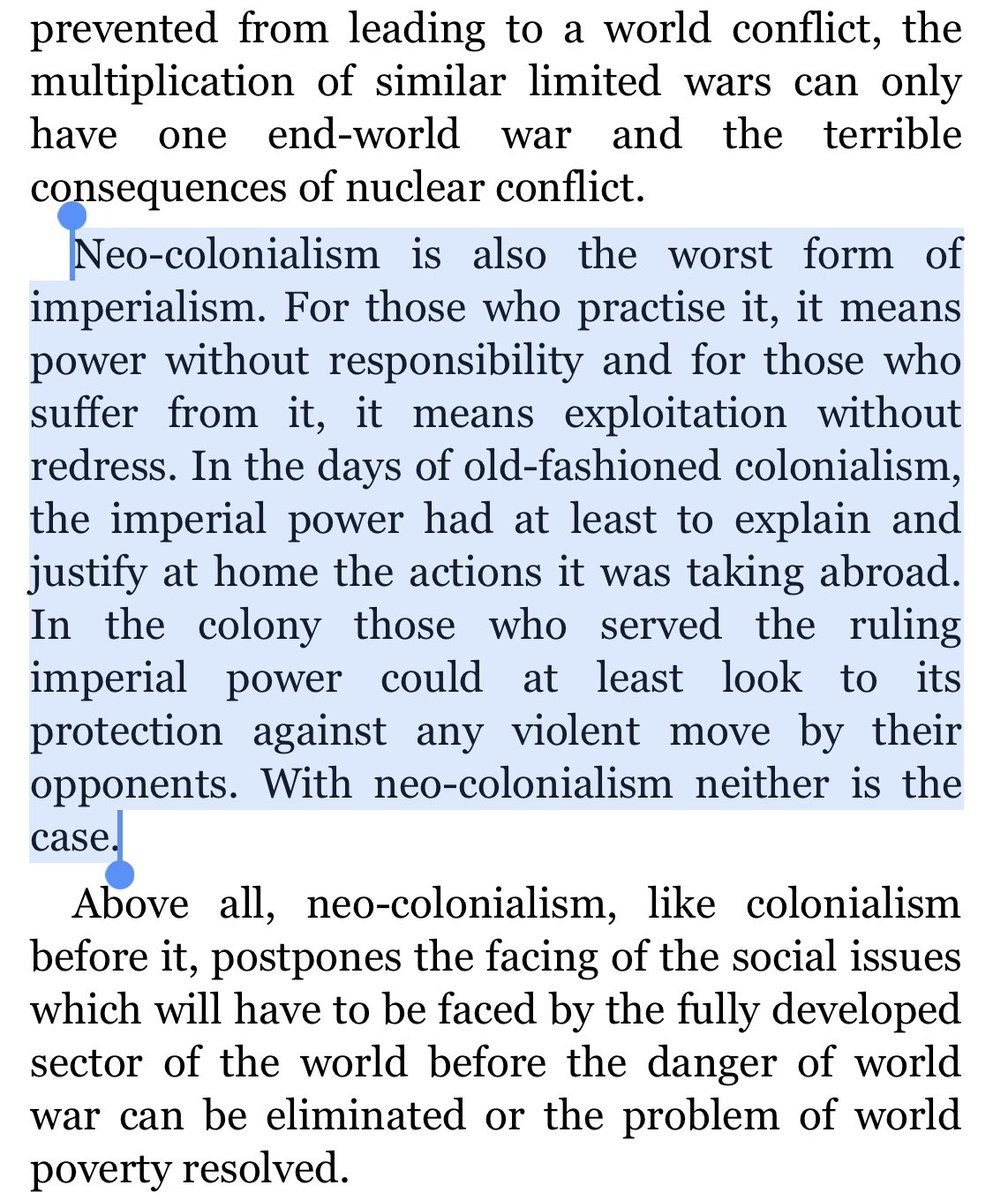
Nkrumah:
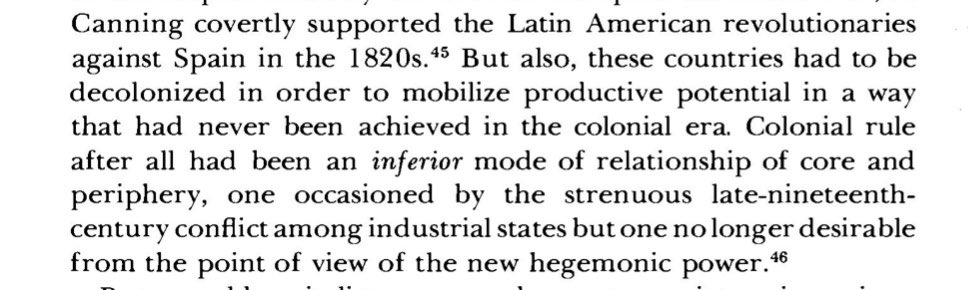
Immanuel Wallerstein:
If Lenin had lived to see decolonization, I believe he would have recognized this as well.
Fin.
Fin.
Loading suggestions...