

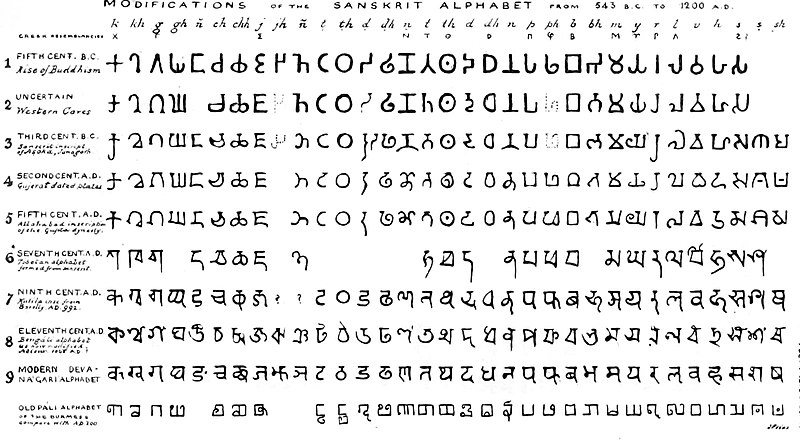
One of the most remarkable advances in the field of Indian antiquity was this publication by James Prinsep in the Journal of the Asiatic Society in 1838, two years before his death.
As the British conquered more and more of India in the early 19th century, they came face to face with massive rock and pillar inscriptions with mysterious writings in a script no one could read. The locals told them the pillars were Bhimsen ki Lath - Bhima's walking sticks
Since no one knew the script, no one knew Ashoka as well. Ceylonese chronicles mentioned a great King of that name but he was believed to be a local of that island. Worse still, Buddhism's history in India was mostly unknown - the Bodh Gaya temple being a local Hindu shrine then
When Prinsep received copies of inscriptions from the Kotla and Ridge pillars in Delhi and from Sarnath and North Bihar, he had two options - he could either go at it statistically identifying patterns and guessing which letter appeared how often or he could trace its descendants
The latter wasnt something new. Champollion had cracked the Egyptian hieroglyphs by assuming the language hadn't disappeared but changed into the live language of Coptic. Prinsep believed that not only the language but also the script had modified into present Devanagari!
You can see the meticulous work that Prinsep put in. The क for eg is a straight descendant. Infact other Brahmi influenced alphabets have similar letters for it - like Tamil. Ashoka had spoken after 2 centuries and Prinsep was the first one to hear his voice.
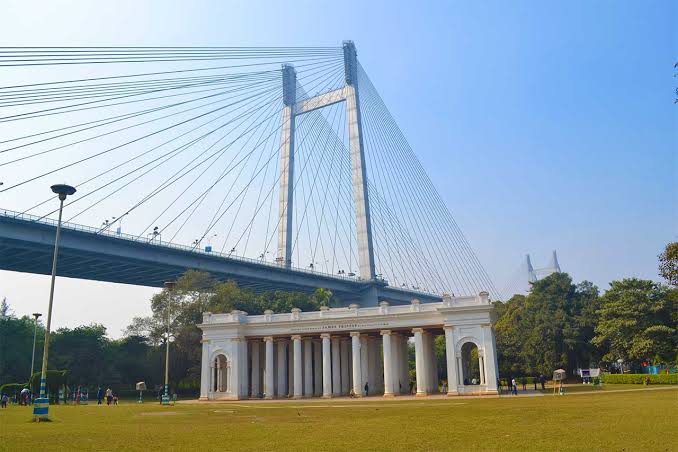
Prinsep died young and is commemorated in this porch next to a ghat bearing his name on the Strand in Calcutta. The least that could be done for a man whose work opened up a thousand years of Indian history to us!
Loading suggestions...