
Peoples of Central Asia (including the Tarim Basin & central Siberia) had a lot of ANE ancestry into the 3rd millennium BC, and also had paleo-Siberian ancestry (distantly related to Amerindian ancestry). ANE ancestry in C Siberia wasn't that divergent from that of Botai.
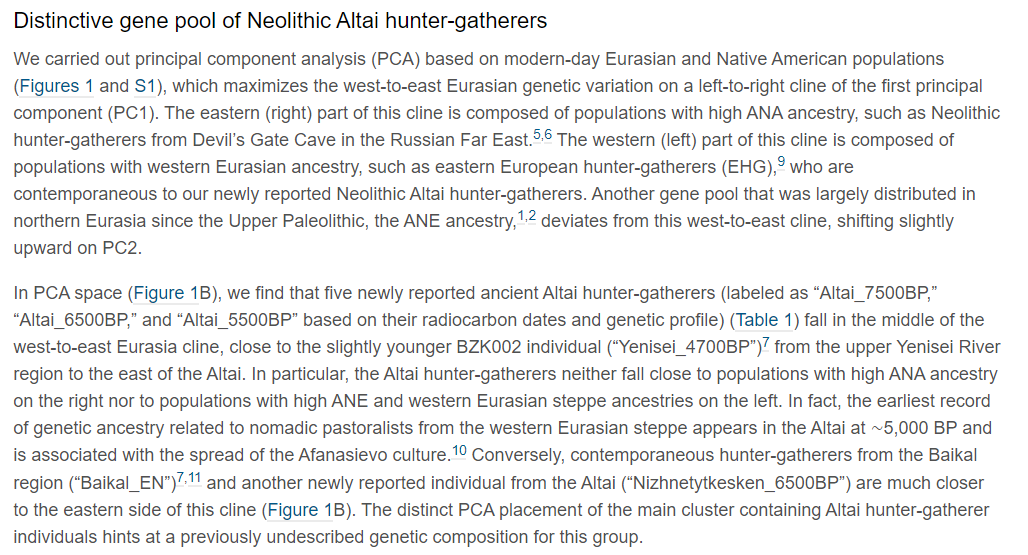
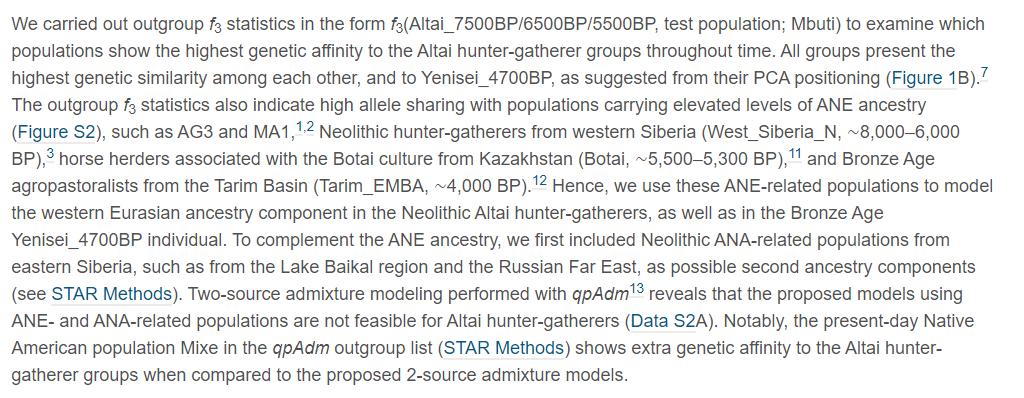
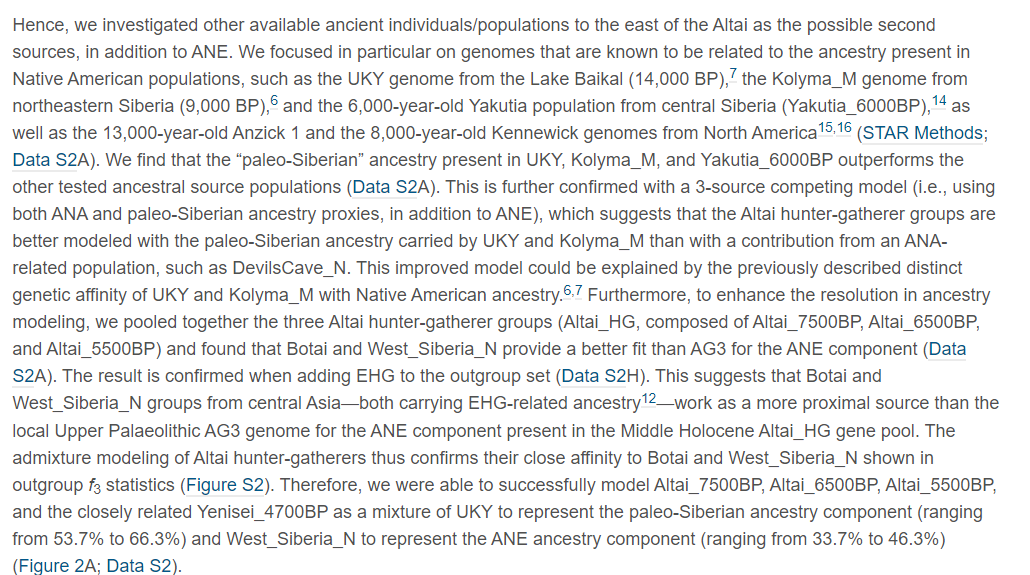
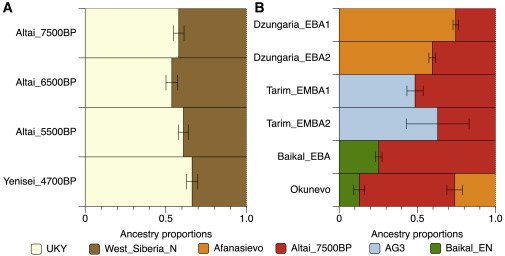
Unsurprisingly mixing between ANE and paleo-Siberian groups happened in a complicated manner 9,000 to 5,400 BC. Various geographical barriers thawed, drowned, or were dried up in that period.

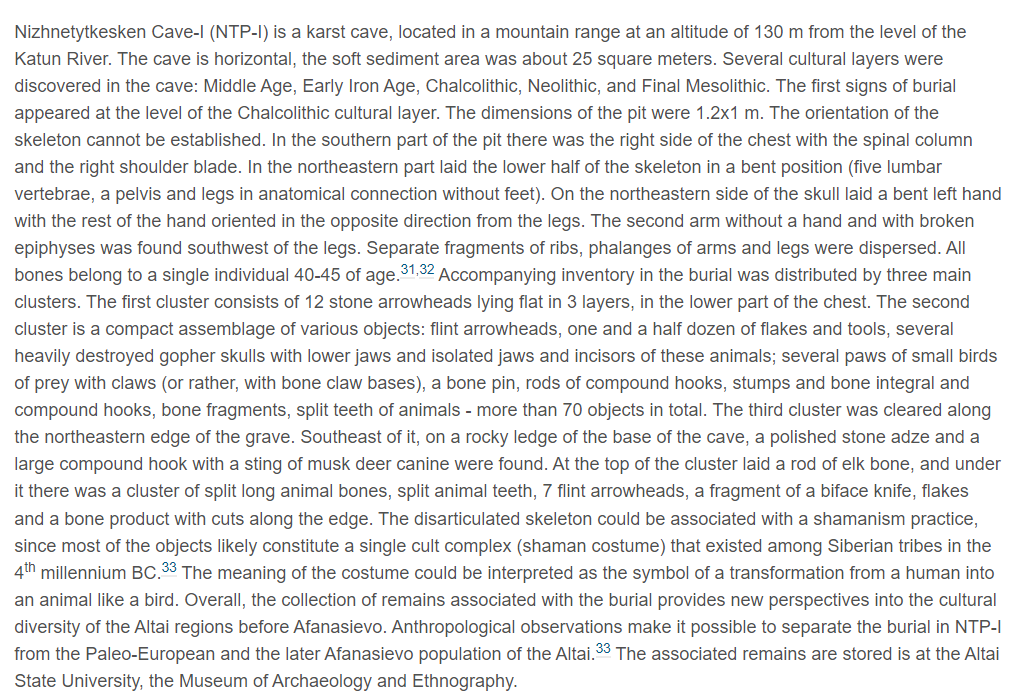
The Baykal Neolithic and Early Bronze Age samples have their ANE ancestry better modeled by the Altai Hunter-Gatherers than original ANE sample. Mixture dates with ANAs for both Neolithic and Early Bronze Age Baykal are ~6,200 BC.
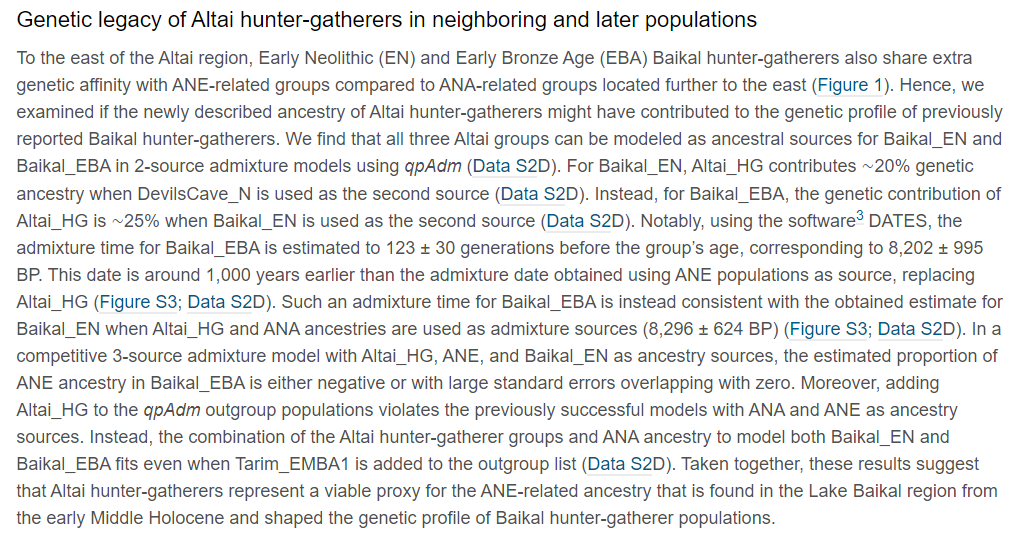
If I read that right, implies that mixing took place somewhere else, and that the Neolithic Baykal group was replaced by the Early Bronze Age Baykal group? Relevant for the discussion of Yeniseian urheimat:
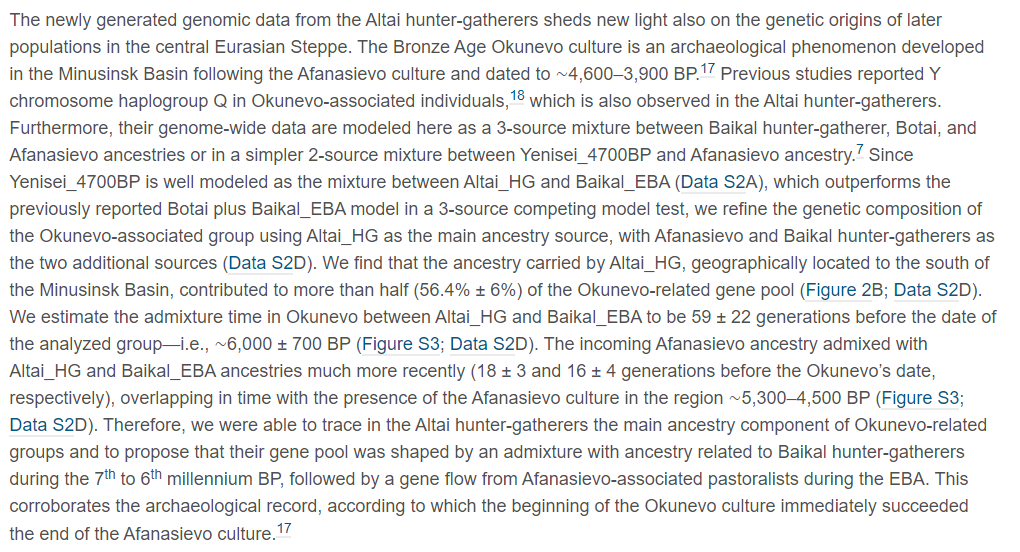
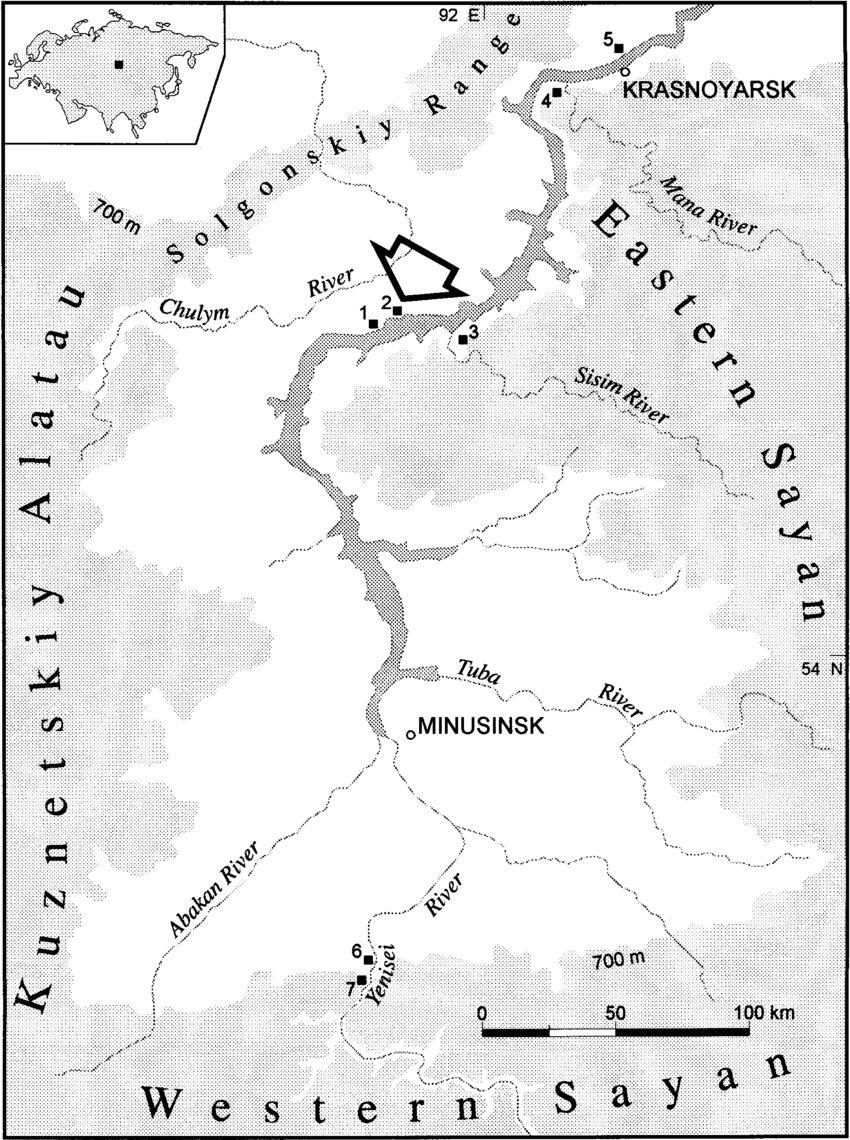
3rd millennium BC Okunevo Culture ruled the Minusinsk Basin - a fertile & easily defensible basin ringed almost entirely by mountains. They were mostly descended from the Altai Hunter-Gatherers who successfully overthrew or assimilated Indo-European Afanasievo Culture invaders.
Indo-Iranians apparently invaded the Altai after western Mongolia
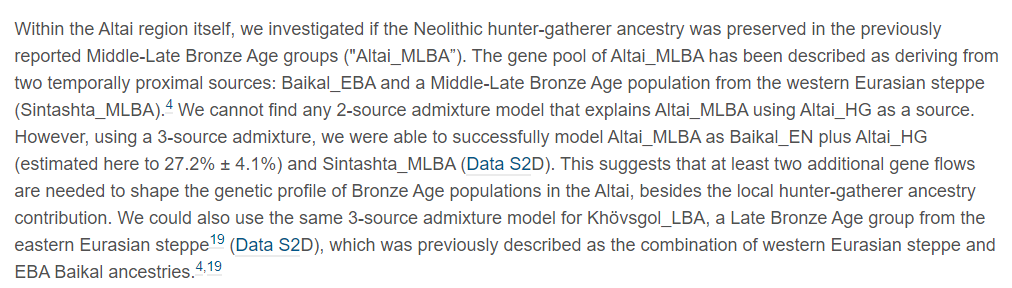
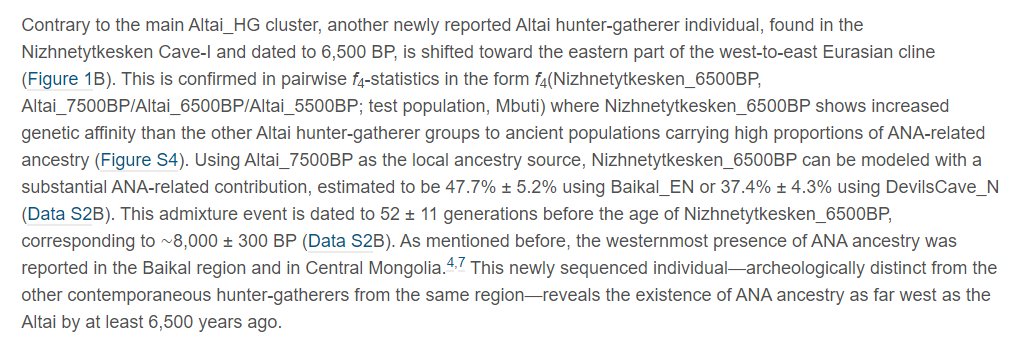
A shaman who died in the Altai around 4500 BC was from a group that was about 50% Baykal Early Neolithic and 50% Altai Hunter-Gatherer was a product of mixing from around 6000 BC - same time that Baykal Early Neolithic and Early Bronze Age populations both formed.
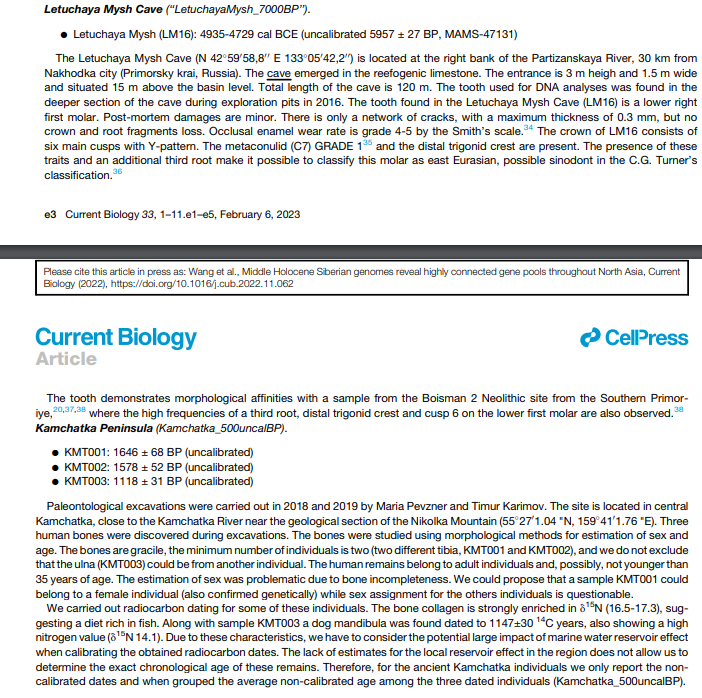
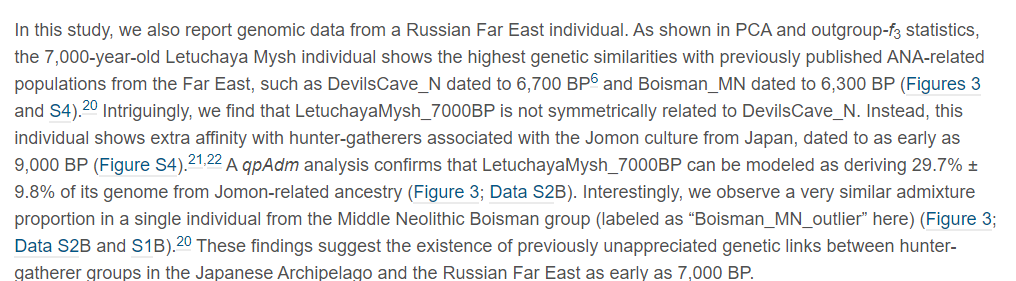
Jomon or related populations on the mainland (likely Korea) mixed with certain groups in Primorye before 5000 BC
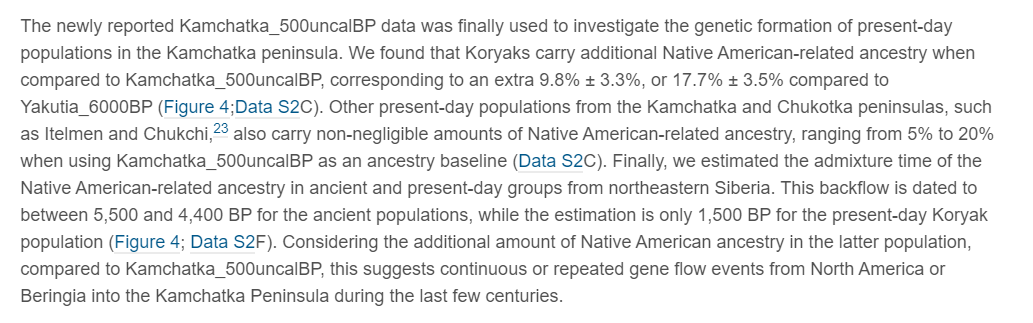
There have been multiple migrations westwards across Bering Strait, with one detected in population in the 300 BC-1 AD samples in coastal Chukotka having formed from a mixing of paleo-Siberian & Amerindian 3500-2400 BC - same as when Na Dene crossed east.
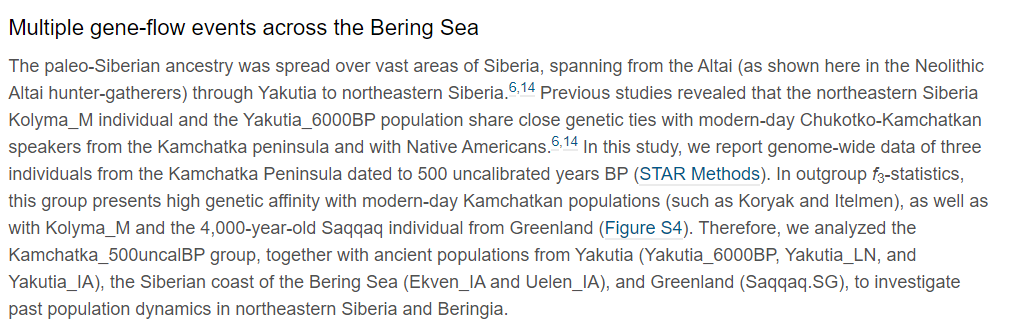
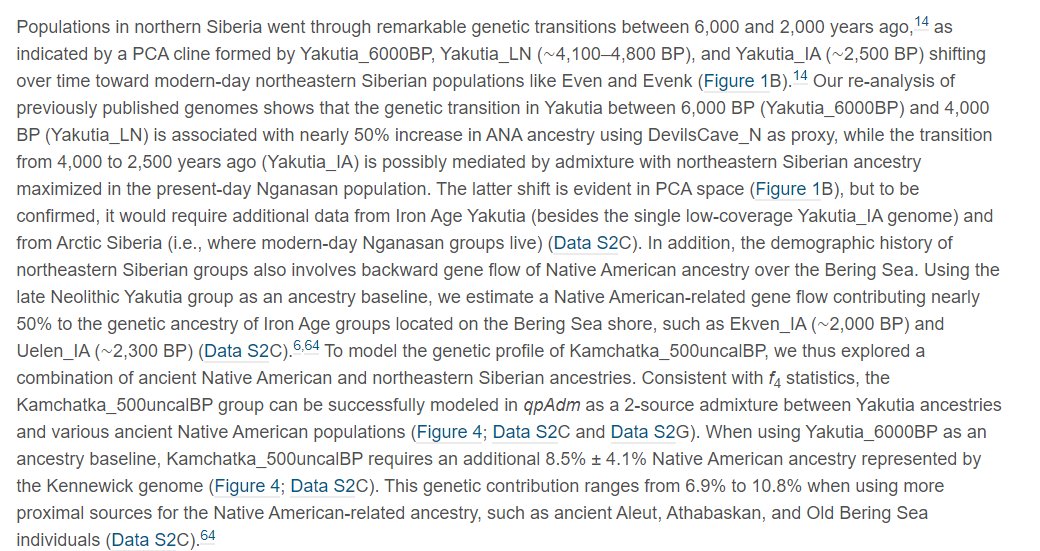
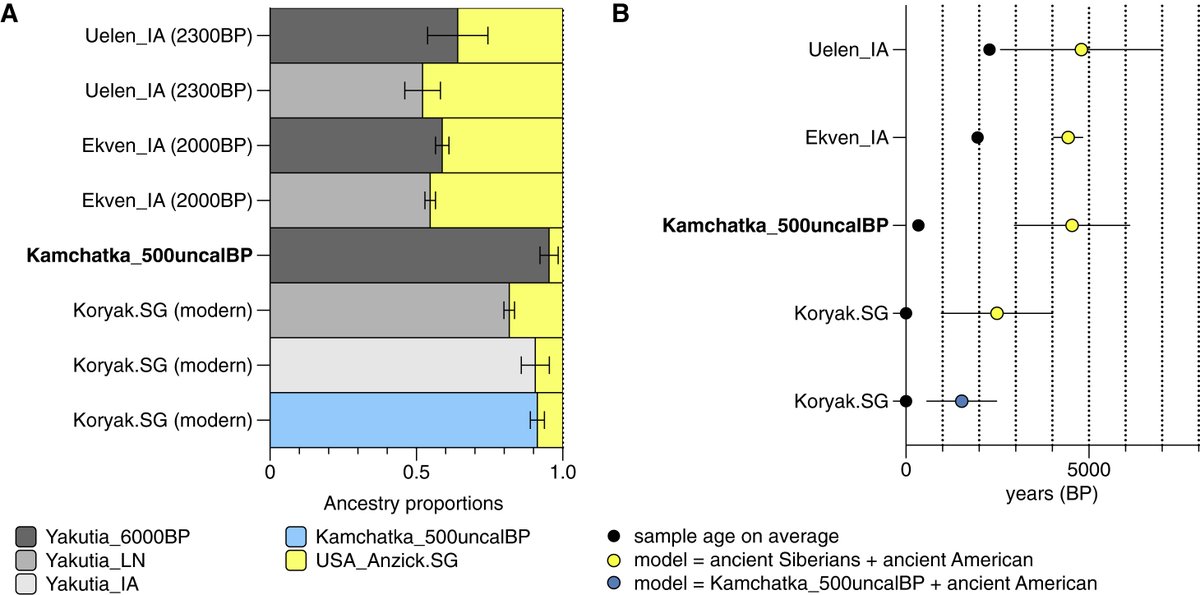
Wild to think there were still (probably) Dene-Yeniseian speakers in Chukotka into the 1st millennium AD. en.wikipedia.org
Interesting read - worth flipping through Vajda & Fortescue's "Mid Holocene Language Connections between Asia and North America" (free on libgen) while reading: cell.com
Loading suggestions...