

This portfolio includes a blend of products made using wooden materials, old and waste iron, aluminum, copper etc. based materials. After identifying the design of the products, they are moulded in the required shape. Some part of the process is sub-contracted as well to
third party carpenters, designers, etc. Some of the examples of upcycled and refurbished materials are given in the image.
D-Textile-based handicrafts
D-Textile-based handicrafts
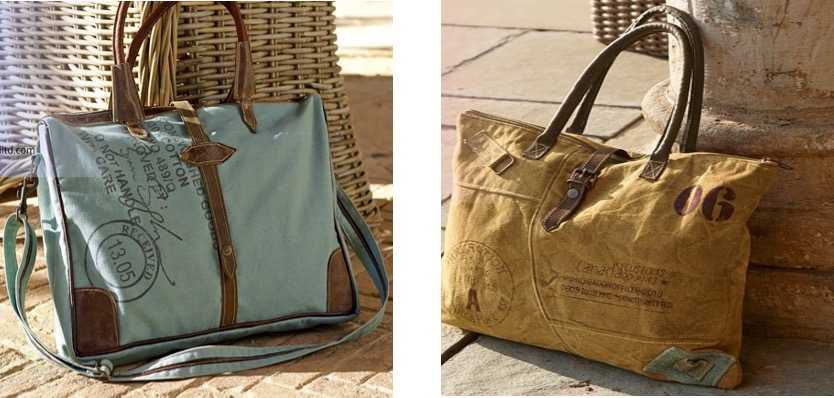
The company’s textile based handicrafts products include handbags, pillow covers, sofa covers, travel bags, backpacks, pet care textiles and other textile based handicraft products. The major raw materials and consumables required for these products include canvas material,
raw and processed leather, cotton based textile material, various types of yarns, dyeing material etc. Apart from these, they also recycle and upcycle various unusable and retired textiles e.g. army dresses, tent materials, etc. The entire textile based handicraft products are
manufactured exclusively at the Basni facility.
4) Industry Overview
-India is a country of rich culture, history and traditions. India is one of the major producers and suppliers of Handicraft products in the world. Before industrial development, this art and industry was a
4) Industry Overview
-India is a country of rich culture, history and traditions. India is one of the major producers and suppliers of Handicraft products in the world. Before industrial development, this art and industry was a
potential economic advantage for the country.
-The country has 744 handicraft clusters employing nearly 212,000 artisans and offering over 35,000 products. Surat, Bareilly, Varanasi, Agra, Hyderabad, Lucknow, Chennai, and Mumbai are among the major clusters.
-The country has 744 handicraft clusters employing nearly 212,000 artisans and offering over 35,000 products. Surat, Bareilly, Varanasi, Agra, Hyderabad, Lucknow, Chennai, and Mumbai are among the major clusters.
Most of the manufacturing units are in rural and small towns, and there is enormous market potential in all Indian cities and abroad.
-Significant advances in the availability of handicraft products on various online portals are boosting market growth in India.
-Significant advances in the availability of handicraft products on various online portals are boosting market growth in India.
Handicrafts are becoming increasingly popular as the country's travel and tourism industry grows. Tourists spend significant money on craft items, expanding the opportunity for local artisans and craftspeople to produce and sell efficient handicrafts.
Furthermore, rising demand for handmade decor accessories in homes, offices, & restaurants & arising demand from the gifting industry are driving the market growth. The sector is economically viable with low capital investment, high value addition ratio and high export potential.
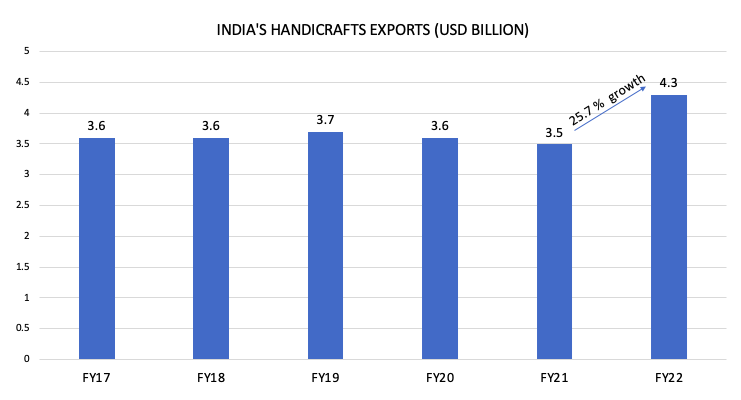
During 2021-22, the total exports of Indian handicrafts were valued at US$ 4.35 billion, a 25.7 % increase from the previous year.
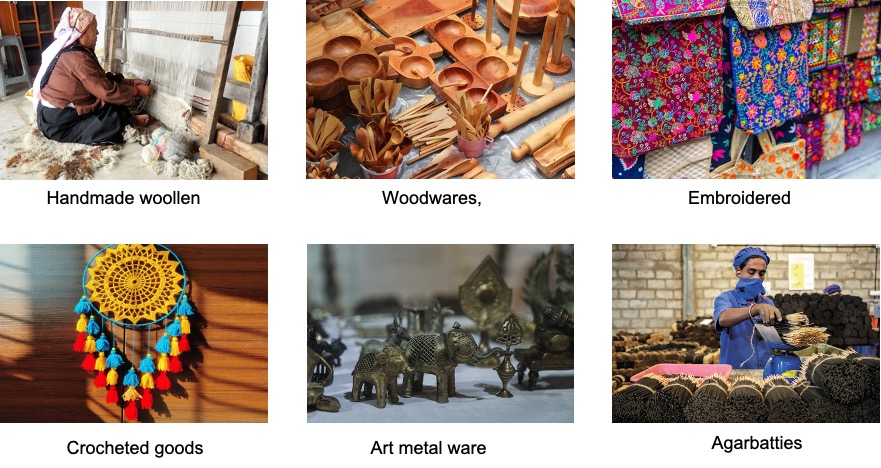
Major goods exported by India are Handmade woolen, Woodwares, embroidered & crocheted goods, art metal ware, hand printed textile & scarves, agarbatties & attars, Zari & Zari goods, and imitation jewelry. Handicraft export of various segments from April 2020 to January 2021
stood as follows, woodwares at US$ 611.48 million, embroidered & crocheted goods at US$ 463.13 million, art metal wares at US$ 353.92 million, hand printed textiles and scarves at US$ 239.73 million, imitation jewelry at US$ 144.19 million,
miscellaneous handicrafts at US$ 714.67 million. From April 2022-September 2022, total handicrafts excluding handmade carpets stood at US$ 716.21 million.
5) Revenue Mix
5) Revenue Mix
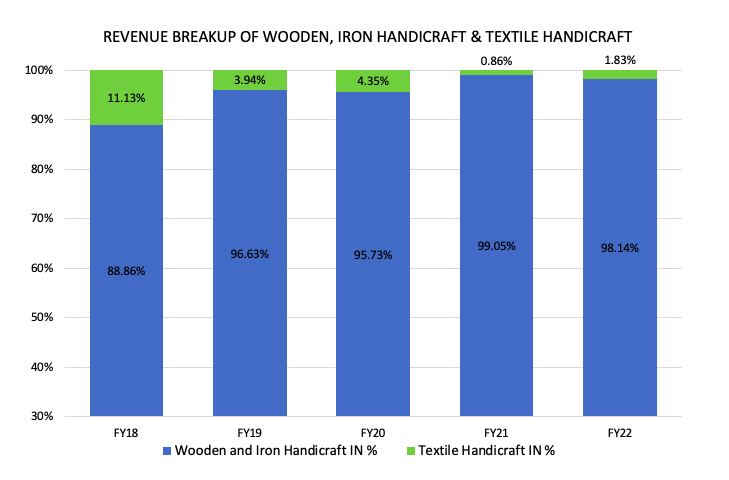
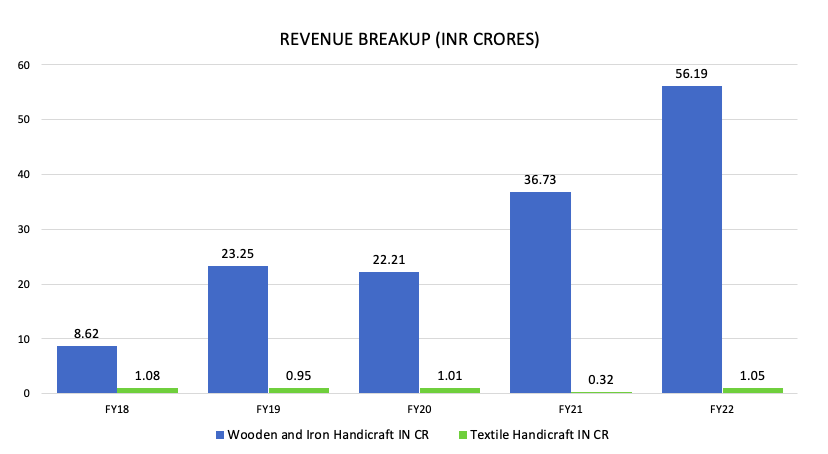
-In the given charts we can see that in FY18, the contribution of wooden and iron handicrafts was 88.86% and textile handicrafts was 11.13% and in FY22 wooden and iron handicrafts was 98.14 % and textile handicrafts was 1.83 %.
-We can clearly see the wooden and iron crafts
-We can clearly see the wooden and iron crafts
contribute more revenue compared to Textile handicrafts.
& year-on-year also the wooden & iron handicrafts revenue is growing, in contribution terms and as well as in revenue terms but we cannot see the growth of the textile handicrafts business segment of Priti international.
& year-on-year also the wooden & iron handicrafts revenue is growing, in contribution terms and as well as in revenue terms but we cannot see the growth of the textile handicrafts business segment of Priti international.
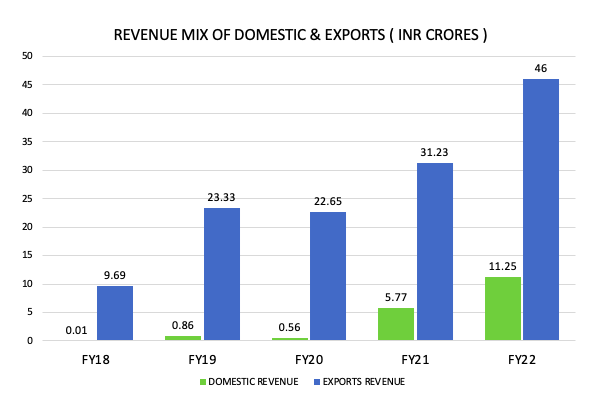
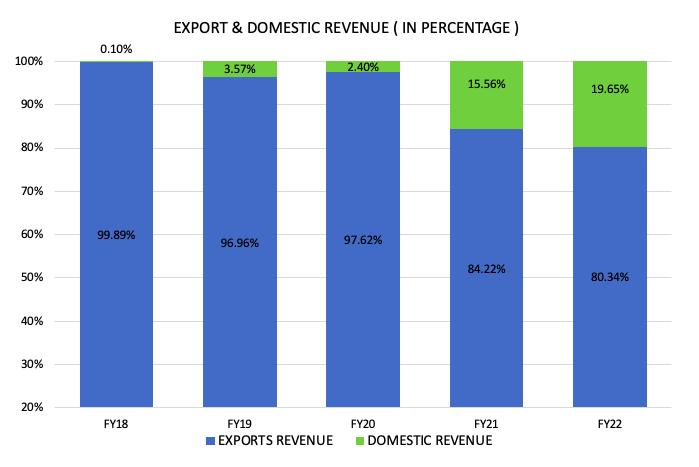
-If we check the historical data of companies, a major part of revenue comes from exports. From the beginning onwards the company has had a great reach in the export market compared to domestic.
-As we can see from the chart, in FY18 revenue from domestic is very low
-As we can see from the chart, in FY18 revenue from domestic is very low
compared to revenue from export which was around 9.69 Crores and in percentage contribution to revenue from that year, which is 0.10% from domestic and 99.89% from exports.
But we can also see that on a year-on-year basis the company is gaining revenue from the domestic market
But we can also see that on a year-on-year basis the company is gaining revenue from the domestic market
and now they have started focusing to cater to the main furniture segment which is home furniture and office furniture, that's the main reason we can see a growth in their revenues from the domestic segment.
6- Raw Materials
The major raw materials used by the company are wooden materials, iron materials along with various hardware materials, adhesives, raw iron, copper, aluminum and other metals, waste iron, iron rods, aluminum, copper, canvas material, raw and processed leather,
The major raw materials used by the company are wooden materials, iron materials along with various hardware materials, adhesives, raw iron, copper, aluminum and other metals, waste iron, iron rods, aluminum, copper, canvas material, raw and processed leather,
cotton based textile materials, various types of yarns, dyeing material. The company procures all the raw materials domestically.
7- Value Chain
The overall process of the business is as follows:
A. Identifying market trends and requirements in the handicrafts segment,
7- Value Chain
The overall process of the business is as follows:
A. Identifying market trends and requirements in the handicrafts segment,
their team continuously works on the identification of the potential customer requirements in the international markets for all kinds of furniture, handicraft products & textile related products through various sources including social media, fashion and lifestyle magazines etc.
B. Procurement of the material: The procurement team arranges for the necessary raw material according to the design of the product. The requirements for raw materials vary on a product to product basis.
Some of the raw materials required for the products include raw & waste iron, copper & other metals which are procured from various waste dealers, raw wood, cotton, canvas, jute & other fabrics, raw & processed leather, yarn, hardware products like nuts, bolts, etc. among others.
Loading suggestions...