

If there is one popular price pattern to trade, it is definitely the sweeps, SFPs, False breaks, or whatever you want to call them.
Of course, most people understand them completely wrong.
Let's break down the market dynamics of these things in a short thread. /cont
Of course, most people understand them completely wrong.
Let's break down the market dynamics of these things in a short thread. /cont
So, first of all, there is no such thing as a "false break" or "manipulation." You will often see images like this talking about liquidity pools as areas where "stops" are resting.
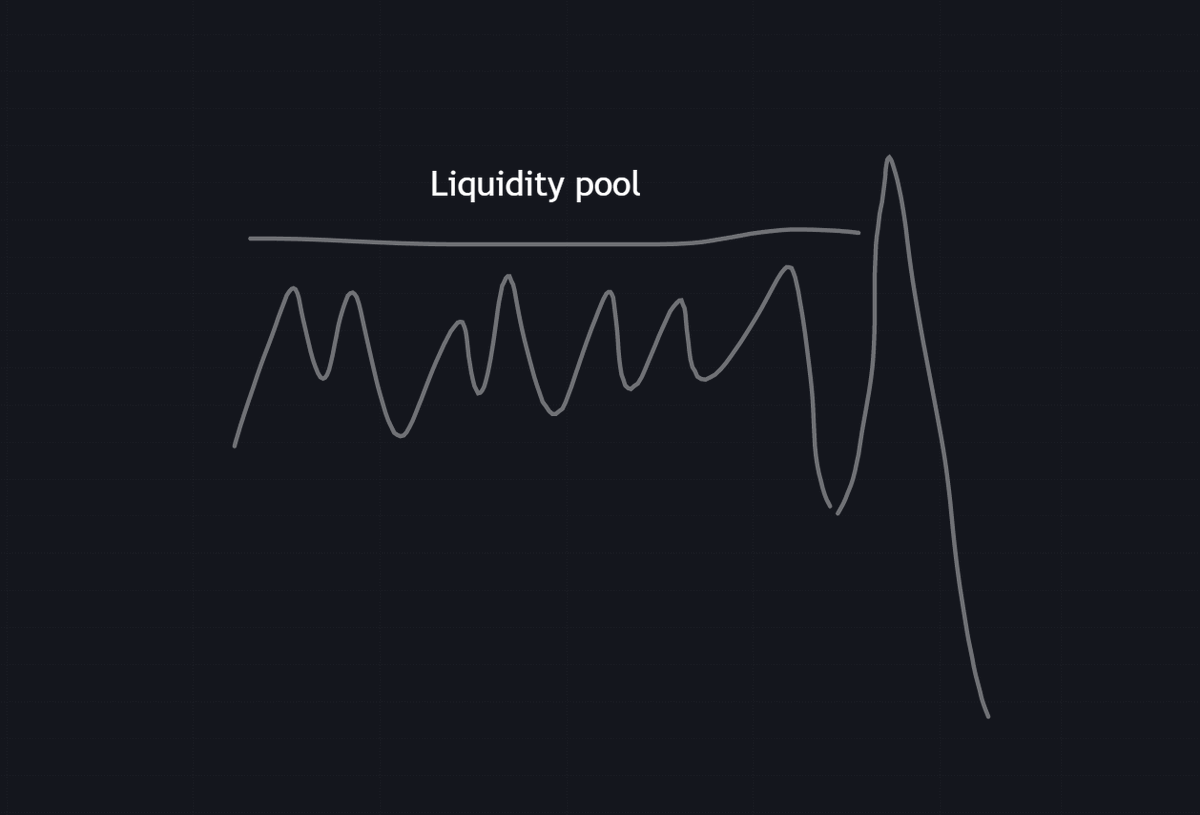
Although some people will get stopped in these areas, the stops play only a small part in the whole move. On top of that, if you look at the DOM or heatmap or any other software, you cant see resting stop orders as they are, for the most part market orders.
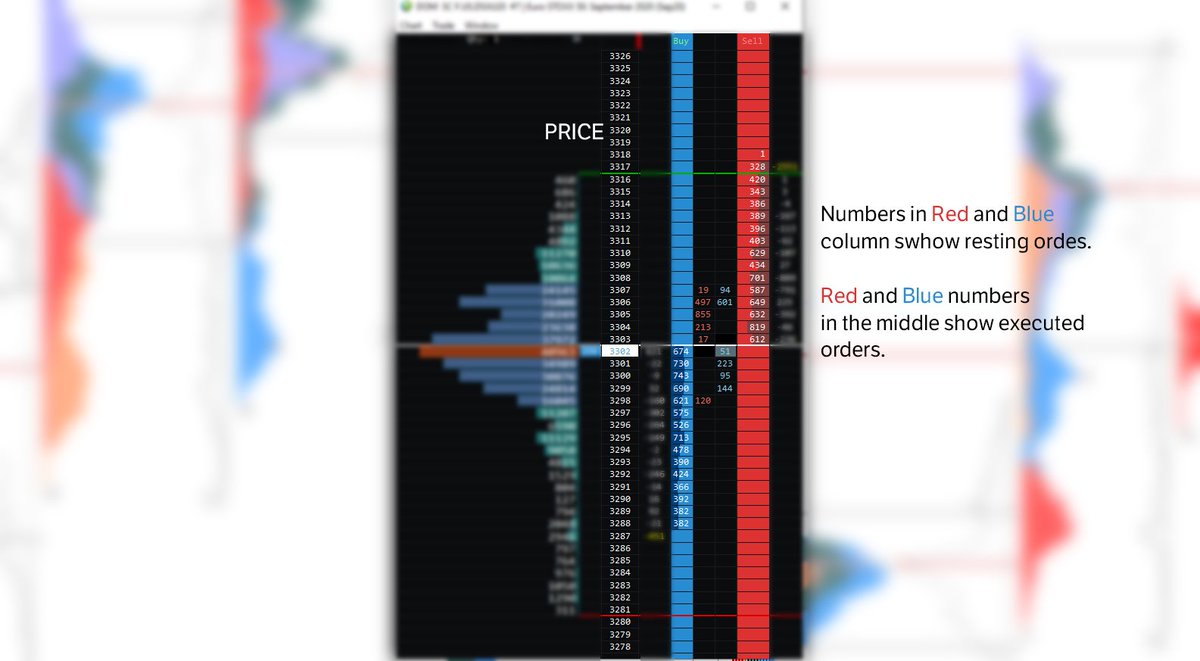
These things often happen in very obvious levels, horizontal and diagonal support/resistance, prior D/W/M lows and highs, Moving averages, psychological numbers, etc. The reason why they happen is way more boring than getting sold to you with mysterious manipulation.

People and their algorithms are interested in these levels, which all boils down to simple supply and demand dynamics.
Thanks to orderflow, we can analyze all these actions happening at the levels.
Thanks to orderflow, we can analyze all these actions happening at the levels.
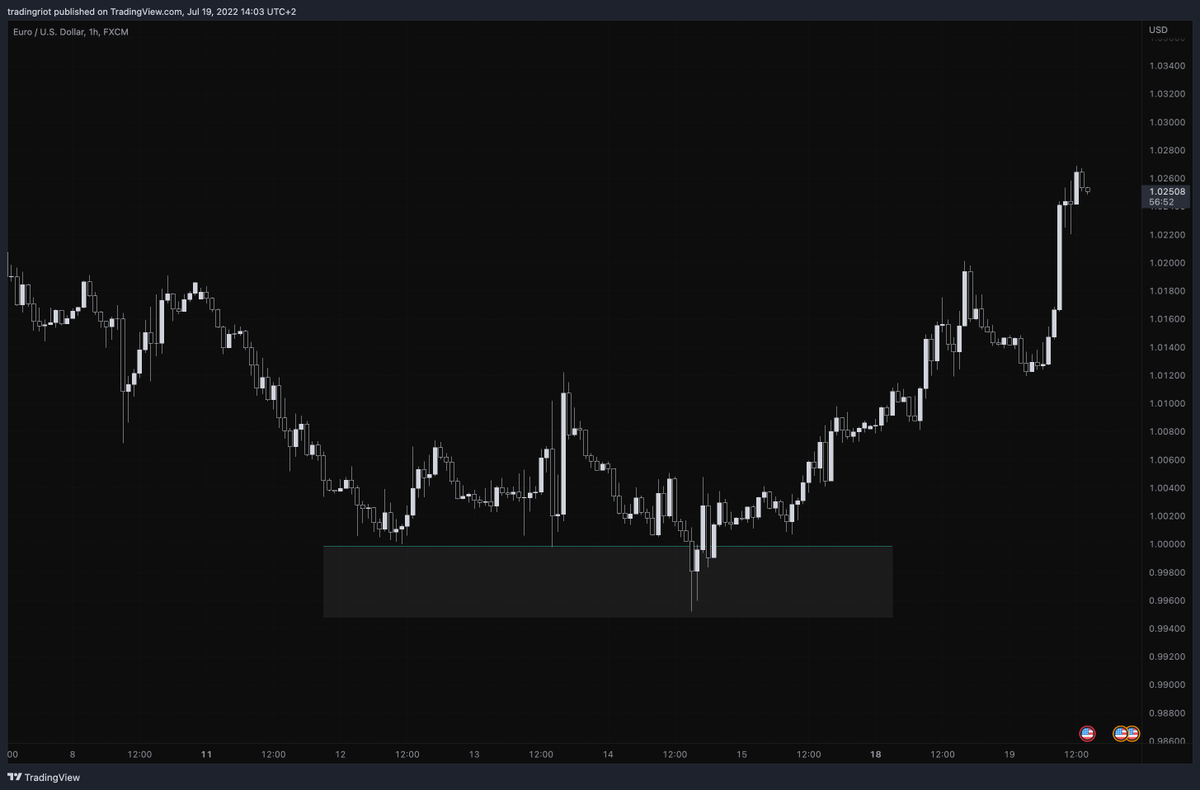
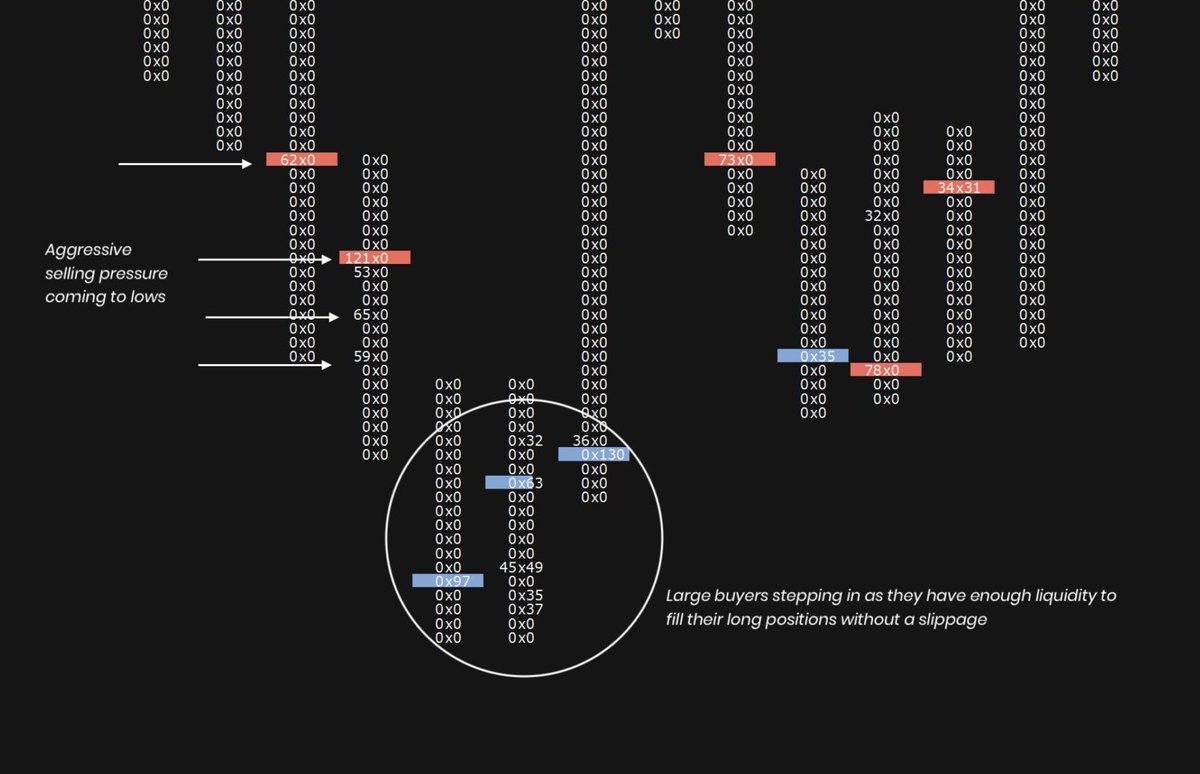
Because of the behaviour of different market participants, these levels are often better to fade than try to force a breakout.
Small retail traders get emotional and feel FOMO of missing the initial move down and will rush with shorts on the first break below the support...
Small retail traders get emotional and feel FOMO of missing the initial move down and will rush with shorts on the first break below the support...
... this will give an ideal market condition to the larger players to fill their buy orders since, for every buyer, there has to be a seller and vice versa.
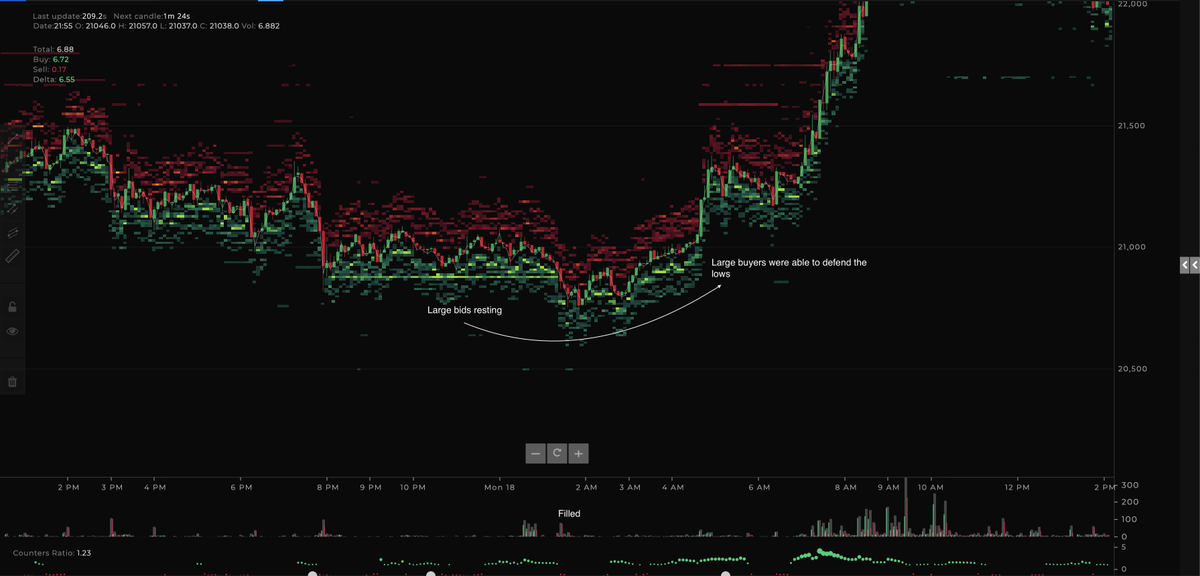
This relationship between passive and active orderflow is essential, most people that trade these use simple time-based candlesticks with requirements of candlesticks having a large rejection wick.
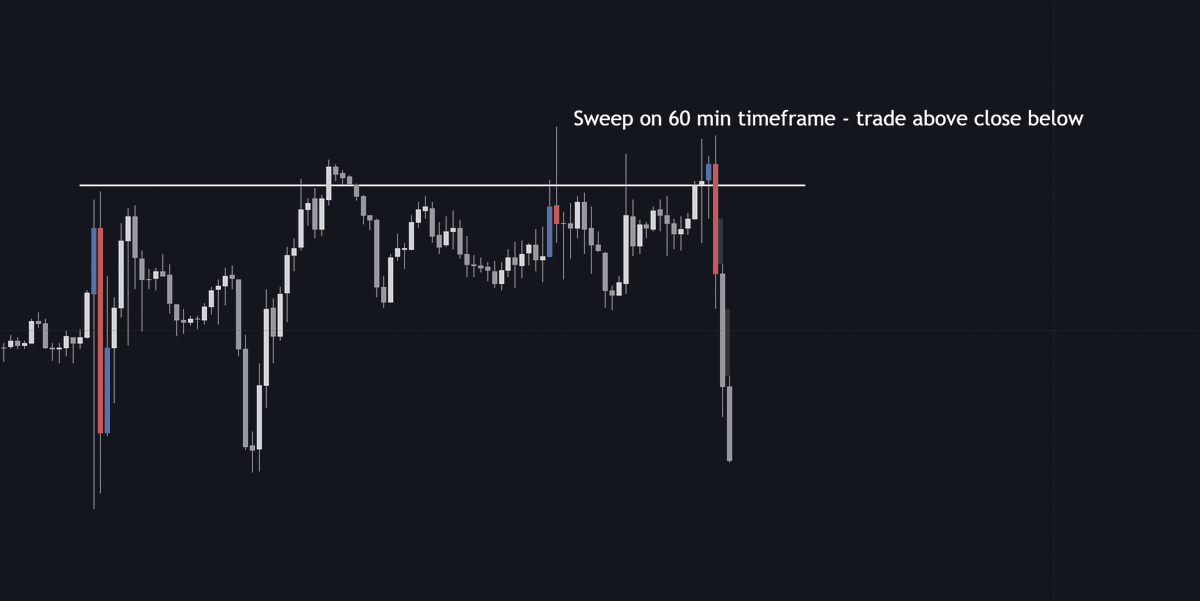
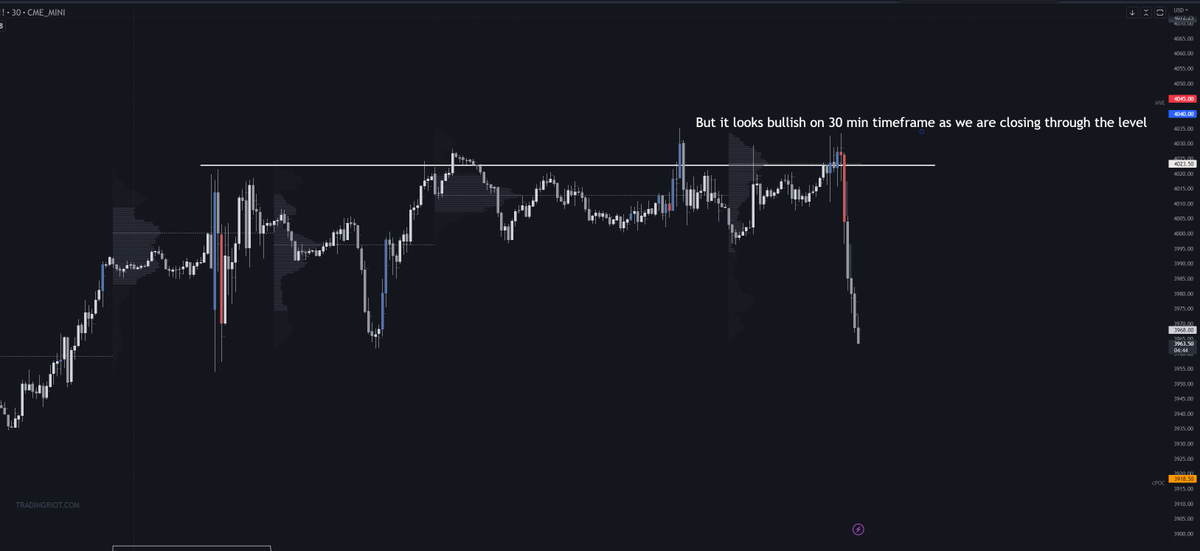
Timeframes are very subjective. You can see failure on one timeframe and breakout on the other.
Only reason why the"rejection wick" is useful is that it shows you pick up on tape speed and that market is not accepting new prices, but in the end, it boils down to participation.
Only reason why the"rejection wick" is useful is that it shows you pick up on tape speed and that market is not accepting new prices, but in the end, it boils down to participation.
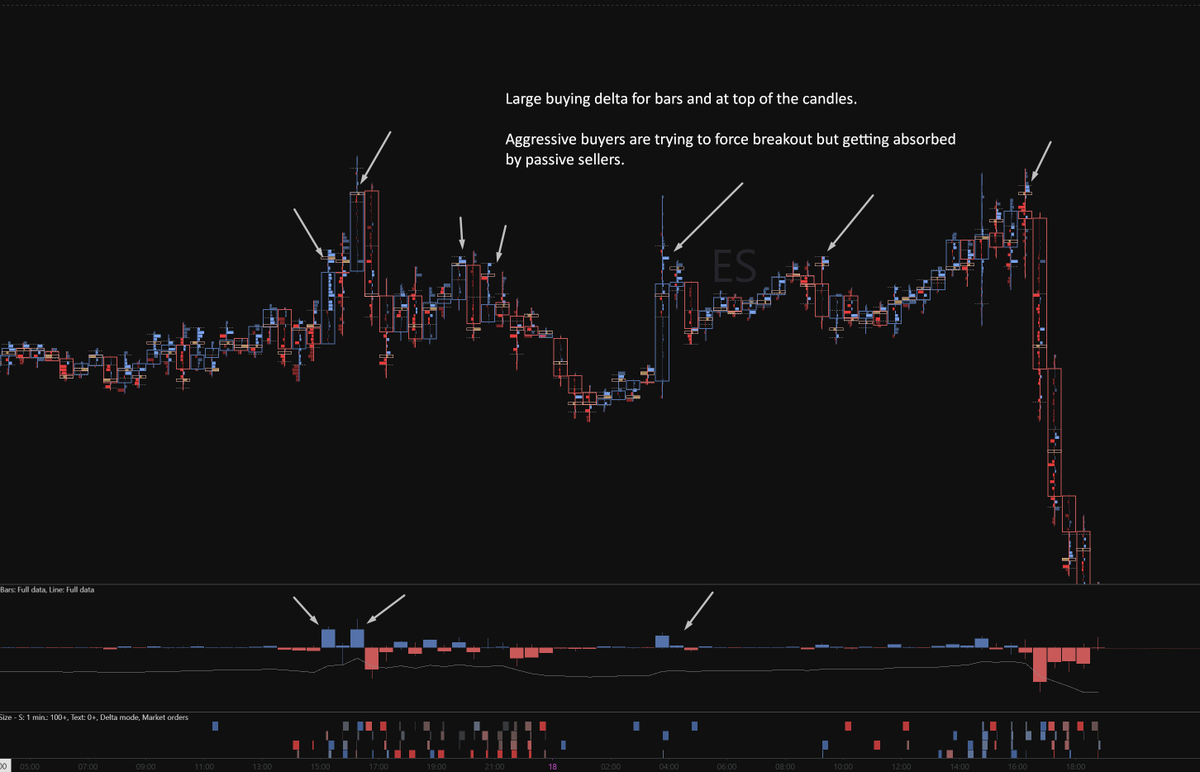
Rather than the candle closes, you should be factoring in time. Compared to continuation trades, where it is fine if the price consolidates at the level as you bet on resting orderflow getting filled, here you really want to see sharp rejections as breakout traders start to puke.
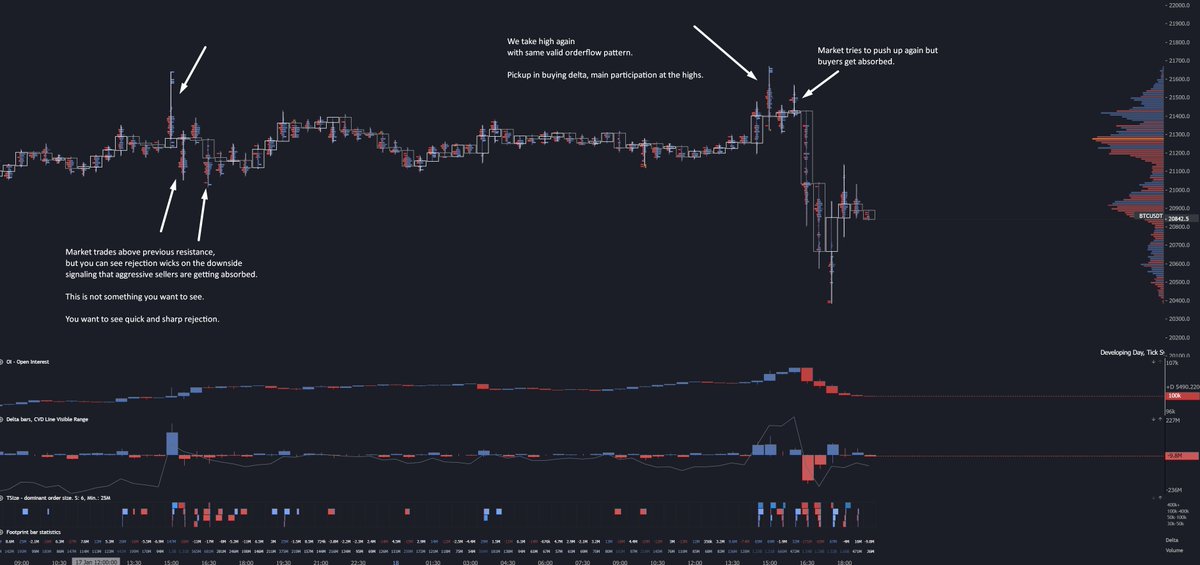
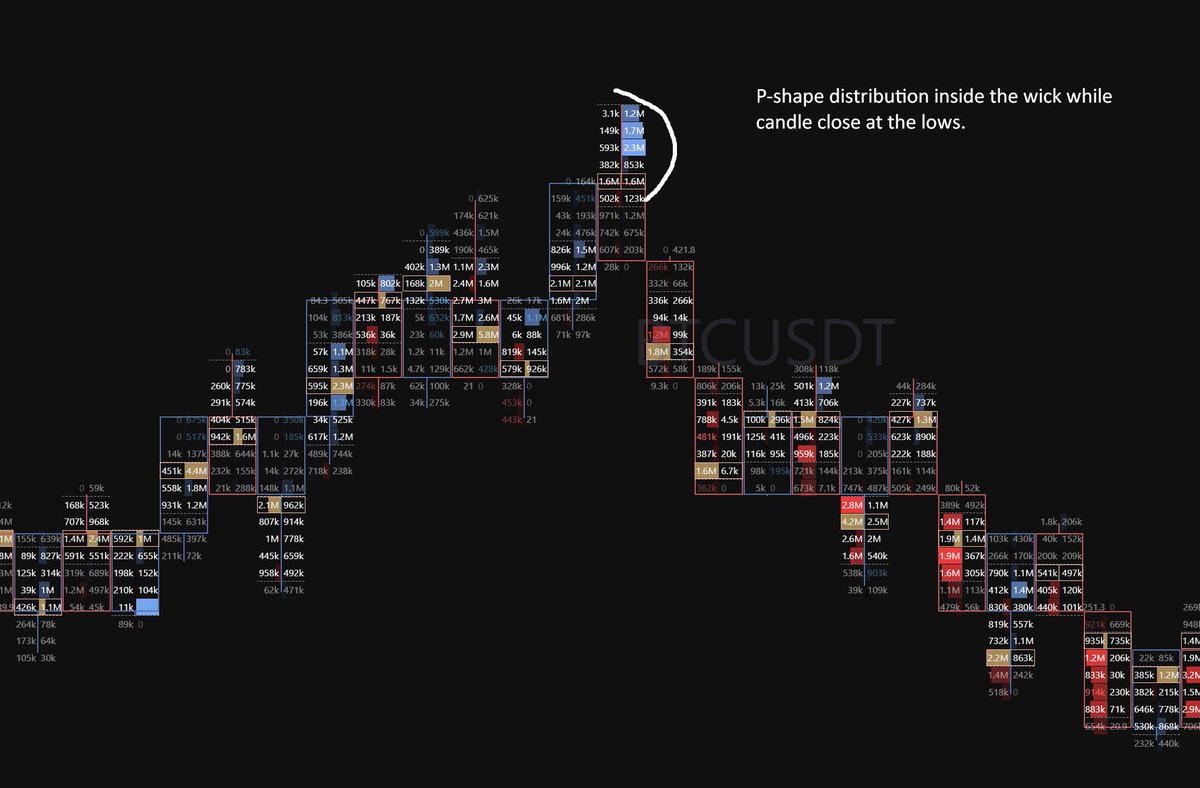
If you are new to this, one of the simplest ways of spotting absorption at new highs and lows is looking for "P", and "b" shape candles with the largest participation opposite the candles close.
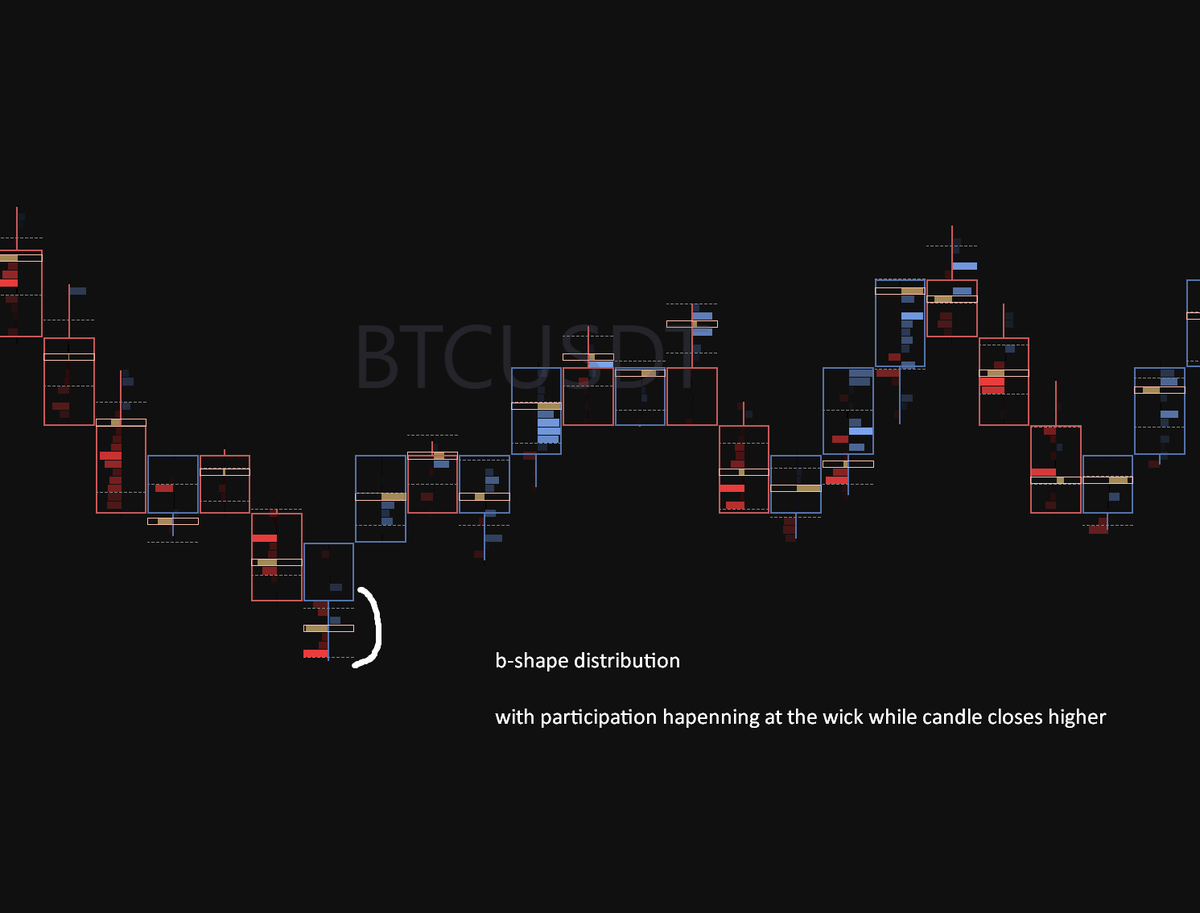
Of course, you shouldn't trade things blindly and use this knowledge as a confluence for forming your overall idea; here is an example of Gold from the start of this year.
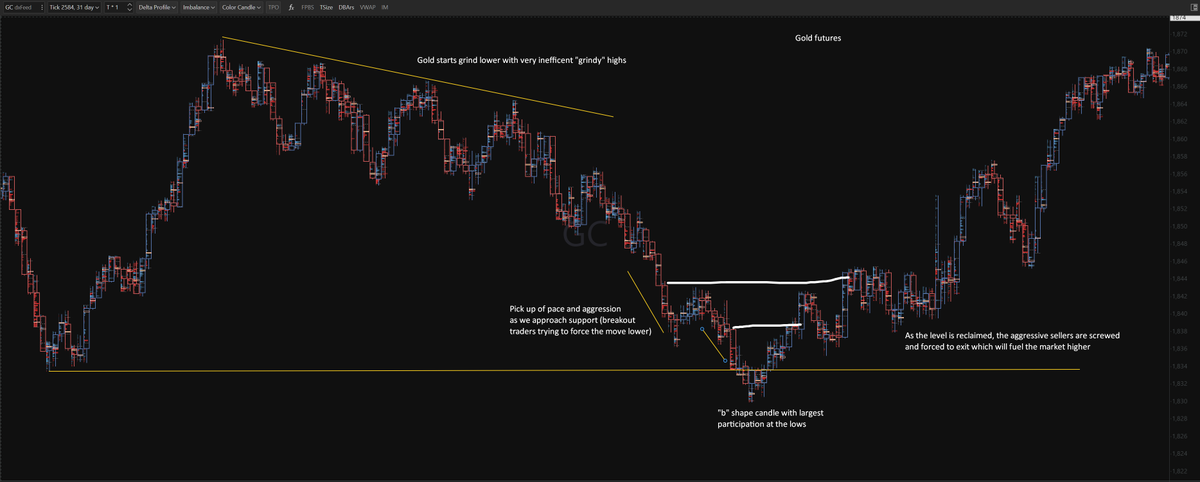
If I can give you advice, only look at orderflow and footprint charts when you want to execute trades.
People often over-analyse every large buy or sell order that will often shake them out from trades for no reason.
People often over-analyse every large buy or sell order that will often shake them out from trades for no reason.
That's it for the thread.
If you want to learn more, here are some additional resources:
tradingriot.com
tradingriot.com
youtube.com
youtube.com
youtube.com
tradingriot.com
If you want to learn more, here are some additional resources:
tradingriot.com
tradingriot.com
youtube.com
youtube.com
youtube.com
tradingriot.com

tradingriot.com/smart-money-co…
Breaking Down Popular Price Action Strategies (Smart Money Concepts and ICT Trading) - Tradingriot.com
If you have been in a trading space for a while, you have probably noticed that there is always a ce...
tradingriot.com/footprint-char…
Footprint Charts - The Complete Trading Guide - Tradingriot.com
Footprint charts are popular trading tools as they offer in-depth look inside the candle. In this gu...

tradingriot.com/technical-anal…
The Only Technical Analysis Course You Will Ever Need - Tradingriot.com
Technical analysis is popular methodology for forecasting markets future direction. In this free cou...
If you want to learn how exactly I execute these things and what I look for, you can pick up the Bootcamp (tradingriot.com)
And as always, read the blog at tradingriot.com, as it has a ton of resources about this orderflow, market microstructure and other things.
And as always, read the blog at tradingriot.com, as it has a ton of resources about this orderflow, market microstructure and other things.


Loading suggestions...