

Breakouts are overrated. And mean reversion, reversal trades/pullbacks are underrated.
If you are an intraday trader, you must know how to trade reversals/pullbacks and not just rely on breakouts.
Let's find this out in a 🧵with a few examples: (1/21)
If you are an intraday trader, you must know how to trade reversals/pullbacks and not just rely on breakouts.
Let's find this out in a 🧵with a few examples: (1/21)
To get best out of this thread, you must know the basics of price action.
Reversal doesn't just mean buying at support and selling at resistance. Beauty of reversal is that they give excellent RR. In different market environments, trades should be approached differently. (2/21)
Reversal doesn't just mean buying at support and selling at resistance. Beauty of reversal is that they give excellent RR. In different market environments, trades should be approached differently. (2/21)
We know that there are three types of trends in the market -- Uptrend, Downtrend and Range bound/Sideways markets.
Like Trend following, we should know the overall trend of the market while trading for Reversals as well. (3/21)
Like Trend following, we should know the overall trend of the market while trading for Reversals as well. (3/21)
#1 Uptrend or Bullish Market
When Index gives a breakout from any major resistance zone in a higher timeframe.. like daily or breaking the range of a few days, then, at least for a few days, it normally follows the trend and goes up one sided. (4/21)
When Index gives a breakout from any major resistance zone in a higher timeframe.. like daily or breaking the range of a few days, then, at least for a few days, it normally follows the trend and goes up one sided. (4/21)

When the trend is up, our focus should be on "buy the dips" for reversal trades - until it reaches the next major resistance.
When the market is bullish, it opens with a gap on most days whenever we get a good breakout from an important zone. (5/21)
When the market is bullish, it opens with a gap on most days whenever we get a good breakout from an important zone. (5/21)
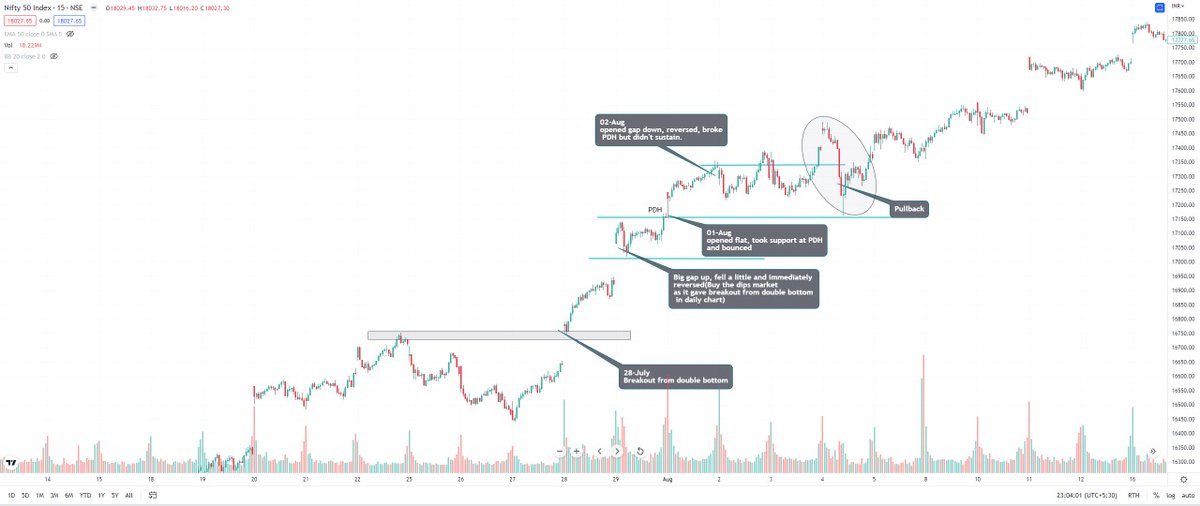
After a gap, it sometimes continues in the direction of the open and sometimes it reverses till immediate support OR fills the gap. If it continues then you will obviously be playing ORB.
How can we play reversal? Read on: (6/21)
How can we play reversal? Read on: (6/21)
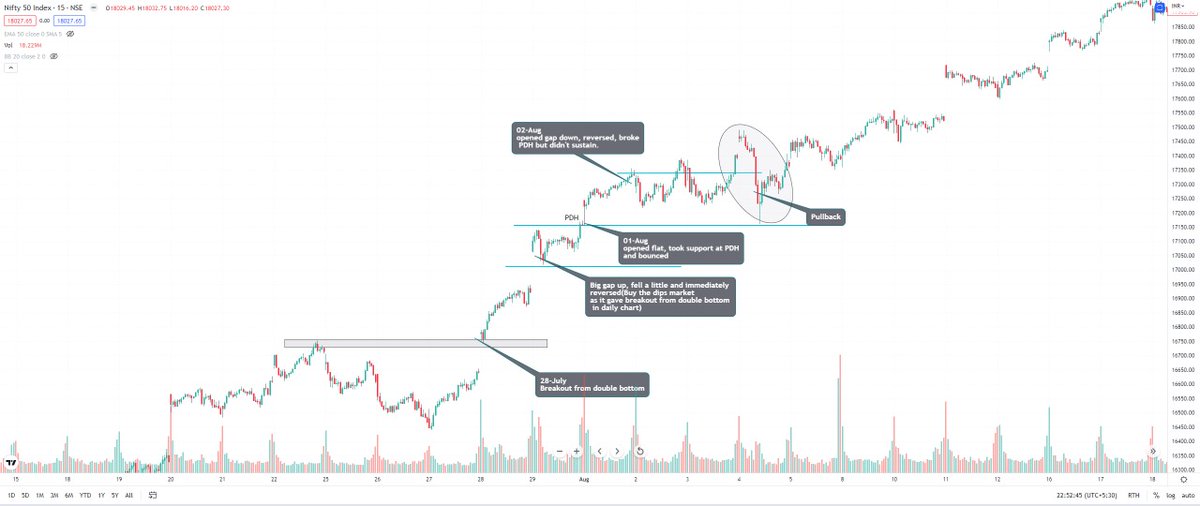
A. If it opens with a small gap or flat, you can initiate a trade after getting a buying signal. You should simply mark PDH and immediate support on your chart. Take a trade when you see a reversal there, you will get a good RR if it bounces back. (7/21)
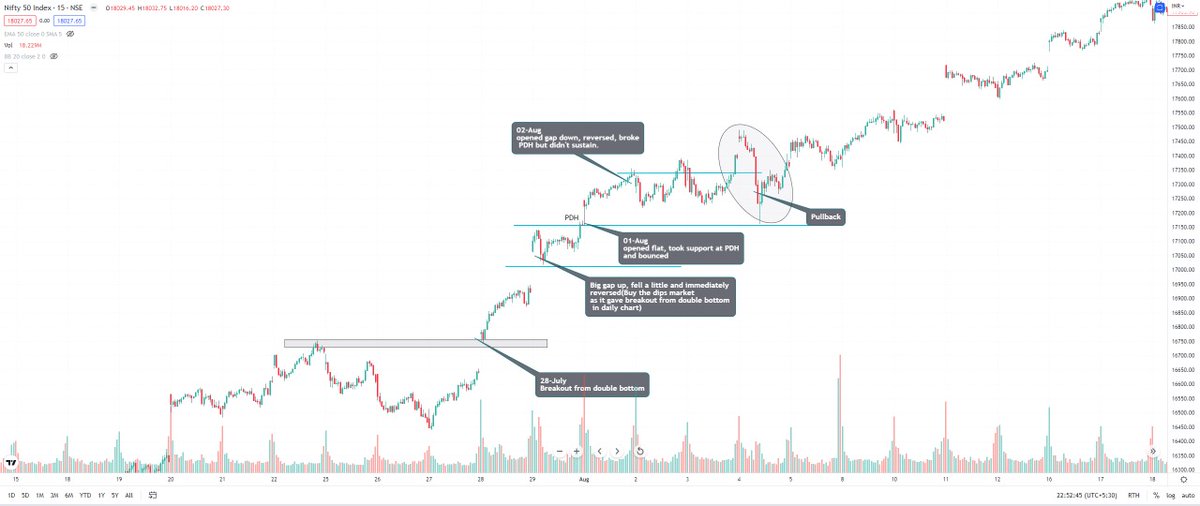
B. If it opens gap down in bullish market, that doesn't mean the trend is changed. It's buy on dips opportunity. Mark important support zones, swing lows and PDL. Watch if you get any buying signal there and initiate a trade with a small SL. (8/21)
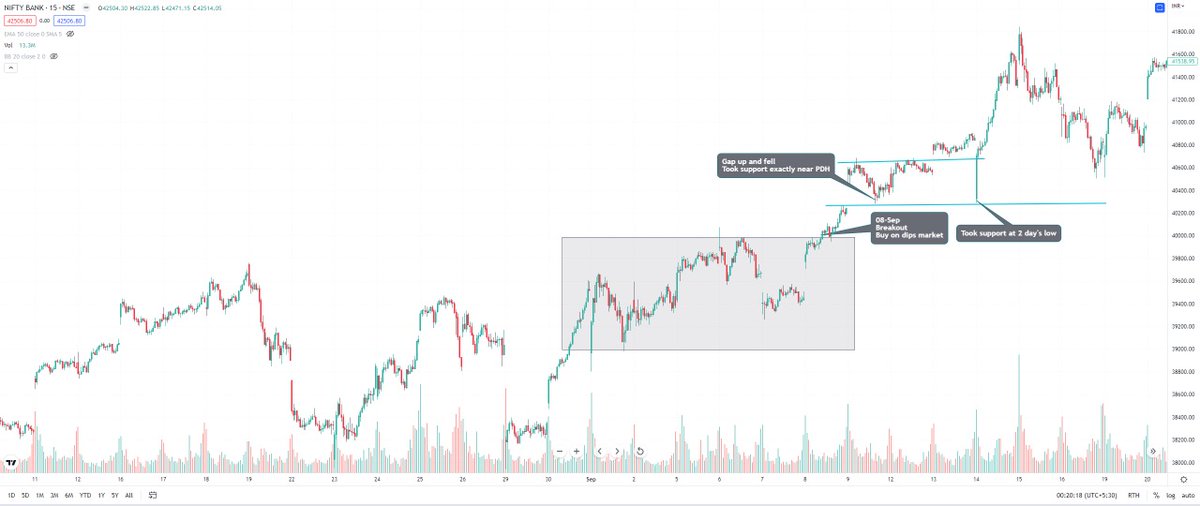
C. If it opens with a big gap up near any important resistance, it either goes sideways or starts falling in the intraday. You can execute selling trade too in this scenario with a small SL. If you get rejection near resistance, initiate a trade and.. (9/21)
...book near important support OR trail (I prefer trailing). This might not work every time, but when it does, it rewards you big.
Do this only when you get a big gap up near major resistance. Else, in a bullish market, focus on 'buy the dips' and not 'sell on rise'. (10/21)
Do this only when you get a big gap up near major resistance. Else, in a bullish market, focus on 'buy the dips' and not 'sell on rise'. (10/21)
Sometimes, after 3-4 days of the continuous up move, we get pullback near PDL or at least 2 days low. Don't go for aggressive selling until you see the change in trend in a higher timeframe. (11/21)
#2 Downtrend
Unlike up moves, the down moves are way too fast. A fall of 100 points happens in a blink of an eye. If an Index breaks any important support or breaks any range after consolidation, it's going to move in the same direction for at least a few days. (12/21)
Unlike up moves, the down moves are way too fast. A fall of 100 points happens in a blink of an eye. If an Index breaks any important support or breaks any range after consolidation, it's going to move in the same direction for at least a few days. (12/21)
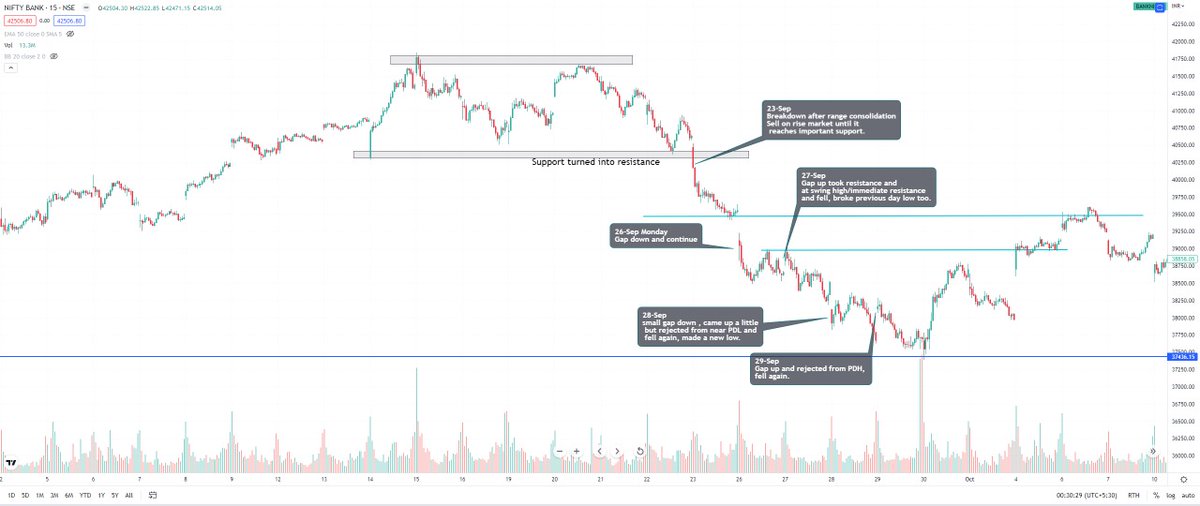
When the trend is down, our focus should be on "sell the rise" for reversal trades - until it reaches the next major support. When you trade the pullback rewards are great - especially in downtrend.(13/21)
A. If it opens with a small gap or flat, you can initiate a trade after getting a selling signal. You should simply mark PDL and immediate resistance on your chart. Take a trade when you see a reversal there, you will get a good RR if it falls. (14/21)
B. If it opens gap up that doesn't mean the trend is changed. It's sell on rise opportunity. Mark important resistance zones, swing highs and PDH. Watch if you get any selling signal there and initiate a trade with a small SL. (15/21)
..When it starts falling, breaks the PDL too and another support, you can even pyramid and simply trail it. No need to rush into booking. Recent market moves are classic examples of this. Every day, it opened gap up or flat and fell one-sided. Look at the charts: (16/21)
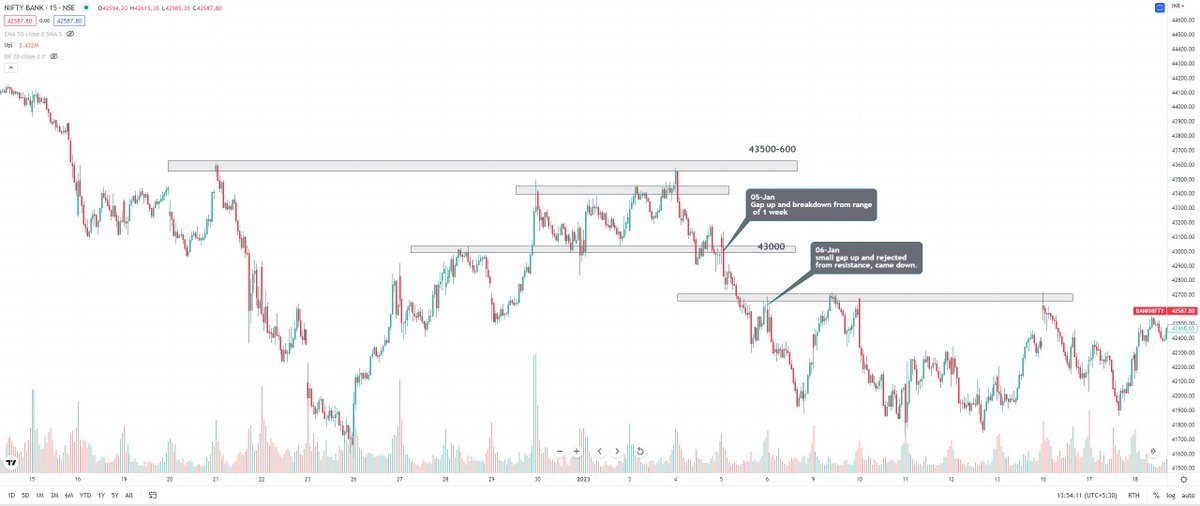
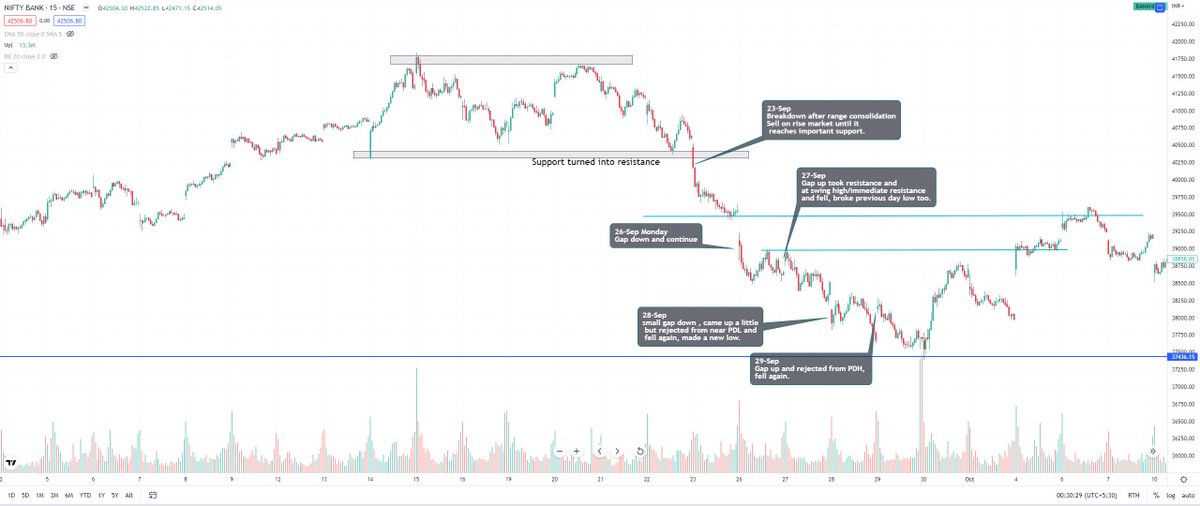
Even when it bounces from important supports, it reached swing highs and then fell again.
C. If an Index opens with a big gap down and reaches important support, you can search for a buying opportunity with a small SL and book at immediate resistance or strictly trail it. (17/21)
C. If an Index opens with a big gap down and reaches important support, you can search for a buying opportunity with a small SL and book at immediate resistance or strictly trail it. (17/21)
• Sometimes, after 3-4 days of continuous down move, it consolidates or takes a pullback near PDH or 2 day high and continues the downtrend again. You will sense it when it changes the trend. It starts making higher highs and higher lows again... (18/21)
#3 Range Bound or Consolidation phase-
This is a tricky market to trade in for directional traders. There are different kinds of range bounds. If it's moving in the same range for a few days, then pullbacks/reversals are the best trades in this kind of market. (19/21)
This is a tricky market to trade in for directional traders. There are different kinds of range bounds. If it's moving in the same range for a few days, then pullbacks/reversals are the best trades in this kind of market. (19/21)
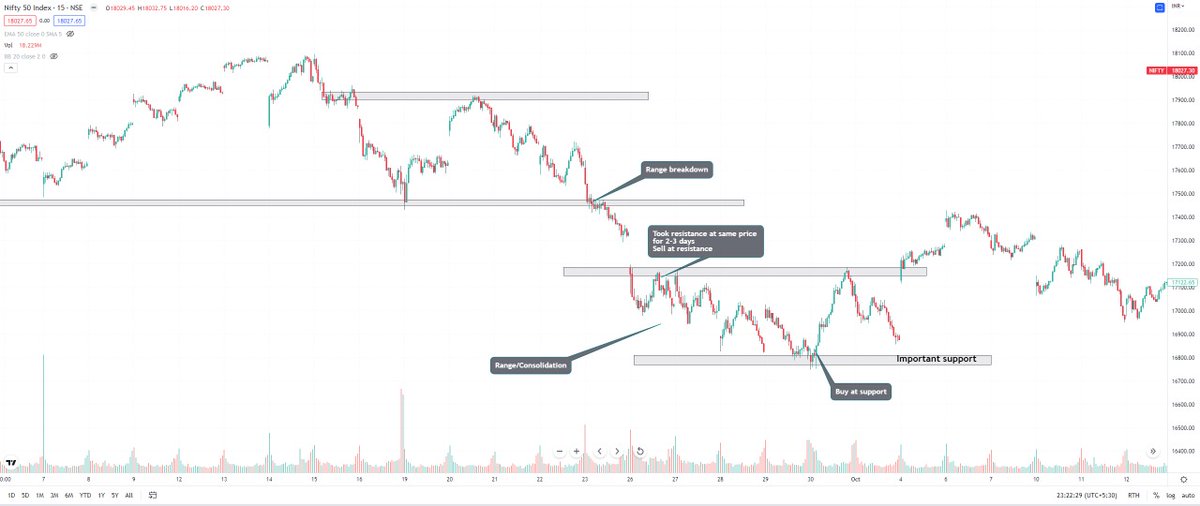
One shouldn't try breakouts in sideways markets. Breakouts fails a lot. Only buying at support and selling at resistance works. If an Index opens in previous day's range, then trade pullbacks. Idea is to trade less in a sideways market and leverage the trending market. (20/21)
That's all that I observed and works for me. In trading, observation and consistent learning is the key. The trading environment keeps evolving and you have to evolve with it too. If this thread was helpful in any way - Retweet it and follow my channel.
telegram.me
telegram.me

Loading suggestions...