

Even if all You Know about DeFi is Curve Wars and Solidly, You're 90% ahead of the Curve.
Understanding just this one thing will make you a crypto Wiz.
I present to you a beginner's guide to mastering @Solidlyexchange: Part 1
A Thread🧵, RT for others
Understanding just this one thing will make you a crypto Wiz.
I present to you a beginner's guide to mastering @Solidlyexchange: Part 1
A Thread🧵, RT for others
I promise to make this thread as simple and exciting as possible.
Outline
✅ Curve Finance and Ve tokens
✅ Major problems with Curve
✅ How Solidly works (SOLID & veSOLID)
✅ veNFTs, Pool Incentives & Bribes.
✅ Protocol-to-Protocol & The Vamp Wars.
✅ Who is Andre Cronje?
Outline
✅ Curve Finance and Ve tokens
✅ Major problems with Curve
✅ How Solidly works (SOLID & veSOLID)
✅ veNFTs, Pool Incentives & Bribes.
✅ Protocol-to-Protocol & The Vamp Wars.
✅ Who is Andre Cronje?
✅ Curve Finance and Ve tokens
Solidly borrowed a lot from Curve Finance (CRV), which currently has a total value locked (TVL) of $4.67 billion.
Solidly borrowed a lot from Curve Finance (CRV), which currently has a total value locked (TVL) of $4.67 billion.
Curve Finance is an automated market maker (AMM), and users can deposit CRV tokens in exchange for veCRV (vote-escrowed tokens).
The longer the deposit period, the more veCRV tokens are received.
The longer the deposit period, the more veCRV tokens are received.

These ve tokens cannot be transferred, but they provide several benefits to holders:
- Trading fees (50% of the fees are distributed among the veCRV holders)
- 100%+ boost on CRV liquidity provider rewards.
- Vote on where CRV rewards go.
- Trading fees (50% of the fees are distributed among the veCRV holders)
- 100%+ boost on CRV liquidity provider rewards.
- Vote on where CRV rewards go.
The vote-escrow system addresses a crucial issue in DeFi: a lack of intrinsic value for many governance tokens.
Protocols like Compound ($COMP) and Uniswap ($UNI) have tokens that only allow their holders to vote on DAO proposals.
As a result, many holders sold their rewards.
Protocols like Compound ($COMP) and Uniswap ($UNI) have tokens that only allow their holders to vote on DAO proposals.
As a result, many holders sold their rewards.
However, Curve’s model isn’t perfect.
📌 The Problem with Curve Finance’s Model
Some of the significant problems with the Curve tokenomics model are:
- Curve incentivizes liquidity provision over trading activity and does not consider the level of trading activity in the pool.
📌 The Problem with Curve Finance’s Model
Some of the significant problems with the Curve tokenomics model are:
- Curve incentivizes liquidity provision over trading activity and does not consider the level of trading activity in the pool.
- Locking up tokens for a long time will result in dilution, and the value of the holdings decreases due to the constant issuance of new tokens.
There is no way to prevent this except you unstake your tokens.
There is no way to prevent this except you unstake your tokens.
✅ How Solidly Works
$SOLID is the token of Solidly. Users can lock it and receive vote-escrowed SOLID (veSOLID).
Unlike other protocols, the ratio of SOLID locked to veSOLID received is not fixed; instead, it's based on the lock-up period.
$SOLID is the token of Solidly. Users can lock it and receive vote-escrowed SOLID (veSOLID).
Unlike other protocols, the ratio of SOLID locked to veSOLID received is not fixed; instead, it's based on the lock-up period.
- 6 months: to get 0.125 veSOLID for 1 SOLID.
- 2 years: to get 0.5 veSOLID for 1 SOLID.
- 4 years: to get 0.1 veSOLID for 1 SOLID.
- 2 years: to get 0.5 veSOLID for 1 SOLID.
- 4 years: to get 0.1 veSOLID for 1 SOLID.
📌 Holders of veSOLID tokens receive the following benefits:
- Right to vote on which AMM pools should be incentivized.
- All the fees generated by the pools voted for
- A significant amount of new SOLID emissions
- Right to vote on which AMM pools should be incentivized.
- All the fees generated by the pools voted for
- A significant amount of new SOLID emissions
✅ SOLID EMISSION
Up to 20M Solid can be distributed weekly, but the rate changes depending on the % of solid locked.
Formula;
(Weekly SOLID emission) = 20,000,000 x (total SOLID supply) - (locked SOLID supply)/ (total SOLID supply).
Up to 20M Solid can be distributed weekly, but the rate changes depending on the % of solid locked.
Formula;
(Weekly SOLID emission) = 20,000,000 x (total SOLID supply) - (locked SOLID supply)/ (total SOLID supply).
E.g.,
- If the total supply of SOLID is 300,000,000 and none of the tokens are locked, the protocol will issue 20,000,000 SOLID by using this formula 20,000,000*(300,000,000 – 0)/300,000,000. The supply will increase to 320,000,000, or by 6.25%.
- If the total supply of SOLID is 300,000,000 and none of the tokens are locked, the protocol will issue 20,000,000 SOLID by using this formula 20,000,000*(300,000,000 – 0)/300,000,000. The supply will increase to 320,000,000, or by 6.25%.
- What if 50% (150,000,000) of SOLID is locked, the protocol will issue 10,000,000 SOLID using this formula 20,000,000*(300,000,000 – 150,000,000)/300,000,000. The total supply will increase to 310,000,000 or by 3.125%.
- Let's say all 300 million tokens are locked; the protocol will not issue any SOLID using this formula 20,000,000*(300,000,000 – 300,000,000)/300,000,000. The total supply will not change.
✅ VeNFTs
Locked SOLID tokens can be wrapped into unique Non-Fungible Tokens called veNFTs.
This feature is essential because:
- These NFTs stay liquid and can be traded on a secondary market. It makes it easy for users to exit their position.
Locked SOLID tokens can be wrapped into unique Non-Fungible Tokens called veNFTs.
This feature is essential because:
- These NFTs stay liquid and can be traded on a secondary market. It makes it easy for users to exit their position.
- Locked tokens can be converted into veNFTs, allowing for partial sales and combined reward calculation for multiple veNFTs held by one user.
✅ Pool Incentives and Bribes
- Holders of veSOLID receive the fees generated by the pools they vote for, and it's in their best interest to vote for pools that generate higher fees.
- Holders of veSOLID receive the fees generated by the pools they vote for, and it's in their best interest to vote for pools that generate higher fees.
- To motivate veSOLID holders to vote for their pool, projects can offer "bribes" - a concept introduced by Curve Finance - incentives given to those who provide liquidity to the pool.
These bribes are distributed among all liquidity providers in the pool.
These bribes are distributed among all liquidity providers in the pool.
✅ Protocol-to-Protocol & The Vamp War
Andre Cronje emphasized that his aim is not to compete for users and liquidity with other AMMs.
Instead, he wants other DeFi protocols to use Solidly.
Andre Cronje emphasized that his aim is not to compete for users and liquidity with other AMMs.
Instead, he wants other DeFi protocols to use Solidly.
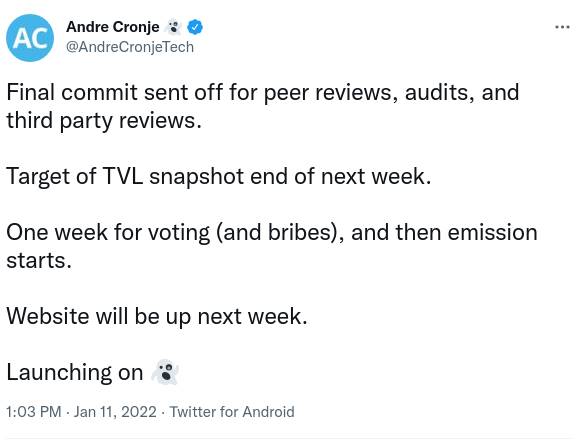
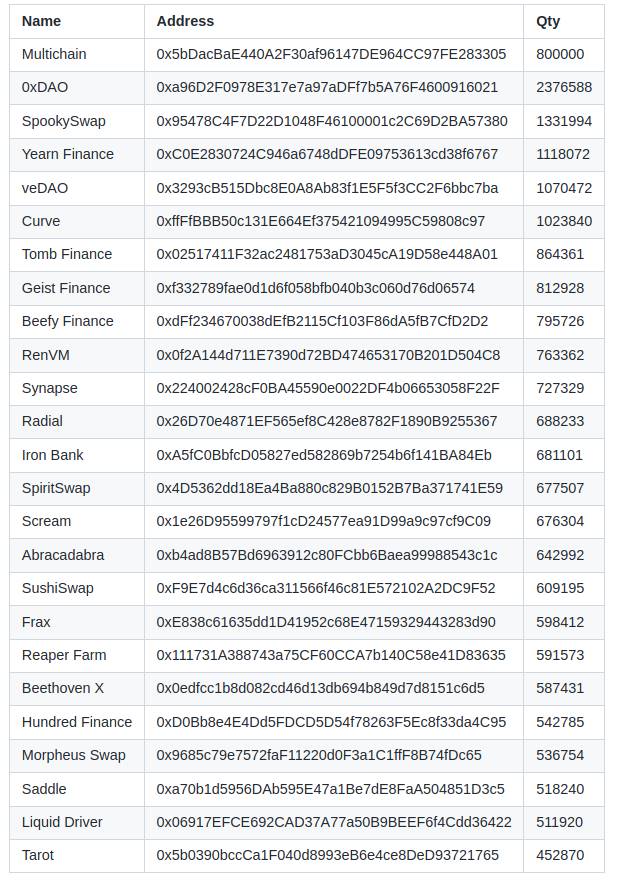
On 11th Jan 2022, Andre Cronje said that Fantom's top 20 DeFi protocols by TVL would get locked SOLID as digital items called veNFTs.
The snapshot was taken on January 23rd.
The snapshot was taken on January 23rd.
There is a saying that goes thus “Show me the incentives, and I will show you the outcome.”
So, to boost their TVL, protocols offered crazing yields of up to 1000%-2000% APYs to lure other protocol users.
So, to boost their TVL, protocols offered crazing yields of up to 1000%-2000% APYs to lure other protocol users.
"Vamp wars" or "vampire wars" is a tactic some protocols use to lure users away from other protocols.
These protocols target users looking for the highest APR and are willing to move to more profitable opportunities quickly.
They are called mercenary liquidity in DeFi.
These protocols target users looking for the highest APR and are willing to move to more profitable opportunities quickly.
They are called mercenary liquidity in DeFi.
To further learn more about Solidly and its operation, visit Andre’s Medium article here: andrecronje.medium.com
✅ WHO IS ANDRE CRONJE?
@AndreCronjeTech is a software architect and Web3 developer from Cape Town, South Africa.
He is known for revolutionizing DeFi through his "test in production" mentality.
Andre is the creator of Yearn Finance and Keep3r (V1)
@AndreCronjeTech is a software architect and Web3 developer from Cape Town, South Africa.
He is known for revolutionizing DeFi through his "test in production" mentality.
Andre is the creator of Yearn Finance and Keep3r (V1)

He was involved in many top DeFi protocols, including Hegic, Pickle Finance, Cover Protocol, PowerPool, Cream V2, Multichain, and SushiSwap.
Cronje initially pursued a career in law, earning a degree and working as a lawyer. Later, he gained an interest in coding.
Cronje initially pursued a career in law, earning a degree and working as a lawyer. Later, he gained an interest in coding.
He decided to take classes and completed a 3-year programming course in just five months.
Andre Cronje entered the blockchain industry in 2016, and four years later, he launched Yearn Finance.
Andre Cronje entered the blockchain industry in 2016, and four years later, he launched Yearn Finance.
Since then, he has gained a large following, and each new project he creates receives significant attention, including @Solidlyexchange.
Continue to Part 2 here:
Continue to Part 2 here:
• That's all for today!
• Follow me @SamuelXeus for more insightful content.
• Like & RT the first tweet and share it with others.
• Follow me @SamuelXeus for more insightful content.
• Like & RT the first tweet and share it with others.
Loading suggestions...