
History
Politics
Religion
Islamic Studies
Islamic History
European History
Middle Eastern Politics
Cultural Commentary

Once upon a time, there were two epicenters of Islamic power on Earth (3, but let’s stick to 2 now), the Ottomans in the Middle East and the Mughals in India.
Neither subservient to the other and neither willing to recognize the Caliphate of the other as authoritative of Islam.
Neither subservient to the other and neither willing to recognize the Caliphate of the other as authoritative of Islam.
This state of affairs remained in place for a good two-odd centuries before things took an abrupt turn toward the end of the 17th century.
Two events—the world continues to feel their repercussions to this day.
One of these just turned 323 years today.
Two events—the world continues to feel their repercussions to this day.
One of these just turned 323 years today.
Toward the end of 1600s, the Ottomans went to war with Europe. We don’t call this a crusade but that’s exactly what it looked like —the Caliphate on one side and the entire Christian Europe on the other led by the Holy Roman Empire itself.
And Turkey lost.
Badly.
And Turkey lost.
Badly.
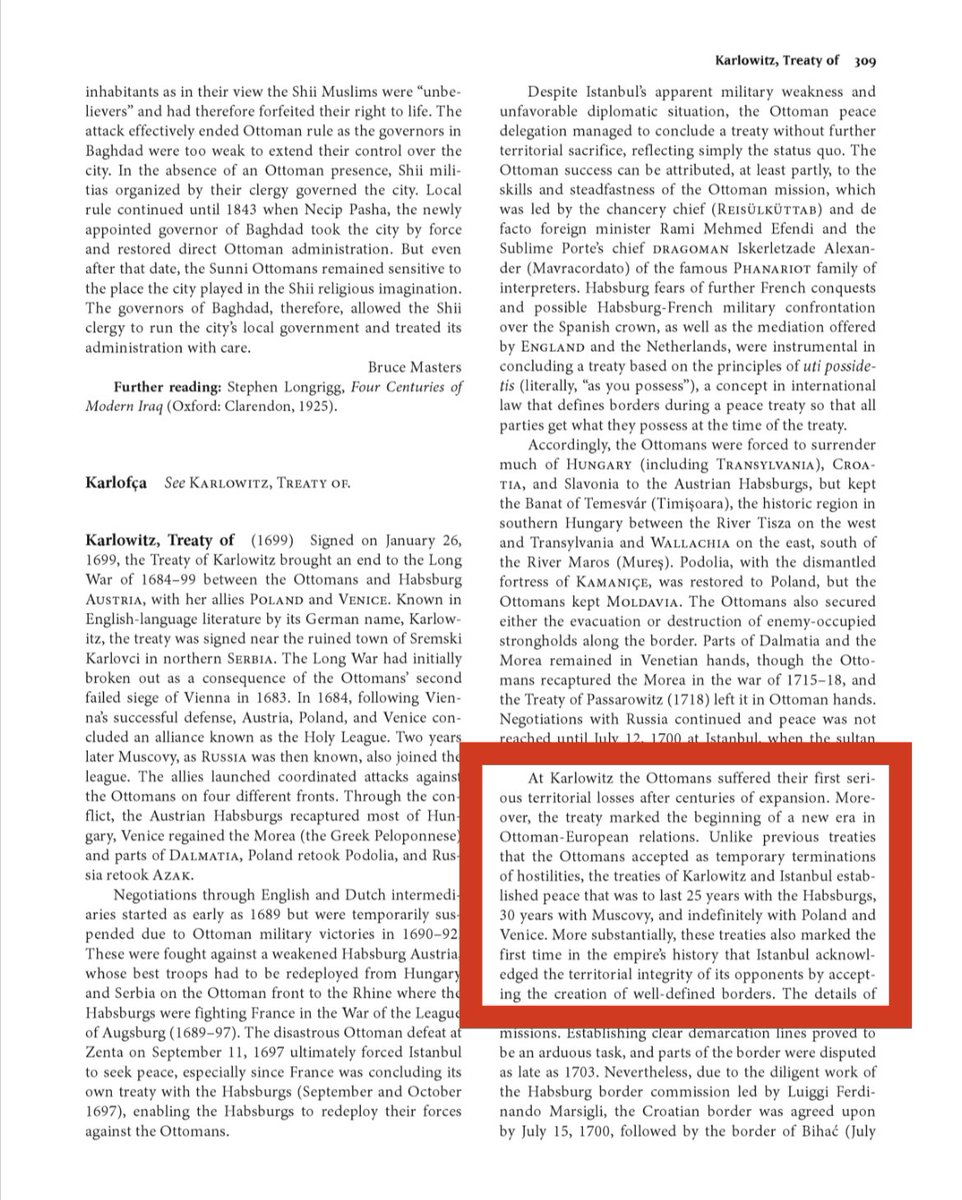
The Great Turkish War lasted 16 years and ended on January 26, 1699, with the Treaty of Karlowitz. The caliphate lost territory for the first time in its history making the beginning of its downfall.
For millions of Muslims across the world, this was a major setback.
For millions of Muslims across the world, this was a major setback.
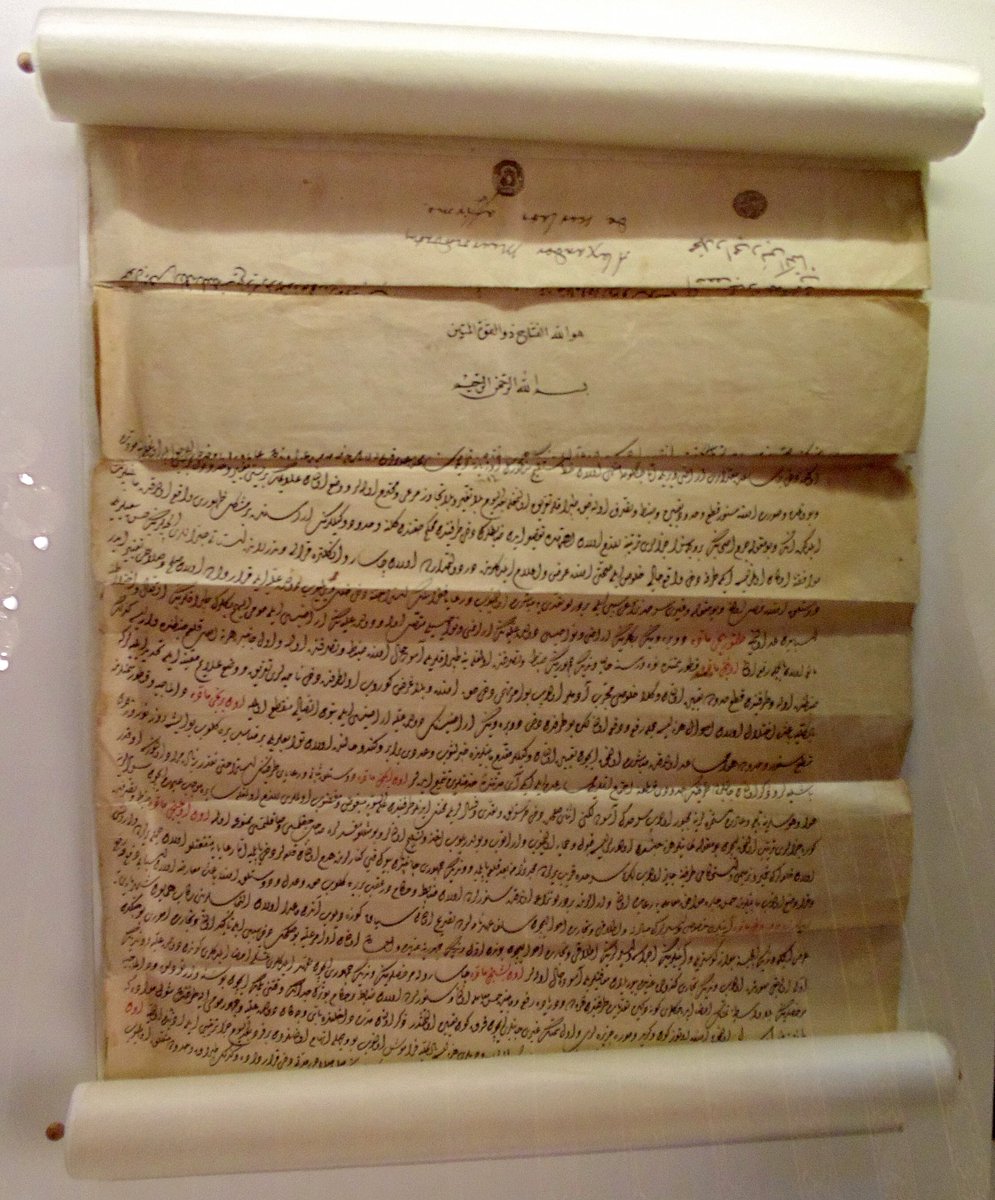
The Ottomans weren’t just a political power but also ideological. Especially after the end of the Abbasids.
Unable to reconcile with their decline, the Muslim community needed a figurehead to help them make sense of all this and lead them to stability.
Unable to reconcile with their decline, the Muslim community needed a figurehead to help them make sense of all this and lead them to stability.
Just as the Ottomans had been a spiritual fulcrum of the Muslims at large, the Mughals had been for the ones in India.
Especially under Aurangzeb but also under his two earlier predecessors.
And Aurangzeb died in 1707.
A major setback to the Muslims on the subcontinent.
Especially under Aurangzeb but also under his two earlier predecessors.
And Aurangzeb died in 1707.
A major setback to the Muslims on the subcontinent.
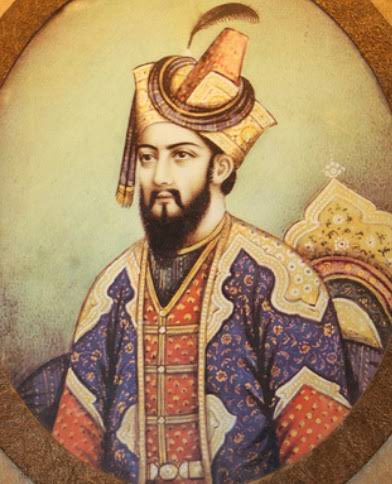
Just as the Great Turkish War marked the beginning of Ottoman decline, Aurangzeb’s death marked the beginning of Mughal decline. His successors were too weak to resist incursions from both Muslims (Nadir Shah) and Hindus (Marathas).
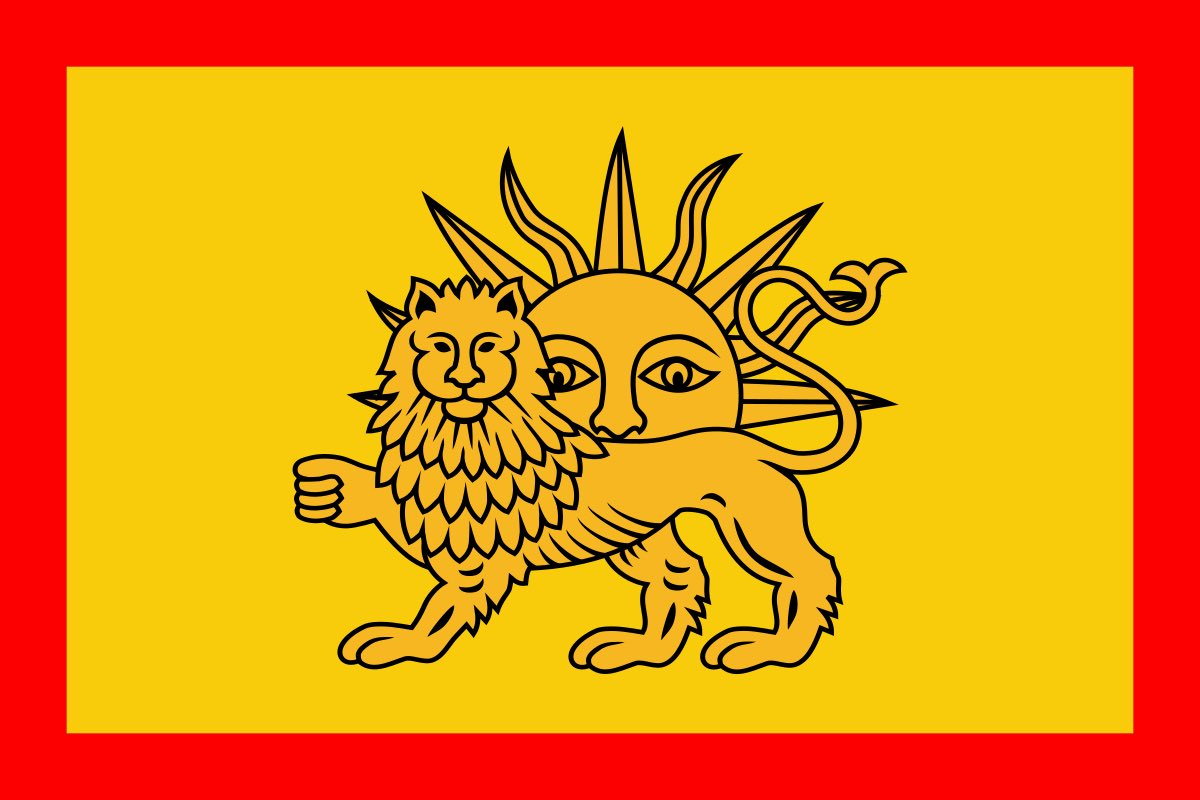
So in a space of one turbulent decade, the Islamic world had lost both its ideological nuclei.
And when such forces decline, others rush to fill in. That’s what happened here. Two men, both born in the same year during the “decade of decline” emerged as spiritual figureheads.
And when such forces decline, others rush to fill in. That’s what happened here. Two men, both born in the same year during the “decade of decline” emerged as spiritual figureheads.
Both saw reasons for the decline in the general departure from the Islamic core. Muslims had to be shepherded back to “the one true path” of Sharia.
A new pristine interpretation of The Book was the call of the hour.
That’s what the two men did.
A new pristine interpretation of The Book was the call of the hour.
That’s what the two men did.
The man in the Ottoman realm was Muhammad ibn Abd al-Wahhab.
The man in the Mughal realm was Shah Waliullah Dehlawi.
Both subscribed to the Hanbali creed.
This was a return to the absolute, incorruptible basics—a way back to the Hadiths.
The man in the Mughal realm was Shah Waliullah Dehlawi.
Both subscribed to the Hanbali creed.
This was a return to the absolute, incorruptible basics—a way back to the Hadiths.
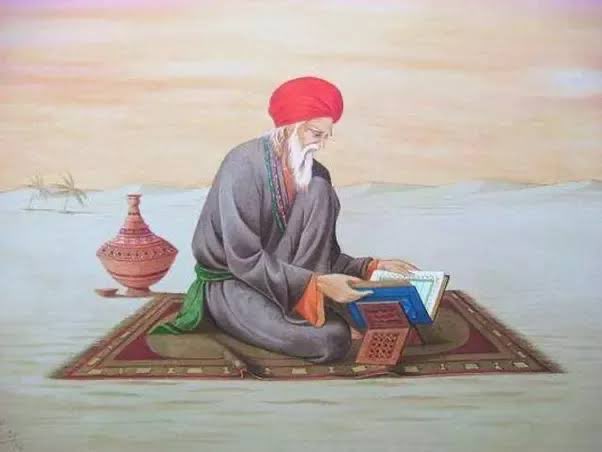

While the two men didn’t succeed in reviving their respective caliphates, they did in reviving Islam’s hegemony by injecting the community with a renewed sense of ideological puritanism.
Their actions and inspirations continue to inform geopolitics to this day.
Their actions and inspirations continue to inform geopolitics to this day.
While Wahhab’s Wahhabism would go on to inspire the likes of al-Qaeda, Dehlawi’s thoughts crystallized in Deoband which would ultimately spawn the Taliban.
In short, all the violence you see today in the name of Islam trace their origins to the years between 1699 and 1707.
In short, all the violence you see today in the name of Islam trace their origins to the years between 1699 and 1707.
But why am I talking Istanbul and Delhi in the same vein? It’s not like one’s decline impacted the other’s.
Because both declines and the subsequent rise of fanaticism found a common catalyst in a third decline.
The decline of the Safavids.
Because both declines and the subsequent rise of fanaticism found a common catalyst in a third decline.
The decline of the Safavids.
This is the “3rd” we spoke of in the beginning.
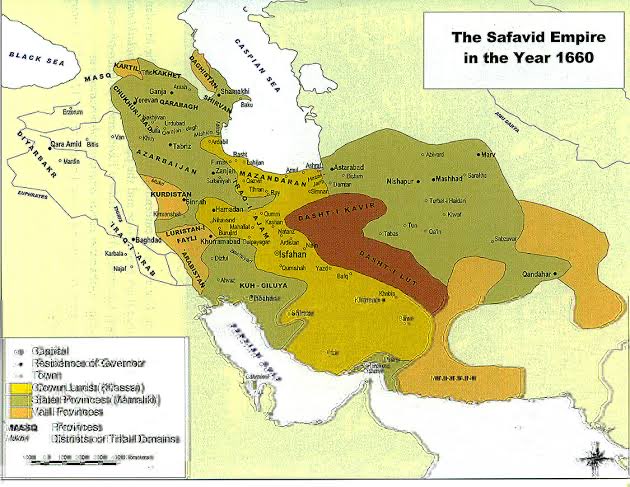
So we have the Ottomans, the Safavids, and the Mughals (together abbreviated to OSM). Traditionally called the “Gunpowder Empires” for their pioneering use and dependence on the revolutionary new kind of warfare in the Middle Ages.
So we have the Ottomans, the Safavids, and the Mughals (together abbreviated to OSM). Traditionally called the “Gunpowder Empires” for their pioneering use and dependence on the revolutionary new kind of warfare in the Middle Ages.
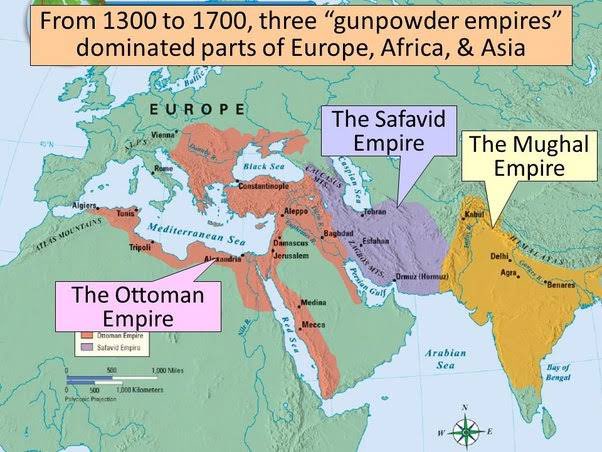
While the Ottomans and the Mughals were Sunni, the Safavids were Shia. They lorded over modern-day Iran, Central Asia, Iraq, Bahrain, and parts of Russia.
This empire came to an end less than 30 years after the beginning of Ottoman-Mughal decline.
This empire came to an end less than 30 years after the beginning of Ottoman-Mughal decline.
And we can pin it all on one individual—Nadir Shah.
Disliked by both Delhi and Istanbul, the man helped himself to the Iranian throne as the first Afsharid monarch.
Now although his dynasty lasted a mere 12 years, it upended the whole Islamic world very quickly.
Disliked by both Delhi and Istanbul, the man helped himself to the Iranian throne as the first Afsharid monarch.
Now although his dynasty lasted a mere 12 years, it upended the whole Islamic world very quickly.
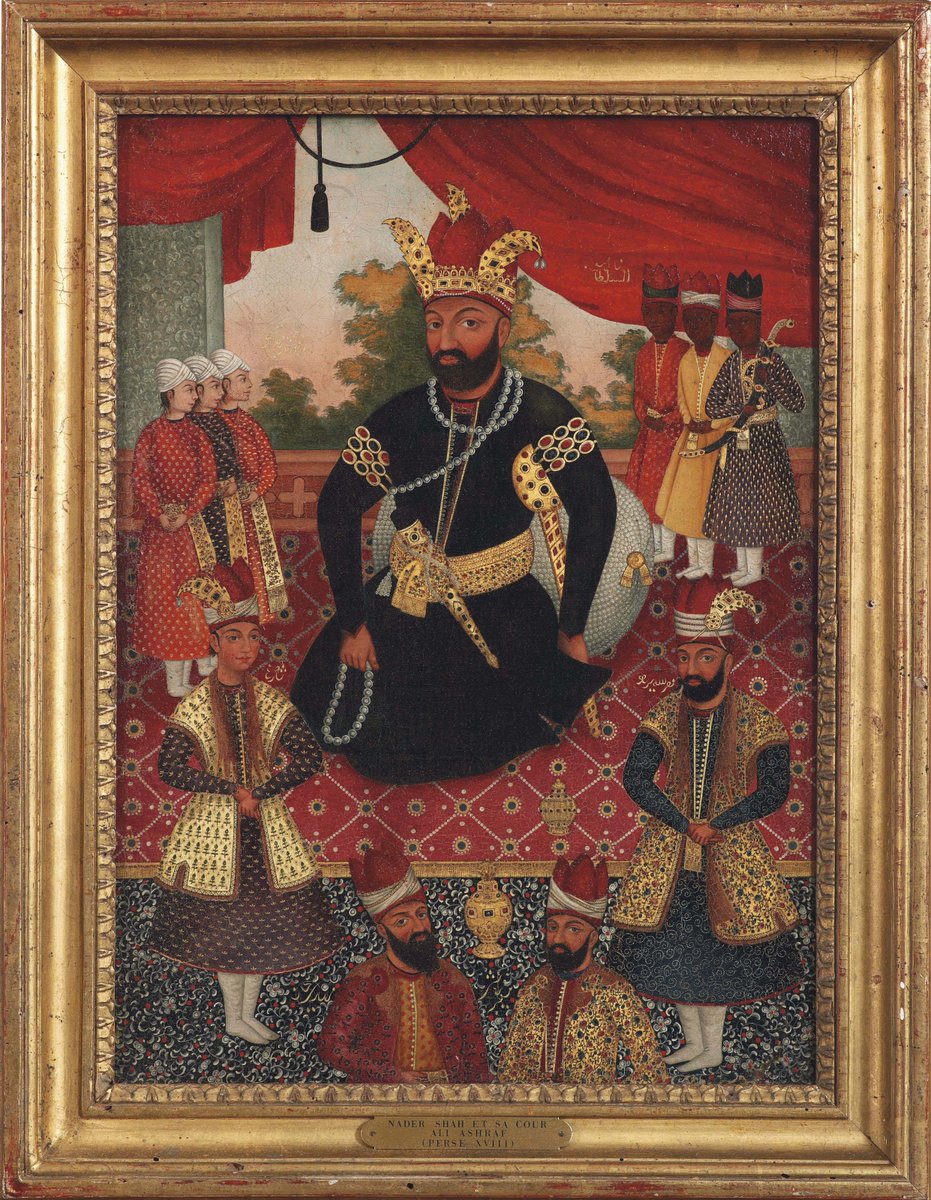
For starters, Shah, territorial and despotic while he was, was surprisingly indifferent on the question of religion.
In fact, it’s said he even switched from Shia to Sunni during his reign in anticipation of adding Sunni Ottoman territories to his realm.
In fact, it’s said he even switched from Shia to Sunni during his reign in anticipation of adding Sunni Ottoman territories to his realm.
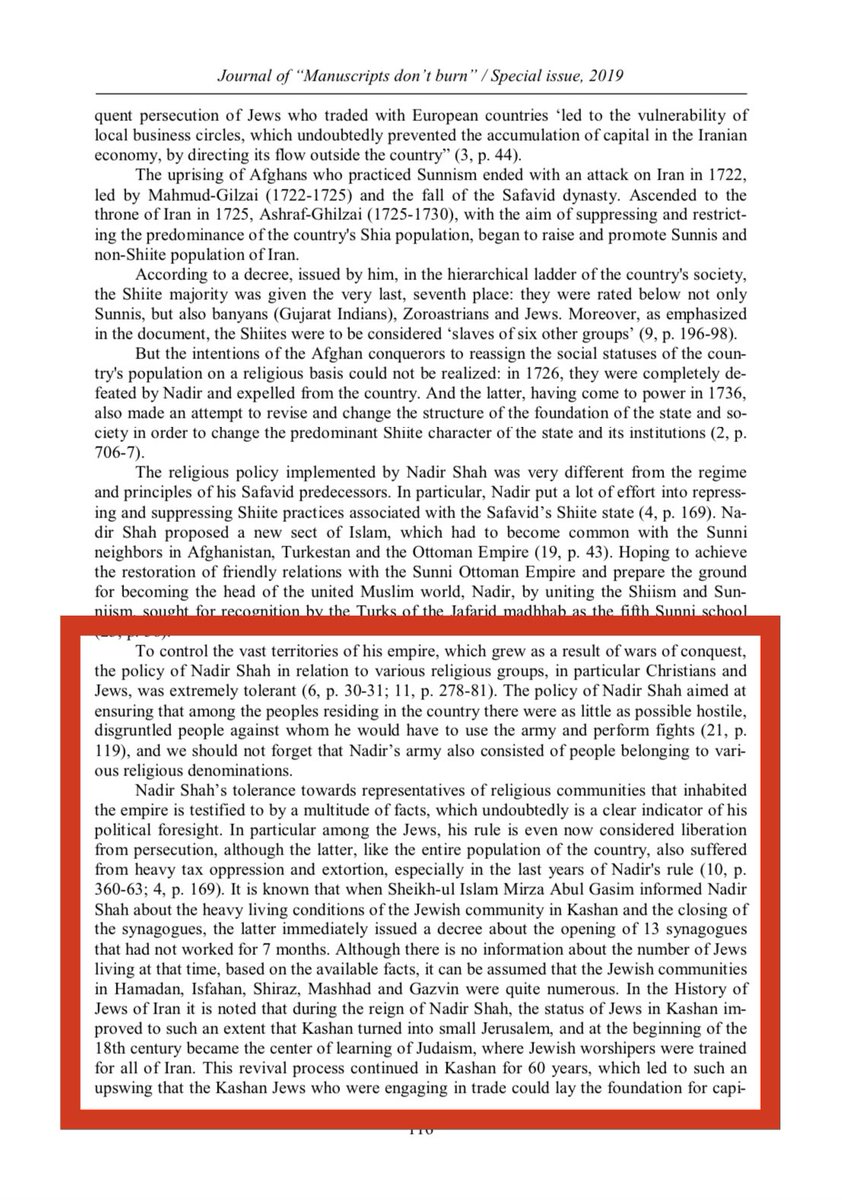
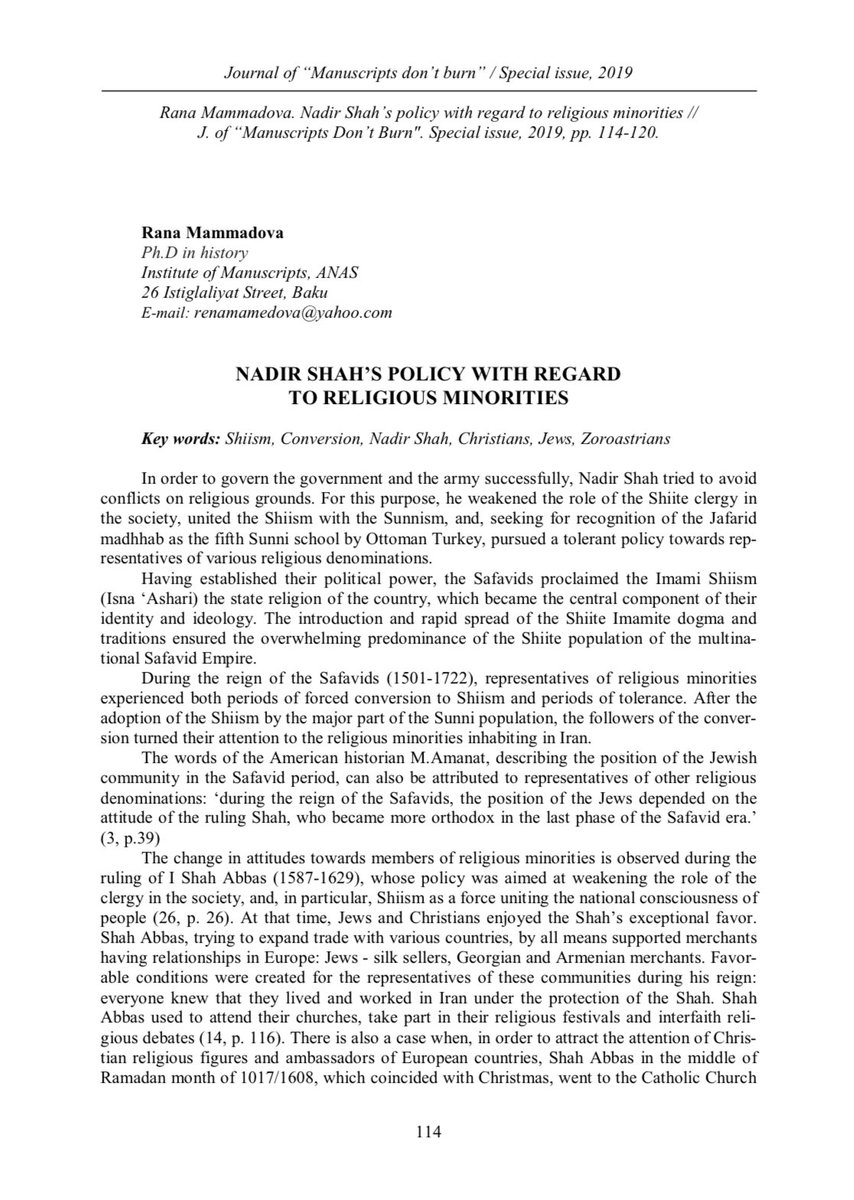
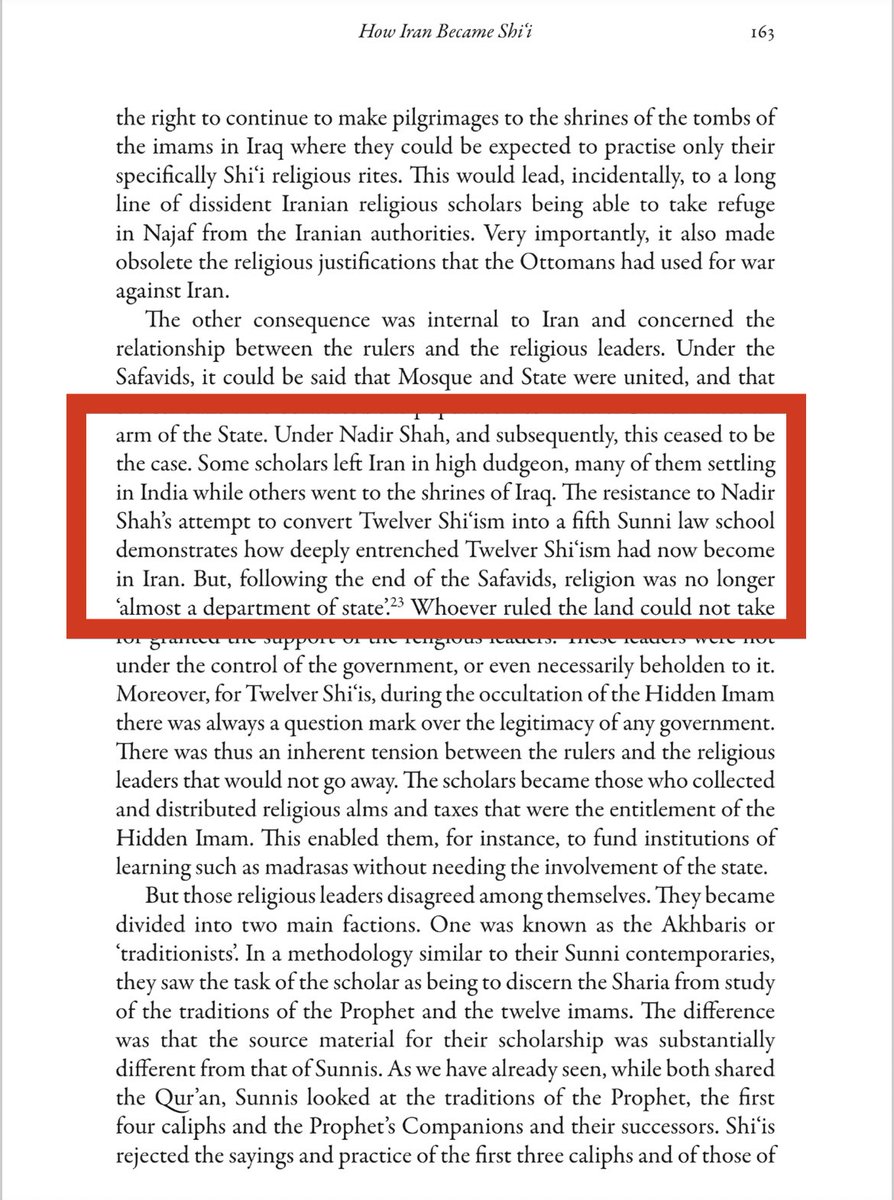
Within a decade of taking the throne, he’d humbled both Mughals (sack of Delhi) and Ottomans (Battle of Kars).
It’s around this period that Dehlawi and Wahhab shot into theological stardom with their respective maiden works.
It’s around this period that Dehlawi and Wahhab shot into theological stardom with their respective maiden works.
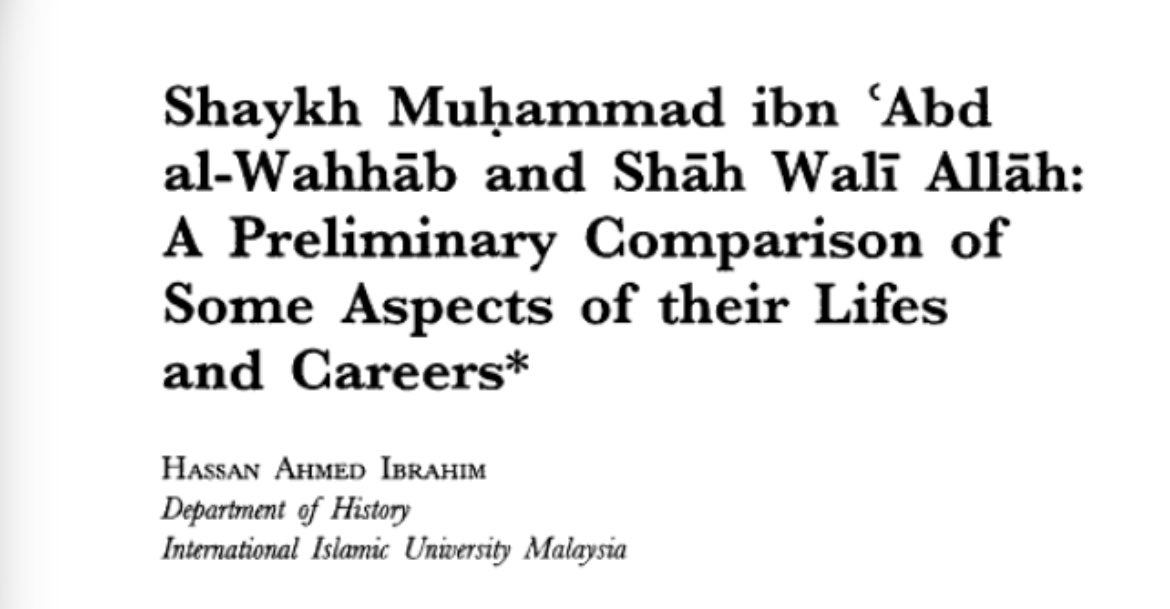
Wahhab’s Kitab at-Tawhid and Dehlawi’s Ḥujjat Allah al-Baligha, both advocated for and reinforced Islam’s return to its absolute, non-negotiable fundaments.
One became the guiding scripture for Wahhabism, the other for Deobandism that’d emerge a century later.
One became the guiding scripture for Wahhabism, the other for Deobandism that’d emerge a century later.
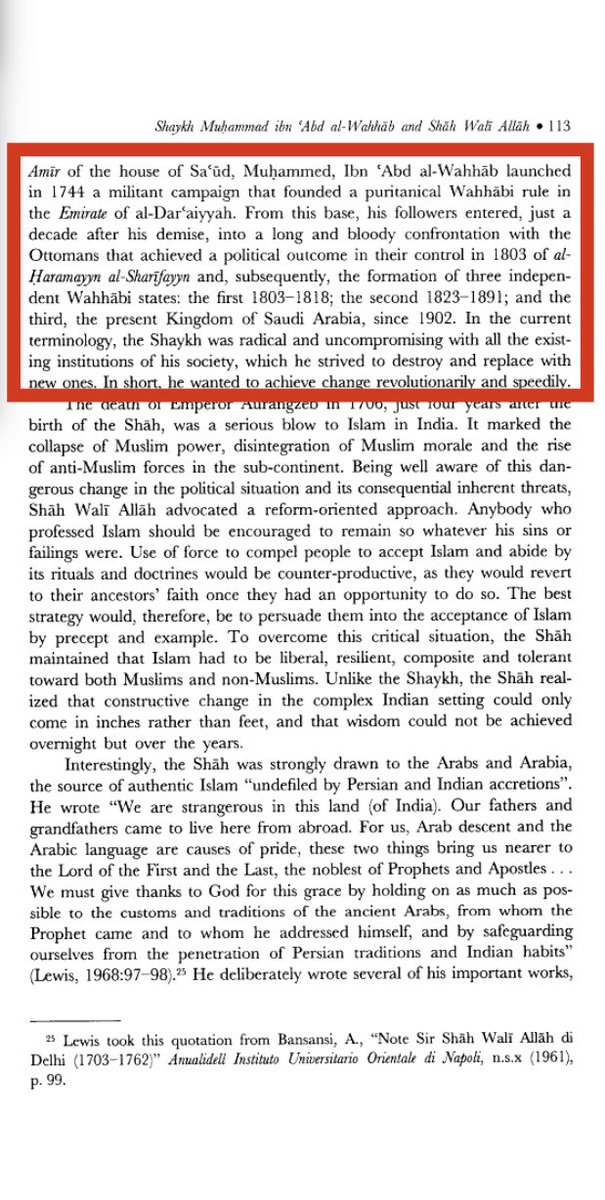
In Dehlawi’s defense however, I must assert—and forcibly so—that he was categorically against forced conversions or violence. Ironically, that’s the only part of his teachings his latter adherents would ignore. Be that as it may, his advocacy of Sharia found instant resonance.
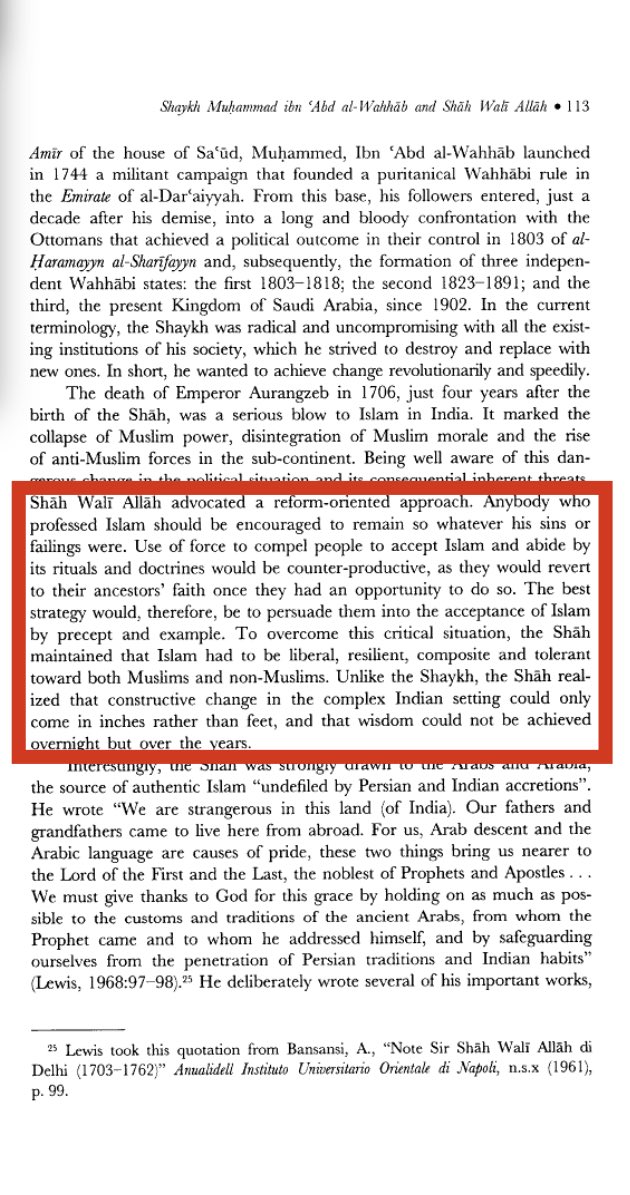
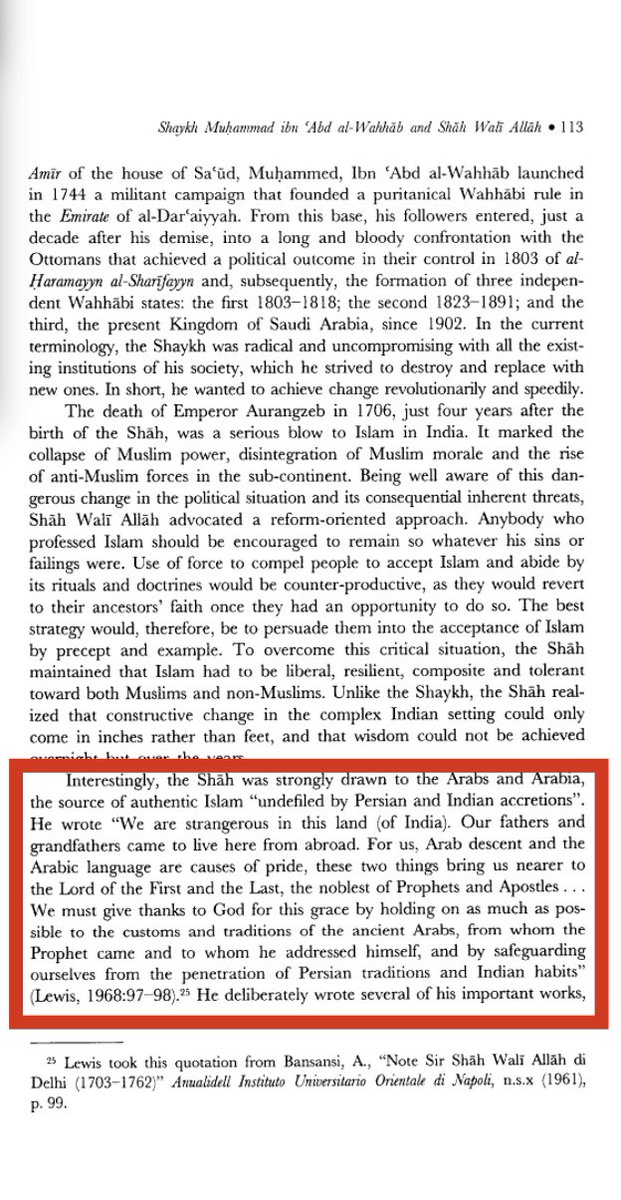
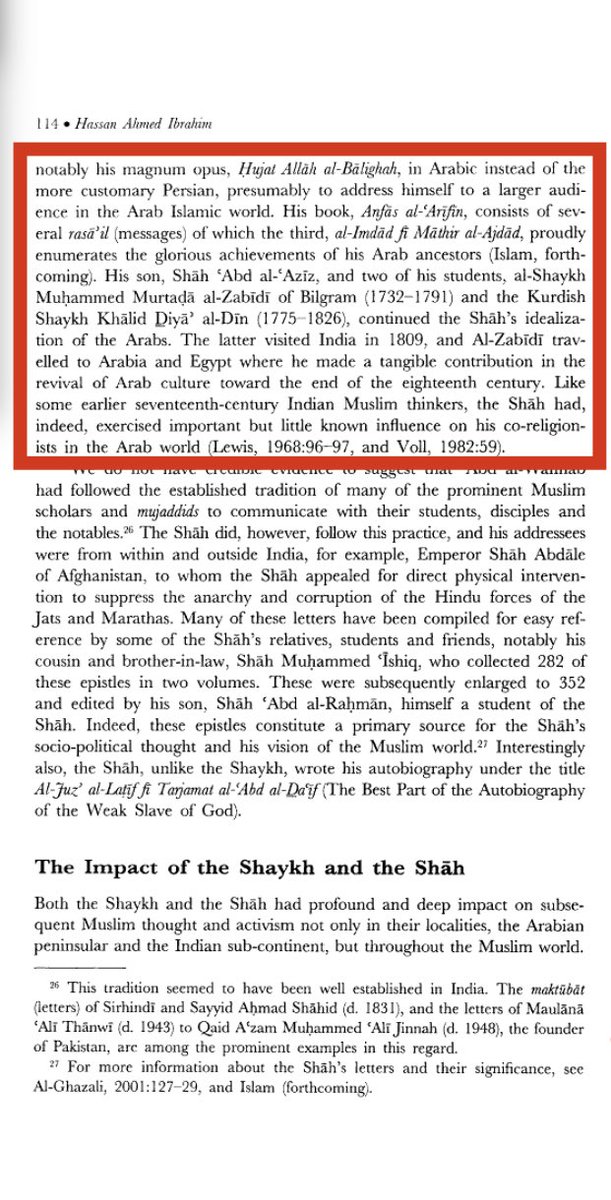
Dehlawi also superimposed upon Indian Muslims, an overarching Arab identity. While his advocacy for patience and pragmatic nonviolence didn’t resonate, this did. This was the birth of a “Muslim before Indian” sentiment that forms the trope of all Islamophobic narratives today.
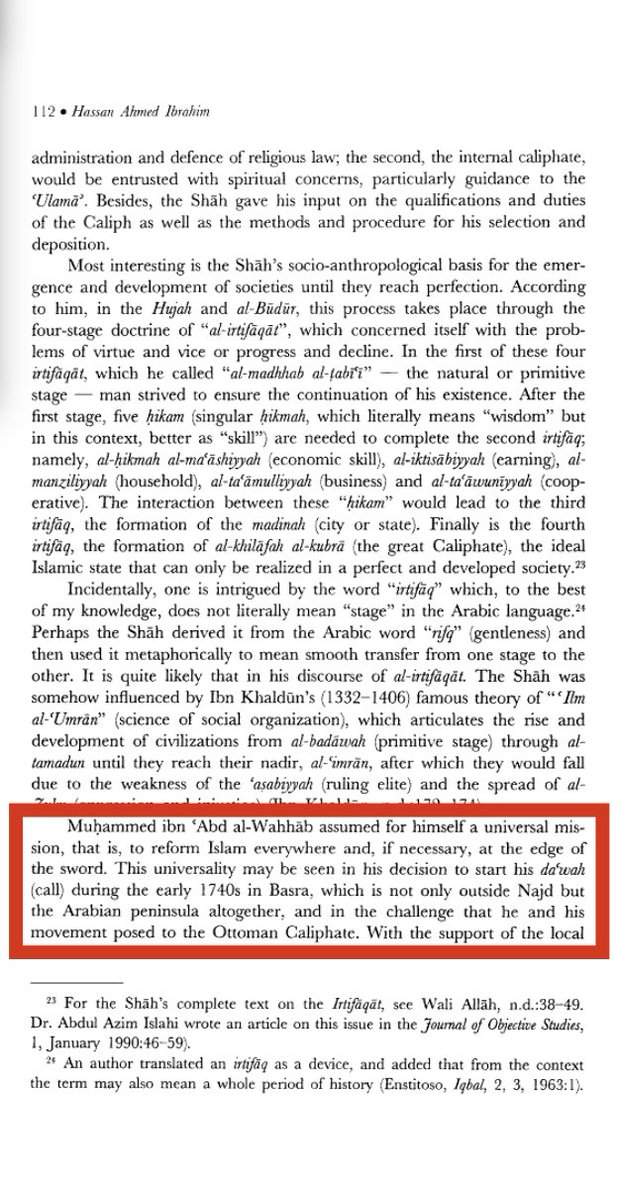
Wahhab, on the other hand, embarked upon a less nonviolent path that led to not only his confrontation with the Ottomans but also the establishment of a puritanical Islamist Emirate of Diriyah. This would later burgeon into the Kingdom of Saudi Arabia that we know of today.
Thus—and in most simplistic, reductive terms—one can see violent geopolitical jihad as a series of dominos, the first of which fell with the defeat of Constantinople…
On January 26, 1699.
To reduce it further, today is the birthday of modern militant jihad.
On January 26, 1699.
To reduce it further, today is the birthday of modern militant jihad.
Loading suggestions...