
While the shadowban is strong, I might as well take a trip back in photographic history.
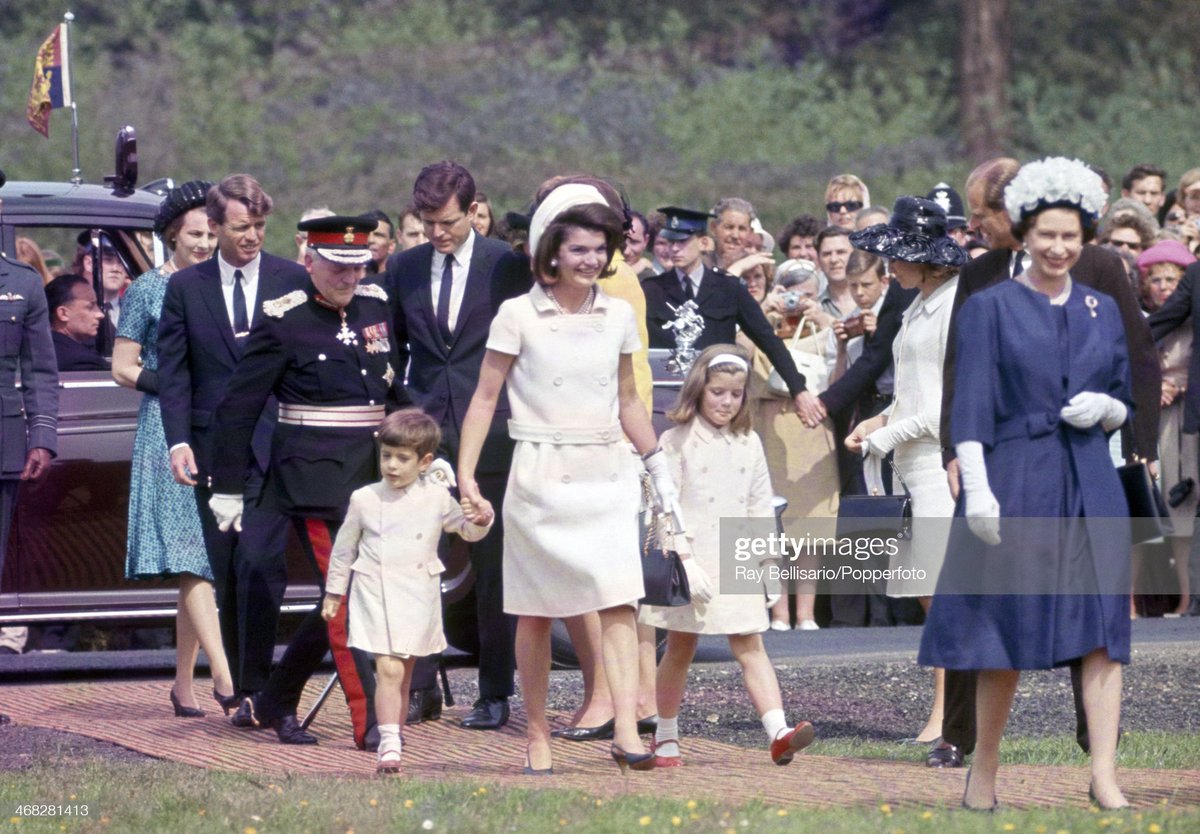
The best photographers taking the highest quality pictures in full sunlight.
In 1968.
gettyimages.com.au
The best photographers taking the highest quality pictures in full sunlight.
In 1968.
gettyimages.com.au

These are professional photographers with the best cameras money can buy.
People who have been taking pictures for years.
The grain is testament to the labour required to develop the images from negatives.
People who have been taking pictures for years.
The grain is testament to the labour required to develop the images from negatives.

Manual focus.
Manual exposure.
There was no auto focus or auto exposure on these cameras.
Colour bleeds and grain are authentic.
Manual exposure.
There was no auto focus or auto exposure on these cameras.
Colour bleeds and grain are authentic.
The very best photographers with the very best cameras can't adjust for minor movements which blur the image.


If you have been doing this for years and focus on one place, set the shutter speed very low and have full sun you might get an image like this

Or maybe even this. These cars are travelling approximately 200 mph.

Thankfully all these difficulties were solved in 1969 when NASA strapped a big "click me" button on a Hasselblad and every single picture came out perfect...
weforum.org
weforum.org
Hasselblad are very proud of their history, and rightly so. They were the people that made these impossible pictures possible hasselblad.com
Full sun.
No exposure adjustment.
No auto focus.
No viewfinder.
The first point and shoot camera.
Hi resolution, grain free pictures. Every one.
#thankshasselblad
No exposure adjustment.
No auto focus.
No viewfinder.
The first point and shoot camera.
Hi resolution, grain free pictures. Every one.
#thankshasselblad

And here is another picture showing the stripped down Hasselblad, full of dust, able to take perfect grain-free pictures with the click of a big button.
The button was big because of the gloves, which expand even more in a vacuum.
npr.org
The button was big because of the gloves, which expand even more in a vacuum.
npr.org

Remember too that this is bright sunlight - there are no clouds on the moon. In fact in the daytime the surface temperature is 140 celsius.
They stripped the camera down to save weight.
That enabled them to fit the lunar buggy in the lunar module
#scottiebluepills
They stripped the camera down to save weight.
That enabled them to fit the lunar buggy in the lunar module
#scottiebluepills

The moon buggy itself was a feat of engineering, the tyres were steel mesh only - to withstand the vaccuum and 140 degree heat on the surface.
moon.nasa.gov
moon.nasa.gov

It's difficult to make out from the images but in fact the lunar buggy was able to fold up in order to fit into the lunar module.
Just one of many essential firsts required in 1969 to get mad to drive around on the moon.
#scottiebluepills
scifacts.net
Just one of many essential firsts required in 1969 to get mad to drive around on the moon.
#scottiebluepills
scifacts.net
The moon buggy was truly amazing. For Apollo 17 the astronauts drove it for 100km with a max speed of 11 km/h.
10 hours driving is exhausting in 140 degree heat. I hope the airconditing was working!
moon.nasa.gov
10 hours driving is exhausting in 140 degree heat. I hope the airconditing was working!
moon.nasa.gov

And the Hasselblad performed brilliantly on all the missions. Here is a close up of the lunar module which fit the lunar buggy, two astronauts, an 8kW 1Mflp computer for guidance and moon rocks. This one is the Apollo 12 version

The 8kW 1megaflop computer was necessary to dock the moon lander travelling at 2000km/h (escape velocity) to the orbiting rocket travelling at 5500km/h (lunar orbit speed) in perpendicular directions.
Taking a picture in such extreme circumstances requires extreme skill
Taking a picture in such extreme circumstances requires extreme skill


This picture was famously taken through a window of the earlier Apollo 8 mission

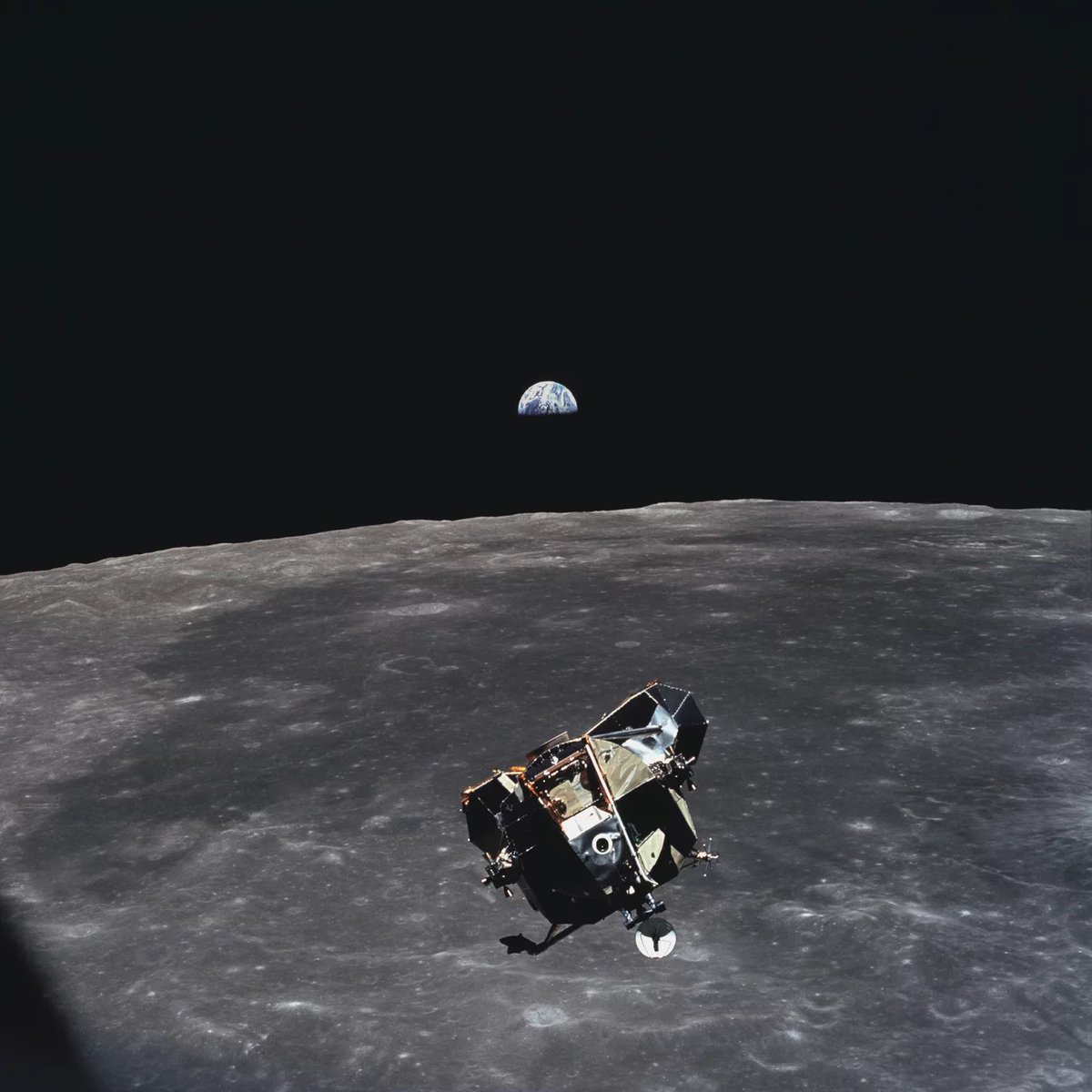
The coup de grace of filmography was this famous image of the moonlander travelling towards Apollo 11 to dock.
This iconic image was taken by Michael Collins as he guided the rocket travelling at 5500mk/h away from the moonlander, using a spare camera.
#scottiebluepills
This iconic image was taken by Michael Collins as he guided the rocket travelling at 5500mk/h away from the moonlander, using a spare camera.
#scottiebluepills
Any that's enough for this trip down memory lane. Hope you enjoyed it. If you find any other high resolution images from 1969 please post them - and remember genuine pictures only please!
*man
*airconditioning
Just one more note in relation to those mesh tyres developed in 1969 that could drive for 100km.
It seems that they were still struggling with the problem in 2017.
Weird how inventions and progress at NASA goes backwards isn't it?
businessinsider.com
It seems that they were still struggling with the problem in 2017.
Weird how inventions and progress at NASA goes backwards isn't it?
businessinsider.com
*km/h
For God's sake let us have the ability to make minor edits to tweets in threads!
For God's sake let us have the ability to make minor edits to tweets in threads!
*anyway


Loading suggestions...