

For 10 Years, VALUATION was not a factor in my investing.
That ends today
Here's what will be changing...⤵️
That ends today
Here's what will be changing...⤵️
But first: Why wasn't valuation a factor?
When I was getting started, I passed on FAR too many stocks b/c of valuation
I learned:
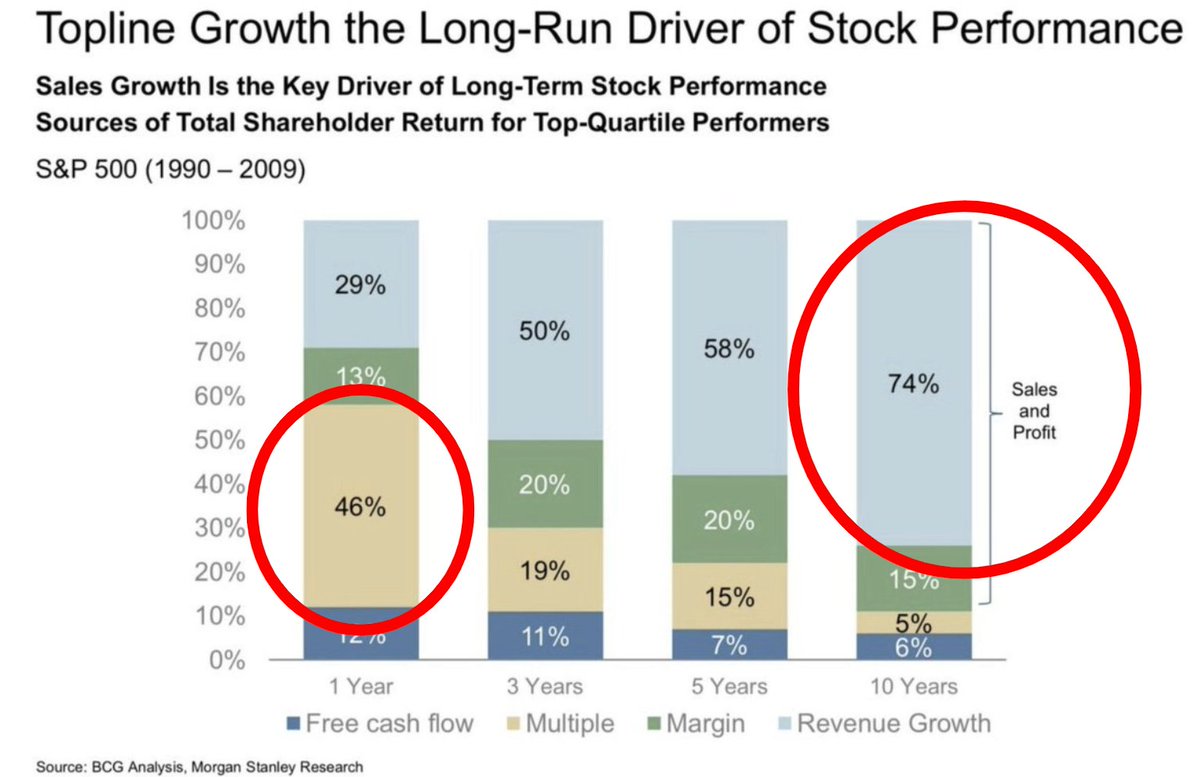
⌛Inthe short-term, valuation is the PRIMARY thing driving results
📆But in the long-term, GROWTH is the driver.
When I was getting started, I passed on FAR too many stocks b/c of valuation
I learned:
⌛Inthe short-term, valuation is the PRIMARY thing driving results
📆But in the long-term, GROWTH is the driver.
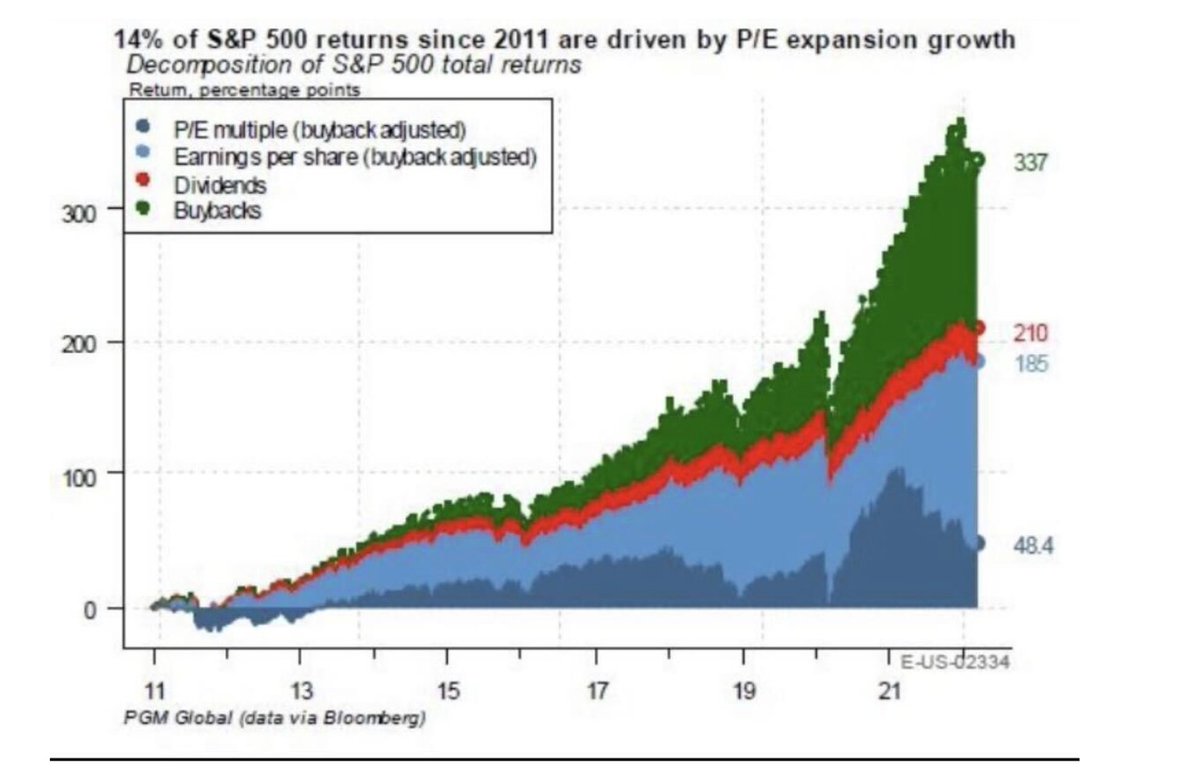
Even from 2011 to the recent post-COVID drop, valuation expansion was NOT the biggest driver of returns.
👉 7% was due to dividends
👉 14% was due to multiple expansion
👉 38% was due to buybacks
👉 41% was due to earnings growth
👉 7% was due to dividends
👉 14% was due to multiple expansion
👉 38% was due to buybacks
👉 41% was due to earnings growth
Instead, I focused on 3 ANTIFRAGILE traits:
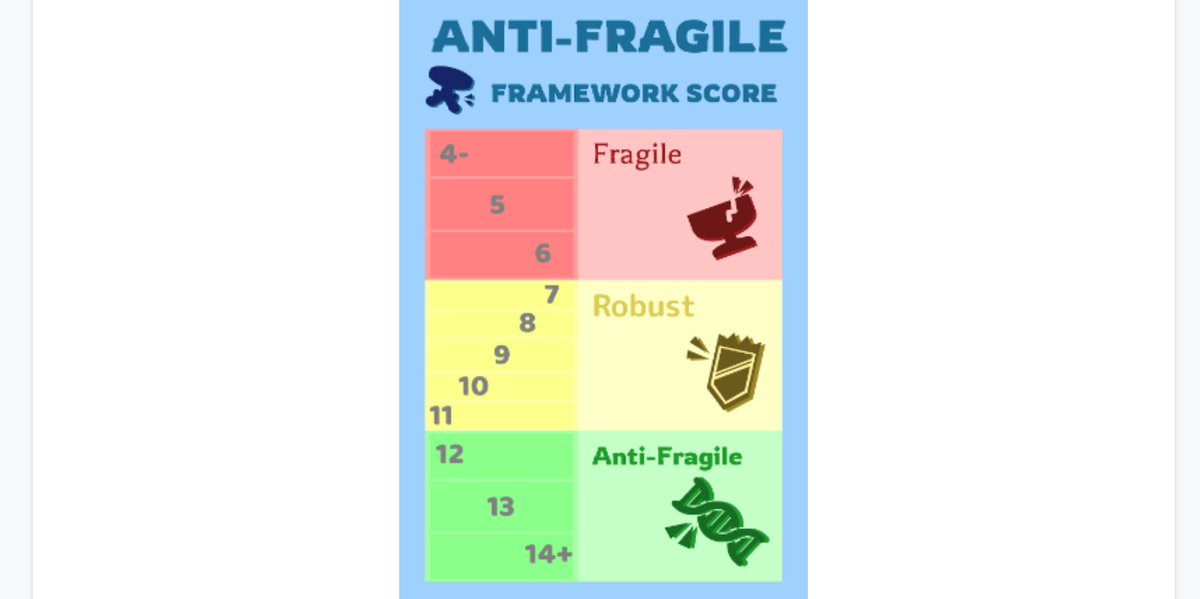
1️⃣ BARBELL METHOD: Wide Moats on one side, Optionality on the other (14 pts)
2️⃣ REDUNDANCY: Lots of cash, little debt, positive cash flows, no single point of failure (5 pts)
3️⃣ SKIN IN GAME: founder-led w/ insider ownership (5 pts)
1️⃣ BARBELL METHOD: Wide Moats on one side, Optionality on the other (14 pts)
2️⃣ REDUNDANCY: Lots of cash, little debt, positive cash flows, no single point of failure (5 pts)
3️⃣ SKIN IN GAME: founder-led w/ insider ownership (5 pts)
But there was a disconnect:
INVESTING in antifragile companies is NOT the same thing as making an antifragile PORTFOLIO.
The key unit in the former = the company
The key unit in the latter = my portfolio
My solution: zero in on a key VALUATION metric
INVESTING in antifragile companies is NOT the same thing as making an antifragile PORTFOLIO.
The key unit in the former = the company
The key unit in the latter = my portfolio
My solution: zero in on a key VALUATION metric
That metric:
A reverse DCF calculation (12% discount rate, 10X FCF terminal) letting me know:
How fast does FCF need to grow over time to justify this stock price?
If I had done this, I would have trimmed many of my positions in late 2021.
An example...
A reverse DCF calculation (12% discount rate, 10X FCF terminal) letting me know:
How fast does FCF need to grow over time to justify this stock price?
If I had done this, I would have trimmed many of my positions in late 2021.
An example...
In November 2021, $SHOP was by far my largest holding.
Taking the data from the time, FCF would have to have grown at: a **61% CAGR** for the foreseeable future.
Is that possible? YES
Probable? NO
And this quote highlights the problem
Taking the data from the time, FCF would have to have grown at: a **61% CAGR** for the foreseeable future.
Is that possible? YES
Probable? NO
And this quote highlights the problem

With Shopify occupying over 15% of my portfolio -- and the company needing to generate such growth, my portfolio was fragile.
But:
👉 I would NOT have sold it altogher
👉 I would NOT avoid buying it if I didn't already
It would inform POSITION SIZE
But:
👉 I would NOT have sold it altogher
👉 I would NOT avoid buying it if I didn't already
It would inform POSITION SIZE
So here's TWO things I'm doing:
1️⃣ After running framework, I do Reverse DCF and ask: Does that FCF growth seem reasonable?
👉If VERY reasonable: ADD up to +1.5 points
👉If plausable: score UNCHANGED
👉If HIGHLY improbable: SUBTRACT up to -1.5 points
1️⃣ After running framework, I do Reverse DCF and ask: Does that FCF growth seem reasonable?
👉If VERY reasonable: ADD up to +1.5 points
👉If plausable: score UNCHANGED
👉If HIGHLY improbable: SUBTRACT up to -1.5 points
2️⃣ Check this once per 6 months
👉If a stock is OVER 10% of port and has HIGHLY improbable assumptions baked in, TRIM
👉If a stock is BELOW 5% of port and has VERY reasonable assumptions baked in, ADD
Next week, I'll be revealing my portfolio changes based on this...
👉If a stock is OVER 10% of port and has HIGHLY improbable assumptions baked in, TRIM
👉If a stock is BELOW 5% of port and has VERY reasonable assumptions baked in, ADD
Next week, I'll be revealing my portfolio changes based on this...
If you'd like to see that portfolio reveal next week, follow @Brian_Stoffel_
If you'd like to learn more about long-term investing, subscribe to my FREE weekly newsletter with nearly 50,000 subscribers:
brianstoffel.com
If you'd like to learn more about long-term investing, subscribe to my FREE weekly newsletter with nearly 50,000 subscribers:
brianstoffel.com

To review:
1️⃣ The Antifragile Framework will remain my central component
2️⃣ A reverse DCF model will allow me to add/subtract 1.5 points when done
3️⃣ I will regularly update my numbers to adjust POSITION size
1️⃣ The Antifragile Framework will remain my central component
2️⃣ A reverse DCF model will allow me to add/subtract 1.5 points when done
3️⃣ I will regularly update my numbers to adjust POSITION size
Loading suggestions...