

Thanks for writing back Amit. That’s true. Term “Hindu” wasn’t used but when Naqib clearly represented that, Badayuni had desire to take part in “Holy War.”
& if you begin to look at history of Babur’s lineage, they have always called one against “Hindu King” as “Holy War.”
& if you begin to look at history of Babur’s lineage, they have always called one against “Hindu King” as “Holy War.”
For example, while Babur was fighting with Afghan tribals in Kabul, & even made the tower of their skull it wasn’t called holy war. He didn’t call his war against Lodi as “Holy War.” He called his war against “Rana Sanga”, a Jihad— a holy war.
So it is not very appropriate to think that Akbar didn’t consider “holy war” to be a war against a Hindu king.
& in that case when Badayuni shows desire to soak his beard in blood in “Holy War”, it has to be blood of infidels.
& in that case when Badayuni shows desire to soak his beard in blood in “Holy War”, it has to be blood of infidels.
To understand the psyche of Akbar wrt Battle of Haldighati, we must get into a few remarkable details of tussle between “House of Mewar” (Chittor) & “House of Timur” (Akbar).
On March 9, 1958, Akbar issued Fathnama (decoration of Victory) which says as below:
On March 9, 1958, Akbar issued Fathnama (decoration of Victory) which says as below:
“We, as far as it is within our power, remain busy in Jihad & owing to the kindness of the superior Lord, who is the promoter of our victories, we have succeeded in occupying a number of forts and towns belonging to the infidels and have established Islam there.
With the help of our bloodthirsty sword we have erased the signs of infidelity from their minds and have destroyed temples in those places and also all over Hindustan.”
He calls enemy Infidel/ Kafir & his victorious army, one of Islam.
Some snippets.
He calls enemy Infidel/ Kafir & his victorious army, one of Islam.
Some snippets.
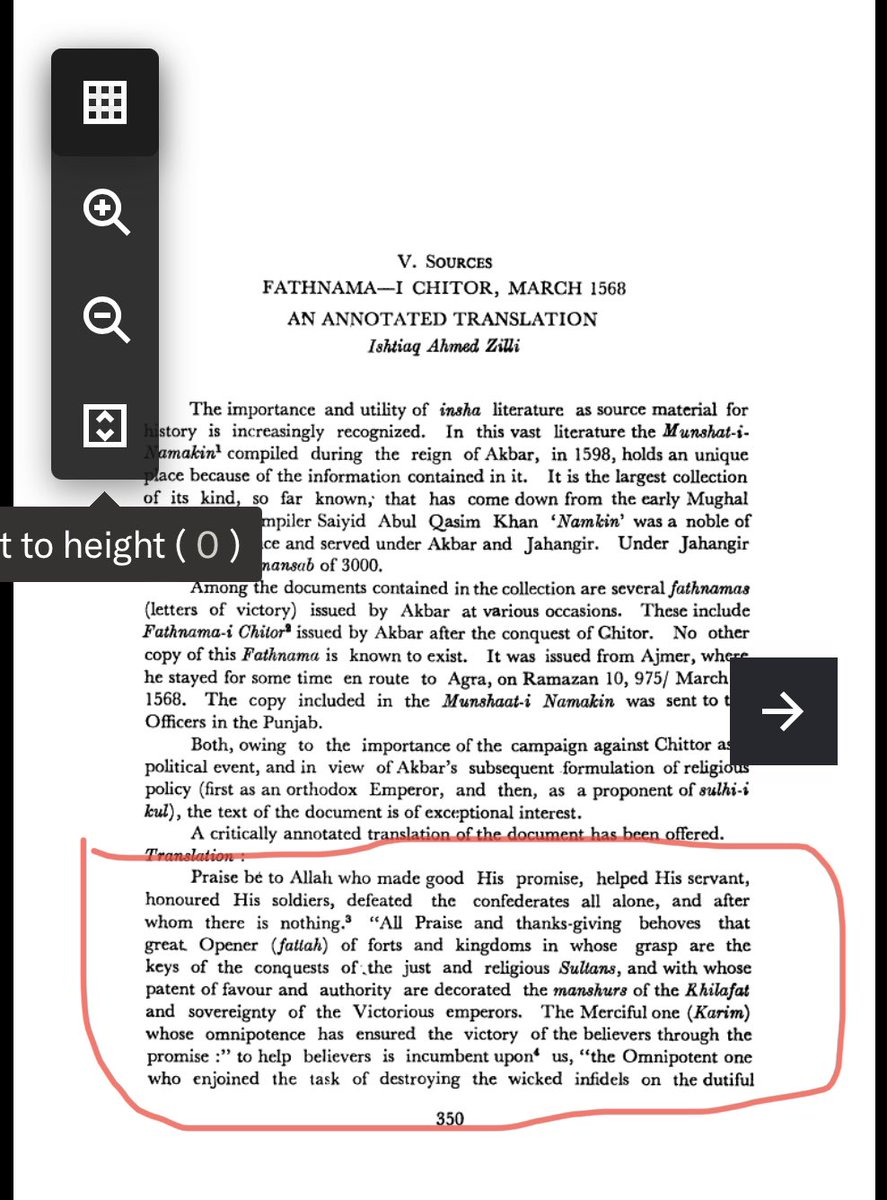
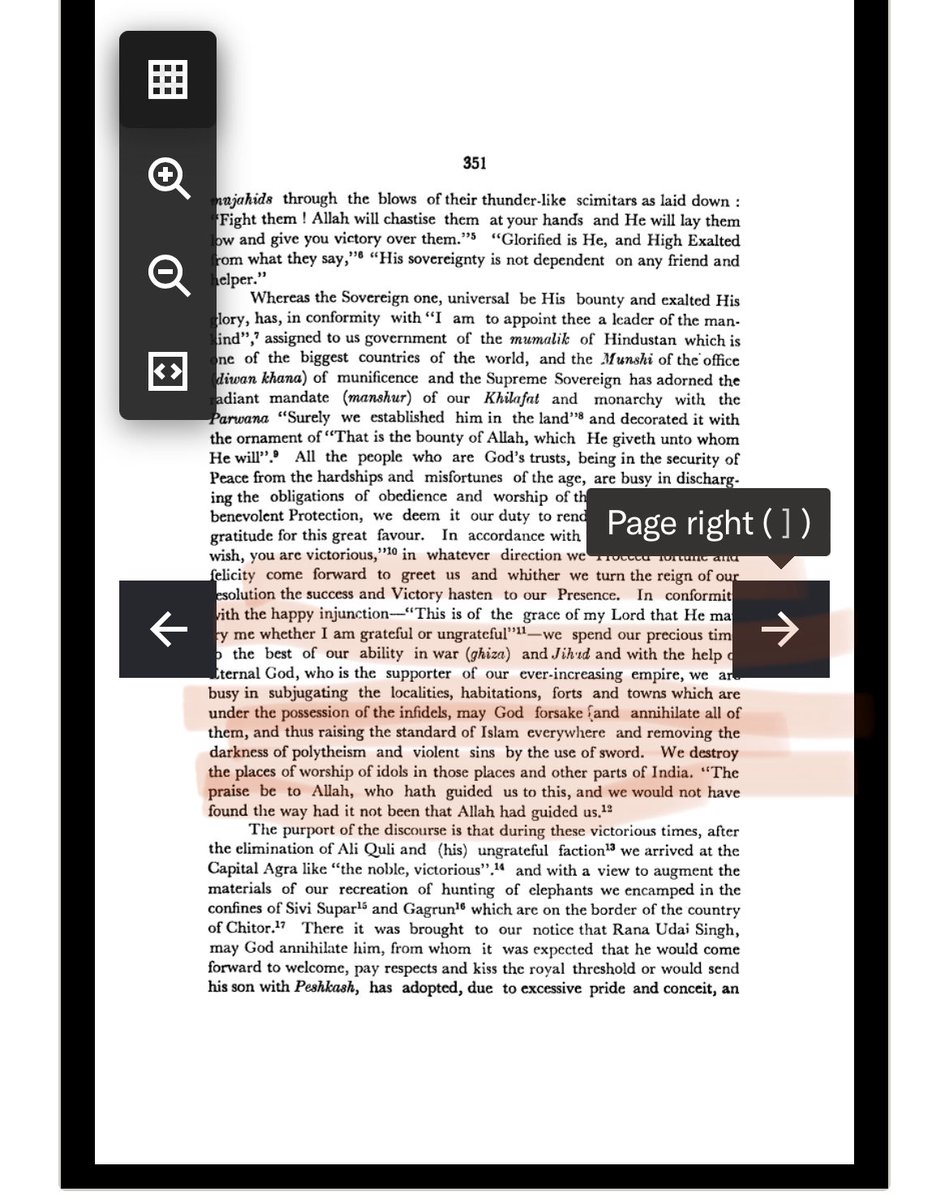
It was translated & paper published in 1971, in Indian History Congress by Ishtiaq Ahmad Zilli.
The whole paper/ translation & commentary can be read here #page_scan_tab_contents" target="_blank" rel="noopener" onclick="event.stopPropagation()">jstor.org
The whole paper/ translation & commentary can be read here #page_scan_tab_contents" target="_blank" rel="noopener" onclick="event.stopPropagation()">jstor.org
When Akbar returned to Agra, he commissioned the statues of Jaimal & Patta outside his fort most likely to humiliate them as his doorkeepers.
Though Satish Chandra in order to secularise Akbar, says that it was for honouring them.
Though Satish Chandra in order to secularise Akbar, says that it was for honouring them.
As far as Rana Pratap’s army consisting of Muslims is considered, one part led by Hakim Khan Sur Pashtun, & the number of afghans was around 500-800.
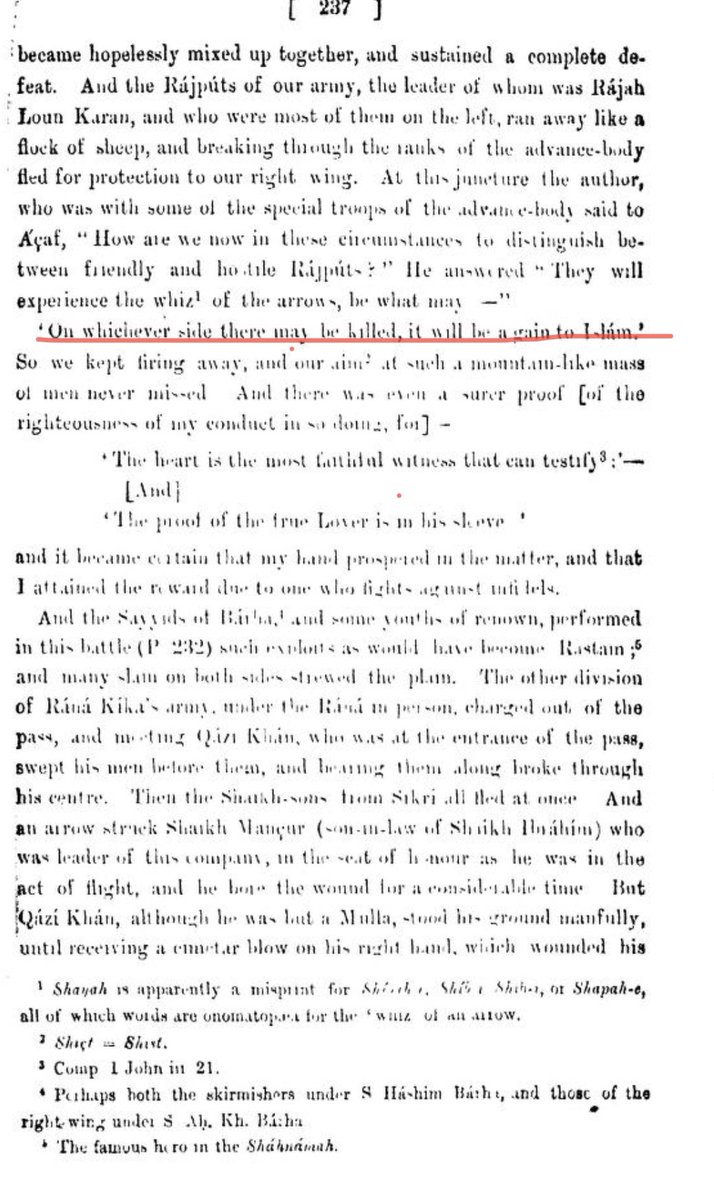
In fact once a question arose during war that since there are Rajputs on Akbar side & it is tough to figure out who is on which side.
For this Badayuni opines, that wherever Hindus are killed from either side it is benefit of Islam. Here is snippet.
For this Badayuni opines, that wherever Hindus are killed from either side it is benefit of Islam. Here is snippet.
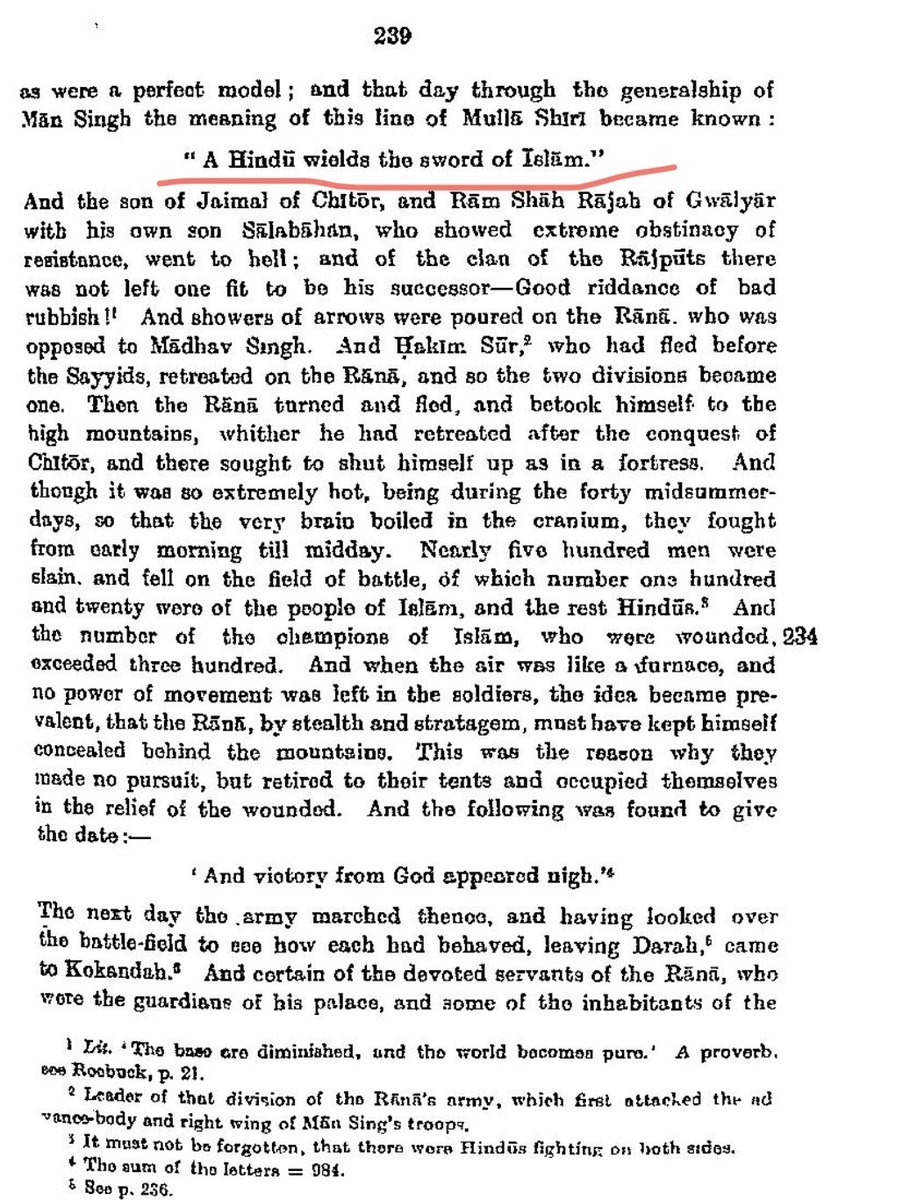
And I must add one more point; in popular discourse among the Timurids (distorted as Mughals), Man Singh was considered “A Hindu (who) wields the sword of Islam.”
Again, this too is from same vol-2 of Badayuni.
Again, this too is from same vol-2 of Badayuni.
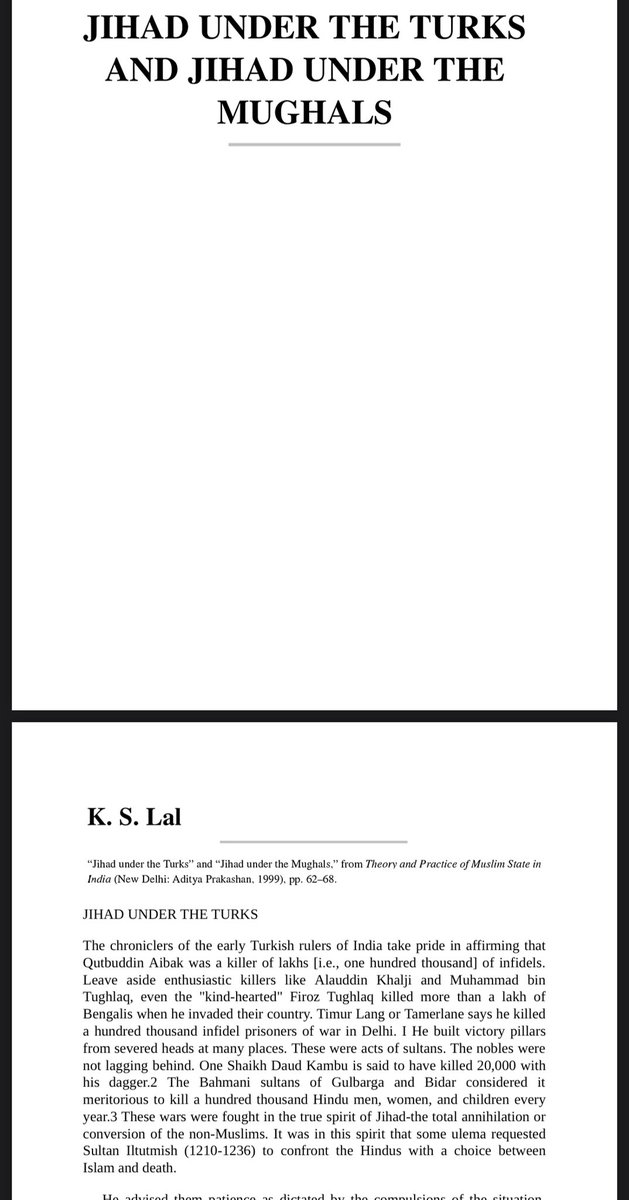
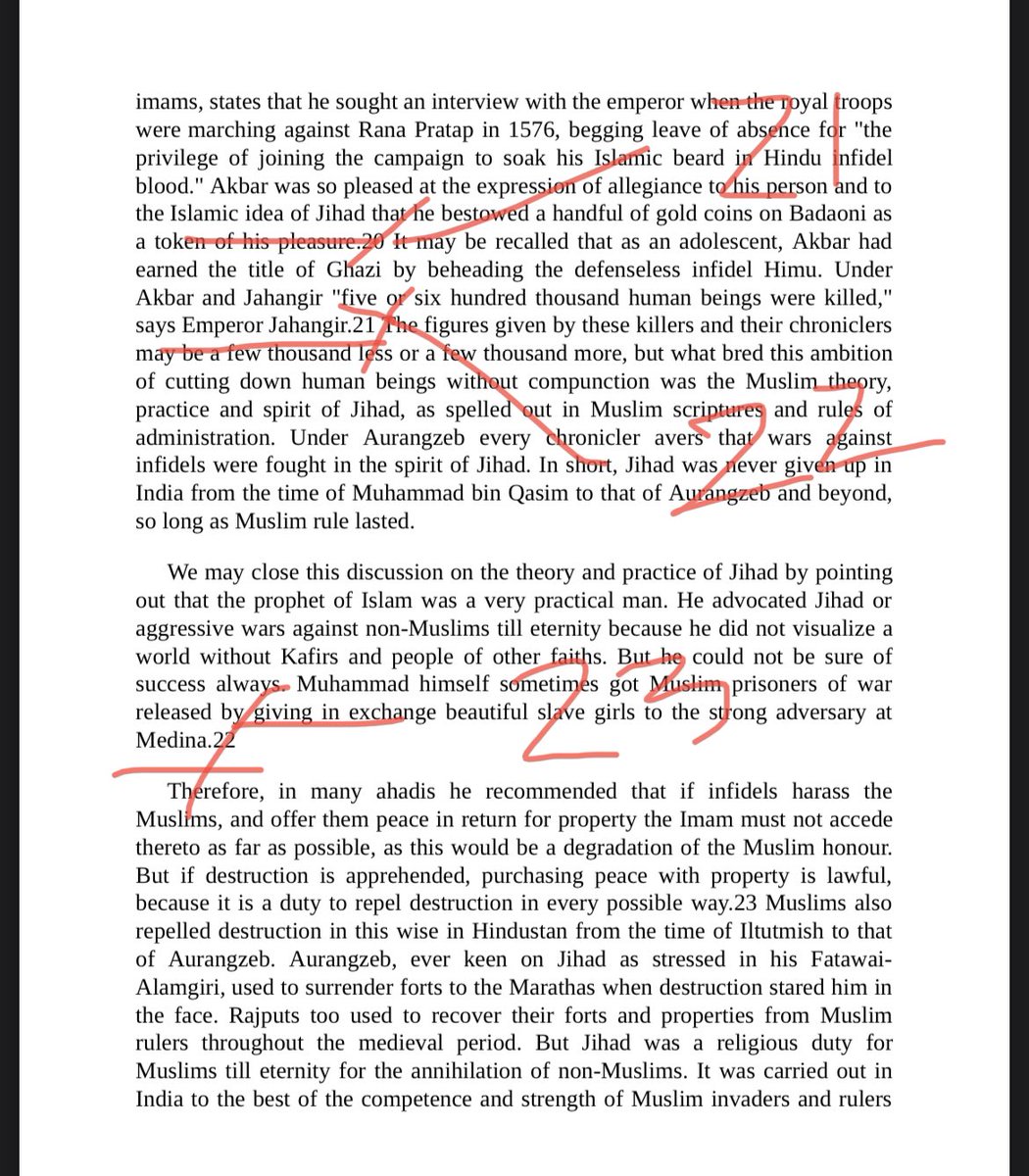
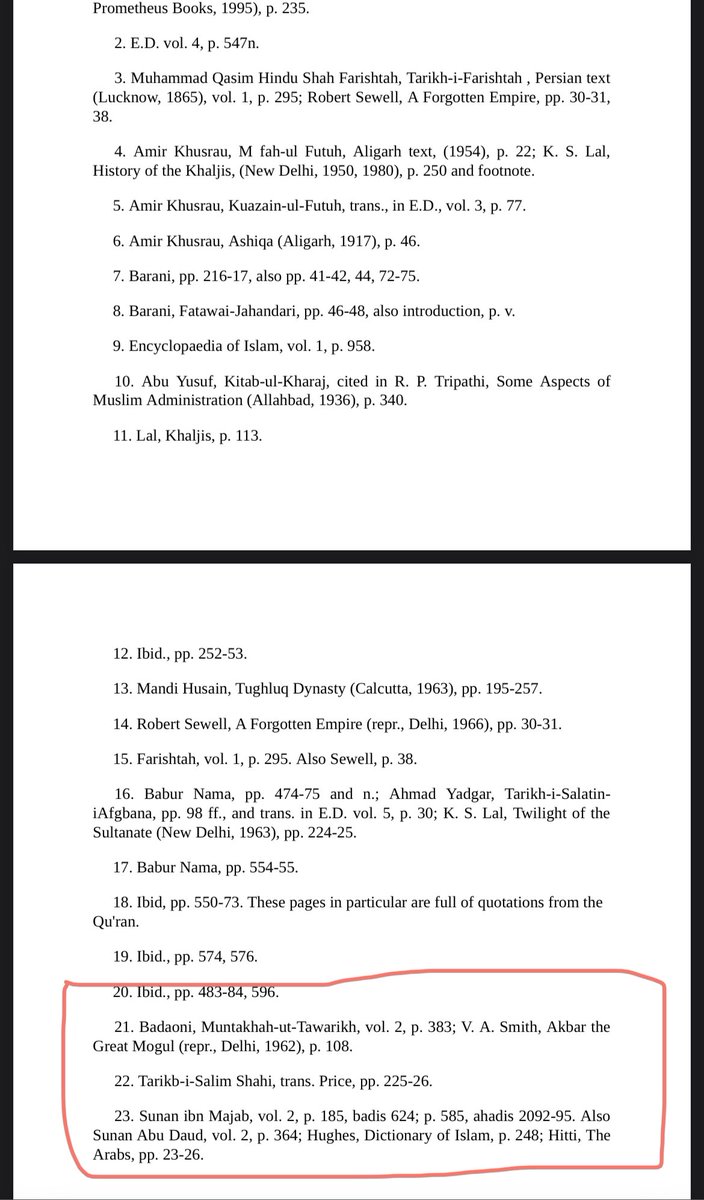
Missed this. Bostom had just edited the book more like a compiler. This essay what we discussed about was actually written by KS Lal (image-1). And once the citation 20 in article becomes 21, 21 becomes 22, 22 becomes 23, all make sense (image 2 &3). One “ibid” came extra 😀
Loading suggestions...