

بهذا الثريد بتكلم عن
📌Shock
الي هي نقصان كبير بتدفق الدم للاعضاء وممكن يصير فيهم فشل بسبب قلة التروية
تابعو الثريد ⬇️⬇️
📌Shock
الي هي نقصان كبير بتدفق الدم للاعضاء وممكن يصير فيهم فشل بسبب قلة التروية
تابعو الثريد ⬇️⬇️
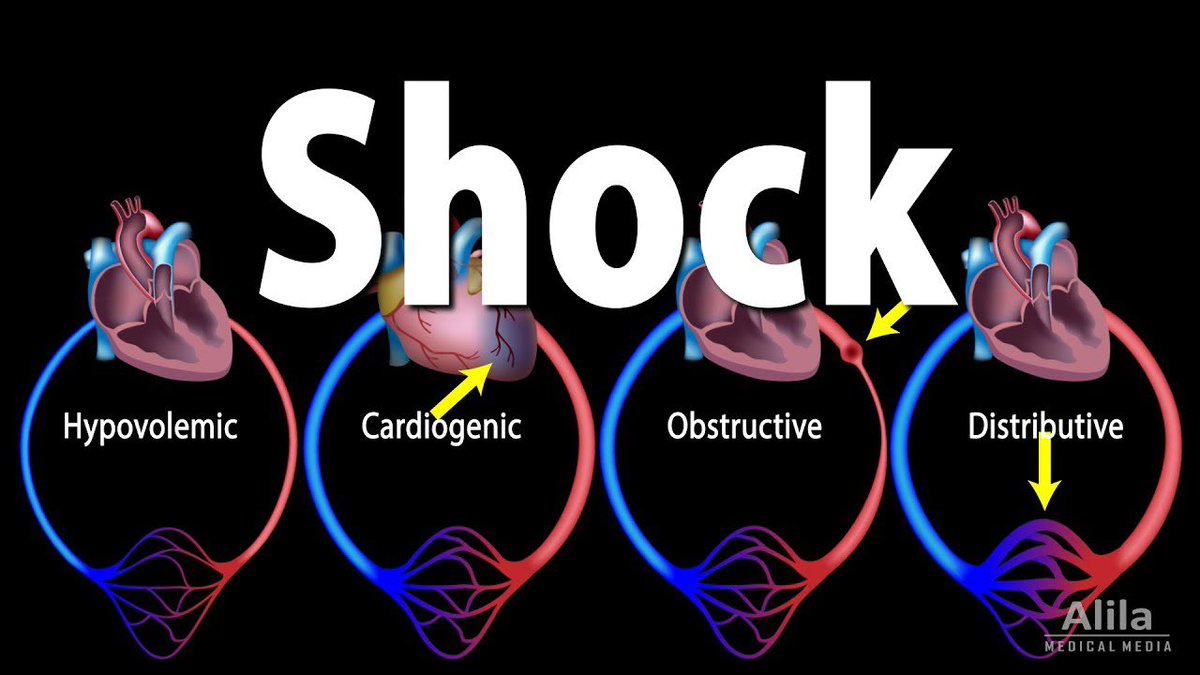
Shock is defined as a state of cellular and tissue hypoxia due to either reduced oxygen delivery, increased oxygen consumption, inadequate oxygen utilization, or a combination of these processes.
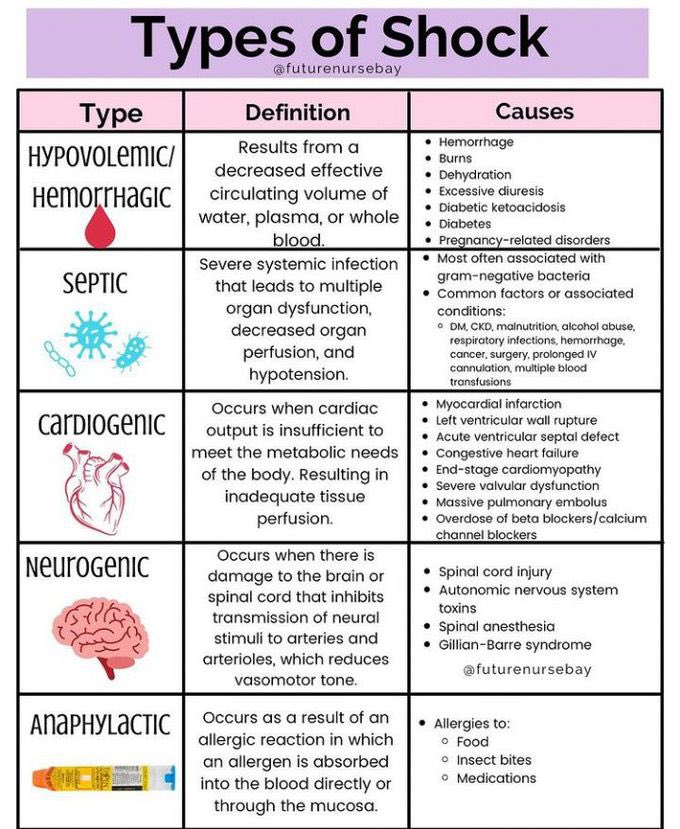
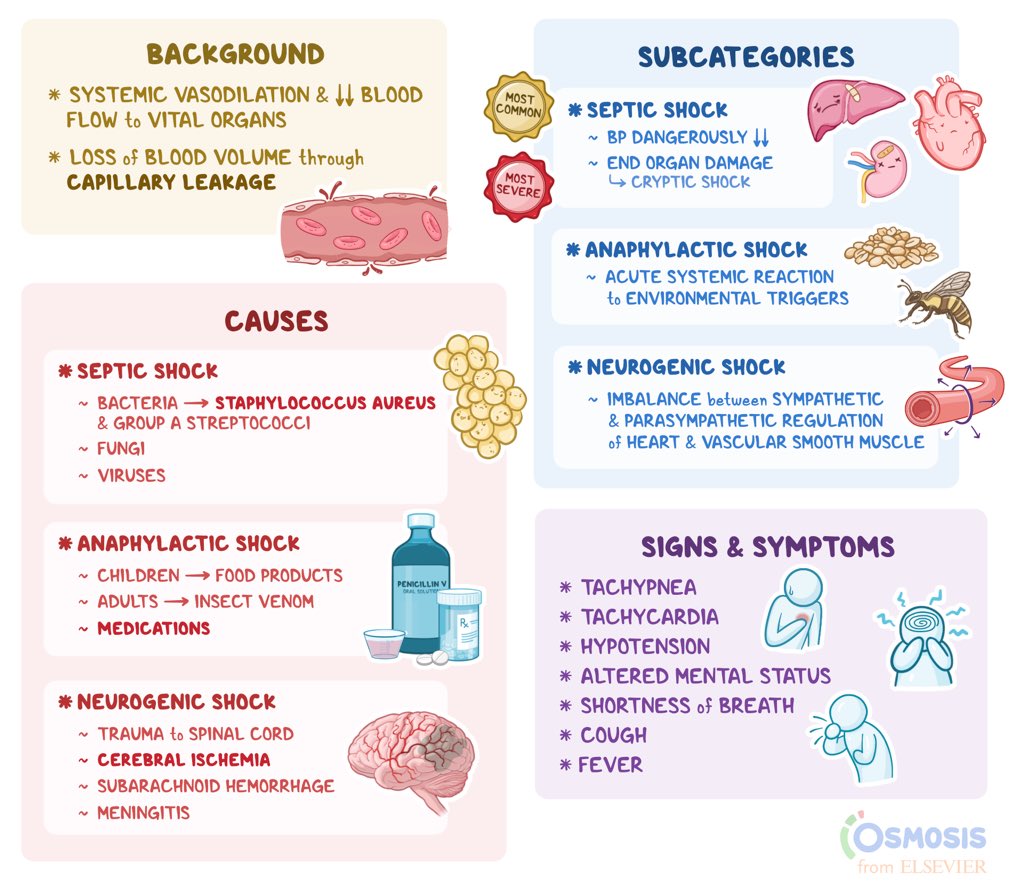
The main types of shock:
•Cardiogenic shock (due to heart problems)
•Hypovolemic shock (caused by too little blood volume)
•Anaphylactic shock (caused by allergic reaction)
•Septic shock (due to infections)
•Neurogenic shock (caused by damage to the nervous system)
•Cardiogenic shock (due to heart problems)
•Hypovolemic shock (caused by too little blood volume)
•Anaphylactic shock (caused by allergic reaction)
•Septic shock (due to infections)
•Neurogenic shock (caused by damage to the nervous system)
Cardiogenic Shock: occurs when the heart can't pump enough blood to meet the body's demands. Causes include heart attack, heart failure.
Hypovolemic Shock: occurs when there's a severe loss of blood or fluid volume. Causes include severe bleeding, dehydration.
Hypovolemic Shock: occurs when there's a severe loss of blood or fluid volume. Causes include severe bleeding, dehydration.
Obstructive Shock: occurs when blood flow is blocked, most commonly by blood clots, tension pneumothorax, or cardiac tamponade.
Septic Shock: occurs when a bacterial infection releases toxins into the bloodstream, leading to widespread inflammation and decreased blood flow.
Septic Shock: occurs when a bacterial infection releases toxins into the bloodstream, leading to widespread inflammation and decreased blood flow.
Anaphylactic Shock: a severe, whole-body reaction to an allergen or other trigger. It can cause hives, difficulty breathing, and a drop in blood pressure.
Neurogenic Shock: occurs when sudden spinal cord injury disrupts the nervous system's regulation of blood pressure and HR.
Neurogenic Shock: occurs when sudden spinal cord injury disrupts the nervous system's regulation of blood pressure and HR.
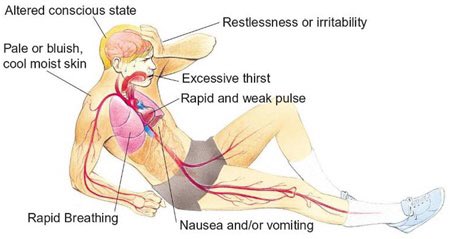
Shock Symptoms:
-Low blood pressure
-Rapid, weak pulse
-Confusion or unconsciousness
-Bluish or gray skin color
-Difficulty breathing
-Chest or abdominal pain
-Low blood pressure
-Rapid, weak pulse
-Confusion or unconsciousness
-Bluish or gray skin color
-Difficulty breathing
-Chest or abdominal pain
Shock Risk Factors:
-Age: older adults are more at risk
-Chronic illnesses such as diabetes, heart disease, and kidney disease
-Medications that affect blood pressure
-Injury or trauma
-Dehydration
-Severe infections
-Allergic reactions
-Severe bleeding
-Burns
-Organ failure
-Age: older adults are more at risk
-Chronic illnesses such as diabetes, heart disease, and kidney disease
-Medications that affect blood pressure
-Injury or trauma
-Dehydration
-Severe infections
-Allergic reactions
-Severe bleeding
-Burns
-Organ failure

Diagnosing Shock:
-Physical exam: pulse, blood pressure, breathing rate
-Blood tests: to check electrolyte levels, glucose levels, blood count
-Imaging tests: X-rays, CT scans, or ultrasound
-EKG or cardiac monitoring
-Physical exam: pulse, blood pressure, breathing rate
-Blood tests: to check electrolyte levels, glucose levels, blood count
-Imaging tests: X-rays, CT scans, or ultrasound
-EKG or cardiac monitoring
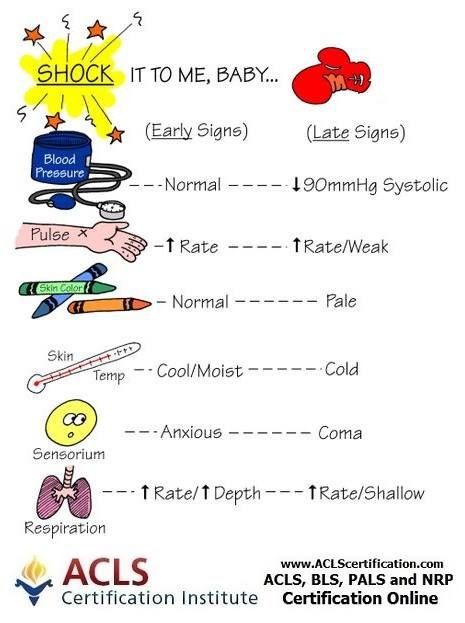
Physical exam of a patient with shock can reveal the following signs and symptoms:
-Low BP
-Rapid, weak pulse
-Confusion or unconsciousness
-gray skin color (due to poor blood circulation)
-Difficulty breathing
-Sweating
-Nausea or vomiting
-Reduced urine output
-Elevated HR
-Low BP
-Rapid, weak pulse
-Confusion or unconsciousness
-gray skin color (due to poor blood circulation)
-Difficulty breathing
-Sweating
-Nausea or vomiting
-Reduced urine output
-Elevated HR
Lab results in a patient with shock:
(anemia)
• Low electrolyte levels (e.g. sodium, potassium, calcium)
• High or low glucose levels
• Elevated markers of inflammation (CRP, WBC count)
• Elevated lactate levels
• Abnormal LFT
• Abnormal KFT
• Abnormal CD (PT, INR)
(anemia)
• Low electrolyte levels (e.g. sodium, potassium, calcium)
• High or low glucose levels
• Elevated markers of inflammation (CRP, WBC count)
• Elevated lactate levels
• Abnormal LFT
• Abnormal KFT
• Abnormal CD (PT, INR)
Treating Shock:
-Treat underlying cause: e.g. stop bleeding, remove blockages, antibiotics for infections
-Fluid replacement: IV fluids to increase blood volume
-Medications: to increase blood pressure, treat infections, manage pain
-Treat underlying cause: e.g. stop bleeding, remove blockages, antibiotics for infections
-Fluid replacement: IV fluids to increase blood volume
-Medications: to increase blood pressure, treat infections, manage pain
Oxygen therapy: to improve oxygen levels in the blood
-Inotropic drugs: to improve heart function
-Mechanical ventilation: if breathing is compromised
-Surgery: to repair damage, remove blockages
-Inotropic drugs: to improve heart function
-Mechanical ventilation: if breathing is compromised
-Surgery: to repair damage, remove blockages
The type of shock and its cause will determine the best treatment approach. Timely and appropriate treatment can prevent complications and improve chances of recovery.
Thank you 🙏🏻
Thank you 🙏🏻

Summary
Loading suggestions...