

In case anybody is interested, the history of gardens in ancient & the first millennia is more complex -- ranging from active gardening technique to theological implications to visions of heaven to diversity of automatons to textual records -- and worthy of a monograph.
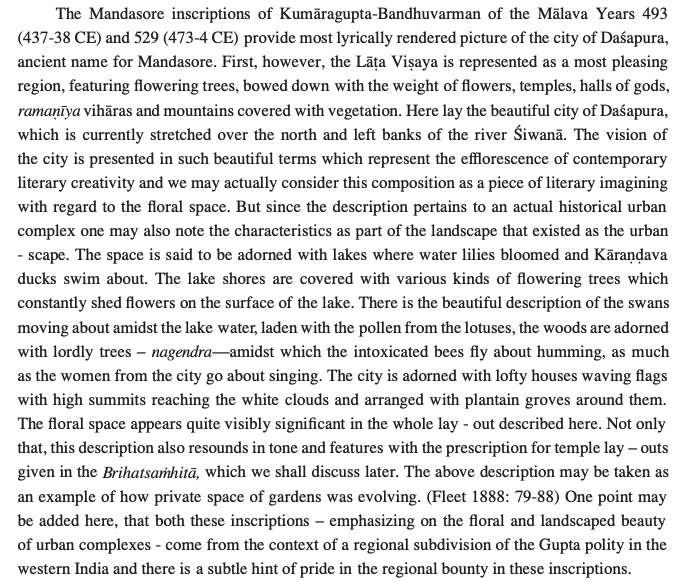
an excerpt about the gardens in the Gupta period — which as Daud Ali describes functioned, to use Foucault's terminology, as a heterotopia — "real places which both operationalized and articulated collective and individual desires."
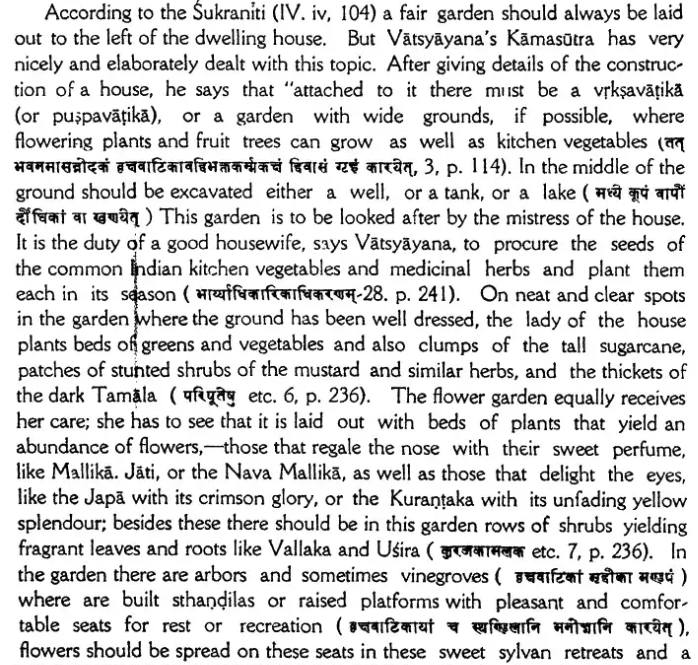
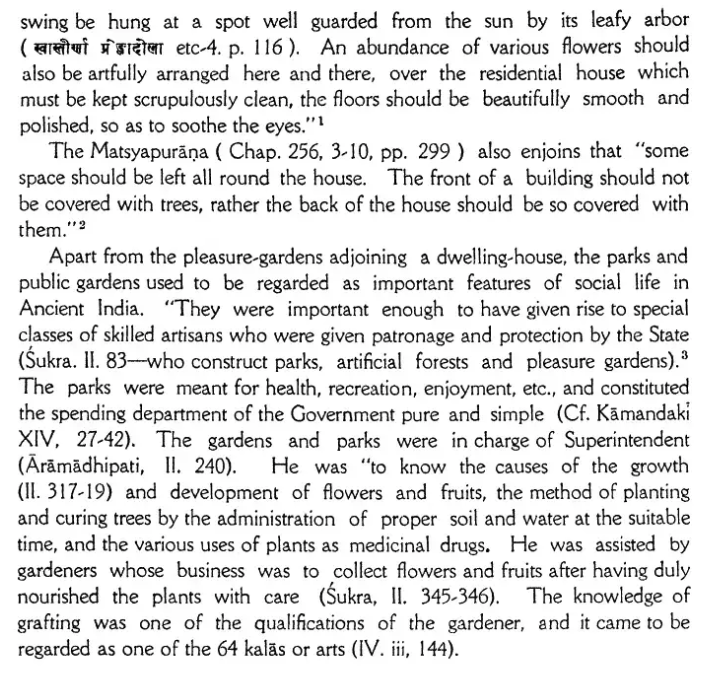
an assorted set on gardens, its location in reference to the course, its maintenance... and so on.
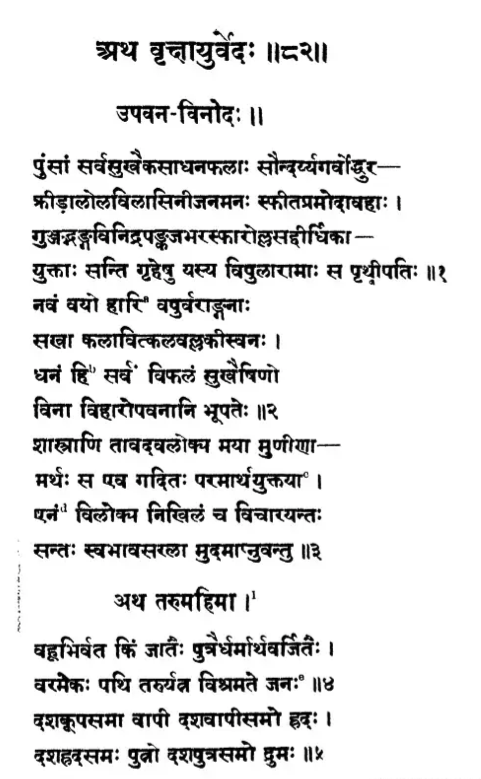
from Sarangadhara's massive 12th C compendium of extraordinary historical detail, a verse my father always reminds me of:
A pond equals ten wells
A reservoir equals ten ponds.
A child equals ten reservoirs.
(And) a tree equals ten children.
A pond equals ten wells
A reservoir equals ten ponds.
A child equals ten reservoirs.
(And) a tree equals ten children.
Loading suggestions...