

1/ Options trading is one of the most overlooked areas of #DeFi
But it's only a matter of time until they take off.
Here's your chance to catch up and learn what option protocols have to offer: 🧵
But it's only a matter of time until they take off.
Here's your chance to catch up and learn what option protocols have to offer: 🧵
2/ There's a joke on Crypto Twitter that there are more options trading protocols than users—and sadly, it’s mostly true.
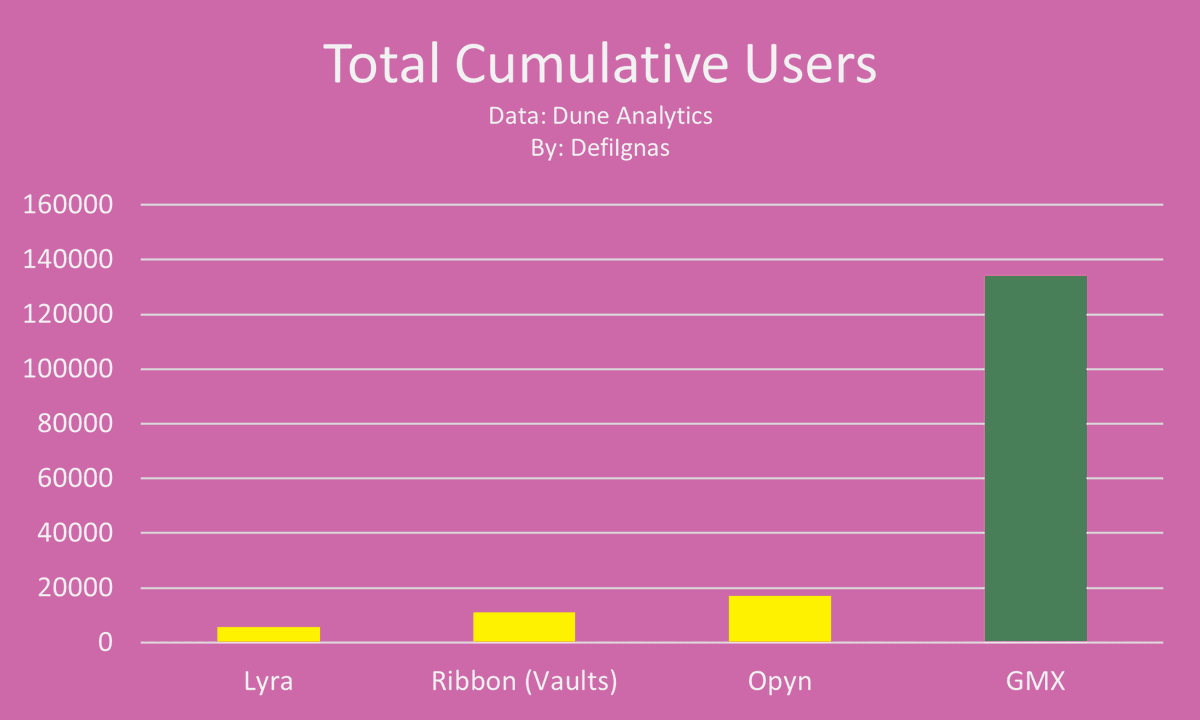
Opyn had 17K cumulative users in a two-year period; Lyra had 5.7K since November 2021.
In comparison, GMX has attracted 134K users since August 2021.
Opyn had 17K cumulative users in a two-year period; Lyra had 5.7K since November 2021.
In comparison, GMX has attracted 134K users since August 2021.
3/ I believe DeFi options are primed for explosive growth.
Here's why: Robinhood earned $363M in 2021 from fees alone and staggering 45% ($163M) were fees from options.
And it will come to DeFi as well.
Here's why: Robinhood earned $363M in 2021 from fees alone and staggering 45% ($163M) were fees from options.
And it will come to DeFi as well.
4/ While DeFi options may seem complex, they allow retail traders to engage in speculation and make bets on the price of tokens.
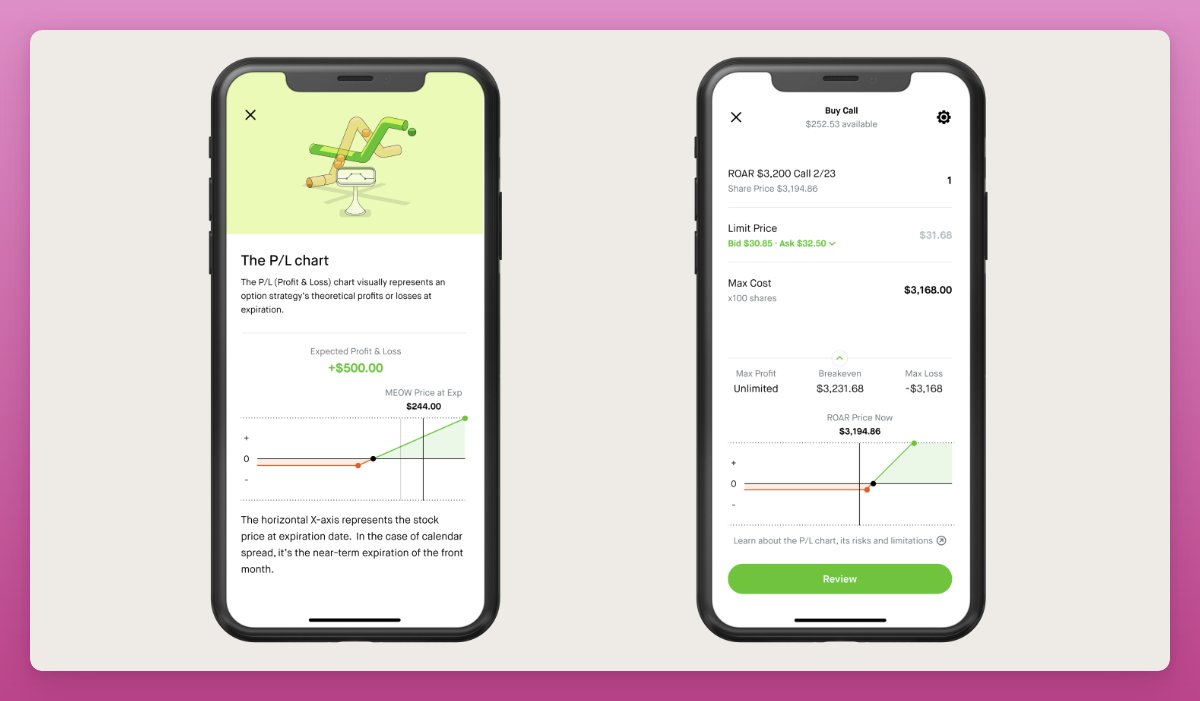
Robinhood's gamified and easy-to-use UI made options trading accessible, even for those with little to no experience in options.
Robinhood's gamified and easy-to-use UI made options trading accessible, even for those with little to no experience in options.
5/ The demand for crypto options is already evident.
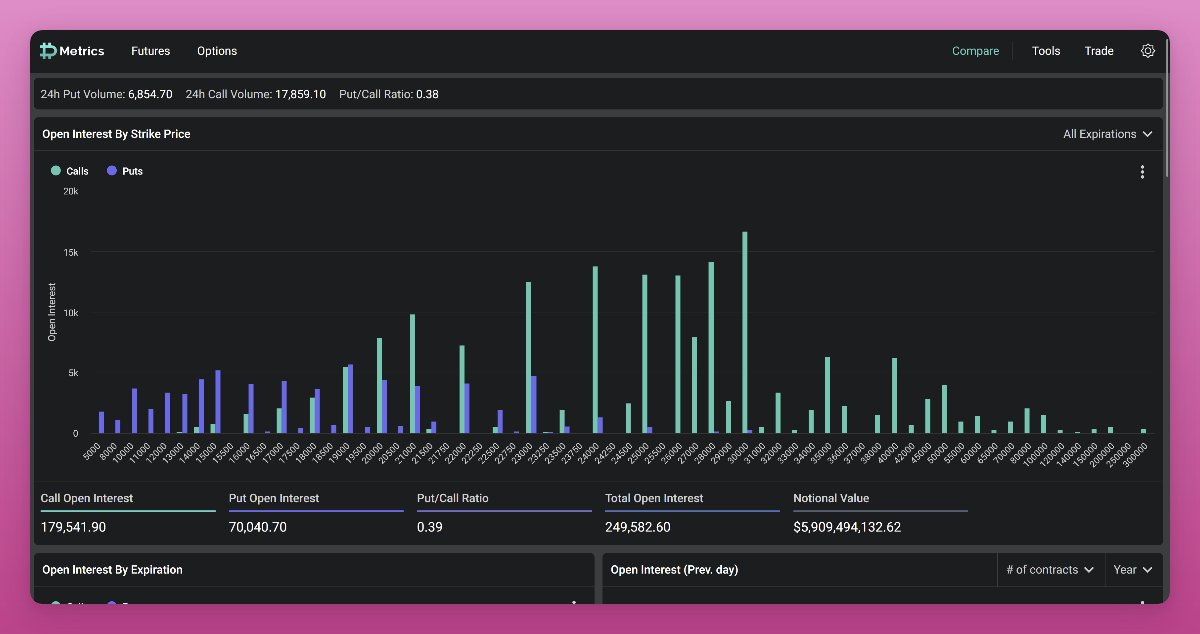
The volume of bitcoin options traded on Deribit recently reached $4.25 billion, the highest since the FTX collapse.
This increase is driven by demand for call options, which are bets on a rising price.
The volume of bitcoin options traded on Deribit recently reached $4.25 billion, the highest since the FTX collapse.
This increase is driven by demand for call options, which are bets on a rising price.
6/ Options are contracts that give you the right, but not the obligation, to buy or sell an asset at a predetermined price.
There are two types of options: calls and puts.
Calls are bets on a rising price, while puts are bets on a falling price.
There are two types of options: calls and puts.
Calls are bets on a rising price, while puts are bets on a falling price.

7/ For this right, you pay a premium that takes into account the time value of the option and the perceived risk/volatility of the underlying asset.
Options also provide opportunities to hedge your portfolio or earn from the premiums.
Confused? Check Barry's thread 👇
Options also provide opportunities to hedge your portfolio or earn from the premiums.
Confused? Check Barry's thread 👇
8/ Due to their complexity, there's a big knowledge asymmetry which could translate into large profits for whoever pulls off the 'Robinhood of DeFi'.
It also means that you're likely to lose money if you aren't an experienced trader.
Luckily, DeFi allows you to bet on a casino.
It also means that you're likely to lose money if you aren't an experienced trader.
Luckily, DeFi allows you to bet on a casino.
9/ There are 42 option protocols listed on DefiLlama, with a combined Total Value Locked (TVL) of $220 million.
Ribbon Finance currently leads the pack.
Note: TVL is not the perfect metric, but it's important for structured options products and liquidity pool marketplaces.
Ribbon Finance currently leads the pack.
Note: TVL is not the perfect metric, but it's important for structured options products and liquidity pool marketplaces.
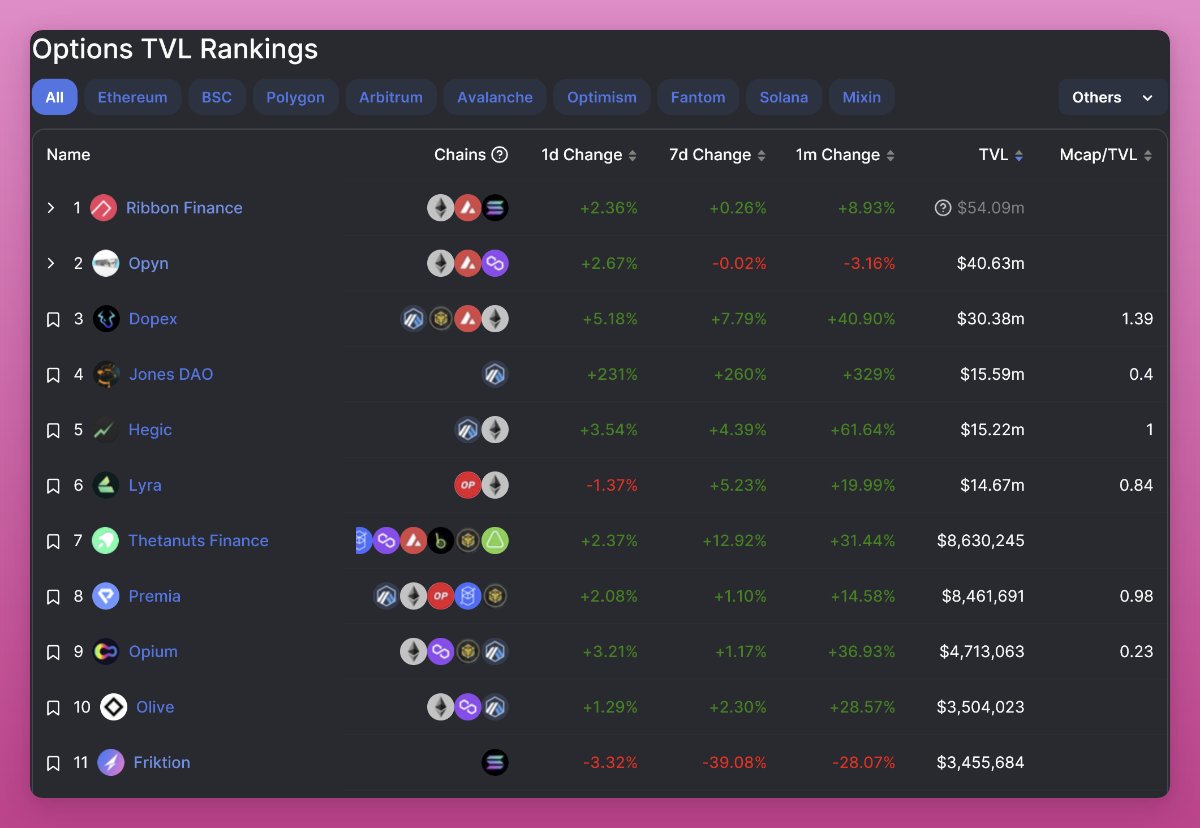
10/ Ribbon's structured products (vaults) use options to generate a risk-adjusted yield.
For example, by depositing ETH into 'T-ETH-C' vault, you earn yield for selling 'potential upside' of ETH.
It's suitable if you expect a minor increase in the ETH price.
For example, by depositing ETH into 'T-ETH-C' vault, you earn yield for selling 'potential upside' of ETH.
It's suitable if you expect a minor increase in the ETH price.

11/ It's not a simple put-and-forget strategy.
You can lose money if a trader's option expires in-the-money (he wins).
Essentially, you are betting that traders will lose (expire out-of-the-money) and you earn premiums.
e.g., T-rETH-C Vault yield is negative -8.8%.
You can lose money if a trader's option expires in-the-money (he wins).
Essentially, you are betting that traders will lose (expire out-of-the-money) and you earn premiums.
e.g., T-rETH-C Vault yield is negative -8.8%.
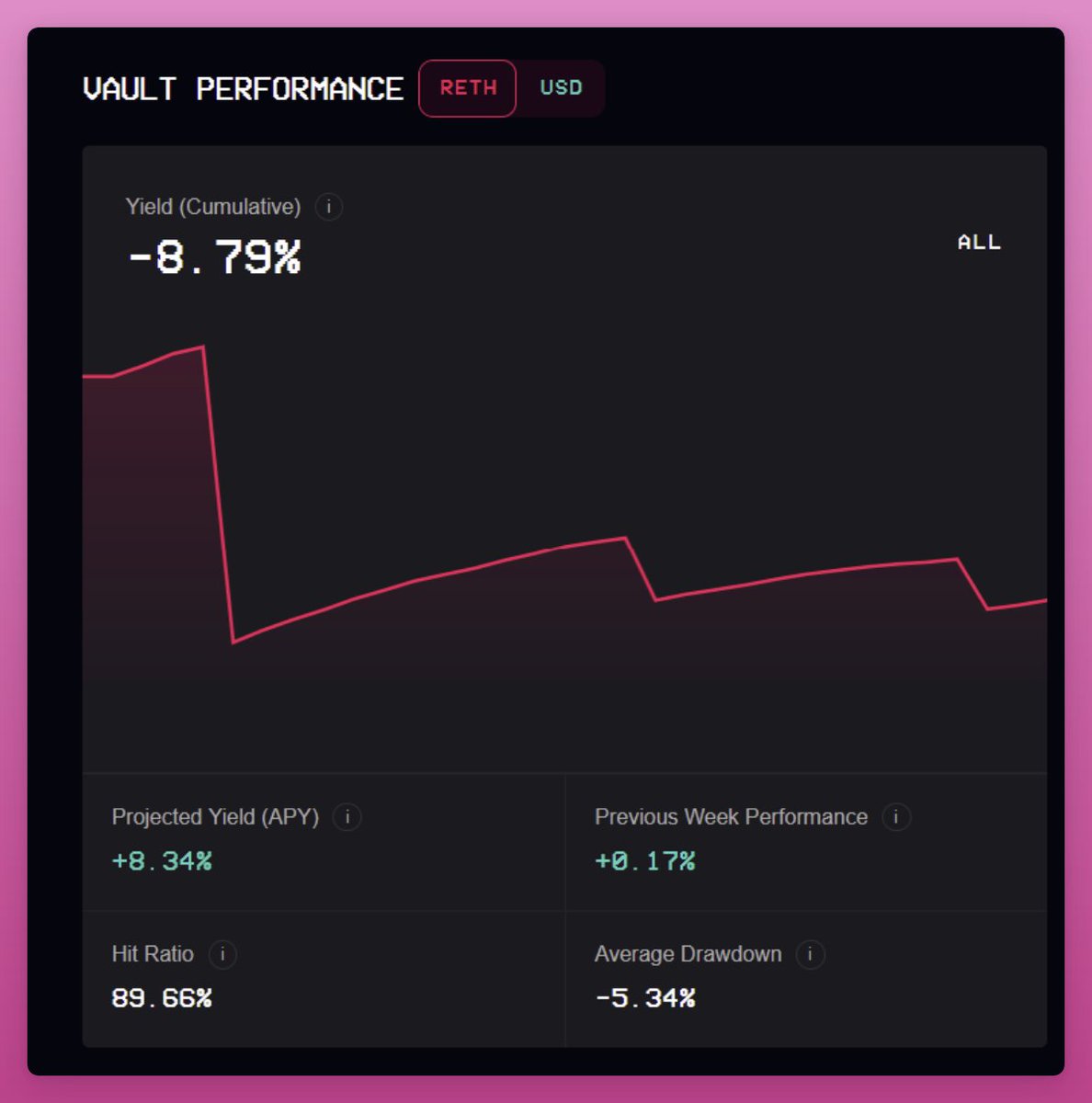
12/ By the way, you can read this post on my blog for more details and an additional section on tokenomics comparison:
ignasdefi.substack.com
ignasdefi.substack.com
13/ Ribbon relies on Opyn for its strategies.
Opyn's main product, Squeeth, allows for long positions without the risk of liquidation.
Long positions pay a fee, while short positions receive funding from the longs but must maintain a collateral ratio to avoid liquidation.
Opyn's main product, Squeeth, allows for long positions without the risk of liquidation.
Long positions pay a fee, while short positions receive funding from the longs but must maintain a collateral ratio to avoid liquidation.
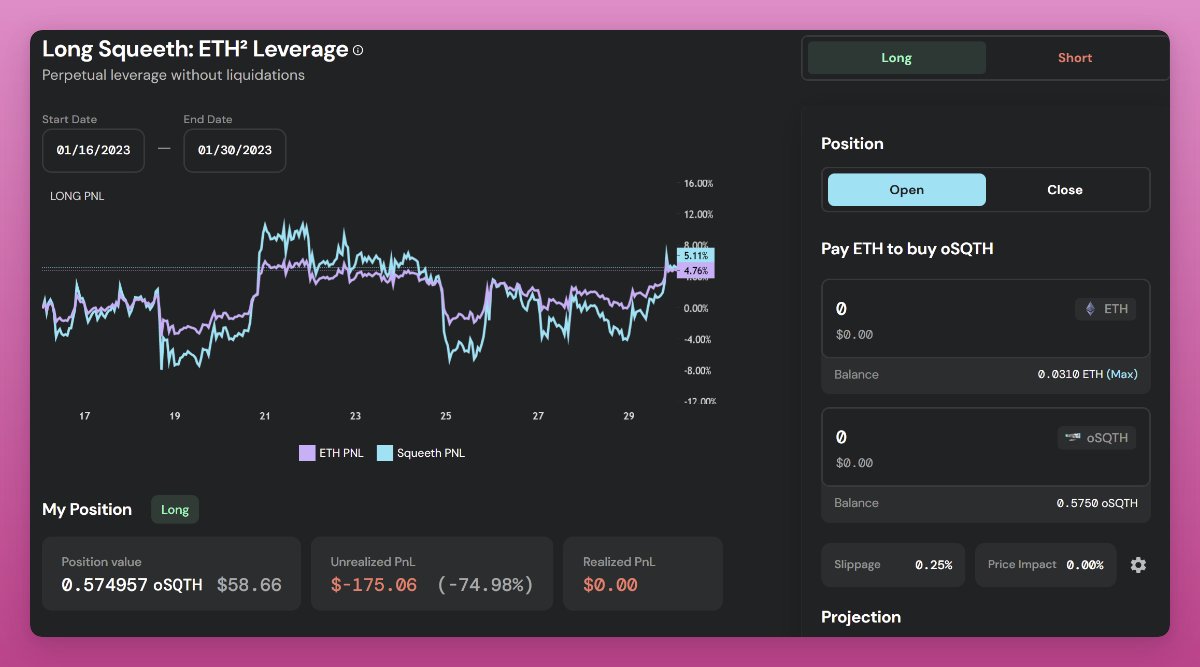
14/ Opyn also offers two other strategies:
• Crab USDC: earning USDC when ETH volatility is low
• Zen Bull ETH: making money when ETH goes up, slow and steady
Crab USDC would've earned you 22% APY over the past six months.
• Crab USDC: earning USDC when ETH volatility is low
• Zen Bull ETH: making money when ETH goes up, slow and steady
Crab USDC would've earned you 22% APY over the past six months.
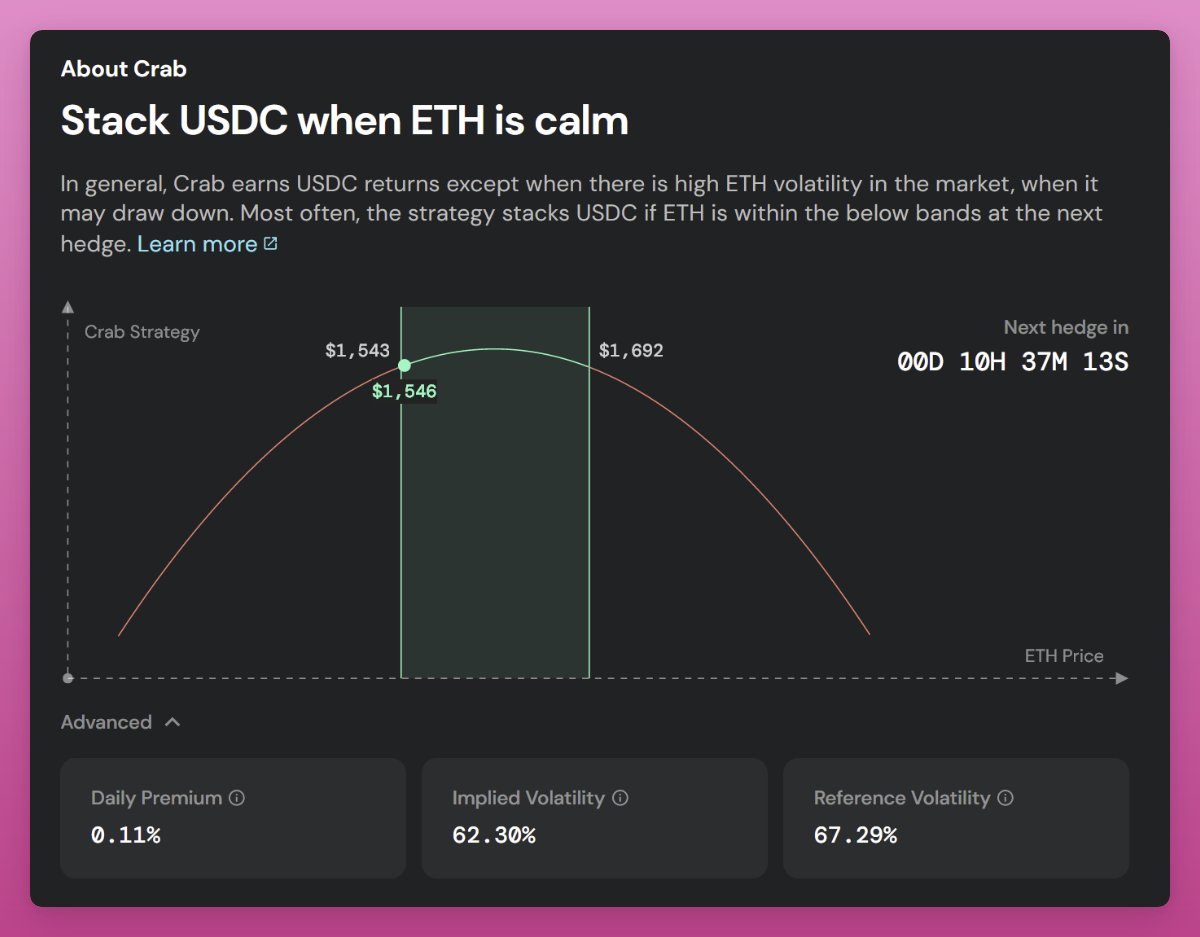
15/ Dopex's Single-Staking Option Vaults (SSOV) work similarly, allowing users to lock up tokens for a fixed period of time and earn yield.
But you also need to select a fixed strike price that you’d like to sell calls at.
Yield = farming rewards + premiums.
But you also need to select a fixed strike price that you’d like to sell calls at.
Yield = farming rewards + premiums.
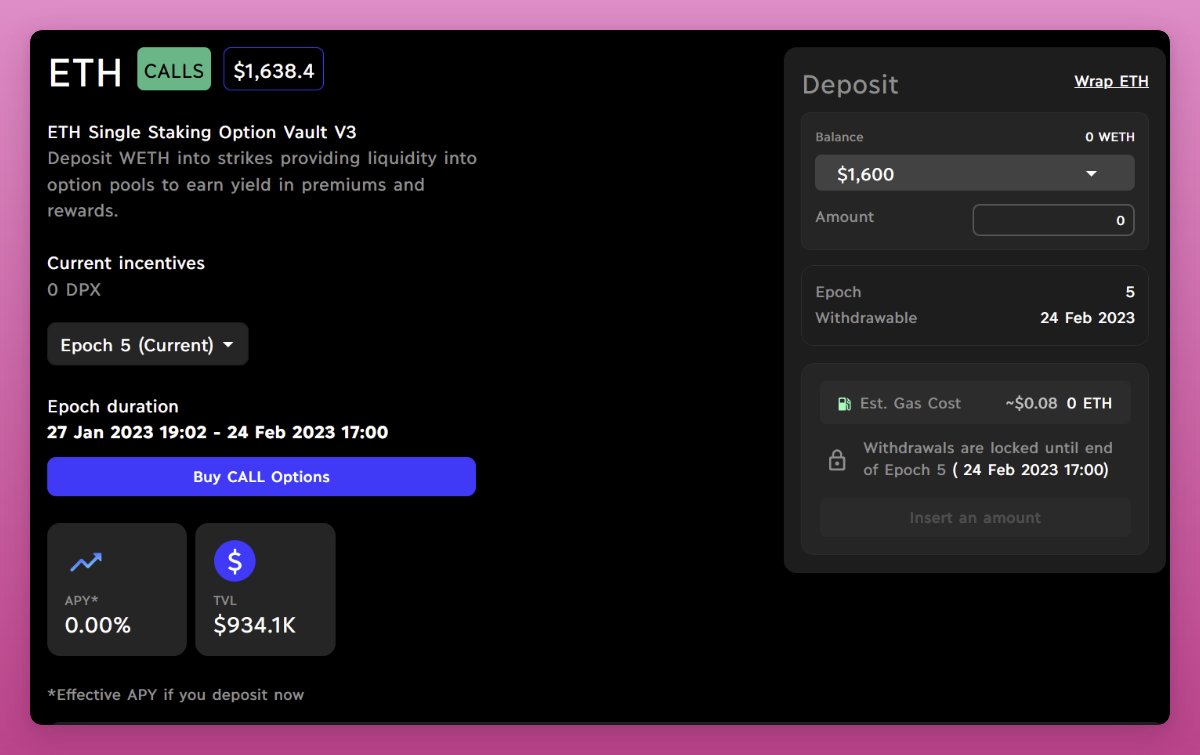
16/ As you can see, it's a risky business.
To minimize it, option writers are compensated with rDPX tokens relative to the losses accrued from options written.
The rDPX v2, using a 2-step bonding process to make rDPX deflationary, is in the works and set to launch soon.
To minimize it, option writers are compensated with rDPX tokens relative to the losses accrued from options written.
The rDPX v2, using a 2-step bonding process to make rDPX deflationary, is in the works and set to launch soon.
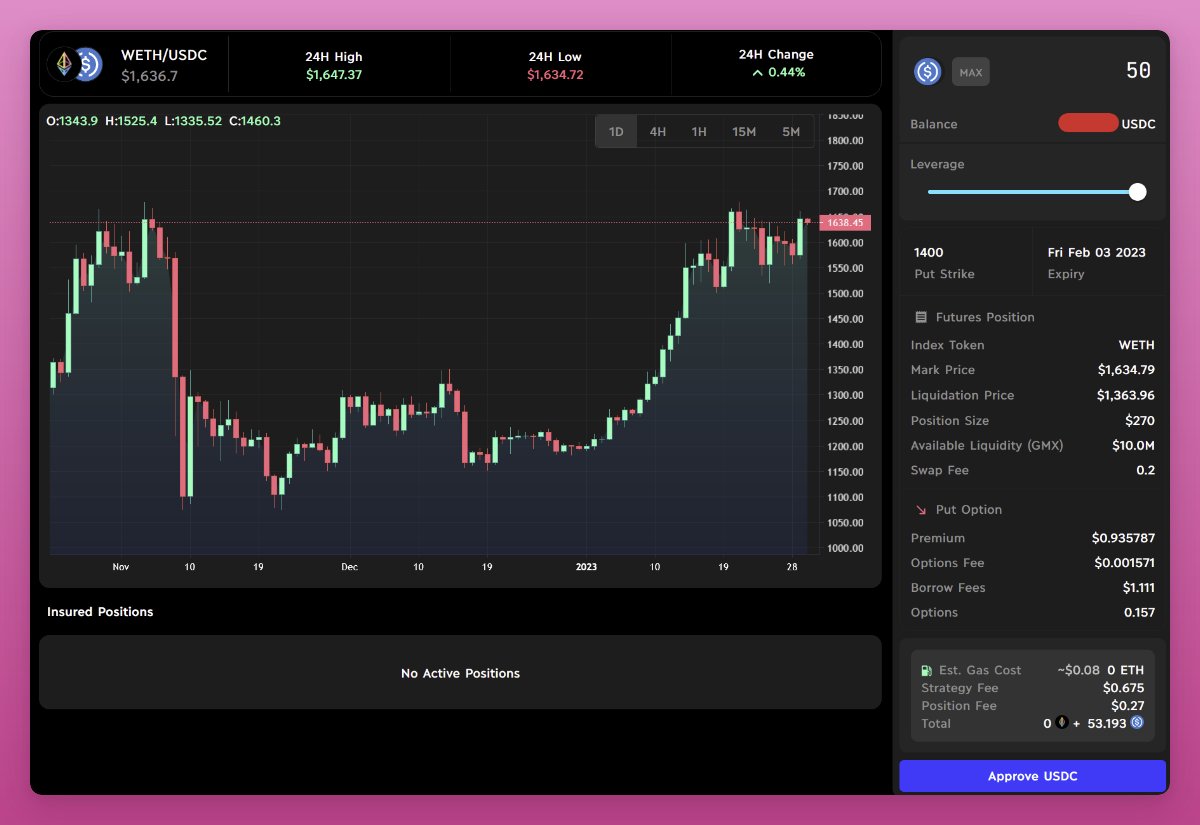
17/ Another Dopex 0-to-1 innovation is insurance on GMX perps.
You can long ETH without having to worry about liquidation by purchasing a Put Option (and paying premium) for a specific period of time.
e.g., I pay 3.1 USDC to insure my 10x long on 50 USDC until Feb 3rd.
You can long ETH without having to worry about liquidation by purchasing a Put Option (and paying premium) for a specific period of time.
e.g., I pay 3.1 USDC to insure my 10x long on 50 USDC until Feb 3rd.
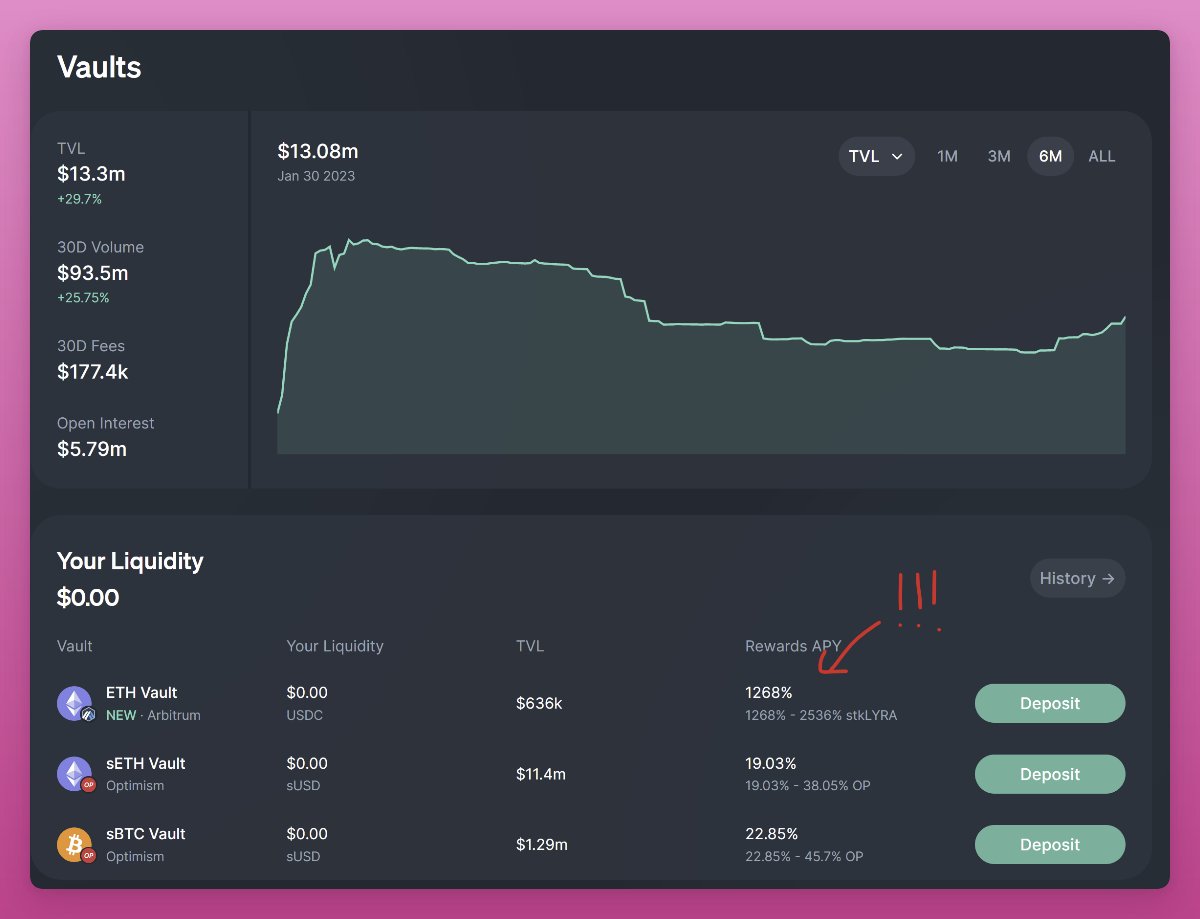
18/ Lyra Protocol is an options AMM allowing traders to buy/sell options using a pool of liquidity.
LPs deposit sUSD in asset-specific vaults to earn fees on option trades.
Traders use Lyra to buy/sell options and pay fees to LPs.
There's a mechanism in place to hedge LP risk.
LPs deposit sUSD in asset-specific vaults to earn fees on option trades.
Traders use Lyra to buy/sell options and pay fees to LPs.
There's a mechanism in place to hedge LP risk.
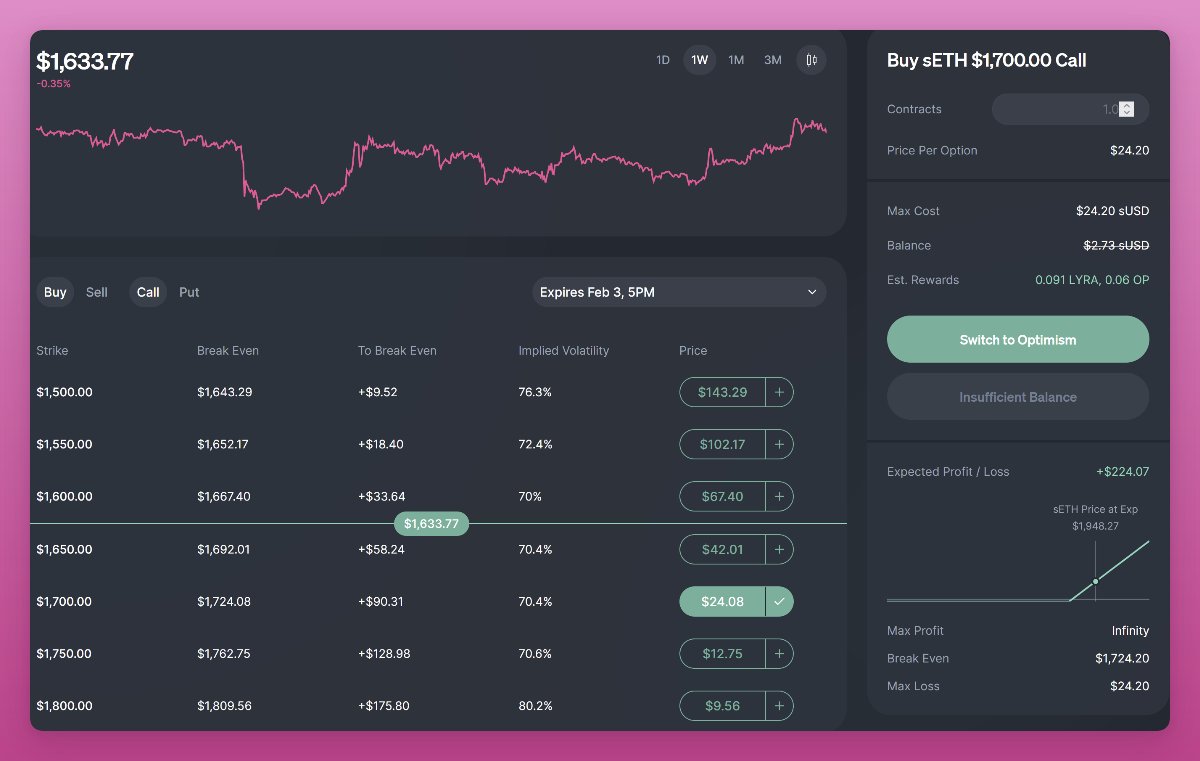
19/ It's quite user friendly:
• Select an expiry date
• Choose Buy or a Call option if you are bullish
• Choose the strike price
At the bottom right corner you can see expected P/L based on ETH price at expiry date.
• Select an expiry date
• Choose Buy or a Call option if you are bullish
• Choose the strike price
At the bottom right corner you can see expected P/L based on ETH price at expiry date.
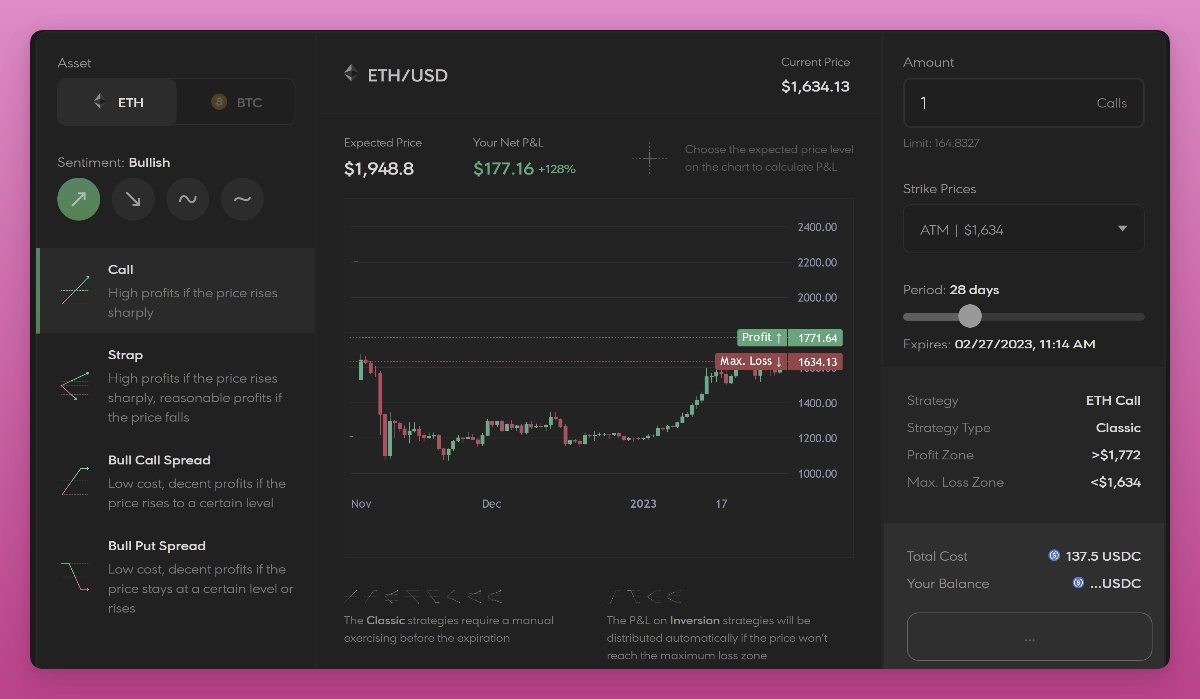
20/ Hegic is using a similar peer-to-pool AMM model.
Trade Call and Put options as well as multiple one-click strategies depending on market sentiment (Bullish, Bearish, High or Low Volatility).
UI/UX is easy to use.
Trade Call and Put options as well as multiple one-click strategies depending on market sentiment (Bullish, Bearish, High or Low Volatility).
UI/UX is easy to use.
21/ Then there's Premia with American style options allowing to be exercised before expiration.
Plus:
• 7+ tokens (YFI, LINK, OP...)
• Vaults to earn from fees
• Custom strike price
It's a feature packed protocol.
Plus:
• 7+ tokens (YFI, LINK, OP...)
• Vaults to earn from fees
• Custom strike price
It's a feature packed protocol.

22/ There's more innovation by:
• Panoptic: perpetual oracle-free options that never expire
• Thetanuts Finance: yield generation for DAOs and retail with simple vaults
• Zeta: order-book style options and futures on Solana
and more...
• Panoptic: perpetual oracle-free options that never expire
• Thetanuts Finance: yield generation for DAOs and retail with simple vaults
• Zeta: order-book style options and futures on Solana
and more...
23/ So much already built, but...
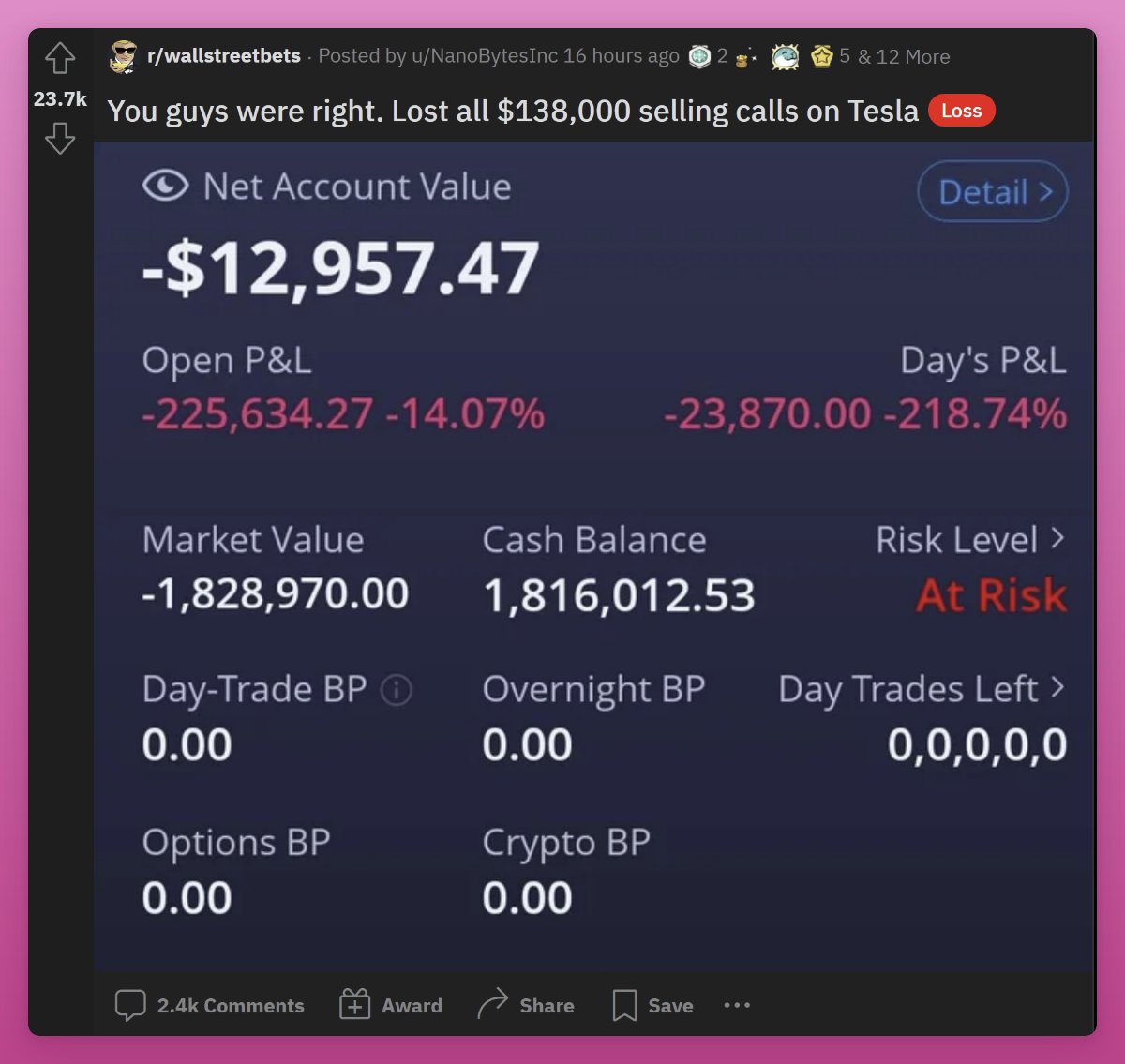
... there's currently low demand for on-chain options from retail.
Robinhood options mania proved that options can attract a big crowd when done right.
For us token investors, timing it can provide a big upside.
... there's currently low demand for on-chain options from retail.
Robinhood options mania proved that options can attract a big crowd when done right.
For us token investors, timing it can provide a big upside.
24/ For 'Tokenomics Comparison' and more details on every protocol, check my full blog post on Substack.
Spoiler alert: these protocols love veTokenomics,
And don't forget to subscribe to stay ahead of the curve 🔔
ignasdefi.substack.com
Spoiler alert: these protocols love veTokenomics,
And don't forget to subscribe to stay ahead of the curve 🔔
ignasdefi.substack.com
25/ Let me know your thoughts below!
Follow me @DefiIgnas for more.
Like/Retweet the first tweet below if you can:
Follow me @DefiIgnas for more.
Like/Retweet the first tweet below if you can:
Loading suggestions...