
I was really excited to get to do this report, as it meant I got to design and field a bilingual survey of fertility preferences in Canada. Woohoo!
One thing we found is that low fertility is likely to continue for a while in Canada as every measure of fertility preferences seems to be lower for Canadians under 30. Younger Canadians have smaller family size desires.
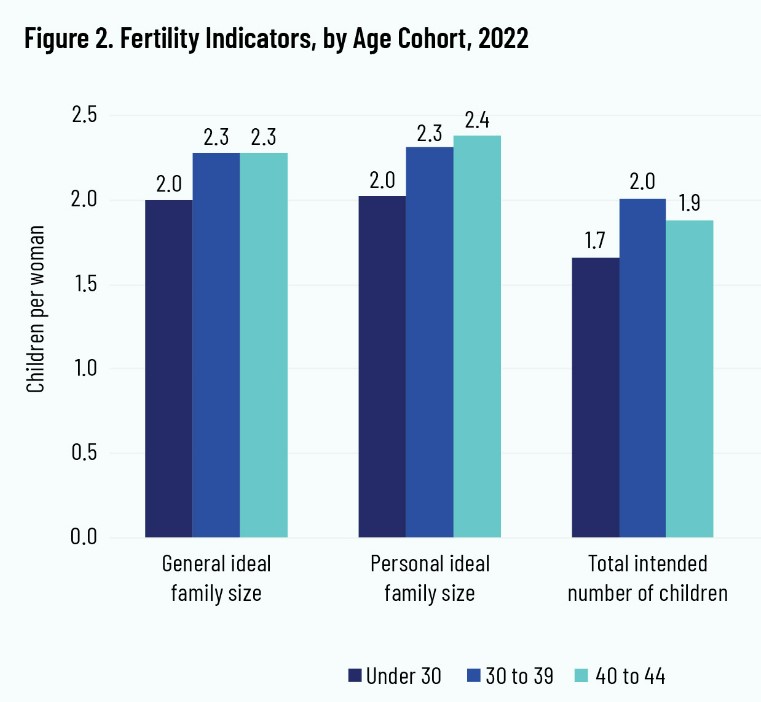
But it's worth noting, Canadian women under 30 still say they personally would ideally like to have 2 kids, when Canada's current fertility rate is 1.4. That's a very big gap!
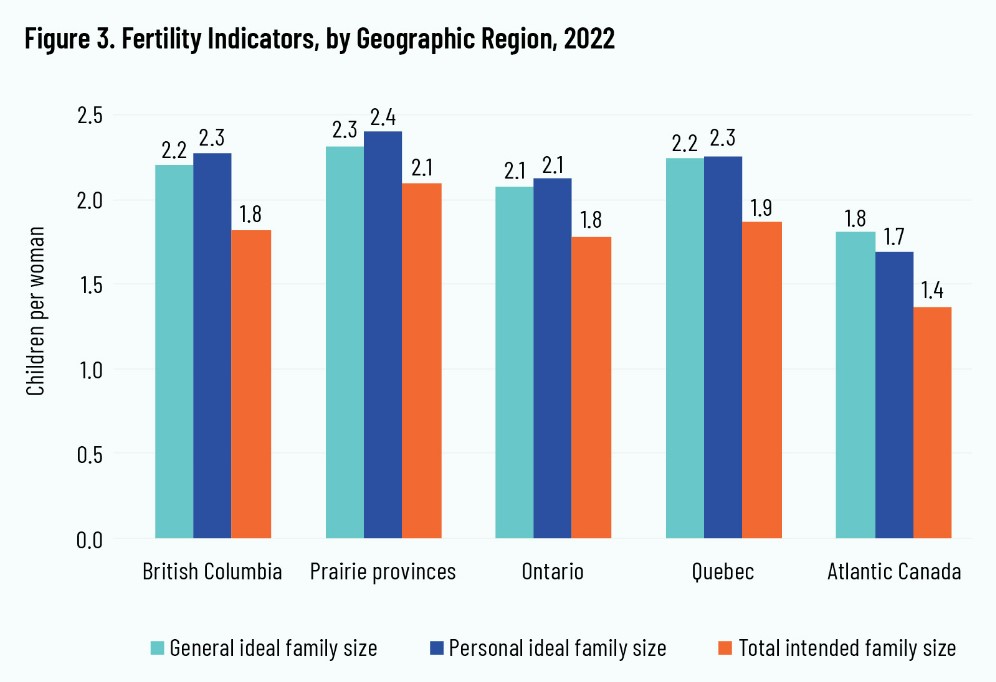
Atlantic Canada, what gives? Why do people in Atlantic Canada not want kids?
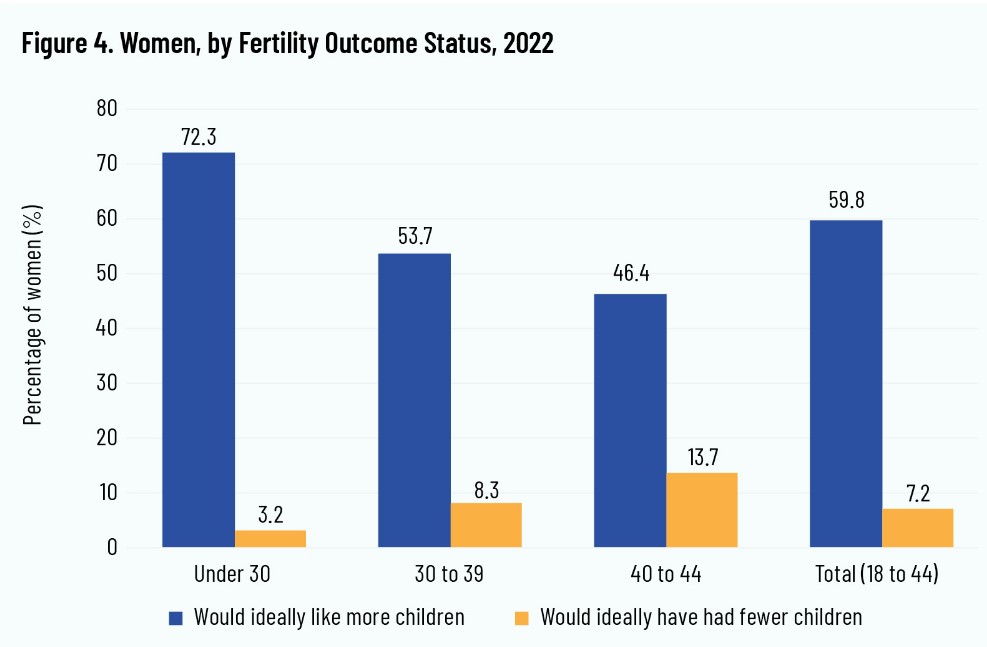
A key finding of our report is that VERY few Canadian women end up with more children than they said was ideal, but MANY Canadian women end up with FEWER children than they said was ideal.
And guess what?
Women who have more or fewer kids than they say is ideal are indeed less happy! Surprise surprise, getting what you want makes you happy, not getting what you want makes you sad! Science!
Women who have more or fewer kids than they say is ideal are indeed less happy! Surprise surprise, getting what you want makes you happy, not getting what you want makes you sad! Science!
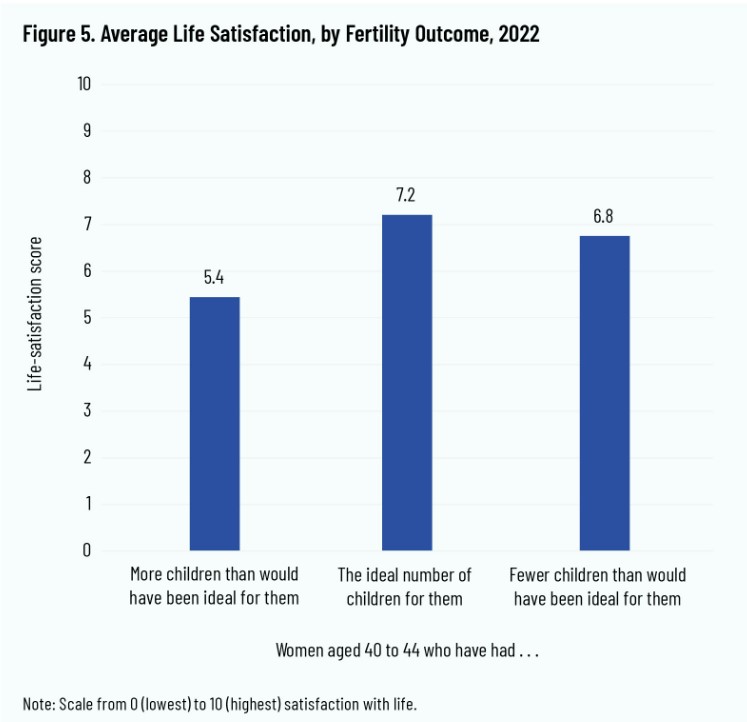
Less flippantly, I do want to emphasize that having excess children is a much bigger happiness loss *per child*. But because the number of "missing kids" absolutely dwarfs the number of "excess kids," a ballpark estimate suggests "missing kids" are a similar or bigger problem.
Obviously philosophical problems there with utility comparisons, but I'm just saying on a very broad ballpark basis, excess and missing kids seem to be qualitatively similarly scaled social problems in Canada.
And yet we hear a lot about excess births, undesired births, unwanted births, the need for more contraception and abortion access, etc. Crickets on the question of undershooting. A big takeaway from this report is we should care about that undershooting.
We have lots of additional graphs teasing out by differences by various subgroups. Upshot of it is:
In Canada richer women WANT more kids INTEND more kids and HAVE more kids. This is DIFFERENT from most industrialized countries.
In Canada richer women WANT more kids INTEND more kids and HAVE more kids. This is DIFFERENT from most industrialized countries.
We call this the "capstone kids" model, the idea that people treat having kids as a kind of reward for having achieved self-actualization and stability in life. Once you've got yourself and your life in order you bring a child into it, etc
We think "capstone kids" is closely related to "intensive parenting," another schema we see as important. Basically, there's a lot of within- and cross-cultural variation in parenting practices. Some people see parenting as a lot more burdensome than others.
We think these schemas, "capstone kids" and "intensive parenting," are key drivers of low fertility in Canada. Evidence comes from questions we asked respondents about what factors influenced their family plans:
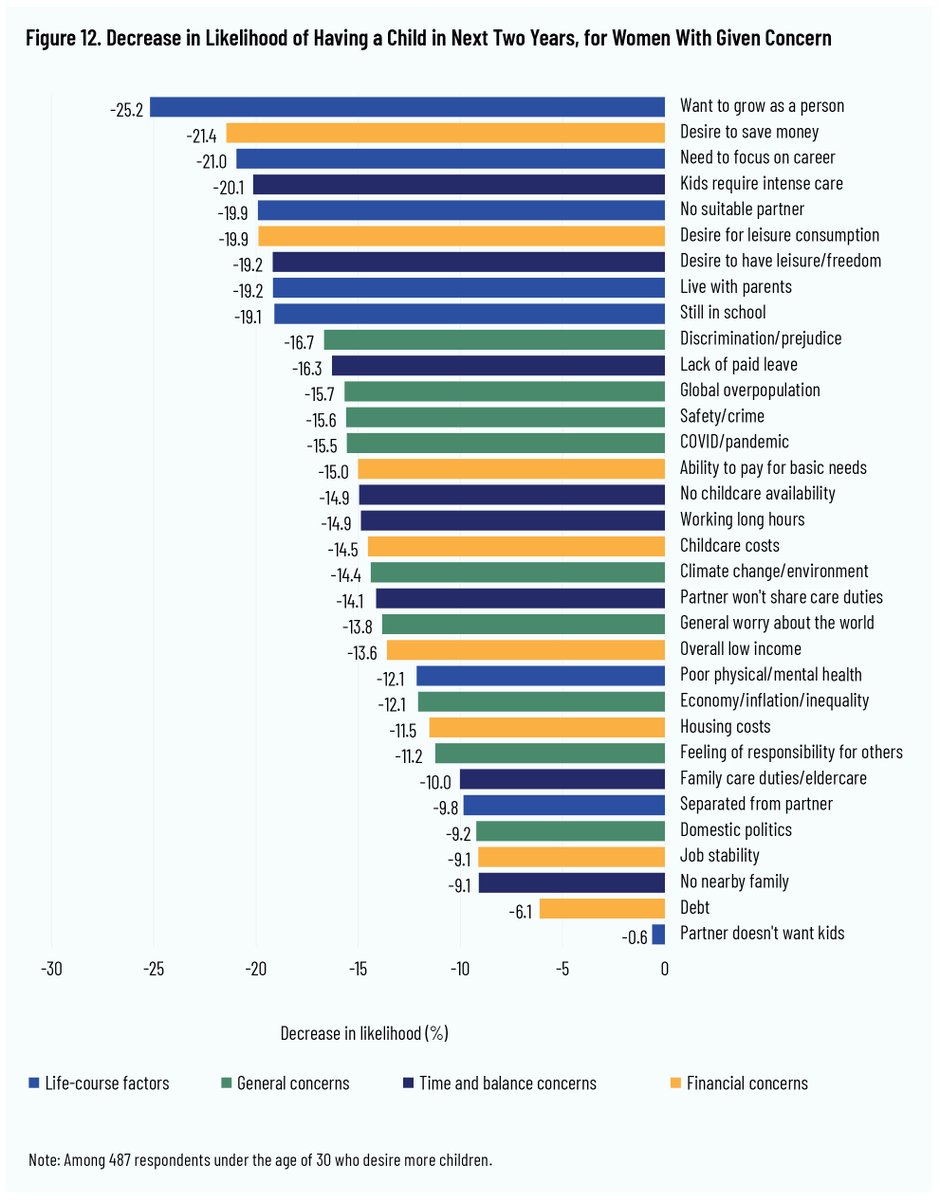
This graph uses a kind of novel indicator. Among women under 30 who DO WANT MORE KIDS (personal ideal>current parity), we see what "factors" are associated with LOWER ODDS OF REPORTING INTENTIONS TO HAVE MORE (near-term in this graph).
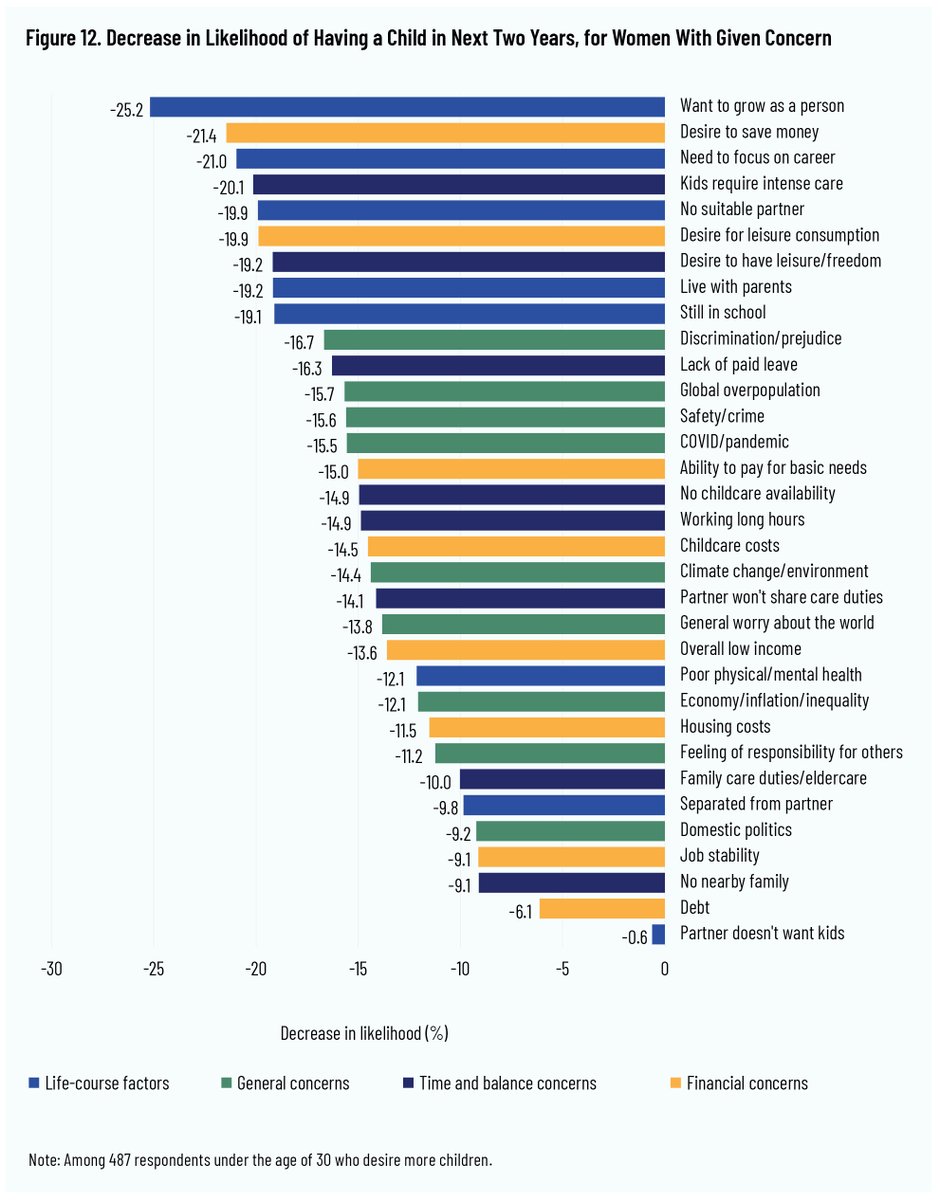
What you can see is the big reasons people cite for not intending to have children that they desire to have isn't stuff like "housing prices" or "maternity leave" or "childcare."
It's stuff like "I want to grow more as a person" or "Parenting is a lot of work"
It's stuff like "I want to grow more as a person" or "Parenting is a lot of work"
More nebulous financial issues like desire for personal savings and desire for leisure consumption do show up. Kids do impinge on that. But the key point is that broader social norms are unsupportive of reasonable parenting.
What I mean by "reasonable parenting" is "having children at an age and raising them in a way that makes hitting non-crazy ideals a plausible outcome."
But instead, when prevailing social norms pressure people into believing they need to wait until they've done everything they want to do because parenting is this absolutely crazily intensive job, well, people undershoot their desires.
Anyways, check out the full report, lots of very interesting stuff in there about the family culture of Canada. In particular we made a major effort to get a good sample of immigrants, racialized minorities, and Francophone Canadians, which was pretty interesting.
Loading suggestions...