
I've been trading for a living for 18 years.
Here are key things I've learned along the way, I wish I knew earlier.
A thread👇👇
Here are key things I've learned along the way, I wish I knew earlier.
A thread👇👇
1. Trading isn't about more knowledge
Most new traders try to learn as much as they can. This isn't necessary.
Trading is getting good at 1 or 2 strategies, trading them over & over. This requires discipline & persistence, NOT more knowledge.
Book knowledge not required...
Most new traders try to learn as much as they can. This isn't necessary.
Trading is getting good at 1 or 2 strategies, trading them over & over. This requires discipline & persistence, NOT more knowledge.
Book knowledge not required...
--Consider what style of trader you want to be
--What time frame you like trading
--Study charts or someone who does what you want to do
--Make it your OWN based on your own tendencies/desires
Learn as much as you need to find this, then dig into ONLY that till profitable.
--What time frame you like trading
--Study charts or someone who does what you want to do
--Make it your OWN based on your own tendencies/desires
Learn as much as you need to find this, then dig into ONLY that till profitable.
2. Fix mistakes instead of learning new strategies
Most people hit a rought patch and try to learn something new. This creates a very long road to profitability. The same mistakes will likely be repeated with EVERY strategy.
Instead, study why losing and winning trades occur...
Most people hit a rought patch and try to learn something new. This creates a very long road to profitability. The same mistakes will likely be repeated with EVERY strategy.
Instead, study why losing and winning trades occur...
Look at:
--conditions present at the time of those trades
--whether the mistake was mental or market-based
--if biases cause "hopefull" trades or missed opportunities
--If getting in slightly later or earlier would improve results
...
--conditions present at the time of those trades
--whether the mistake was mental or market-based
--if biases cause "hopefull" trades or missed opportunities
--If getting in slightly later or earlier would improve results
...
The same mistake is often repeated. Reducing its frequency is a much quicker way to increase profits/reduce losses than learning something totally new.
If you don't brainstorm regularly how to improve on mistakes, they will continue to haunt your trading regardless of strategy.
If you don't brainstorm regularly how to improve on mistakes, they will continue to haunt your trading regardless of strategy.
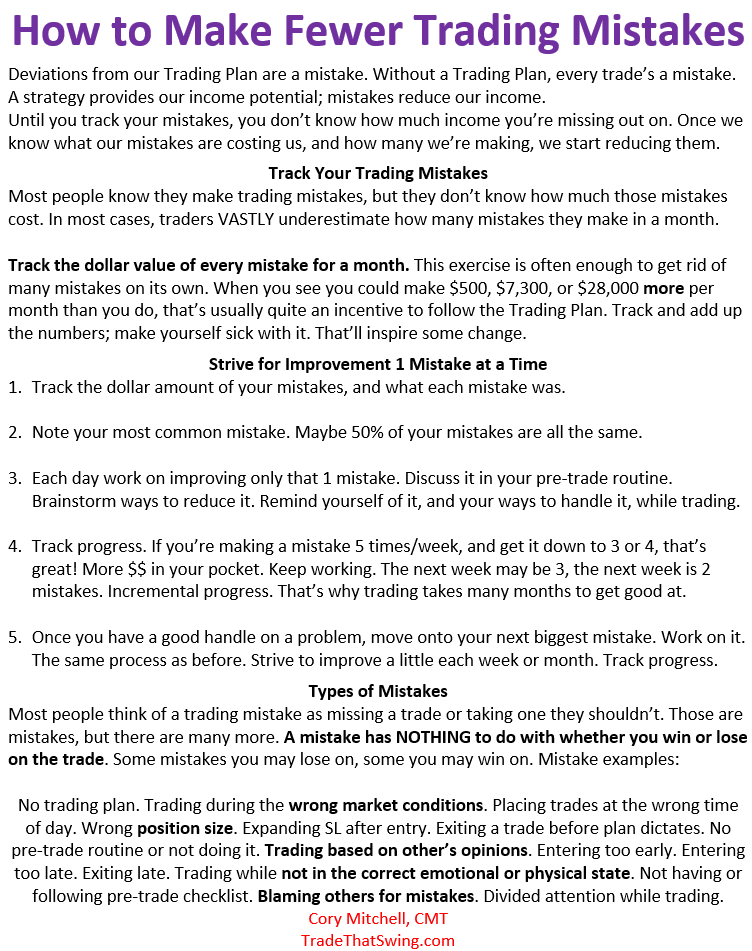
3. Chase your plan, not profits
Each action to trade or not to trade should be based on whether that choice aligns with our trading plan.
Good choices lead to good results, focusing on trying to make money doesn't.
The plan can always be changed, but not during trading...
Each action to trade or not to trade should be based on whether that choice aligns with our trading plan.
Good choices lead to good results, focusing on trying to make money doesn't.
The plan can always be changed, but not during trading...
Follow the plan while trading. Improve it outside of trading hours by reviewing performance and noting areas that could be improved. Then implement again.
Why?
If you can learn to follow a plan, when you're handed a good strategy you'll be able to trade it...
Why?
If you can learn to follow a plan, when you're handed a good strategy you'll be able to trade it...
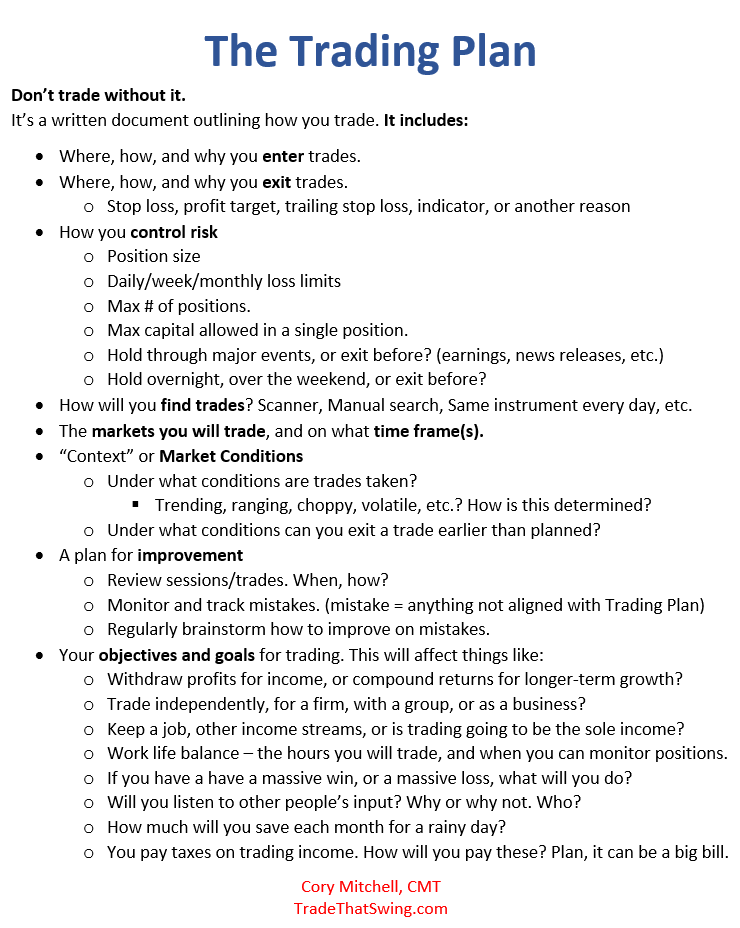
If you constantly make decision on the fly & can't stick to a plan, not matter how a good a strategy is, you won't have the skill set to follow it.
If I hired traders, I'd look at how well they follow their plan, not P&L.
A sucky plan can be changed easily.
If I hired traders, I'd look at how well they follow their plan, not P&L.
A sucky plan can be changed easily.
4. When NOT to trade is more important than when to trade
Even if someone traded several strategies, there are only so many opportunities where that strategy says GO!
The rest of the time is spent preparing, reviewing, making sure our mind is right...
Even if someone traded several strategies, there are only so many opportunities where that strategy says GO!
The rest of the time is spent preparing, reviewing, making sure our mind is right...
The market provides INFINITE opportunities to mess up. You could literally hit buy and sell buttons every second (extreme), but even doing it a little more than you're supposed to can totally ruin a strategy.
Err on the side of trading less. Wait for really great setups...
Err on the side of trading less. Wait for really great setups...
Avoid the "Hmm, is that valid? Ummm..." trades.
There is no perfect number of trades. It could be hundreds a day, it could be one a year for some people.
The perfect number of trades is the number of quality trades that match YOUR trading plan.
There is no perfect number of trades. It could be hundreds a day, it could be one a year for some people.
The perfect number of trades is the number of quality trades that match YOUR trading plan.
5. Context-Pattern-Trigger
In that order. Most people learn about chart patterns or trade setups, and then start trading them all the time.
Context is even more important (tells us when to trade and when not to).
In a ripping bull market I may take an "ok" pattern...
In that order. Most people learn about chart patterns or trade setups, and then start trading them all the time.
Context is even more important (tells us when to trade and when not to).
In a ripping bull market I may take an "ok" pattern...
because the context is so good. Things are flying, breaking out and running. (as soon as that changes, context has changed, beware).
But I would never trade a "perfect" pattern in flat or choppy conditions. There's no momentum, context is poor for making high-probability gains.
But I would never trade a "perfect" pattern in flat or choppy conditions. There's no momentum, context is poor for making high-probability gains.
A Trigger is my exact entry signal. If the context is good, the pattern is good, the trigger is what says NOW is GO TIME.
But it too must be "good". I use tight stop losses close to my trigger. If the candles at my trigger are huge, that means my SL will be huge...
But it too must be "good". I use tight stop losses close to my trigger. If the candles at my trigger are huge, that means my SL will be huge...
That may be ok if the reward of the trade justifies the risk (based on the assets TYPICAL MOVEMENT), but if it doesn't, there is no trade. The risk/reward isn't there.
If the trigger allows for a small SL and a typically good R:R, its go time.
If the trigger allows for a small SL and a typically good R:R, its go time.
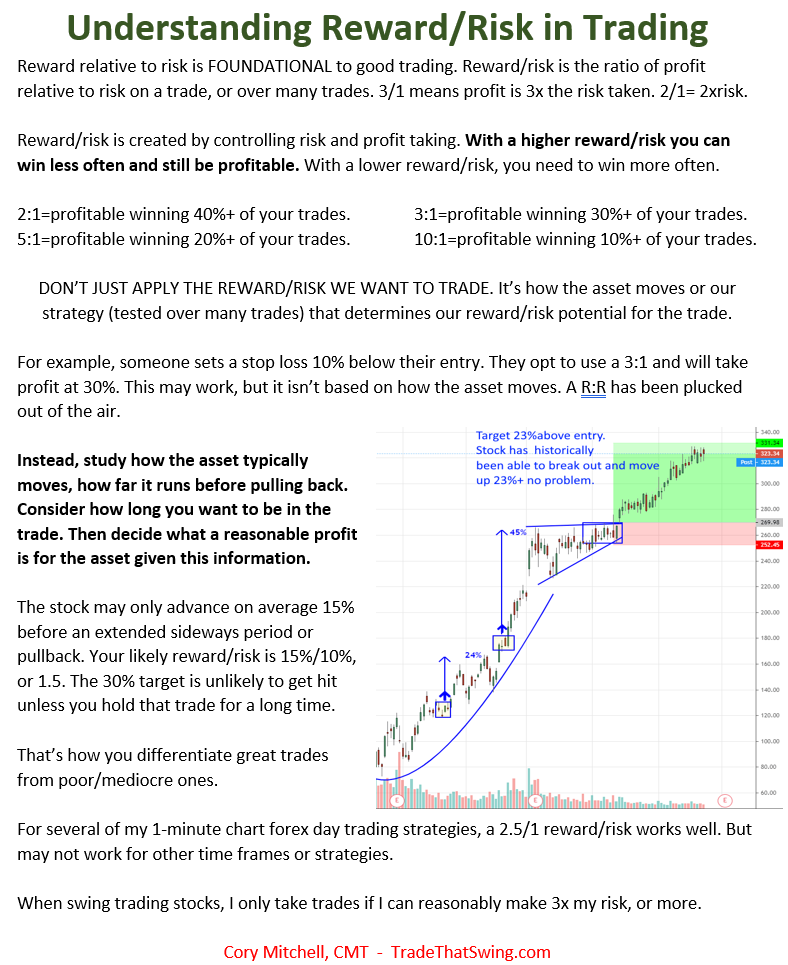
6. Develop STRUCTURES to support your trading
Routines that help deal with an issue or keep me on task are what I call Structures.
I have many of them, but you may need Structures around different areas of your trading than me. Each trader has different issues...
Routines that help deal with an issue or keep me on task are what I call Structures.
I have many of them, but you may need Structures around different areas of your trading than me. Each trader has different issues...
An example of a strucutre is a pre-trade routine. A specific protocol (for me) that gets me in the proper head space for trading.
I tend to over-trade, so my pre-trade is designed to "bring me down" and level me out, almost make me not want to trade anything. I need that....
I tend to over-trade, so my pre-trade is designed to "bring me down" and level me out, almost make me not want to trade anything. I need that....
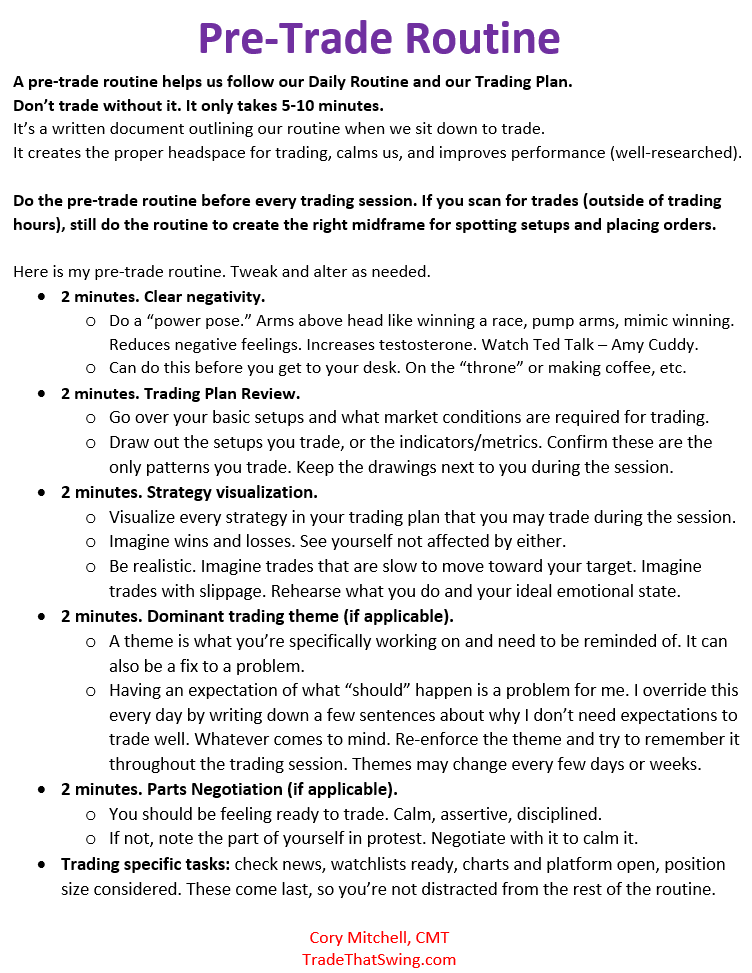
Someone else's pre-trade routine may need to lift them up, because they're so nervous about trading anything.
Another Structure I have is that if I get really distracted while trading, or someone comes into my office, I must do my pre-trade routine again before trading.
Another Structure I have is that if I get really distracted while trading, or someone comes into my office, I must do my pre-trade routine again before trading.
My focus has been broken, I'm in a different head space now, and I need to get back to "level" before placing a trade.
My pre-trade routine prepares me for following my plan.
Commentating the price action during the day keeps me focused on my plan...
My pre-trade routine prepares me for following my plan.
Commentating the price action during the day keeps me focused on my plan...
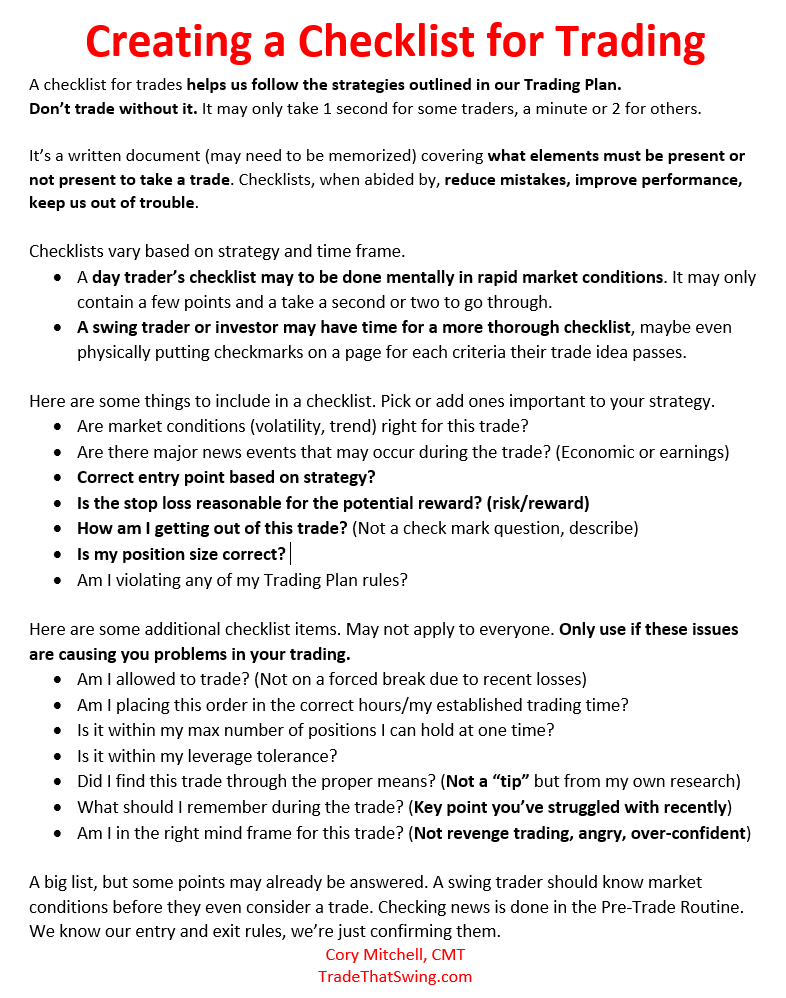
My pre-trade checklists (usually checked off mentally), make sure the trades I take follow the plan.
My review sessions make sure I'm following all these protocols.
I have structures for how I "stalk trades" when swing trading, since a good setup may take days to trigger.
My review sessions make sure I'm following all these protocols.
I have structures for how I "stalk trades" when swing trading, since a good setup may take days to trigger.
7. Trade to match your pscyhology
I don't have all those protocols above because I'm anal and love following orders. The exact opposite!
I have them because I'm impulsive, undisciplined, lazy, and want to gamble.
I have found a way to accept those things and say....
I don't have all those protocols above because I'm anal and love following orders. The exact opposite!
I have them because I'm impulsive, undisciplined, lazy, and want to gamble.
I have found a way to accept those things and say....
"Ok, not being impulsive (etc) will take many years of work...how do I deal with it in the mean time?"
I've been doing that 18 years. I have created structures that help me stay on task.
Why go through all the trouble?
Because I don't want a real job! Seriously!...
I've been doing that 18 years. I have created structures that help me stay on task.
Why go through all the trouble?
Because I don't want a real job! Seriously!...
My trading style is also adapted to my psychology. I'm impulsive, I want action. That's why I CONSTANTLY talk about everything I see on a chart.
I'm also chicken, I don't like holding through pullbacks, so my plan allows for trailing stops when I'm not confident.
I'm also chicken, I don't like holding through pullbacks, so my plan allows for trailing stops when I'm not confident.
8. Listen to people who talk about process
Overall I have lost a ton of money listening to other's trade ideas. I don't look at other people's trades, even if they use the same strategy as me.
I DO listen and learn from people who share information on processes...
Overall I have lost a ton of money listening to other's trade ideas. I don't look at other people's trades, even if they use the same strategy as me.
I DO listen and learn from people who share information on processes...
Because I can always find ways to incorporate that information and use it improve my own processes:
Here are great follows who focus on process:
@SJosephBurns
@AlphaMind101 – psychology
@prrobbins
@ProfWendyWood – habits
@markminervini – swing trading
@monsterstocks1 - history
Here are great follows who focus on process:
@SJosephBurns
@AlphaMind101 – psychology
@prrobbins
@ProfWendyWood – habits
@markminervini – swing trading
@monsterstocks1 - history
If you enjoyed this, give me a follow @corymitc
I have loads of free resources, as well as full courses, on the website: tradethatswing.com
Use the menu to navigate to articles on a specific style of trading you are interested in.
I have loads of free resources, as well as full courses, on the website: tradethatswing.com
Use the menu to navigate to articles on a specific style of trading you are interested in.
Loading suggestions...