

HOW FASHION BRANDS DIE (A STRUCTURAL VIEW) 🧵
Tiffany and Nike announced a collab today, leading to a lot of debate on Twitter (does it suck, does it not suck). I think it sucks, but want to use the launch to talk about how fashion brands—especially luxury ones—eventually die
Tiffany and Nike announced a collab today, leading to a lot of debate on Twitter (does it suck, does it not suck). I think it sucks, but want to use the launch to talk about how fashion brands—especially luxury ones—eventually die

For this, I'll focus on a single case study: Brooks Brothers (BB). Most ppl today don't think of BB as a luxury company, but they used to dress presidents, preps, and members of the professional-managerial class. They "personified East Coast success in the Kennedy vein."

At their limestone flagship on Madison Avenue, they shaped American style by introducing British tweeds, Shetland knits, unlined button-down collars, camelhair polo coats, bleeding madras, & reverse rep-striped ties to these shores. They even invented RTW manufacturing for suits!


BB gave Americans the ABCs of men's dress. The things they introduced at their store over a hundred years ago still form the backbone of most men's wardrobes today. Companies such as Ralph Lauren and Aime Leon Dore are simply using the language that BB created.


From its founding in 1818 to 1946, BB was owned by the Brooks family. Then in 1946, Winthrop Holley Brooks sold the company to the department store chain Julius Garfinckel & Co.
During this time, BB bought bespoke shoemaker Peal’s intellectual property, dressed Clark Gable and then-Senator John F. Kennedy, and famously introduced a women’s version of their men’s pink dress shirt. (Pink was not yet coded as a feminine color)
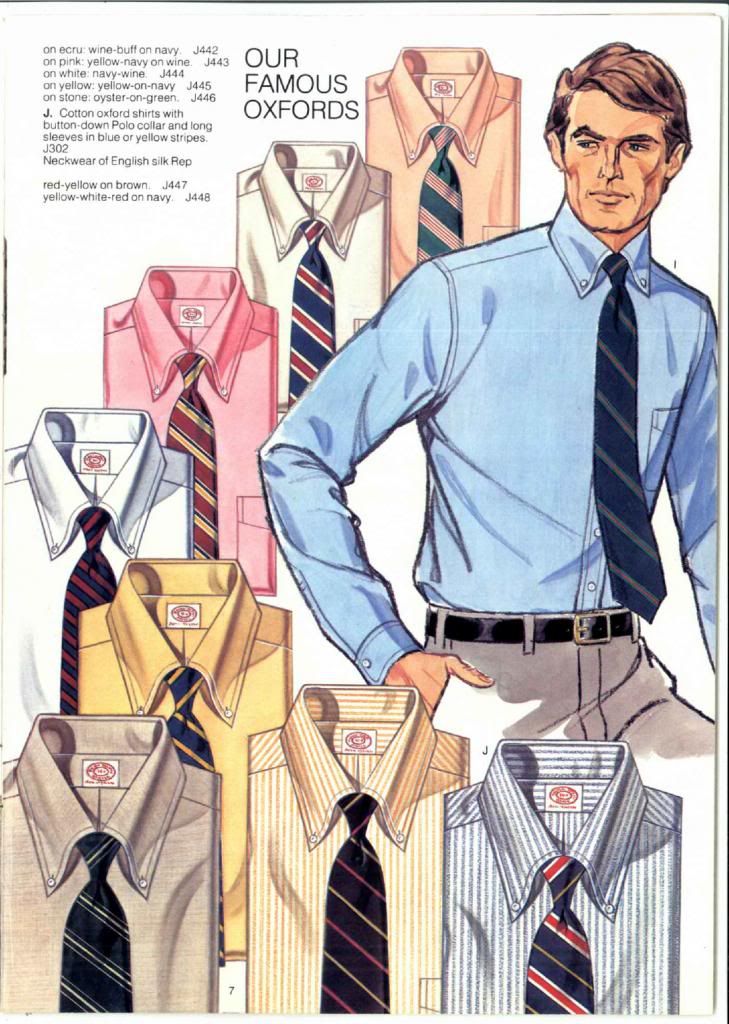


Winthrop Brooks remained as the company's figurehead, but the director was a man named John Clark Wood. Wood is remembered for having kept BB true to its spirit—making conservative clothes for elites. When he retired in 1967, he said: "I made Brooks more Brooksy than before."
However, during Wood's 21-year tenure, he also expanded the biz. BB went from having four stores with annual sales of $4.75M to eight stores in 1967 with annual sales of $35M. In addition, they had mail-order business on many college campuses.

By 1971, this small number of eight stores expanded to eleven—all located in major cities, including Manhattan, Chicago, Boston, San Francisco, Los Angeles, Pittsburgh, Atlanta, Wash DC, and St. Louis. Not bad for a company that started as a small clothier on Catharine Street!

Garfinckel eventually sold BB to Allied Stores in 1981, who in turn sold BB to a Canadian real estate developer named Robert Campeau in 1987. Campeau actually bought a bunch of businesses from Allied for $3.6B, nearly all of it serviced in debt.

When Campeau realized he didn't have enough money to cover the down payment, he sold BB and Ann Taylor in 1988 (BB was sold for $770M). Who did he sell it to? Marks & Spencer, a British multinational retailer who at the time was trying to get into the US market for food & clothes

Growth over this period was huge, as each round of new owners tried to get a return for their investment. Remember that, in 1971, BB had just 11 stores in major cities. By the time M&S sold BB to Retail Brand Alliance in 2001, they had 150 locations in US and Japan.
By 2020, BB had 500 stores worldwide, roughly half of them in the US. Of the 250 US locations, about 100 were outlets selling lower-quality clothes specially made for discount racks.
Stores require real estate, and this sprawling empire eventually proved to be a time bomb
Stores require real estate, and this sprawling empire eventually proved to be a time bomb

When BB filed for bankruptcy in 2020, I interviewed one of the company's former execs in charge of retail sales. The numbers he shared were illuminating. About 27% of BB's sales come from non-iron shirts alone (largely because of the business casual movement)

Additionally, most stores are not profitable. According to this exec, about 80% of BB's sales come from just 40 of its 150 stores. ("I could have closed 100 stores and it would barely have an impact on sales, he said). But he couldn't close them bc of real estate leases.
This complex network of leases constrained what BB could do. They couldn't get out of them for ten or twenty years bc the landlords gave BB favorable rents for long-term leases. Breaking the contract meant hefty penalties.
Let's talk about how this impacted BB's business.
First, it made BB discount more. In the 1980s, BB only had one sale per year. It wasn't even during Christmas—it was after New Year's—and it excluded their popular oxford button-down. The discount was a meager 15% or so.
First, it made BB discount more. In the 1980s, BB only had one sale per year. It wasn't even during Christmas—it was after New Year's—and it excluded their popular oxford button-down. The discount was a meager 15% or so.
Now BB runs 40% off or more discounts almost year-round. Oxford button-downs are almost always included. The "sale section" link at the top of their site is permanent.
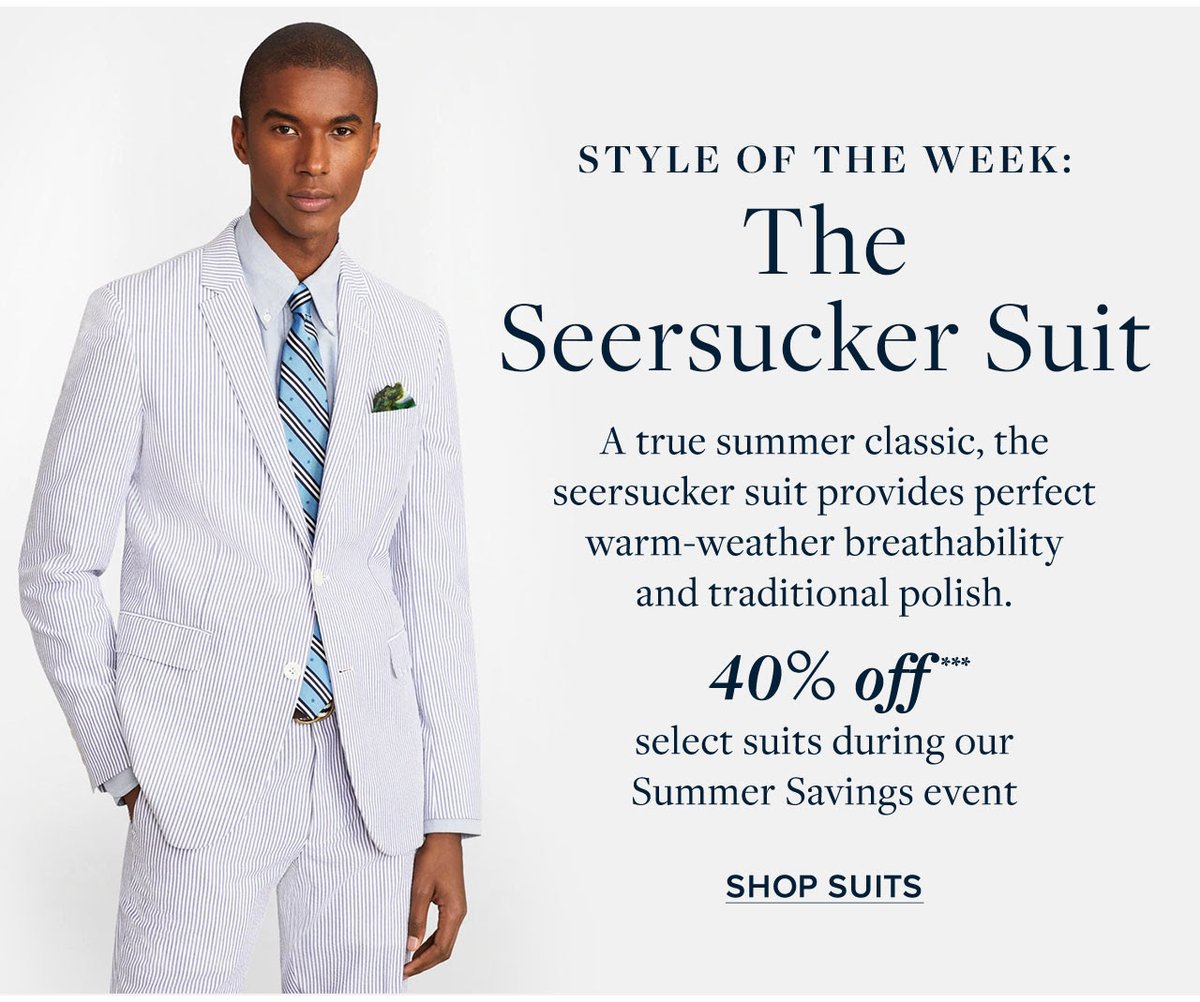
Brooks also used to maintain a certain level of quality. When they opened their outlets to sell mainline merchandise at a discount, they got hooked on the easy profits of outlets. Eventually, they started to make lower-quality clothes for outlets (called the 346 line)
Some of these discount clothes were made by overseas factories, such as TAL Apparel in Asia. Eventually, these partners started to make some of BB's mainline clothes, squeezing out some of the company's US-made goods.


Brooks Brothers also increasingly had to squeeze themselves into trends: doing a collab line with Thom Browne, making shorter and slimmer suits (sometimes using Italian names like Milano fit), and introducing casualwear trends like expensive minimalist sneakers


During this time, there were a lot of internal debates among execs. Some wanted BB to become more Euro in its styling. Others wanted to cut off BB's US factories to reduce costs. An industry friend of mine said BB was becoming a downmarket Italian store.
This is all amazing when you think of BB's origins: a proud clothier that championed American style, almost never discounting, and relying on its US factories. By 2015 or so, the company lost its voice and confidence, chased trends, and needed quick sales to finance costs
BB has become so generic that, when I interviewed another former exec, he said that he saw BB's shirt competitors as UntuckIt and Amazon. I asked him: "how can the company that invented the oxford button-down not be able to charge a premium over UntuckIt?"


He sighed and said, "that's the million-dollar question."
Today, BB is led by a new team ppl (will save my reflections on that for another time). But we can see how the pursuit of growth and resulting fixed costs force brands to discount and chase trends.
Today, BB is led by a new team ppl (will save my reflections on that for another time). But we can see how the pursuit of growth and resulting fixed costs force brands to discount and chase trends.
This story has been endlessly repeated in various ways
Luxury bag makers such as LV and Hermes used to be incredibly innovative w designs. Over time, they figure out what sells and keep making slightly different versions of that bc it's like printing money. This pays for costs
Luxury bag makers such as LV and Hermes used to be incredibly innovative w designs. Over time, they figure out what sells and keep making slightly different versions of that bc it's like printing money. This pays for costs


J. Crew rode high on the heritage menswear wave, but then took on a ton of debt. This constrained their ability to respond to a changing market, forcing them to sell increasingly generic clothes. By 2018, J. Crew basically looked like vanilla nothingness, no inkling of a voice


Today, if you want true luxury clothing, I think you have to get it from teeny tiny makers who have not yet expanded and (hopefully) have no interest in doing so. These places have no branding or luxury lifestyle marketing. They are often run by the maker and have small teams
For instance, in Paris, Hosoï is making the kind of stuff that Moynat and Hermes used to be known for. These are fully bespoke bags handsewn using a technique called saddle stitching, where a maker pricks the leather with an awl and passes two needles through from either side


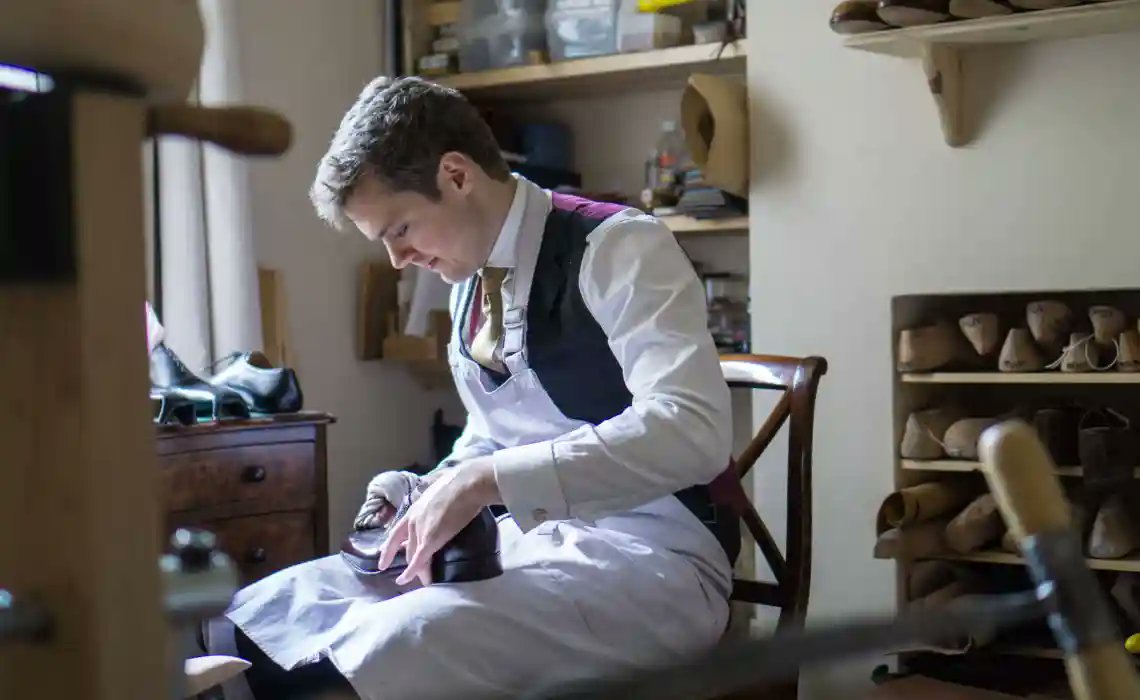
The best shoes are from small independent makers such as Nicholas Templeman, not growing luxury brands like George Cleverley. The best tailoring is done by small indie shops such as Fred Nieddu and Steed, not the big houses on Savile Row.
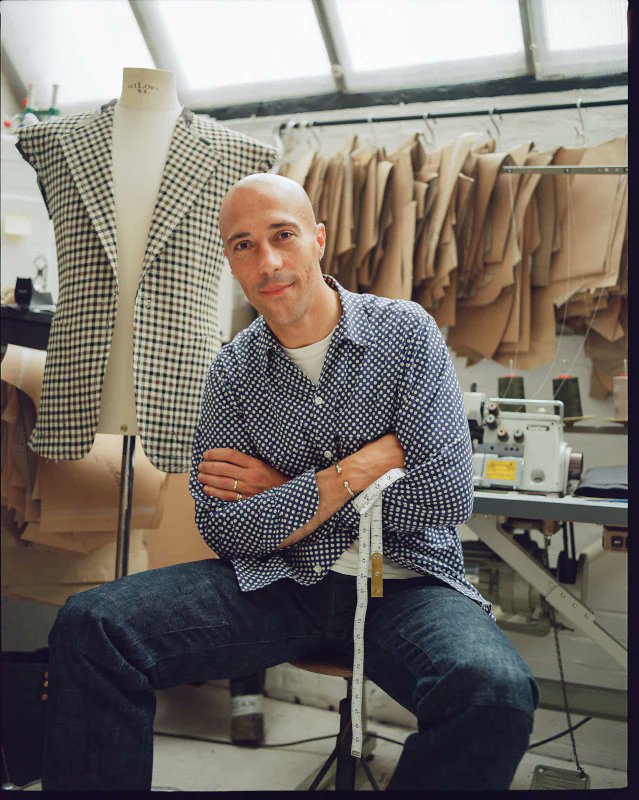
I once sat at a bar with Templeman and suggested that he do a small line of accessories—maybe even high-end ready-to-wear shoes—to bolster profits, since I know bespoke is a low-margin business that he's hard to scale.
He took my comment politely but said, "I just want to make shoes and ride my bicycle every once in a while." This is the attitude that keeps luxury workshops running in the long term. Once aspirations of growth and investors get involved, I think it's over.
Loading suggestions...