

10 Skills Employers Want To See In Your Data Analytics Portfolio:
1. Data Processing
You will spend a lot of time cleaning and preparing data.
Common tasks:
• Filling in missing values
• Blending two data sources together
• Removing duplicate records from a dataset
Including data processing projects shows you can work quickly with data.
You will spend a lot of time cleaning and preparing data.
Common tasks:
• Filling in missing values
• Blending two data sources together
• Removing duplicate records from a dataset
Including data processing projects shows you can work quickly with data.
2. Quick Insights
Answering questions is a data analytics superpower.
Examples:
• Total number of records in the data?
• Any glaring issues or problems?
• Are there obvious categories?
When you get a new data set, answer high-level questions using basic business math fast.
Answering questions is a data analytics superpower.
Examples:
• Total number of records in the data?
• Any glaring issues or problems?
• Are there obvious categories?
When you get a new data set, answer high-level questions using basic business math fast.
3. Basic Business Math
Data analysts need basic business math skills to be effective.
Examples:
• Ratios
• Averages
• Year To Date
• Year Over Year
You don’t need advanced statistics for most data analytics roles, because there are better ways to solve problems.
Data analysts need basic business math skills to be effective.
Examples:
• Ratios
• Averages
• Year To Date
• Year Over Year
You don’t need advanced statistics for most data analytics roles, because there are better ways to solve problems.
4. Data Visualizations
With data, showing is often better than telling.
6 proven data visualizations:
• Maps
• Bar charts
• Line charts
• Scatter plot
• Slope chart
• Highlight tables
By visualizing the data, you’ll drive your point home.
Example from my portfolio:
With data, showing is often better than telling.
6 proven data visualizations:
• Maps
• Bar charts
• Line charts
• Scatter plot
• Slope chart
• Highlight tables
By visualizing the data, you’ll drive your point home.
Example from my portfolio:

5. Dashboards & Reports
Once you have a few data visualizations, you can combine them into dashboards and reports.
Including examples of dashboards and reports in your portfolio shows that you can make something that will drive decisions.
Once you have a few data visualizations, you can combine them into dashboards and reports.
Including examples of dashboards and reports in your portfolio shows that you can make something that will drive decisions.
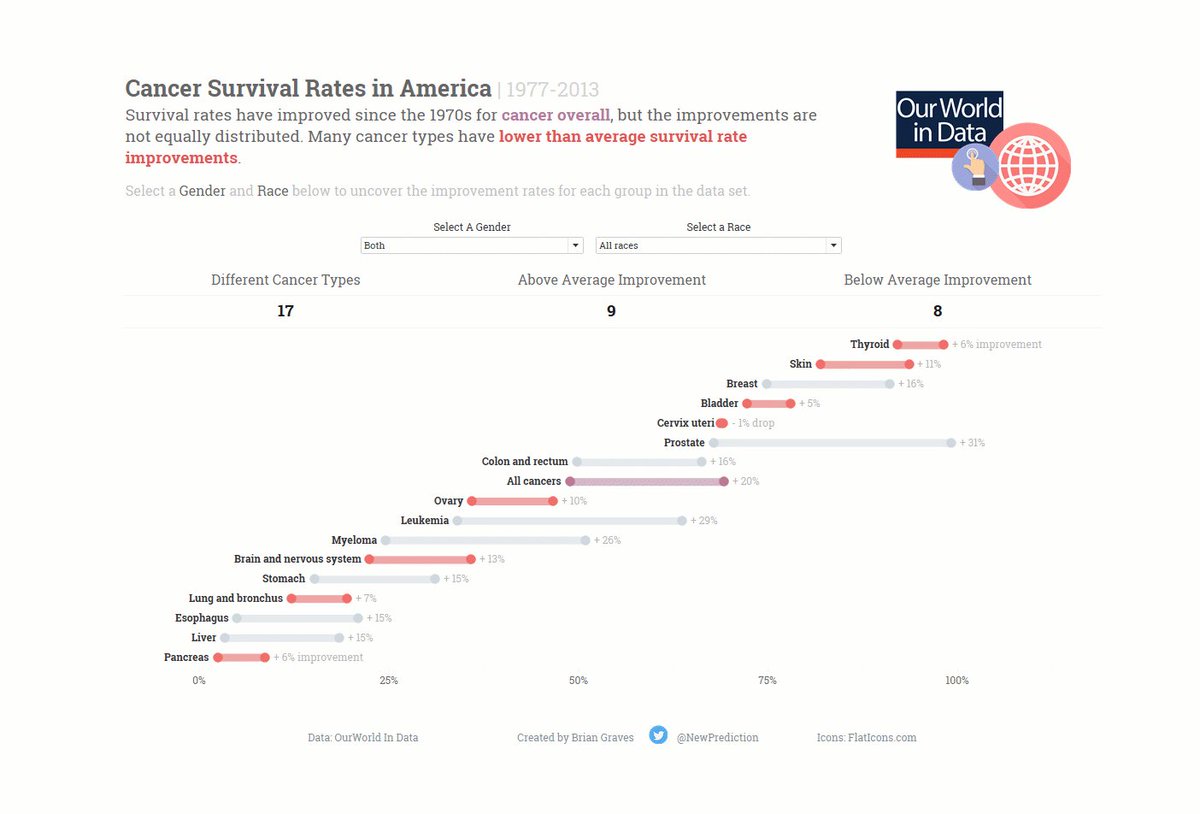
6. Data Storytelling
Telling a story with your data is a skill that sets experienced data analysts apart from the rest.
Every data story has the same components:
• Characters: who?
• Setting: why?
• Conflict: so what?
• Resolution: now what?
Example from my portfolio:
Telling a story with your data is a skill that sets experienced data analysts apart from the rest.
Every data story has the same components:
• Characters: who?
• Setting: why?
• Conflict: so what?
• Resolution: now what?
Example from my portfolio:
7. Critical Thinking
Critical thinking is the ability to work through problems with creativity, curiosity, and logic.
The 3 components of critical thinking:
• Creativity: a new approach to old problems
• Curiosity: explore what's possible
• Logic: be able to back it up
Critical thinking is the ability to work through problems with creativity, curiosity, and logic.
The 3 components of critical thinking:
• Creativity: a new approach to old problems
• Curiosity: explore what's possible
• Logic: be able to back it up
8. Problem-Solving
Data analysts solve 6 types of problems every day:
1. Predicting something
2. Understanding patterns
3. Putting things into categories
4. Uncovering themes in a data set
5. Making connections between ideas
6. Drawing attention to something unusual
Data analysts solve 6 types of problems every day:
1. Predicting something
2. Understanding patterns
3. Putting things into categories
4. Uncovering themes in a data set
5. Making connections between ideas
6. Drawing attention to something unusual
9. Domain Expertise
Highlight experience in your data analytics portfolio.
The problem?
Many beginner data analysts overthink this.
Impostor syndrome sets in and it’s easy to think “I’m not an expert in anything”.
However, you can build up domain expertise in different ways.
Highlight experience in your data analytics portfolio.
The problem?
Many beginner data analysts overthink this.
Impostor syndrome sets in and it’s easy to think “I’m not an expert in anything”.
However, you can build up domain expertise in different ways.
10. Collaboration
Data analysts work as part of a larger team.
Fortunately, collaboration is a soft skill that really goes a long way in your career.
Include it along with other skills and projects to send a signal to recruiters and employers that you work well with others.
Data analysts work as part of a larger team.
Fortunately, collaboration is a soft skill that really goes a long way in your career.
Include it along with other skills and projects to send a signal to recruiters and employers that you work well with others.
That’s it!
Here are the 10 skills that employers are looking for:
1. Data Processing
2. Quick Insights
3. Basic Business Math
4. Data Visualizations
5. Dashboards & Reports
6. Data Storytelling
7. Critical Thinking
8. Problem-Solving
9. Domain Expertise
10. Collaboration
Here are the 10 skills that employers are looking for:
1. Data Processing
2. Quick Insights
3. Basic Business Math
4. Data Visualizations
5. Dashboards & Reports
6. Data Storytelling
7. Critical Thinking
8. Problem-Solving
9. Domain Expertise
10. Collaboration
I hope you've found this thread helpful.
Follow me @NewPrediction for more.
Like/Retweet the first tweet below if you can:
Follow me @NewPrediction for more.
Like/Retweet the first tweet below if you can:
If you liked this, I cover this topic more in-depth in The Data Analytics Portfolio Playbook, plus more:
• Exact step-by-step instructions
• Everything you need to know
• Real-world examples
• 34-page PDF eBook
Get it checked off your to-do list:
newprediction.com
• Exact step-by-step instructions
• Everything you need to know
• Real-world examples
• 34-page PDF eBook
Get it checked off your to-do list:
newprediction.com
Loading suggestions...