

بهذا الثريد بتكلم عن
📌Dialysis
Overview
Types
Process
Advantage and disadvantage for both types
Complication
موضوع مهم تابعو الثريد ⬇️⬇️
📌Dialysis
Overview
Types
Process
Advantage and disadvantage for both types
Complication
موضوع مهم تابعو الثريد ⬇️⬇️
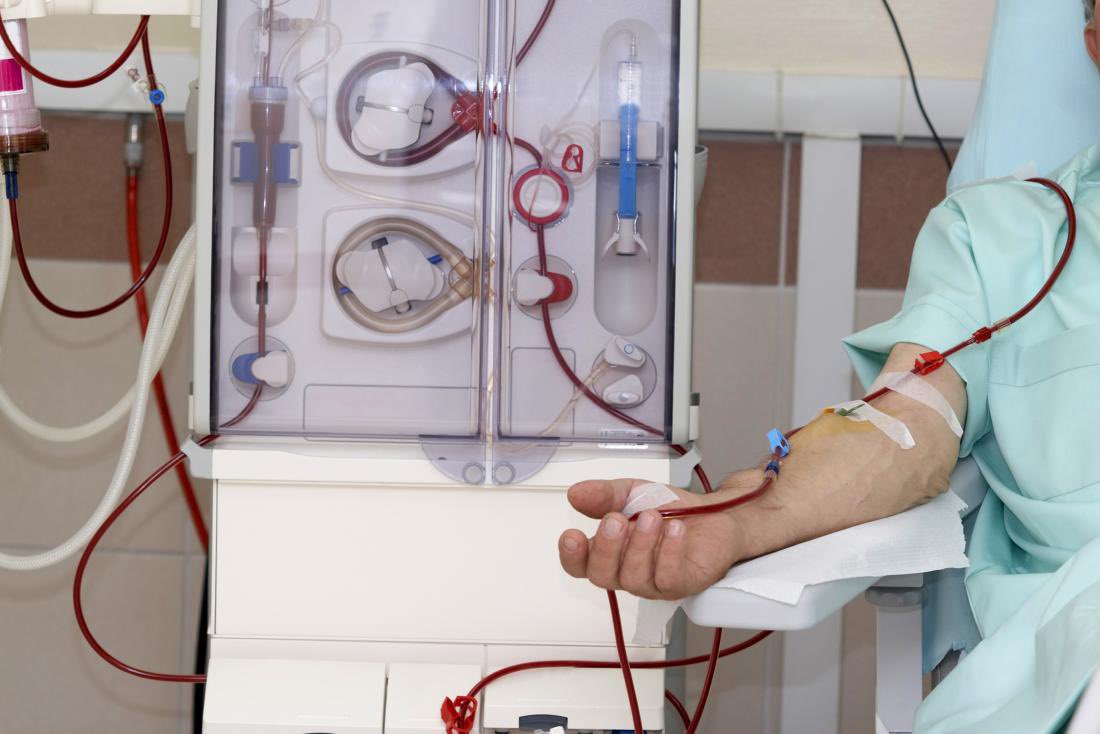
Dialysis is a medical treatment used for individuals with severe kidney failure. It helps filter waste and excess fluids from the blood.
There are two types of dialysis - Hemodialysis and Peritoneal dialysis. Hemodialysis uses an artificial kidney machine and Peritoneal dialysis uses the patient's own abdomen.
Dialysis is usually needed several times a week and can take several hours each time. It can also have side effects such as fatigue, low blood pressure, and muscle cramps.
Indications for Dialysis
Acidosis—, intractable metabolic acidosis
Electrolytes—severe, persistent hyperkalemia
Intoxications—methanol, ethylene glycol, lithium, aspirin
Overload—hypervolemia not managed by other means
Uremia (severe)—based on clinical presentation,
Acidosis—, intractable metabolic acidosis
Electrolytes—severe, persistent hyperkalemia
Intoxications—methanol, ethylene glycol, lithium, aspirin
Overload—hypervolemia not managed by other means
Uremia (severe)—based on clinical presentation,
Kidney transplantation is often considered the best treatment option for those with kidney failure, but it's not possible for everyone. In those cases, dialysis can be a lifesaving treatment.
During Hemodialysis, blood is removed from the body and passed through the dialysis machine, which acts as an artificial kidney. The cleaned blood is then returned to the body.
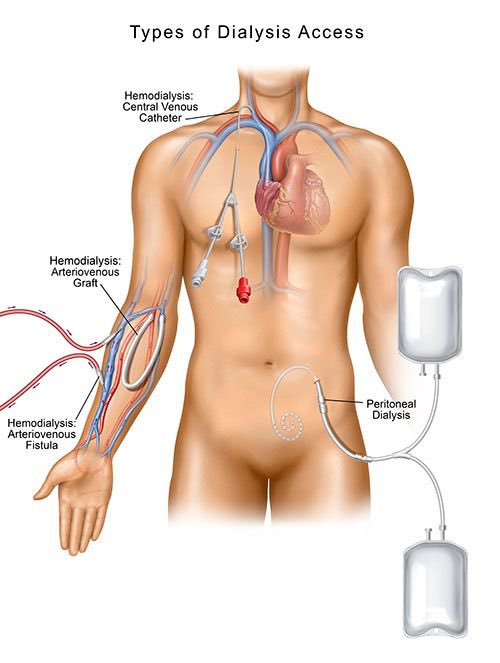
Access to the bloodstream is necessary for Hemodialysis, typically achieved through a surgically created fistula, graft, or catheter.
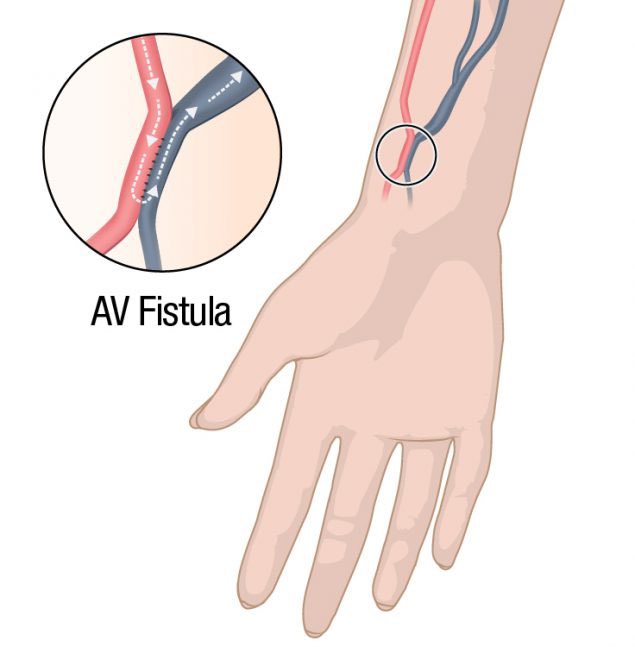

A fistula is preferred as it provides the best long-term access, but a graft or catheter can be used if a fistula is not possible. Regular monitoring of the access site is important for the success and safety of Hemodialysis treatments.
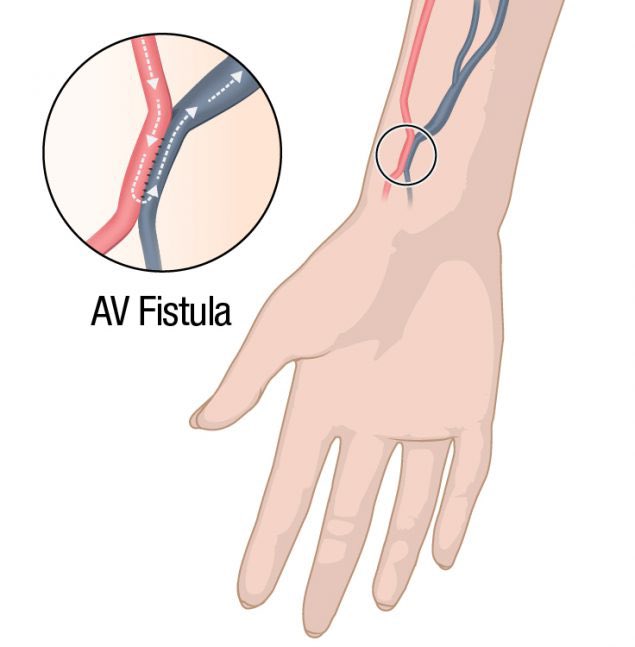
A central venous catheter, also known as a central line, is a long, thin tube inserted into a large vein in the chest for dialysis access.
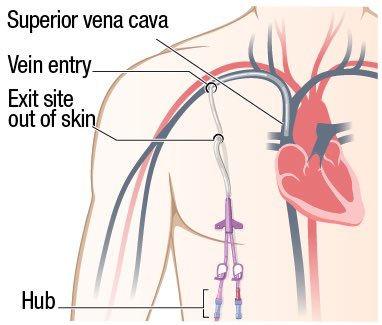
Central venous catheters are used as a temporary or backup access for dialysis in case a more permanent access (such as a fistula) is not possible.
Central venous catheters have a higher risk of infection and stenosis compared to fistulas or grafts, so they are typically used as a short-term solution until a more permanent access can be established.
Peritoneal dialysis (PD) is a type of dialysis that uses the patient's own peritoneal membrane as a natural filter to remove waste and excess fluid from the body.
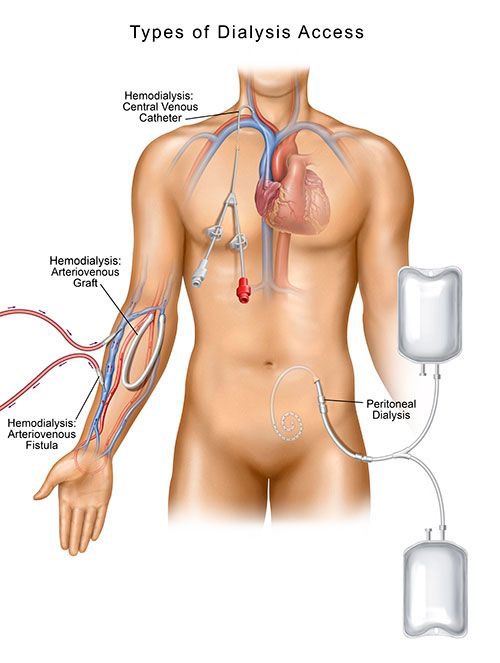
During PD, a sterile solution called dialysate is introduced into the patient's abdomen through a catheter. The dialysate absorbs waste and excess fluid, which is then drained out of the body.
PD can be performed at home, allowing for greater flexibility and independence compared to hemodialysis. It also typically requires fewer treatments per week.
Hemodialysis (HD) Advantages: 1) Can effectively filter waste and excess fluid from the body, 2) Can be performed at a dialysis center, 3) Can be a lifesaving treatment for those with kidney failure.
Hemodialysis (HD) Disadvantages: 1) Requires a surgically created access (fistula, graft, or catheter), 2) Can be time-consuming and tiring, 3) Can have side effects such as low blood pressure and muscle cramps.
Peritoneal Dialysis (PD) Advantages:
1) Uses patient's own peritoneal membrane, 2) Can be performed at home, 3) Requires fewer treatments per week, 4) Offers greater flexibility and independence.
1) Uses patient's own peritoneal membrane, 2) Can be performed at home, 3) Requires fewer treatments per week, 4) Offers greater flexibility and independence.
Peritoneal Dialysis (PD) Disadvantages:
1) Not suitable for all individuals, 2) Can lead to complications such as peritonitis (infection of the peritoneal membrane), 3) May have dietary restrictions.
1) Not suitable for all individuals, 2) Can lead to complications such as peritonitis (infection of the peritoneal membrane), 3) May have dietary restrictions.
Other complications of dialysis can include malnutrition, anemia, and changes in mental function.
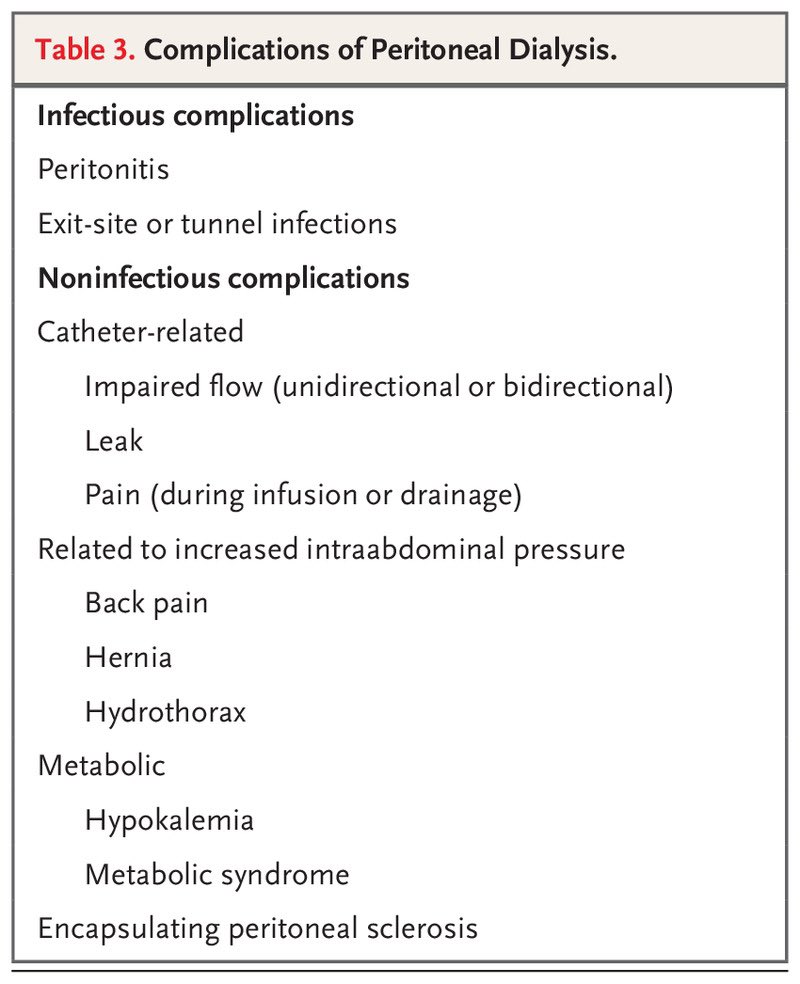
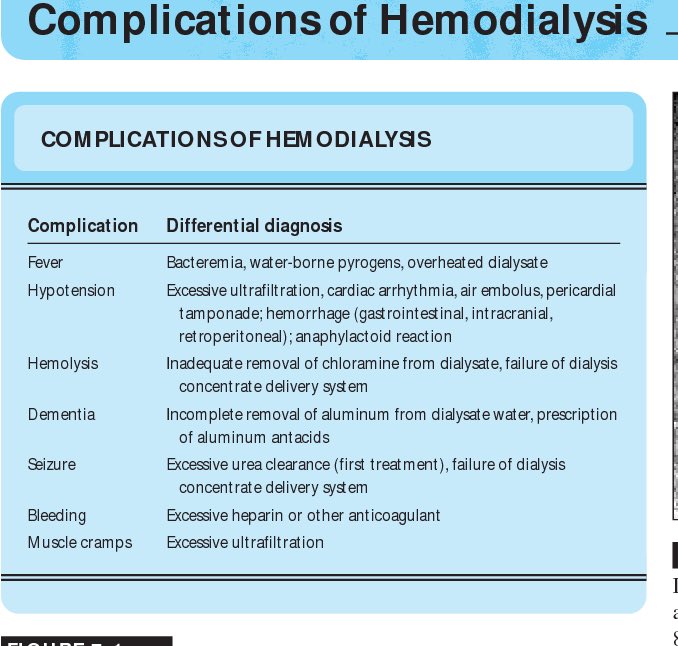
It's important to discuss the potential complications of dialysis with a healthcare provider and take steps to minimize the risks, such as proper care of the access site, regular monitoring, and following a healthy diet.
Thank you 🙏🏻
Thank you 🙏🏻

Loading suggestions...