

ANCIENT BLACK CHINESE.
The Negritos original native ancient asians believe to leave North Africa 100,000 years ago, is what the Chinese people and several Asians believed they came from. Meanwhile some Africans believe they are from Middle East meanwhile they have been
The Negritos original native ancient asians believe to leave North Africa 100,000 years ago, is what the Chinese people and several Asians believed they came from. Meanwhile some Africans believe they are from Middle East meanwhile they have been

existing before others. The Blacks of China were known in the historical literature by many names, including Negro, Austroloid, Oceanean, etc by the Europeans. The East Indians and Mongoloid groups had other names for these Blacks such as Dara.
Yneh-chih. Yaksha, Suka ,and K’un-lun. Lushana and Seythians. The original Black population that lived in China was the Negritos and Austroloid groups. After 5000 BC, Africoid people from Kush in Africa, began to enter China and Central Asia from Iran, while another group

reached China by sea. This two-route migration of Blacks to China led to the development of southern and northern Chinese branches of Africoids. The Northern Chino-Africans were called Kui-shuang (Kushana) or Yueh-chih, while the southern tribes were called Yi and li-man
Yueh and Man. In addition to the Yueh tribes along the north east coastal region, they also lived in Turkestand, Mongolia, Transoxiana, the Ili region and Xinjiang province.

IN NORTHERN CHINA the Blacks/Africoids founded many Civilizations. The three major empires of China were the Xia, Dynasty (1900-1700 BC), Shang/Yin Dynasty (1700-1050 BC) and the Zhou Dynasty. The Zhou Dynasty was the first dynasty founded by the Mongoloid people in China.
The Xia and Shang dynasties were founded by Black tribes living in ancient China. The key to understanding Chinese civilization is to remember the fact that both Xia and Shang came from similar ancestors.
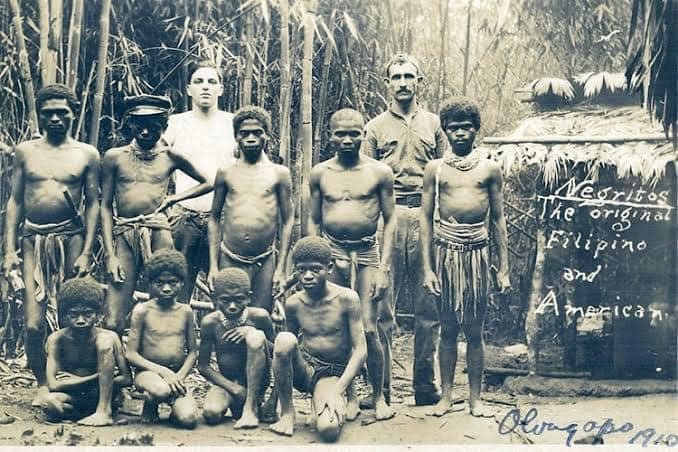
IN SOUTHEAST ASIA AND SOUTHERN CHINA, ancient skeletal remains represented the earliest inhabitants to be Austroloids and Negrillo/Negrito. By the beginning of the Present (Holocene) period the population in China could be differentiate, and placed into categories
designating Mongoloid in the north, and Oceanic on Black races in the south. Both of these groups evolved out of a common Upper Pleistocene substratum as represented by the Tzu-yang and Liuchian skulls. By at least 2500 BC Africoids of the Mediterranean and
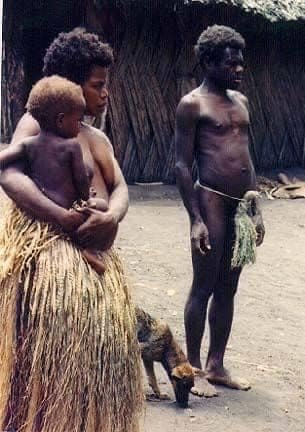
West African type entered this areas by way of India. The skeletal evidence from the Shantung and Kiangsu China show the modern Africoid type especially at the initial Qinglien King and Machiabang phases.
THE NEGRITOS
H. Imbert, a French scholar in 1928 in Les Negritos de Chine, observed that “In the first epochs of Chinese history, the Negrito type peopled all the south of this country and even the island of Hainan, as we have attempted to prove in our
H. Imbert, a French scholar in 1928 in Les Negritos de Chine, observed that “In the first epochs of Chinese history, the Negrito type peopled all the south of this country and even the island of Hainan, as we have attempted to prove in our
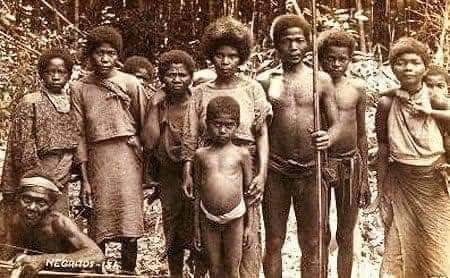
study on the Negritos, or black men of the land”. There are many references to these Negritos in Chinese literature. According to T. De Lacoperie, the Chinese first met these tribes in 2116 BC, when they advanced eastwards of the great southern bend of the Yellow River.
They are spoken of in the Zhou Li, composed under the Zhou dynasty (1122-249 BC), as “black and oily skinned.” Tribes of the same race are also spoken of in the fabulous geography of the Shan hai king, written a few centuries before the Christian era.
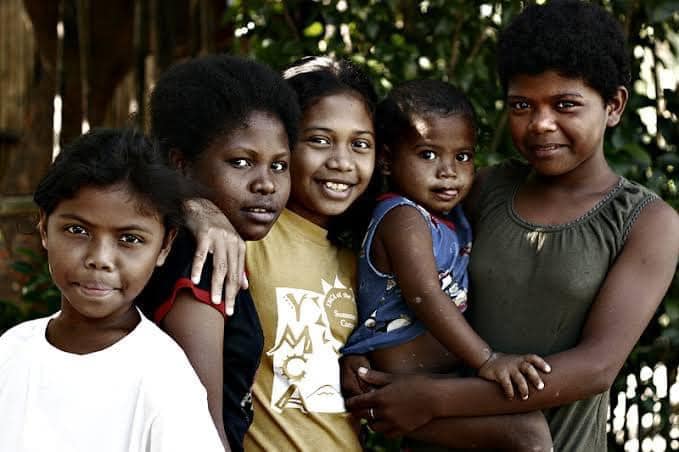
Many of these tribes were called Diaoyao or ‘Dark pygmies’. In 122 BC, Prince Liu-Nan, who died in 122 BC, speaks of references of Negritos in China as late as the Tang dynasty. In the Lin-yi Kuo Chuan, contained in Book 197 of the Chu Tang Shu it is written that
“the people living to the south of Lin-yi have wooly hair and black skin”. In addition to the above, Chinese folk-lore mentions an empress of China, named Li (373-397 AD) who was the consort of the Emperor Xiao Wu Wen, was a Black.
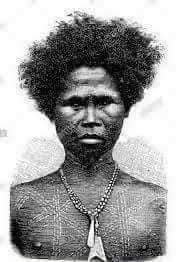
In addition to fighting the Yi, the Zhou also conquered the Negritos of southern China. They defeated some but not all of the Negrito kingdoms especially in Yunnan. The Chinese called the Negrito Blacks: Man, and K’un-lung .
Many of these Blacks presently live in Cochin China, and Yunnan. The Xia people came in contact with these folk in 2116 BC, they are mentioned in the Zhou Li, as living along the Yellow River. The Nam of the Yangtze River basin area were also constantly at war with the Zhou.
The Nam, were closely related to the Tibetans of Szechwan. At this time the Man States were ruled by princes.
Loading suggestions...