

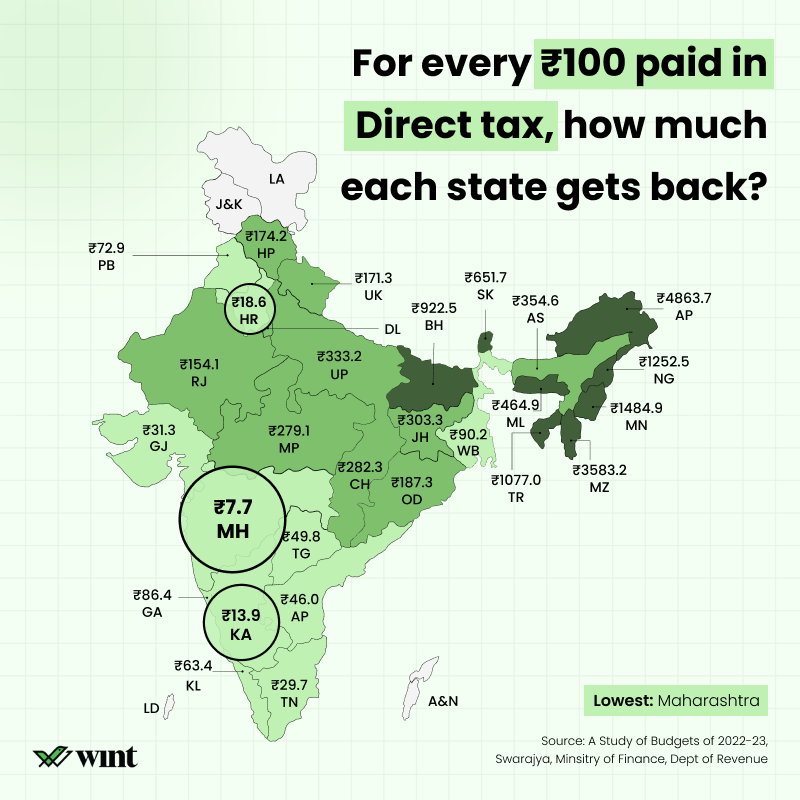
Direct tax contributes ~30% to the Union Budget. Out of every ₹100 that a state pays in direct tax, how much direct tax does it get back?
Why does Maharashtra get back ₹7, UP get back ₹333 and Bihar get ₹922?
Why does Maharashtra get back ₹7, UP get back ₹333 and Bihar get ₹922?
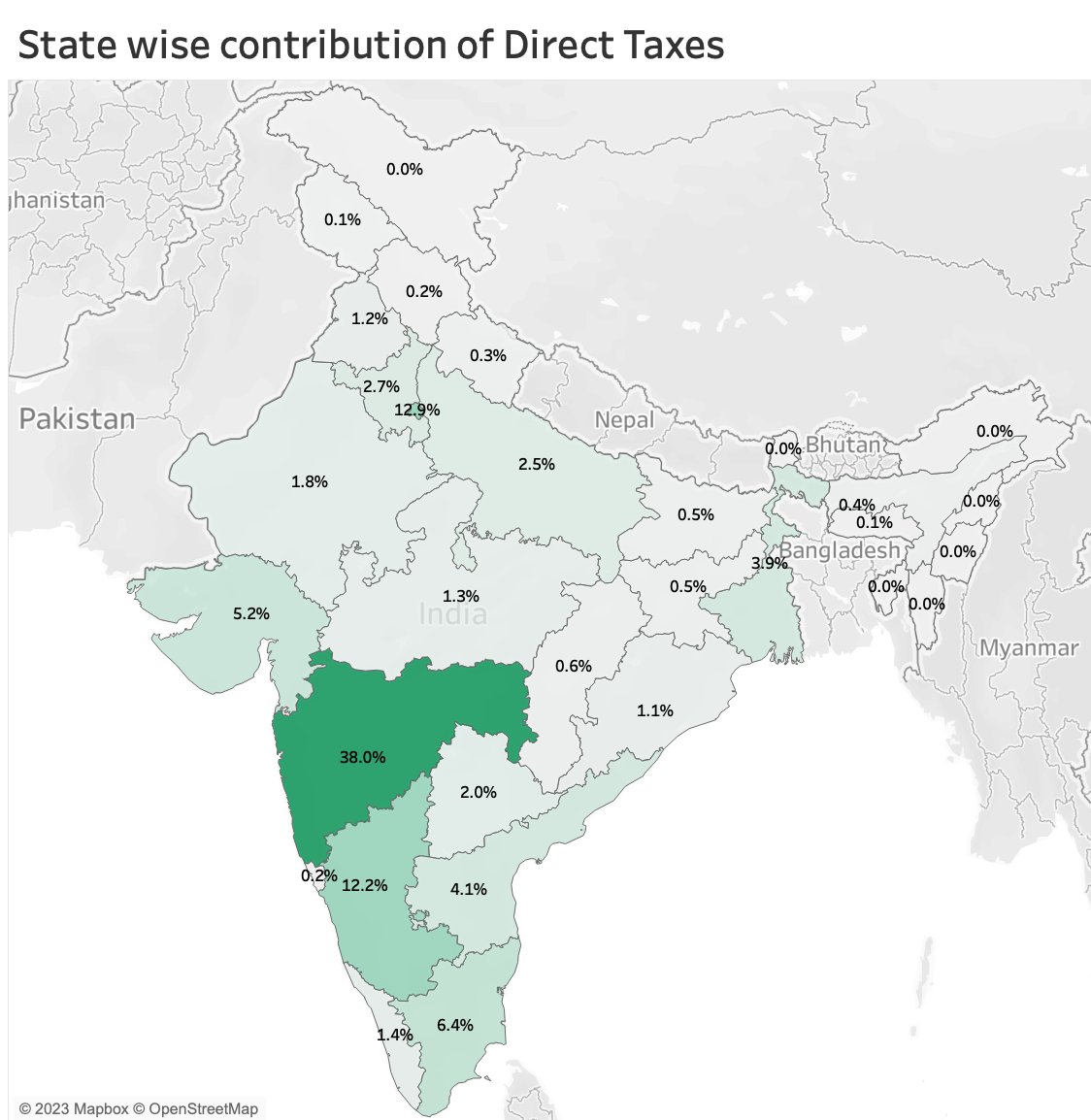
This is how much each state contributes in terms of direct taxes. It is an effect of income levels, business activity (agricultural income doesn’t contribute), how effective states are in collecting taxes.
Data source - Swarajya, Ministry of Finance, Dept of Revenue.
Data source - Swarajya, Ministry of Finance, Dept of Revenue.
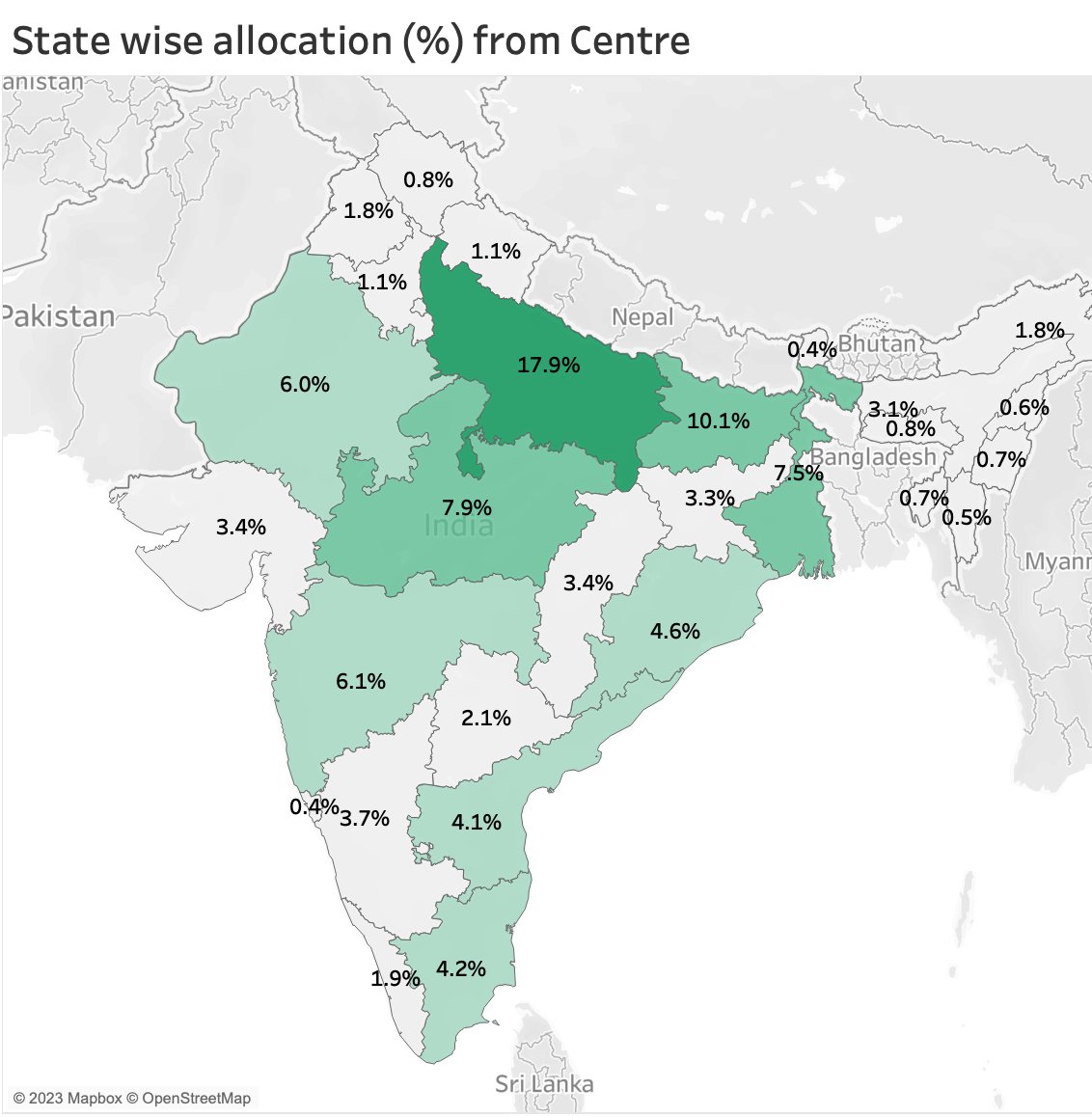
And this is how much they get back from the Centre.
To decide this, there is a set formula by the 15th Finance Commission.
What goes into the formula?
What goes into the formula?
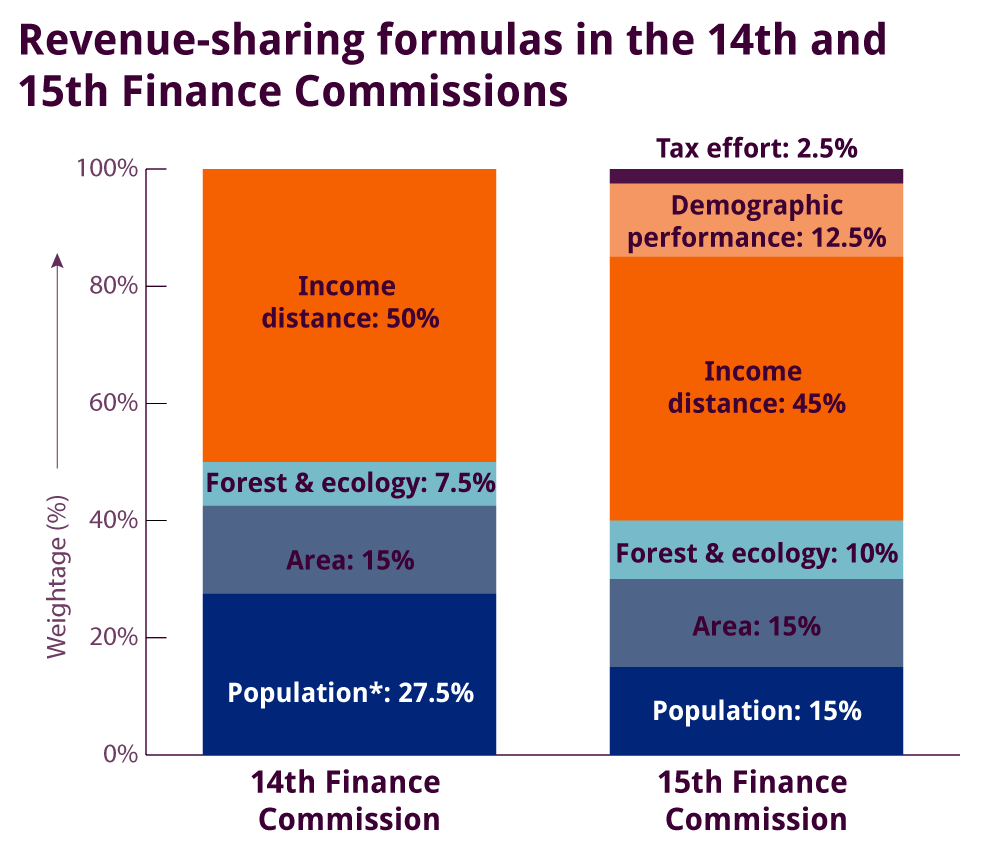
Income distance - How far is the state’s per capita income from the state with the highest per capita income. This redistributes collections from richer states to relatively poorer states helps in developing them.
Area - Bigger the state, higher it needs to spend on building and maintaining infrastructure like roads, airports, highways, civic services.
Population - Allocation should of course go to the people. It should be used to spend on education, healthcare, sanitation, housing. That is why states with more populations get higher allocations.
Demographic performance - While population carries weight in the formula, it should not be an incentive for states to grow their population unsustainably. So demographic performance is based on progress in population control. This is a recent addition to the formula.
Forest cover - States which maintain their forest cover are giving up some of their economic potential for conserving the environment. This is to compensate and incentivise nature conservation.
Tax effort - This is an incentive for states which have higher tax collection efficient. It is the ratio of average per capita own tax revenue and the average per capita state GDP. It has the lowest weightage (2.5%).
Even though Maharashtra does relatively better on most parameters, the highest weight goes to income distance, which favours states with lower per capita income.
That is why Bihar gets 10.06% of the tax devolution as compared to Maharashtra’s 6.14%.
That is why Bihar gets 10.06% of the tax devolution as compared to Maharashtra’s 6.14%.

Loading suggestions...