
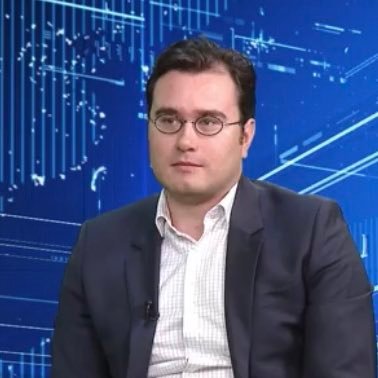
How Russian writers advanced the imperial message of 🇷🇺, and the imperialism of Russian dissidents.
Fascinating interview with @EwaThompson1! 👏
🧵 Highlights
1/16
revdem.ceu.edu
Fascinating interview with @EwaThompson1! 👏
🧵 Highlights
1/16
revdem.ceu.edu
“Russia likes to pass itself as a nation state among other states in Europe and the world. However, Russia is not a nation state.”
/2
/2
“Russia would like to be a nation state by Russification of all those nations that are part of the Russian Federation, but Russia so far has not succeeded in doing so.”
/3
/3
“You can be a great genius, and Tolstoy certainly was, and at the same time promote wrong ideas.
All those borderline peoples are simply not important, they don’t count, they will soon be Russified anyway, or already have been Russified.”
/4
All those borderline peoples are simply not important, they don’t count, they will soon be Russified anyway, or already have been Russified.”
/4
“The image of, say, Poland, that Tolstoy gave to millions of readers was extremely negative.
I mean, negative in the sense that it was not a country worthy of existence.”
/5
I mean, negative in the sense that it was not a country worthy of existence.”
/5
“We know that in reality, 🇵🇱 actually supplied Napoleon with a 80,000 strong army and was obviously not on the side of Tzar Alexander. All this disappears from Tolstoy’s description and such images remain in the cultures of France, Germany and Great Britain.”
/6
/6
“In a sense, Tolstoy’s novel did more harm, not just to Poland, but also to Lithuania, Latvia, Estonia, Belarus and Ukraine than many, many other more obvious things that happened in history.”
/7
/7
“In Tolstoy, it seemed that everybody welcomed the Russian army. Remember the big fete in Vilnius that was organized by, of course, grateful people that lived in Vilnius, but in reality, the city didn’t really welcome Tzar Alexander I.”
/8
/8
“Russian literature presents ideas that dress up as human beings. This makes it rather different from western literature, which tends to be much more down to earth and presents real people in real societies.”
/9
/9
“When it comes to Pushkin — again a great poet, but his poem, Na Vzjatie Varshavy [On the Taking of Warsaw] written during the uprising of 1830-31, was an ugly poem. Russian writers tended to side with the Russian government when it came to political issues.”
/10
/10
“The fact is that if you were not in line with the gov, you had no access to publishers and you had no access to audiences. Of course, it translates into building up a negative picture of, say, 🇺🇦 or 🇵🇱 in the west, but that’s what happens in 🇷🇺 all the time.”
/11
/11
“On how to reach [a democratic] society, you have a complete blank, both in Russian literature, in Russian thinking, and in Russian philosophy. There is simply no plan and no understanding that there must be a plan, there must be a fight for a free society.”
/12
/12
“Criticism is one thing, and planning to change is another thing. Just pure criticism it’s really like drinking tea and eating cakes and saying, ‘oh this government is terrible, you know, it would be nice to have a different kind of government’.”
/13
/13
“This is how I think 🇷🇺 writers and 🇷🇺 dissidents deal with this terrible system that exists in 🇷🇺 . They do not try to even think of convincing 🇷🇺 society that the system should be changed, because 🇷🇺 society is not at all convinced that the system should be changed.”
/14
/14
“There is no admittance in Solzhenitsyn for instance, that Russia should relinquish those territories that do not want to be part of the Russian Federation — no Russian dissidents have ever said that.”
/15
/15
“And why did Germany change radically? Because foreign armies were in Berlin, they forced Germans to change their views. If Germany won World War II, they would be worshipping Hitler today.”
/16
/16
Loading suggestions...