

Thread: You Should Know Everything About Index Funds.🧵
(1) Let's understand Index first: An index is a collection of stocks that represent the overall market or a specific sector. Nifty 50 is an index that includes the top 50 companies in India across various sectors. Bank Nifty is another index that covers all major banks in India.
(2) Index Funds are passive mutual funds that copy market indices. The fund manager doesn't choose stocks, they simply invest in all the stocks in the followed index.
(3) A Nifty 50 Index fund invests its funds into the same stocks and proportion as the Nifty 50 Index, aiming to replicate its returns with some deviations.
(4) Index mutual funds are great for risk-averse investors who don't want to spend time researching. They can invest in equities via Nifty/Sensex index funds without worrying about the risks of actively managed equity funds.
(5) Index funds are a passive investment strategy that aren't influenced by the personal biases of fund managers. Unlike active funds, index funds don't have a fund manager's sector preferences affecting performance as it simply tracks a market index.
(6) Index funds are recommended for long-term investments of 5+ years. Short-term fluctuations are normal but over time they average out to offer 10-12% returns.
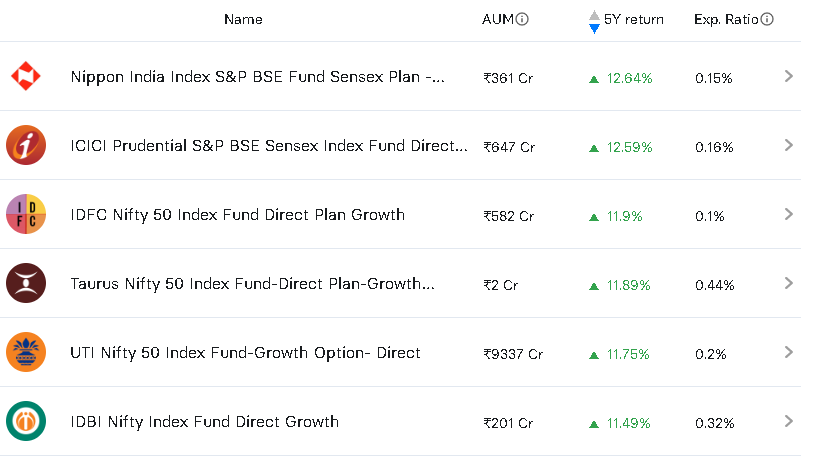
(7) Factors to consider before investing in Index Funds in India:
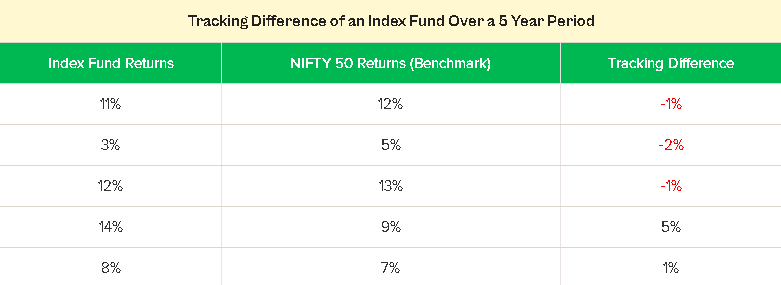
Low tracking error - Check for low tracking error before investing in index funds. Returns are usually similar to the market index they track.
Low tracking error - Check for low tracking error before investing in index funds. Returns are usually similar to the market index they track.
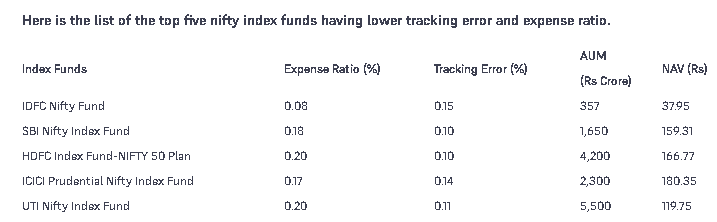
(8) Low expense ratio: Pick the one having lowest expense ratio as lower expenses ratio will increase your returns.
Loading suggestions...