
Moroccan design is all about colour, texture & fluid lines. It is a unique blend of North African, Mediterranean & Islamic styles, creating a distinctive look which has inspired artists & designers all over the world.
A thread on the art of Moroccan design aesthetics...
A thread on the art of Moroccan design aesthetics...

1/ City planning, military architecture, urban casbahs, and the intricate beauty of Moroccan carpets, woodwork, and zellij tilework are all part of this distinctive and brilliant world of art.
Moroccan aesthetics continues to influence artists and designers all over the world…
Moroccan aesthetics continues to influence artists and designers all over the world…
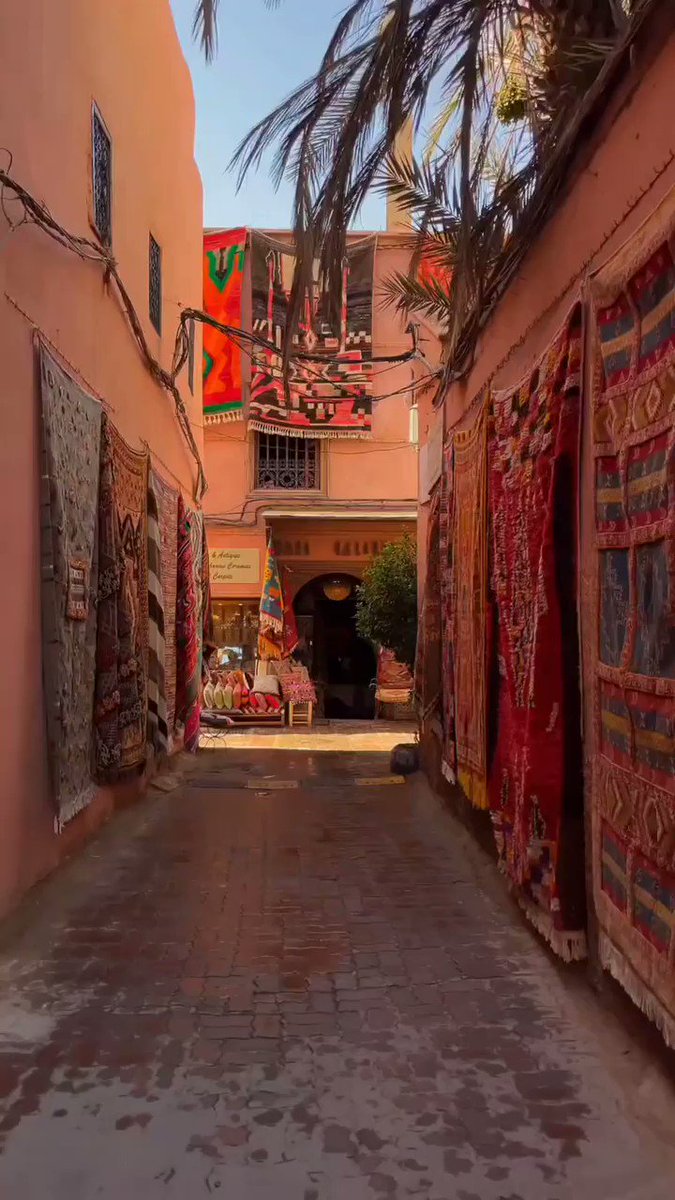
2/ Some of the readily recognized features of Moroccan design include Islamic geometric patterns, vivid colors, and zillij tiles. Zillij tiles are terra cotta tile-work of enamel chips set in plaster to create mosaic geometric shapes…

3/ Zillij tiles are a visual language composed of shapes, patterns & colours. Morocco has some of the last traditional workshops devoted to the preservation & production of zillij, the living craft of hand-cut glazed mosaic tile developed in Andalusia in the twelfth century…
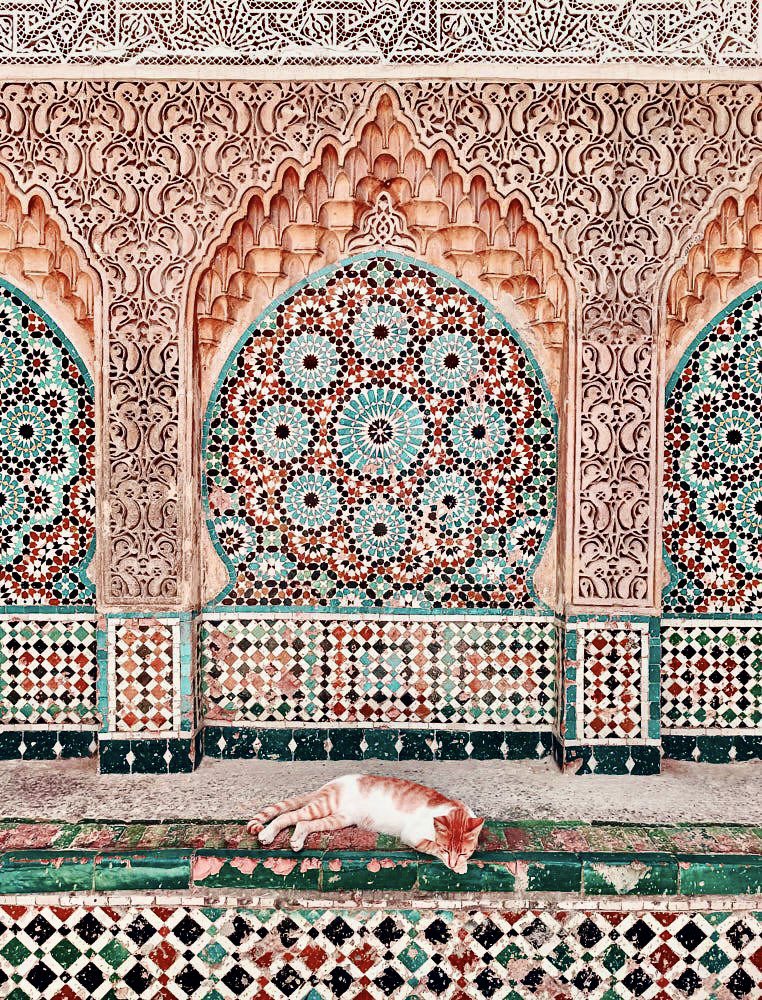
4/ Mosaic Water Features and Fountains are popular in Morocco. Many are decorated in colourful Zillij tiles
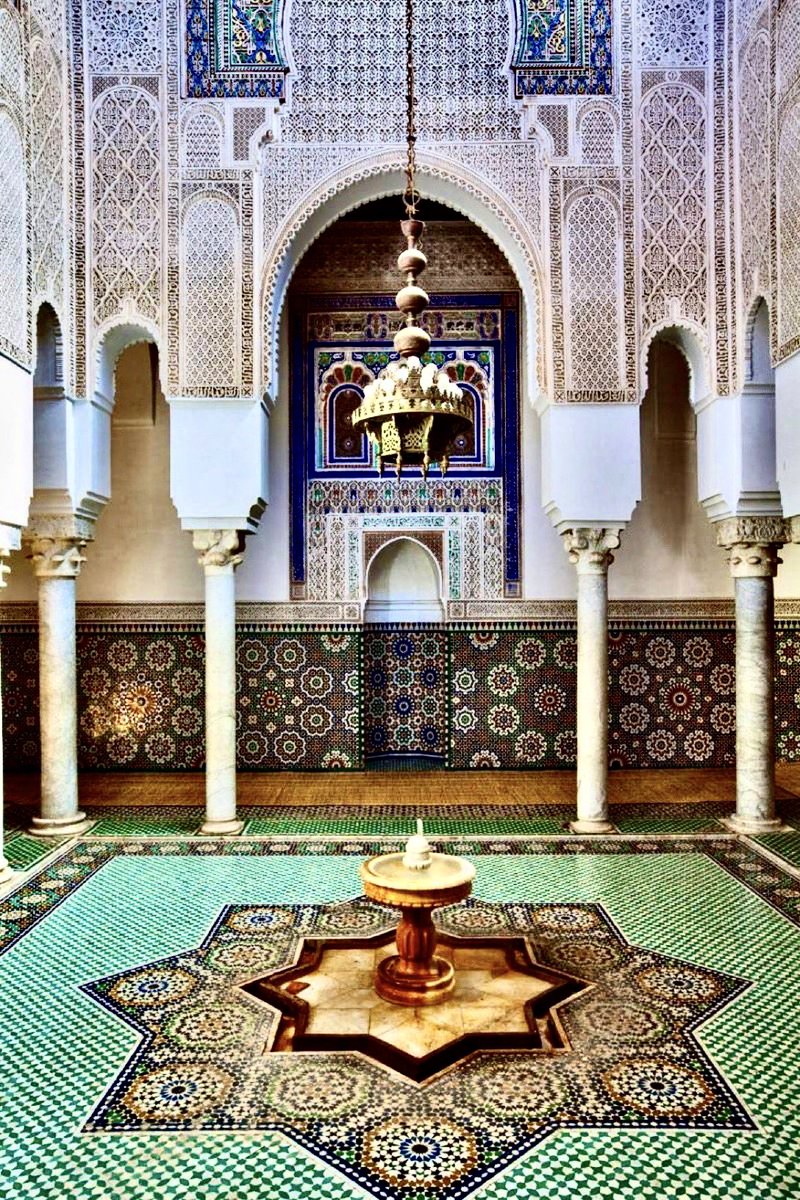
5/ Open courtyards filled with lush gardens and tiled water fountain are a mainstay in Moroccan architectural style. U-shaped entries and large domes further define Moroccan designs.
Video: Adrien
Video: Adrien

6/ Traditional Moroccan homes are made of stucco with wooden beams and supports. The homes are commonly white-washed and gleam in the bright Saharan sunlight.
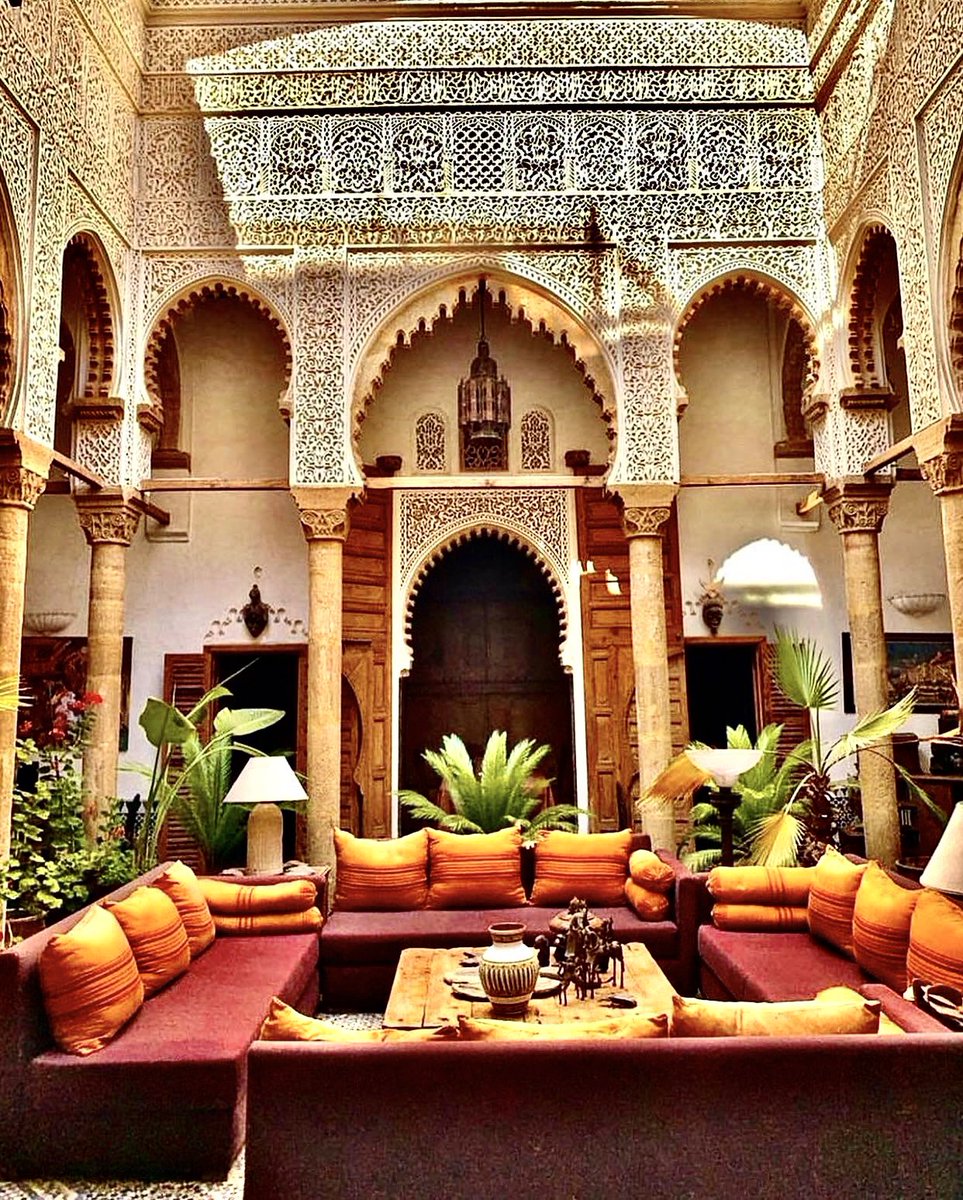
7/ Few right angles exist in Moroccan design. Doorways and windows are arched or shaped in the traditional Islamic key-hole design.
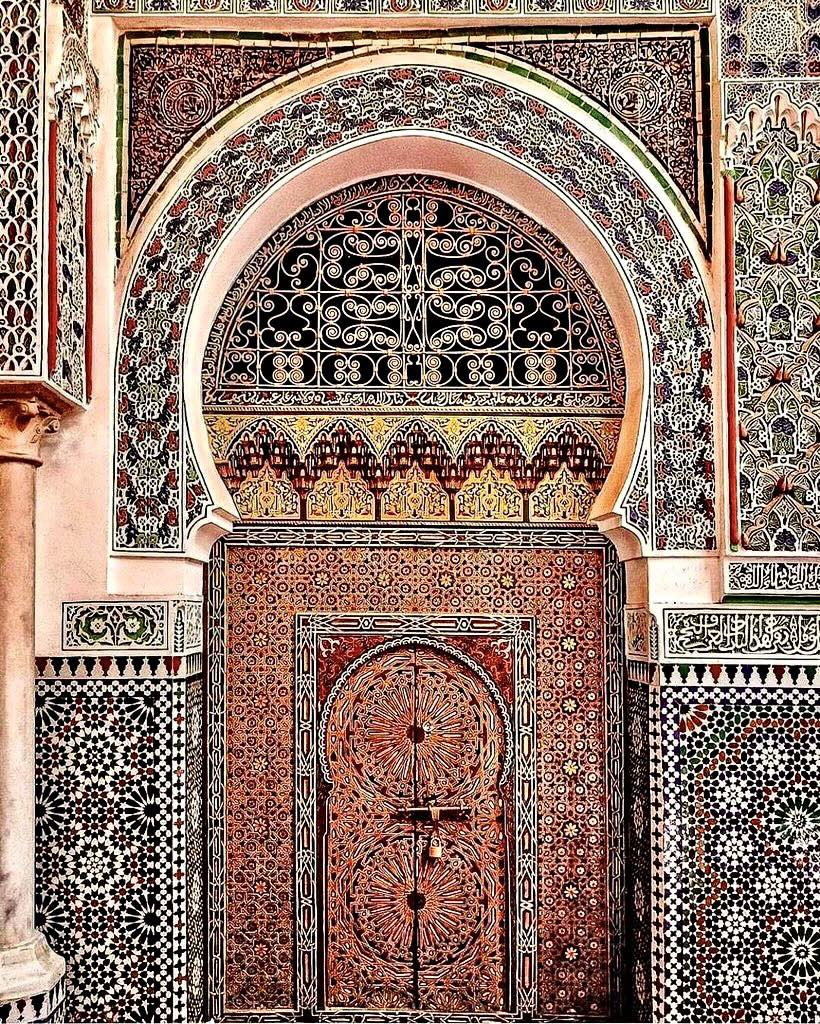
8/ Moroccan design incorporates bold colors, such as fuchsia, royal blue, deep purple, and vibrant red, with the soothing neutral colors of the desert, such as sand, taupe, beige, and shades of white. Bold accent walls are common in this design style.
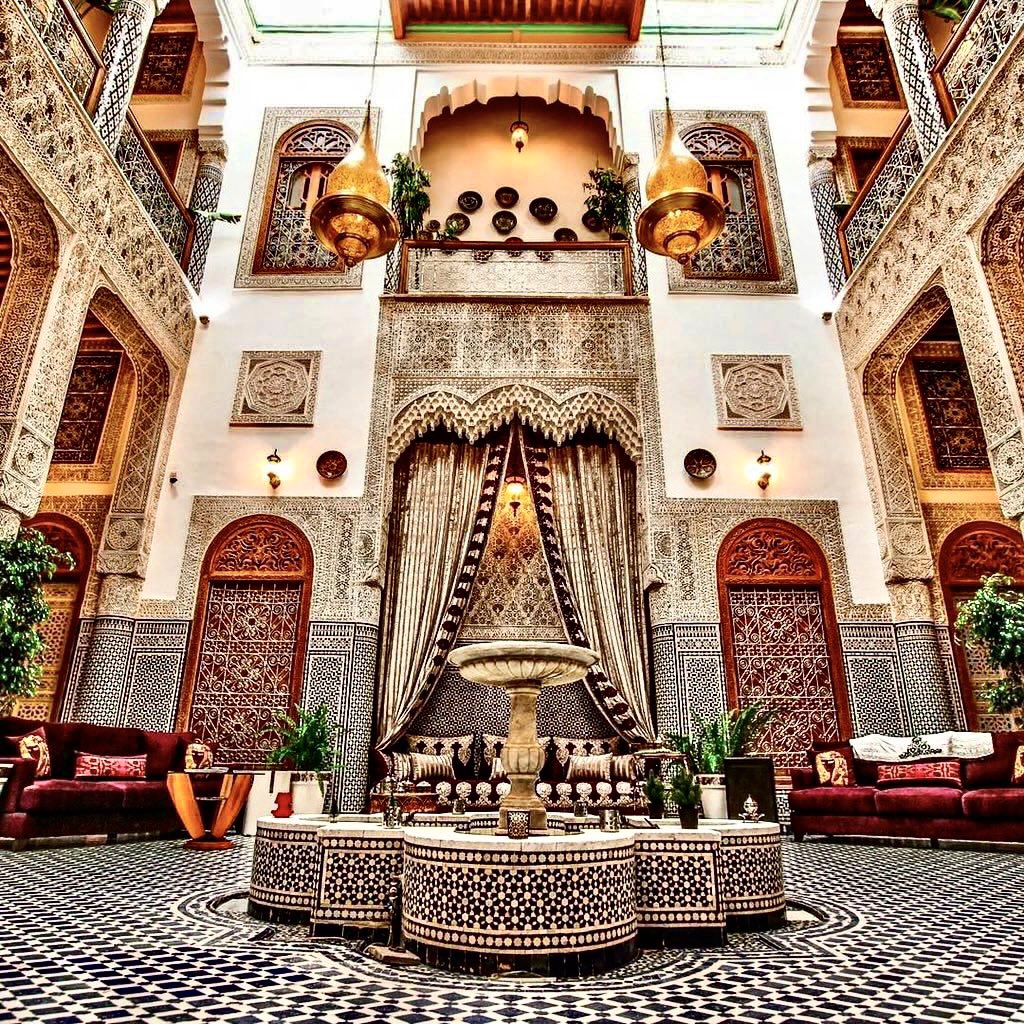
9/ Texture is important in Moroccan design. Rough stucco walls, smooth silken tapestries, and rugs are just a few textures found in Moroccan interior design.
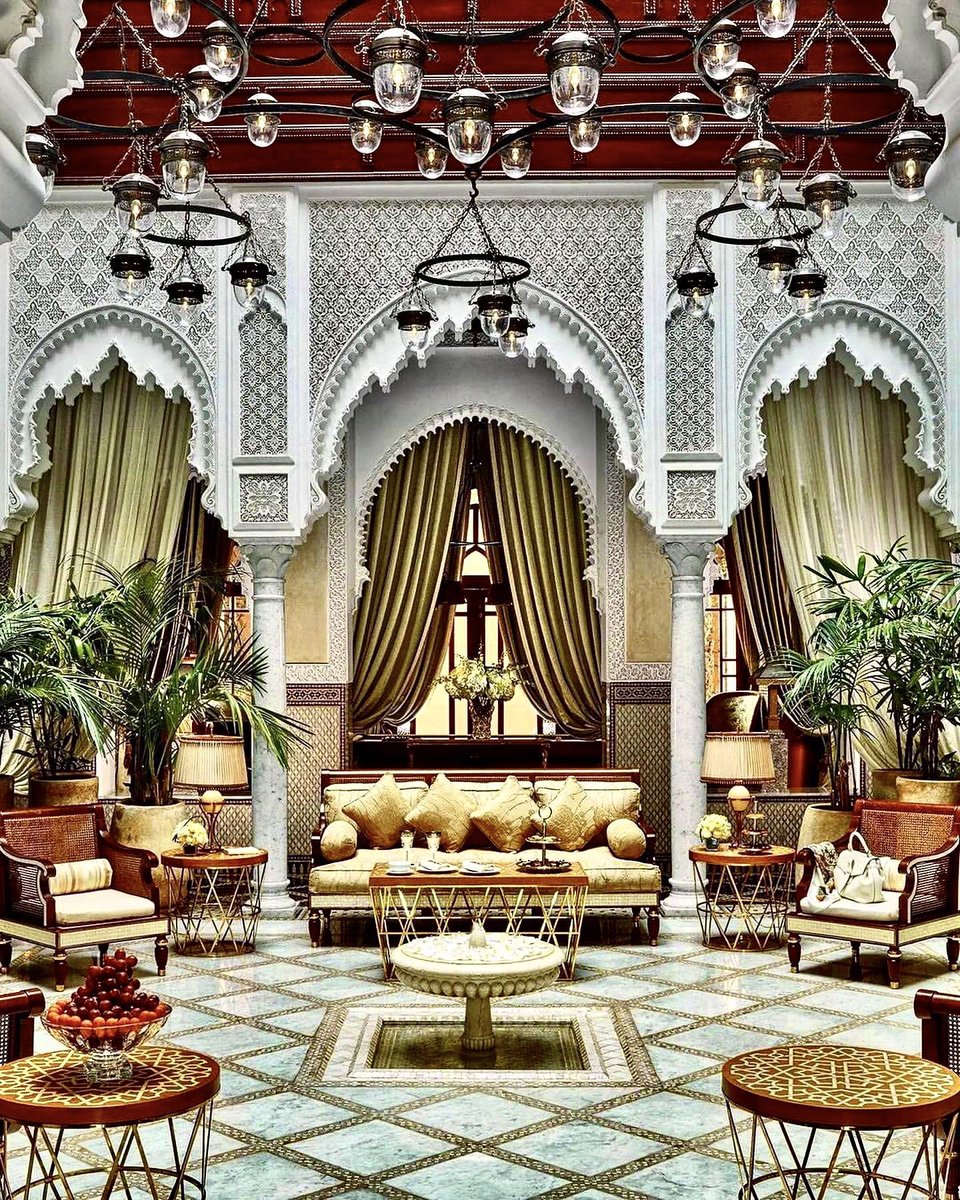
10/ Beautiful interiors
Prayer in Morocco
Prayer in Morocco
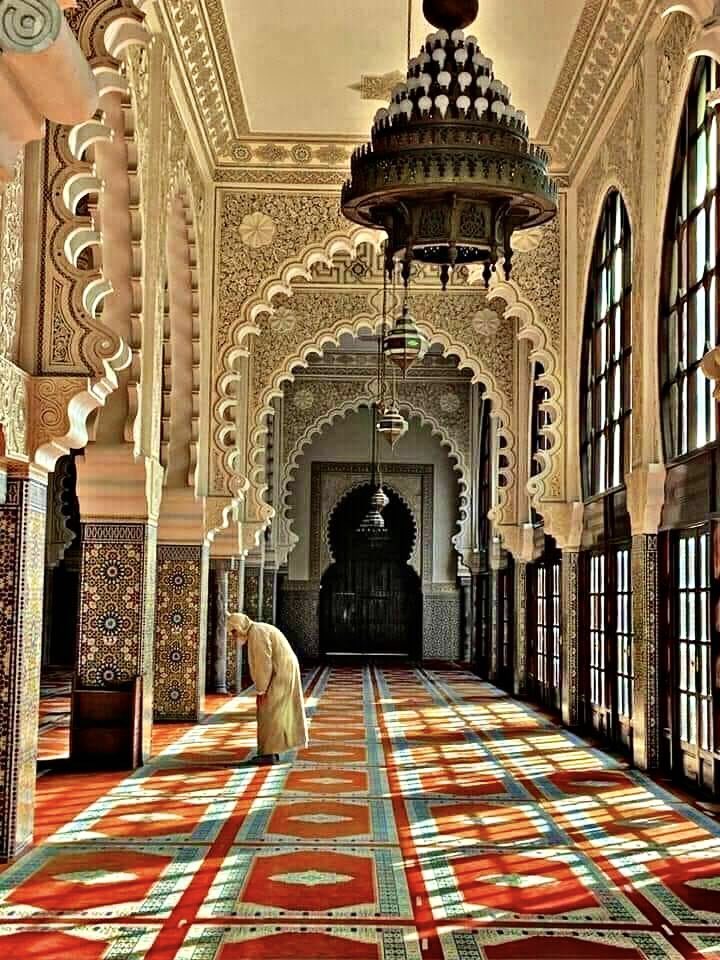
11/ Textiles in Moroccan interior design drape & flow. Silks, gauze-like fabrics, & drapery sheers are commonly used to divide rooms, to frame windows & to throw across furniture.
Textiles are also important as floor coverings, often seen in woven kilim rugs.
Textiles are also important as floor coverings, often seen in woven kilim rugs.
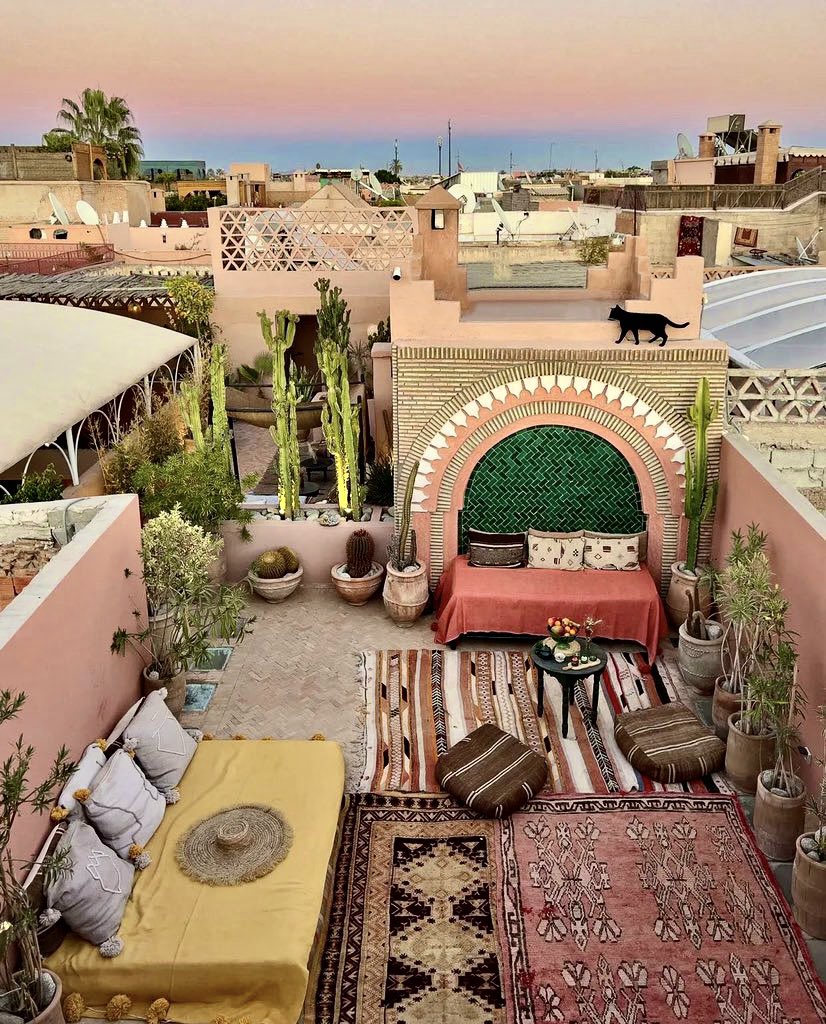
12/ Furniture in Moroccan design is a combination of delicately-carved wooden pieces and plush over-stuffed upholstered ones including couches & pillows
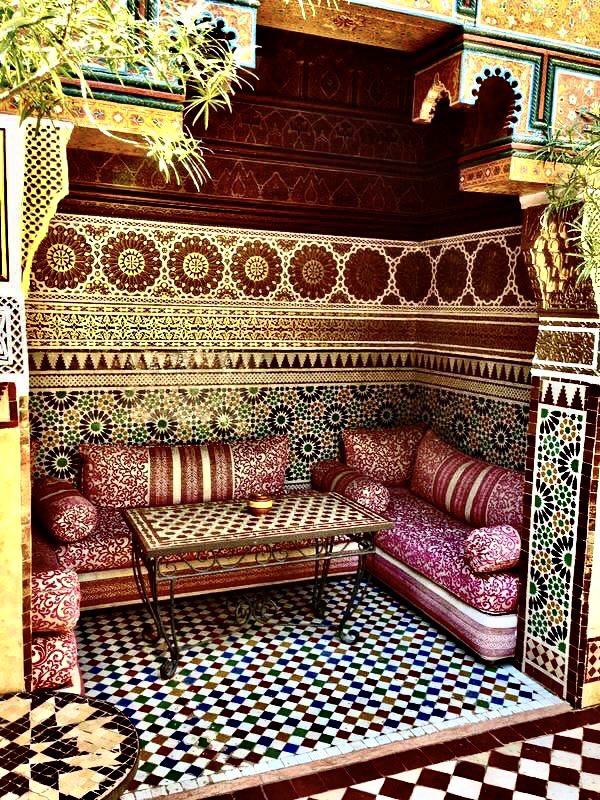
13/ Accent pieces also reflect the Islamic influences on Moroccan design. Lamps are often hung from the ceiling & are made of metals, such as brass & copper. Other popular Moroccan style accents include mirrors framed in metal or wood with arabesque design
Video: riadelegancia
Video: riadelegancia

14/ In Moroccan design it’s all about details and every piece is crafted with skill, love and artistry
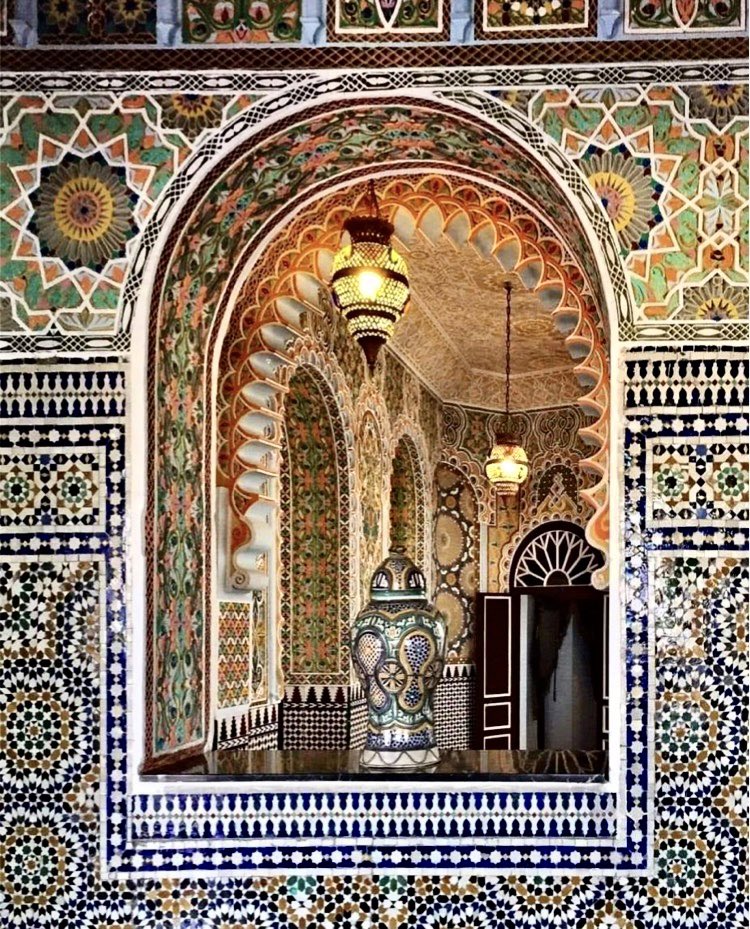
15/ Exquisite Moroccan design details
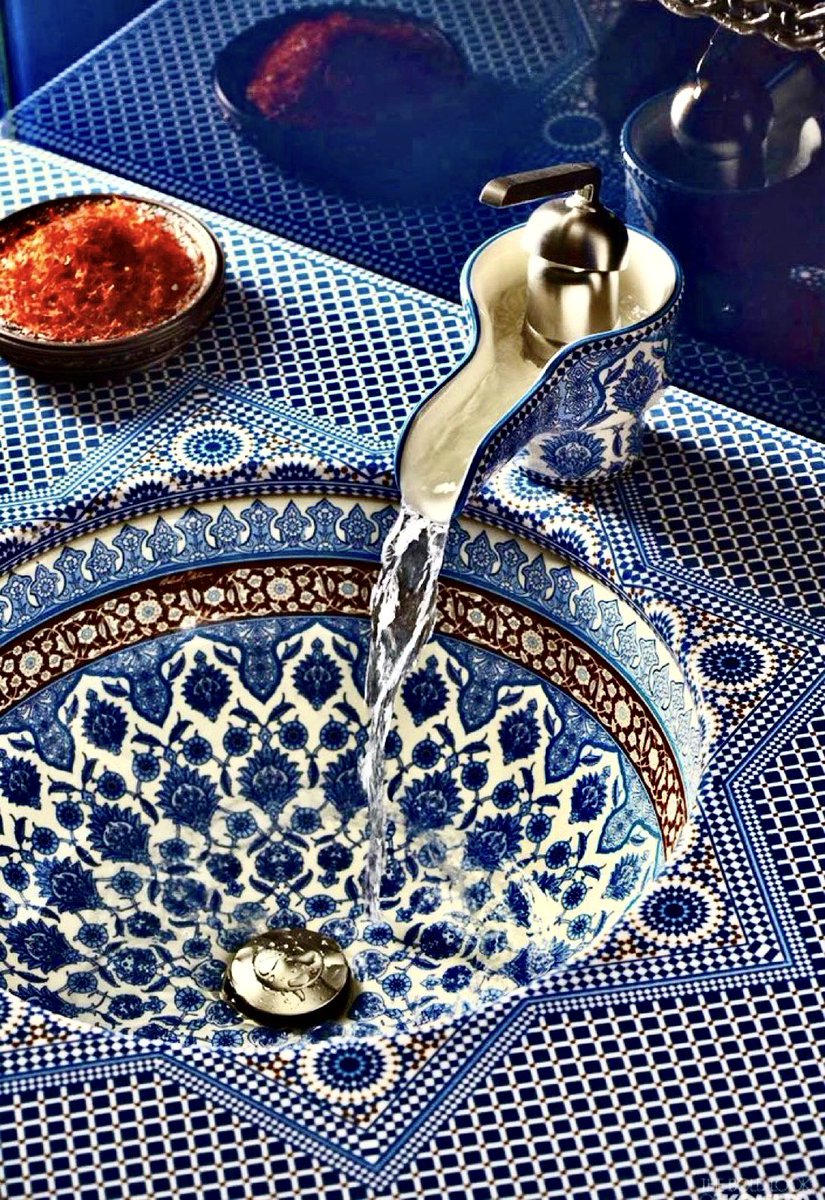
16/ Islamic geometry & pattern are prominent across all aspects of Moroccan architecture, including ceilings even
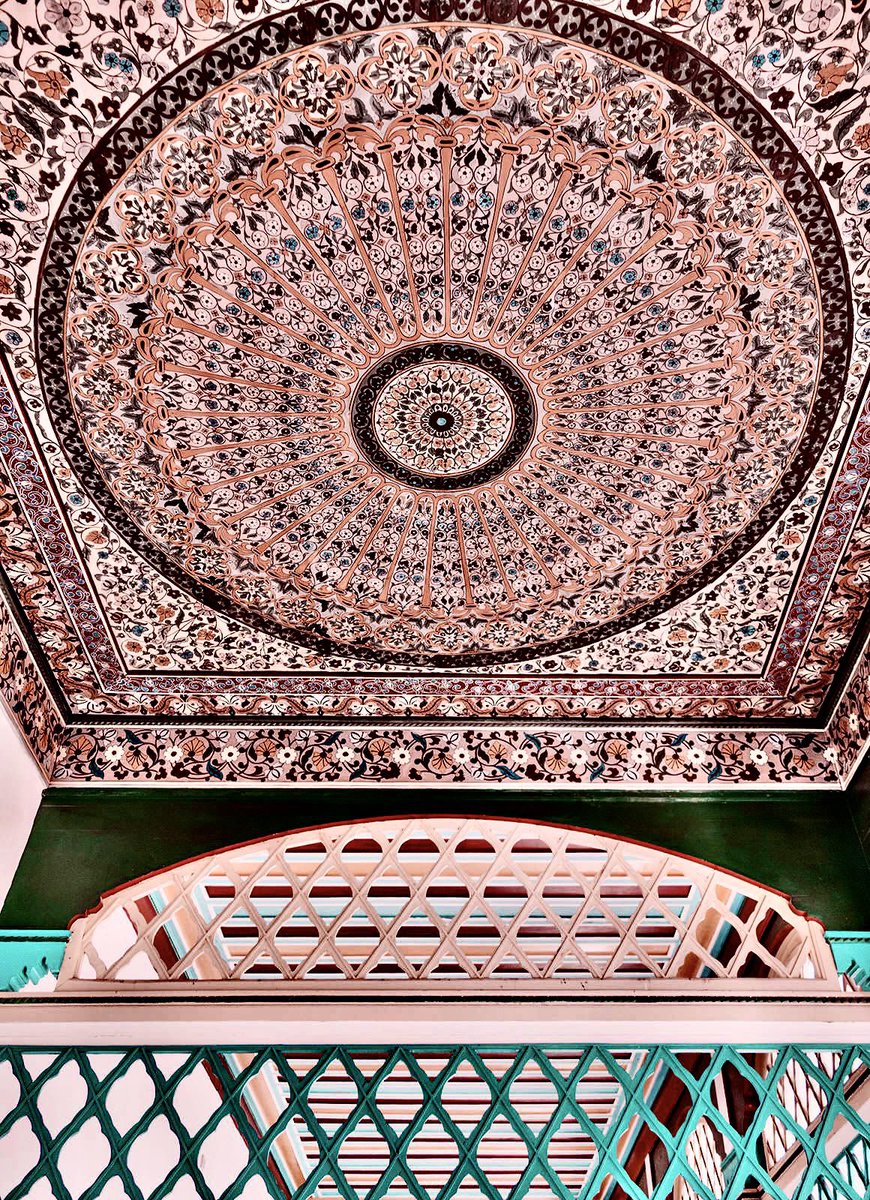
17/ Carving is traditional craft and the most amazing carved details are found in Moroccan design aesthetics, with beautiful arabesque & Islamic geometric patterns
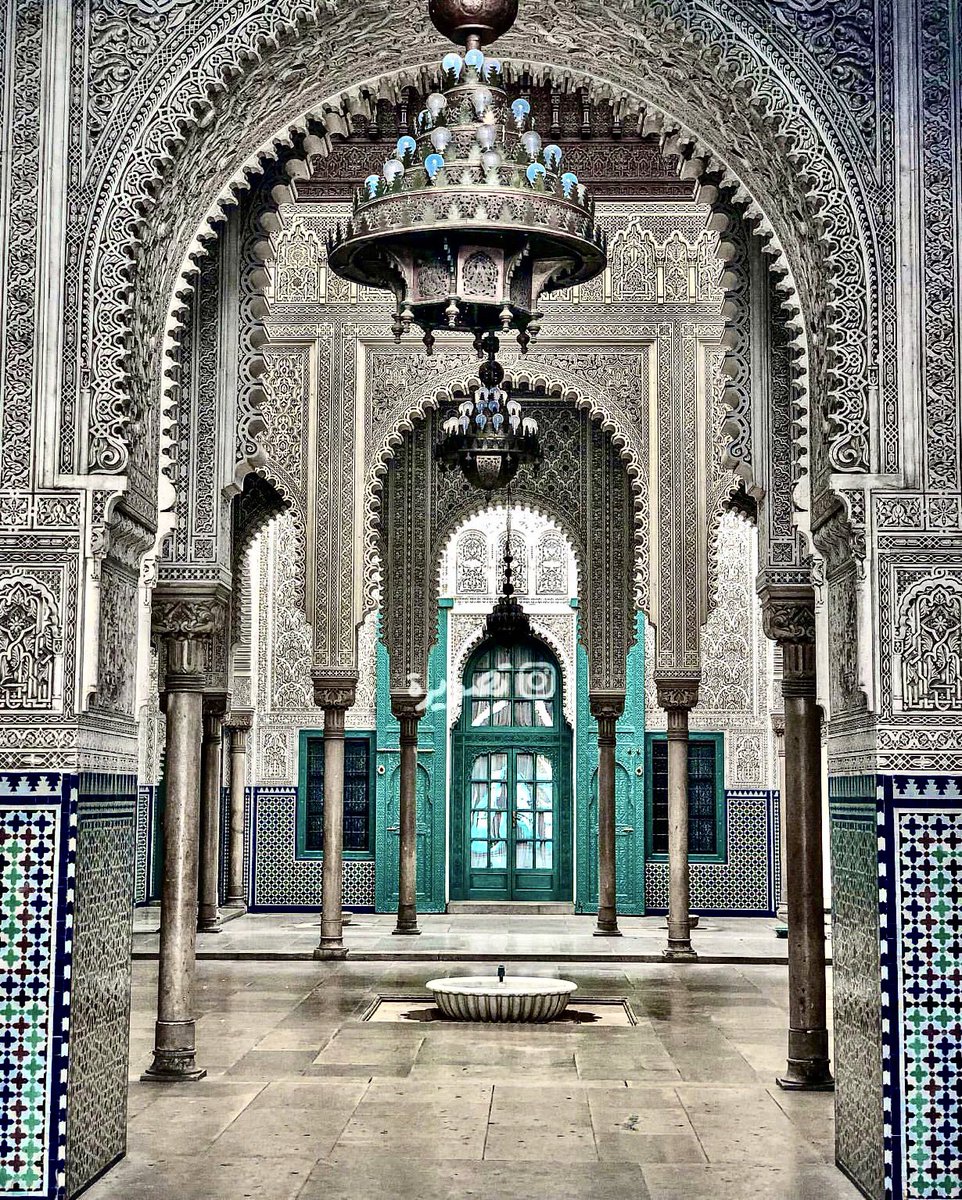
18/ The colour palette used in Moroccan architecture and design is a harmonious combination of delicate pastels with vibrant bold colours, balanced with soothing neutrals
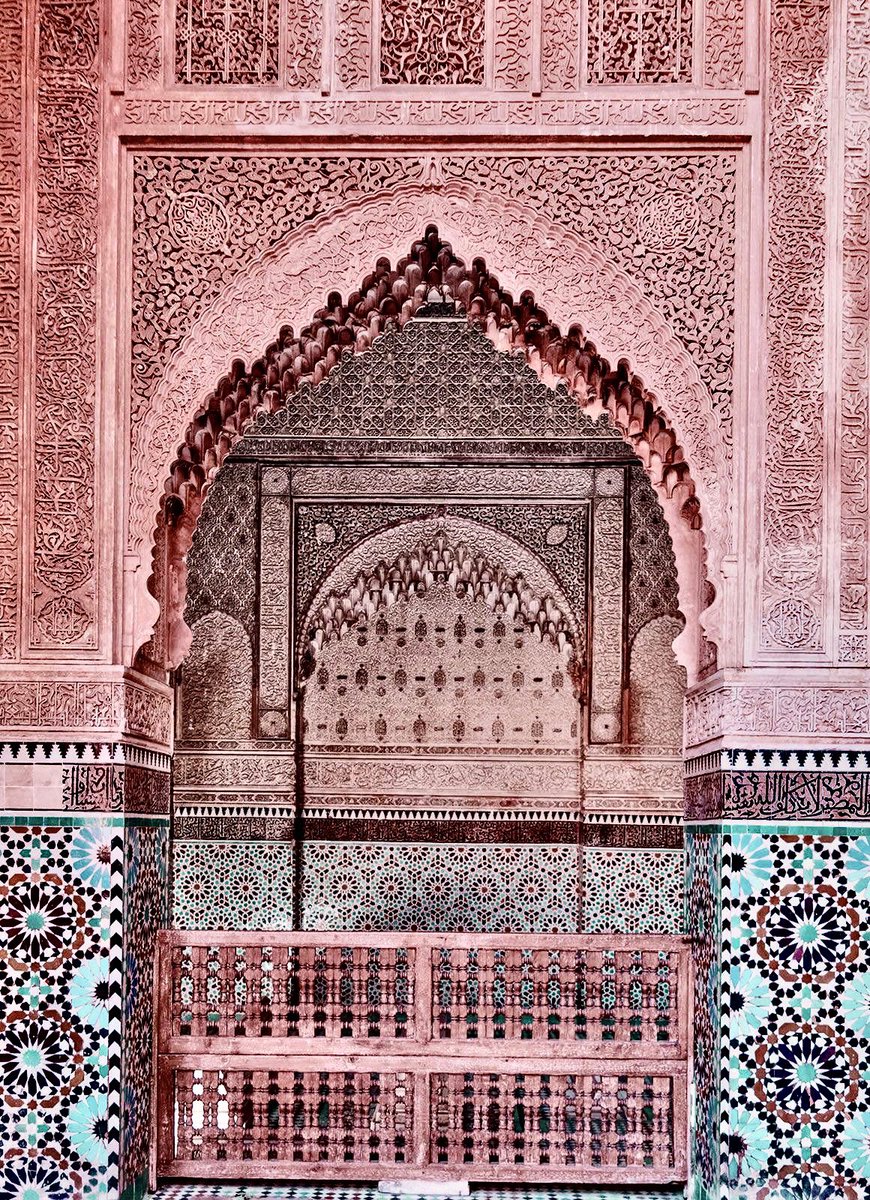
19/ Beautiful Islamic gardens & courtyards are abundant in Morocco. This is Le Jardin Secret, Marrakech. An Islamic garden hidden within the narrow Marrakech streets. It’s initial foundations date from the 16th century, restored in 2016, it is open to the public
Video: Sid Winks
Video: Sid Winks

20/ The souks are the heart of the Marrakech medina and have been the centre for trade in the city a thousand years. The colourful vibrant souks have inspired designers and artists across the world
Video: Moroccobyme
Video: Moroccobyme

21/ Magnificent Moroccan architecture - full of pattern, texture and colour
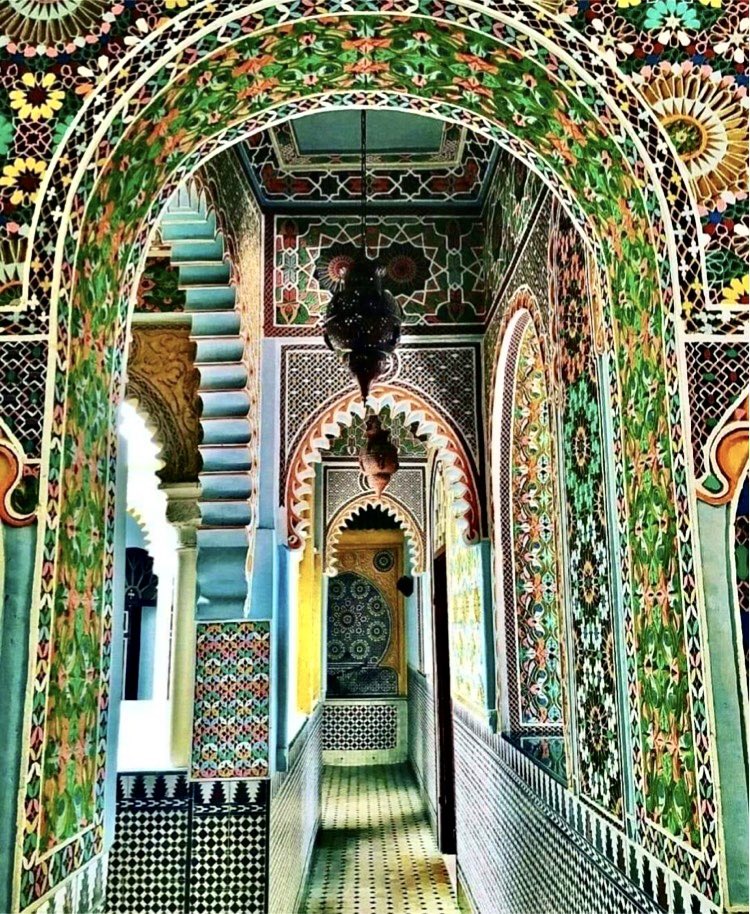
22/ Yves Saint Laurent's love of Morocco has been well-documented. The designer first visited the country in the 60s, and bought a house in Marrakech in 1966. The house is elaborately furnished and reflects his passion for Moroccan aesthetics
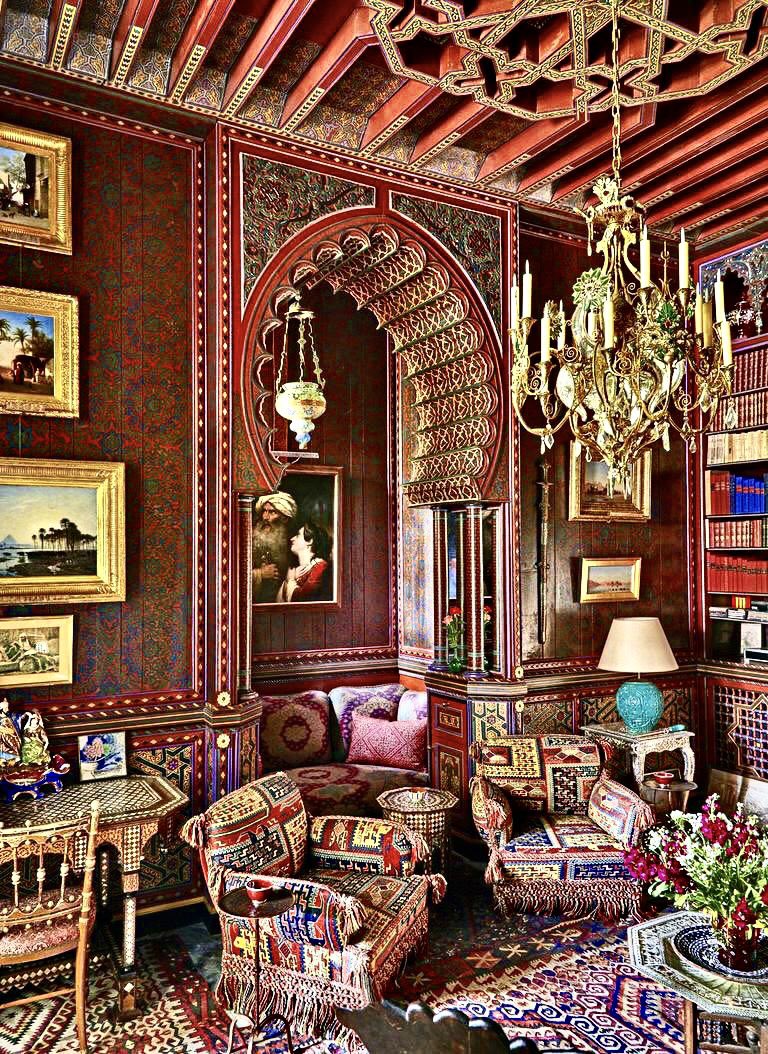
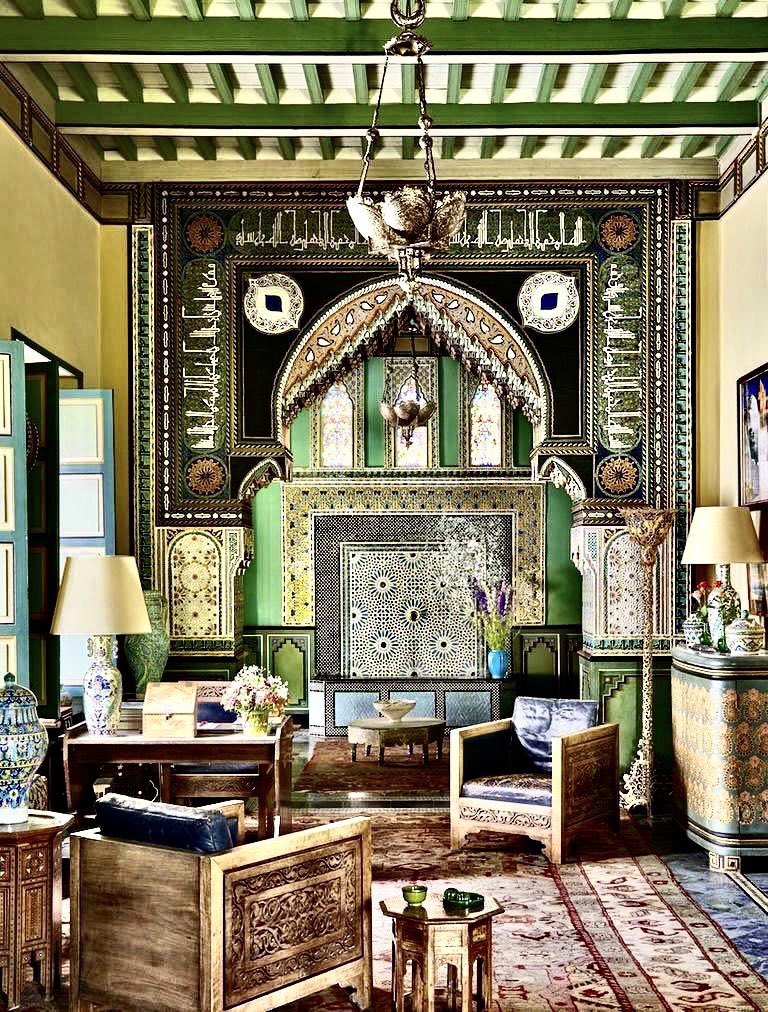
23/ The elaborate tile-work and wall decorations in the grand salon are inspired by travels throughout Morocco. The early-20th-century armchairs and desk are French.
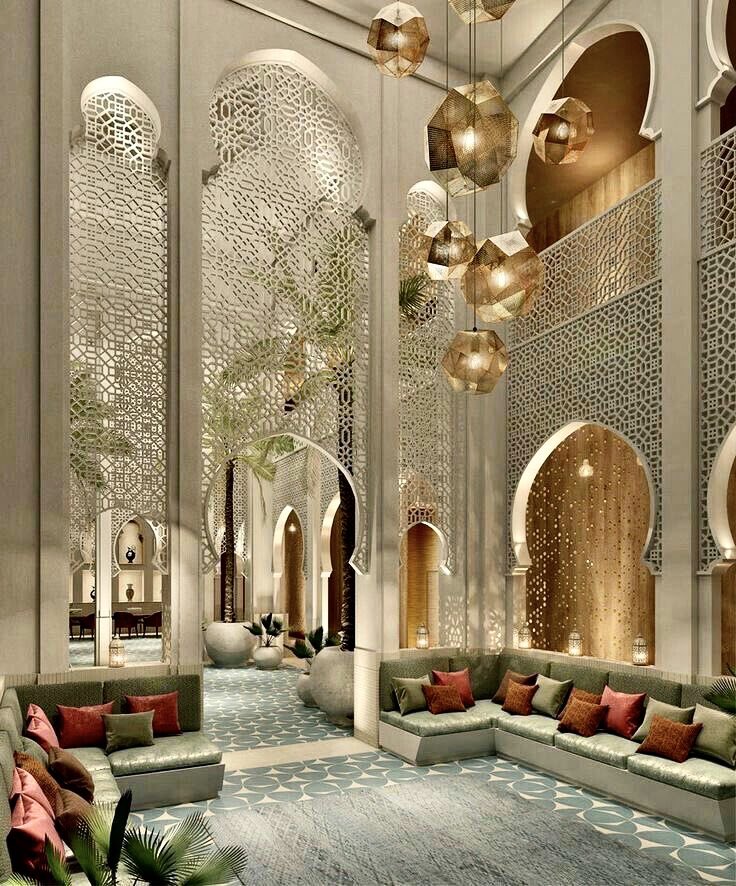
24/ Today's next generation of Moroccan designers are combining the rich craft heritage with an understanding of modern design & technology, along with an openness to reference points beyond Morocco's borders. Now a new type of product is emerging & we are excited for the future!
Discover more about the art of Moroccan design aesthetics, with sources of inspiration & information for this thread - and further reading
baytalfann.com
baytalfann.com

Loading suggestions...