

⚜️Do you know?
🌺There are usually 33 different types of Shaligrams associated with the 24 incarnations of Sri Vishnu and the Shaligram is usually collected from the Kali Gandaki river of Nepal.🌺
🌺There are usually 33 different types of Shaligrams associated with the 24 incarnations of Sri Vishnu and the Shaligram is usually collected from the Kali Gandaki river of Nepal.🌺
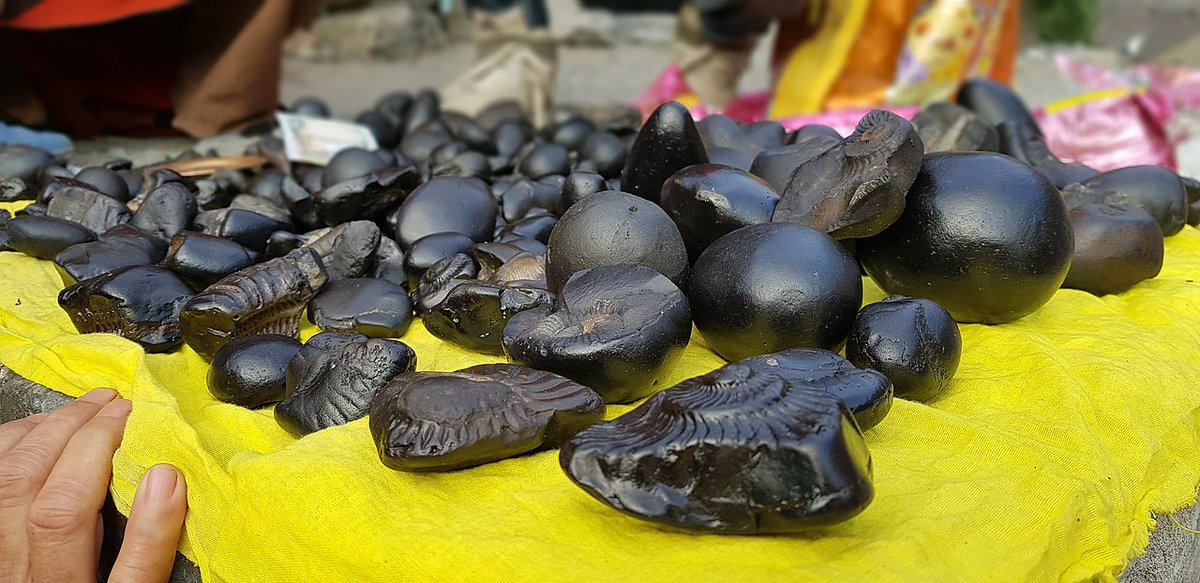
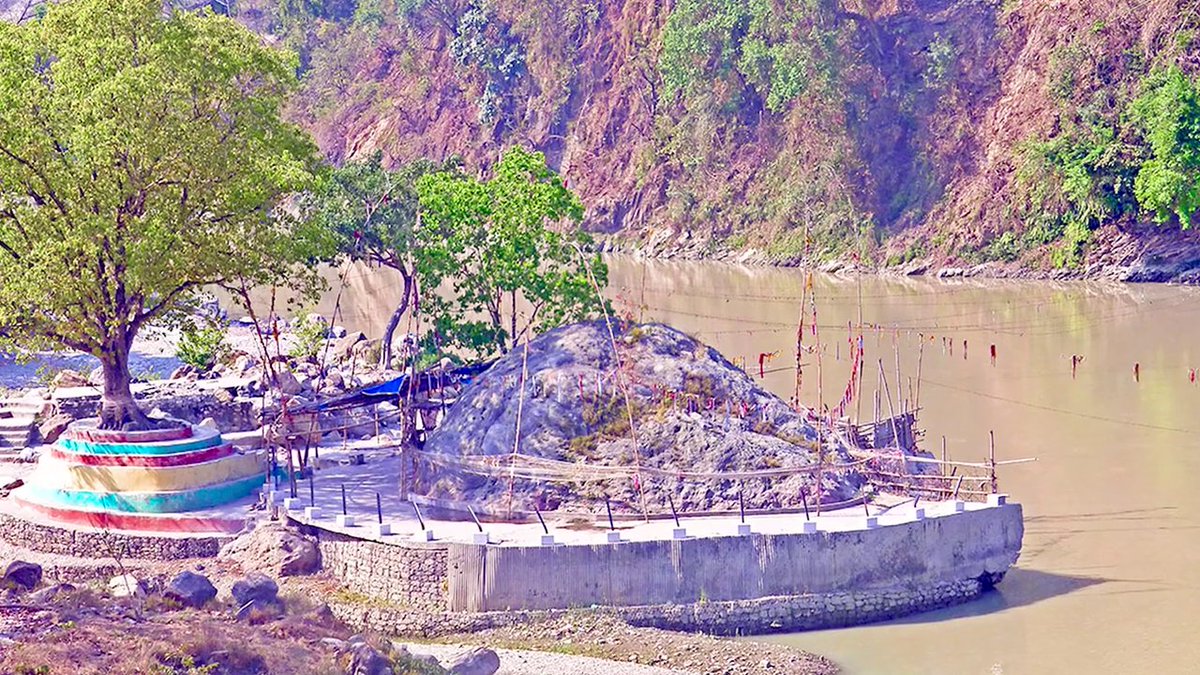
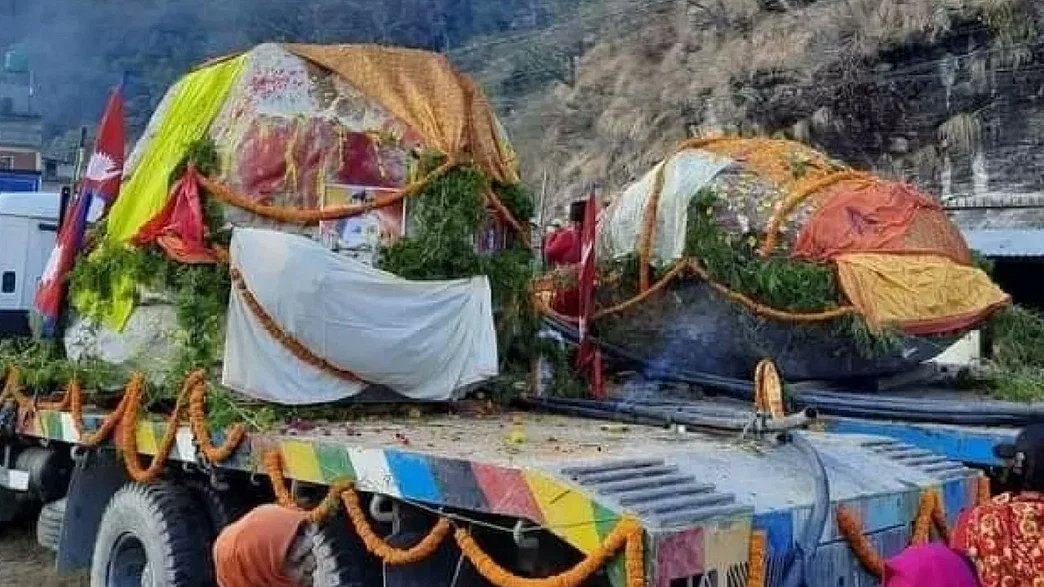
In Hinduism, Shivling is considered as the form of Bhagwan Shiv. Similarly, Shaligram is considered as an incarnation of Sri Vishnu.
According to the Puranas, only Deity form of the Shaligram should be worshipped. Shaligram is the sacred name of Sri Vishnu. As per the Legends, Sri Madhvacharya received it from Vyasadeva.
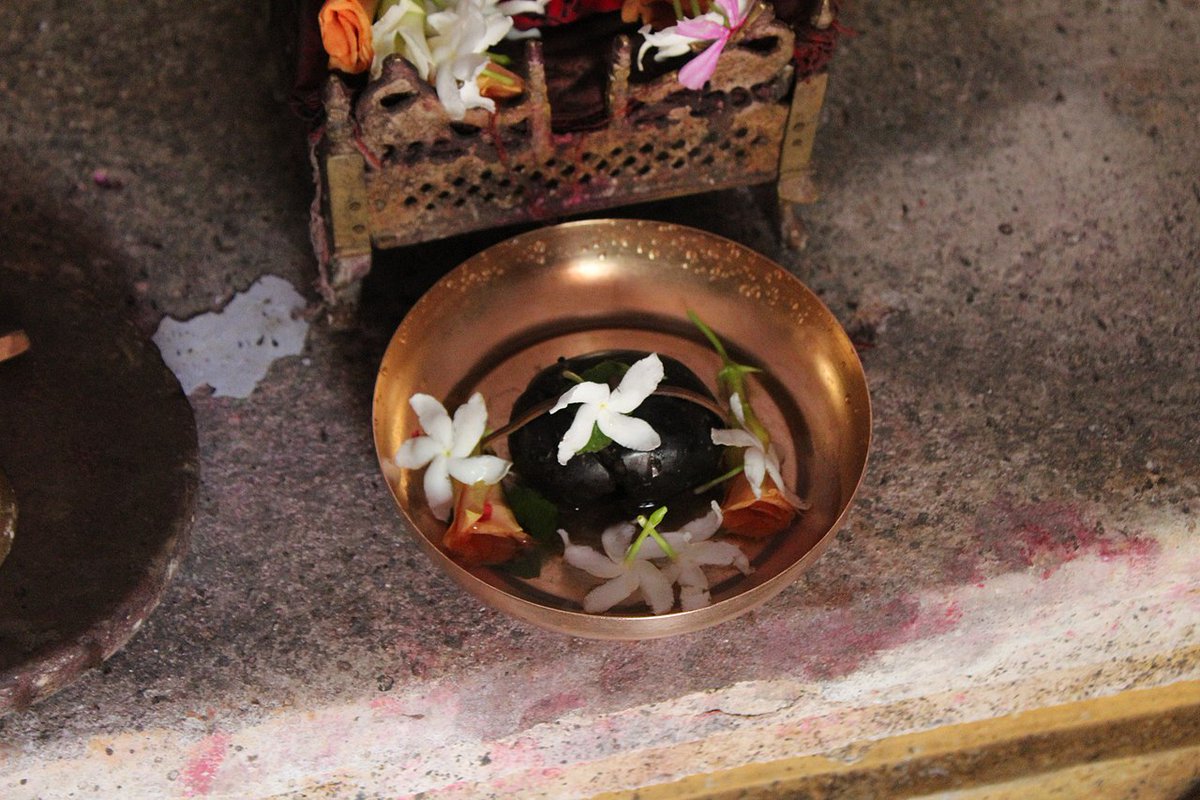
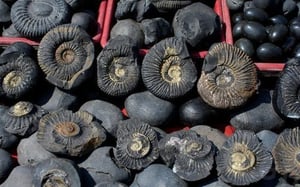
Shaligram is an ammonoid fossil shell, found in black, brown, white, gray, blue color and sometimes with golden glow from the Devonian-Cretaceous period of 400 to 66 million years ago. Shaligram word is derived from Shankha means conch shell.
The varieties of Shaligram as given in the Garuda Puran are mostly found in the Agni Puran, Panchanan Tarkaratna (Saka 1812, ch., 46) and Skanda Purana (Nagarekhanda, 244:3-9) as well as Brahmavaivartta Purana (Prakrtikhanda, chapter 21).
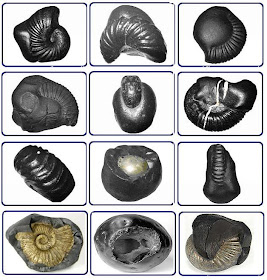
They are:
🌺1. Lakshmikantha : One that is multi-colored and surrounded on all sides by snake-like hoods,considered as a treasure by many and is believed to help in gaining prosperity and material wealth. The Shaligram containing the Chakra symbol is also known as Lakshmikantha.
🌺1. Lakshmikantha : One that is multi-colored and surrounded on all sides by snake-like hoods,considered as a treasure by many and is believed to help in gaining prosperity and material wealth. The Shaligram containing the Chakra symbol is also known as Lakshmikantha.
It has four circular marks at the opening and is decorated with a vanamala, one footprint of a cow and a golden linear mark.
🌺2. Damodara :The Shaligrams that are unusually large with cavity r known as Damodar. It will also bear the mark of a discuss.Some also have yellow line.
🌺2. Damodara :The Shaligrams that are unusually large with cavity r known as Damodar. It will also bear the mark of a discuss.Some also have yellow line.
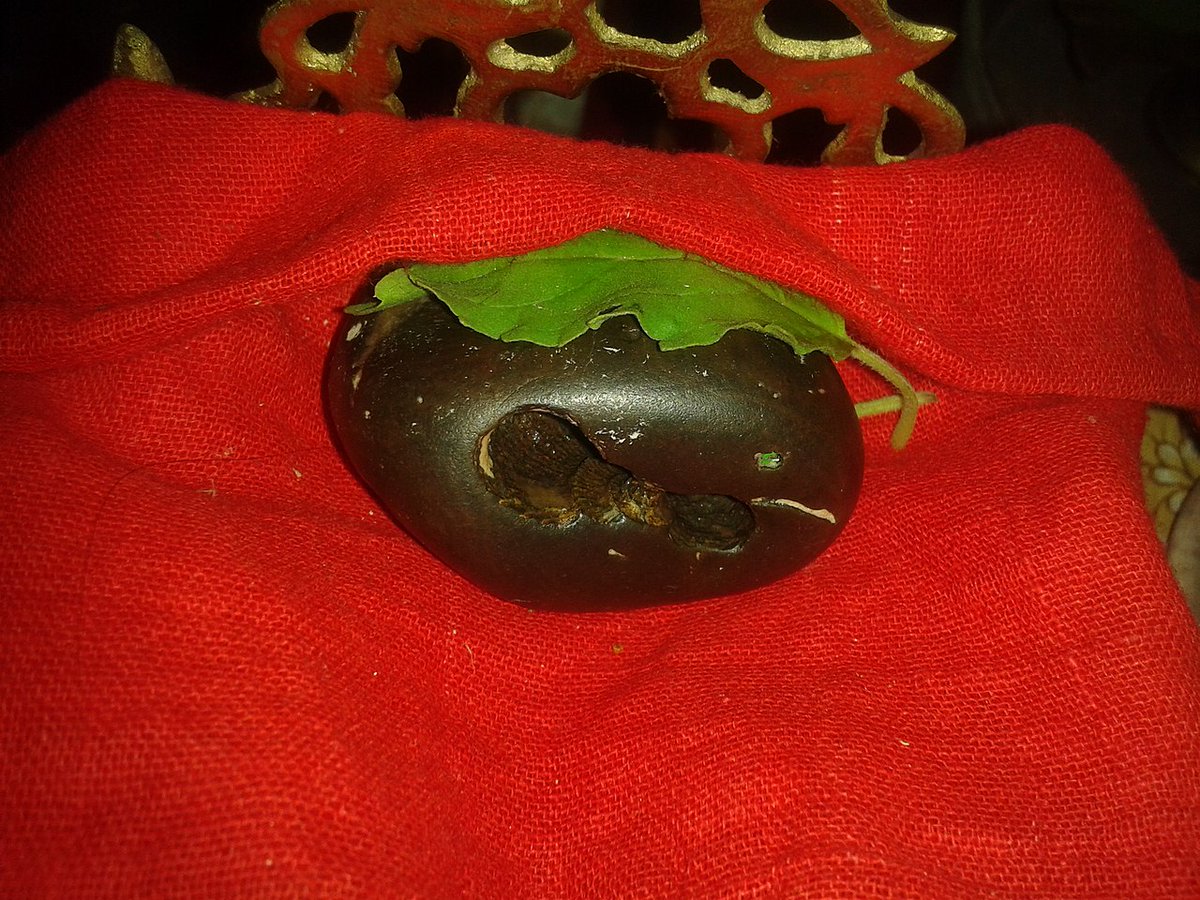
🌺3. Vamadeva: The Shaligrams that look like a hood of snake or that has golden shine or that has a discus (chakra) with golden color is referred as Vamadeva. Possession of it is believed to help in prosperity and peace.
🌺4. Shankarshan: Reddish in colour, having two circular marks joined with each other, and also the mark of a lotus on the easter side of its body.
🌺5. Nrisimha: It holds the mark of a mace at the centre of its body and a circular mark at the lower middle portion.
🌺5. Nrisimha: It holds the mark of a mace at the centre of its body and a circular mark at the lower middle portion.
Its upper middle portion being comparatively bigger.
🌺6. Hayagriva: With a big hole, a big circular mark, five linear marks and the marks of a Kaustubha gem, an Ankusha (spear head) several dots and a dark spot.
🌺6. Hayagriva: With a big hole, a big circular mark, five linear marks and the marks of a Kaustubha gem, an Ankusha (spear head) several dots and a dark spot.
🌺7. Raghunatha: It has two openings with four circular marks. Its body also is marked with the footprint of a cow, but not with any mark of vanamala.
🌺8. Vamana : The Shaligram having the stripes in the form of conch (shanka) is known as Vamana.
🌺8. Vamana : The Shaligram having the stripes in the form of conch (shanka) is known as Vamana.
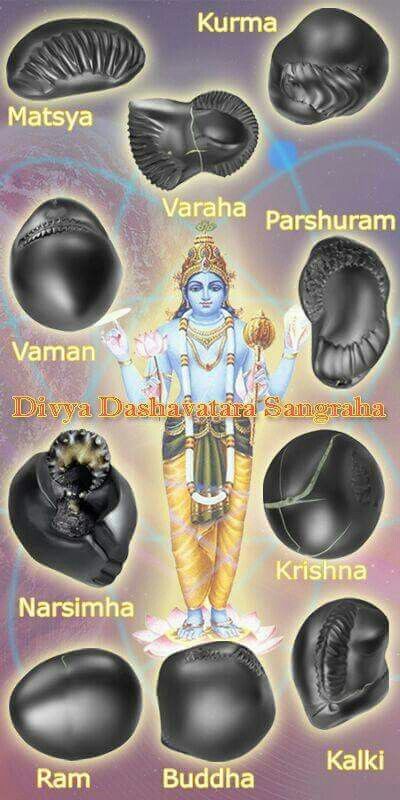
🌺9. Varaha Shaligram: The Shaligram that contains stripes in the form of Tortoise or the foot of the cow is known as Varaha.
🌺10. Ranarama: Round & middle in shape with prints of arrows all over its body. It must have 2 circular marks & prints of a quiver with arrows on body.
🌺10. Ranarama: Round & middle in shape with prints of arrows all over its body. It must have 2 circular marks & prints of a quiver with arrows on body.
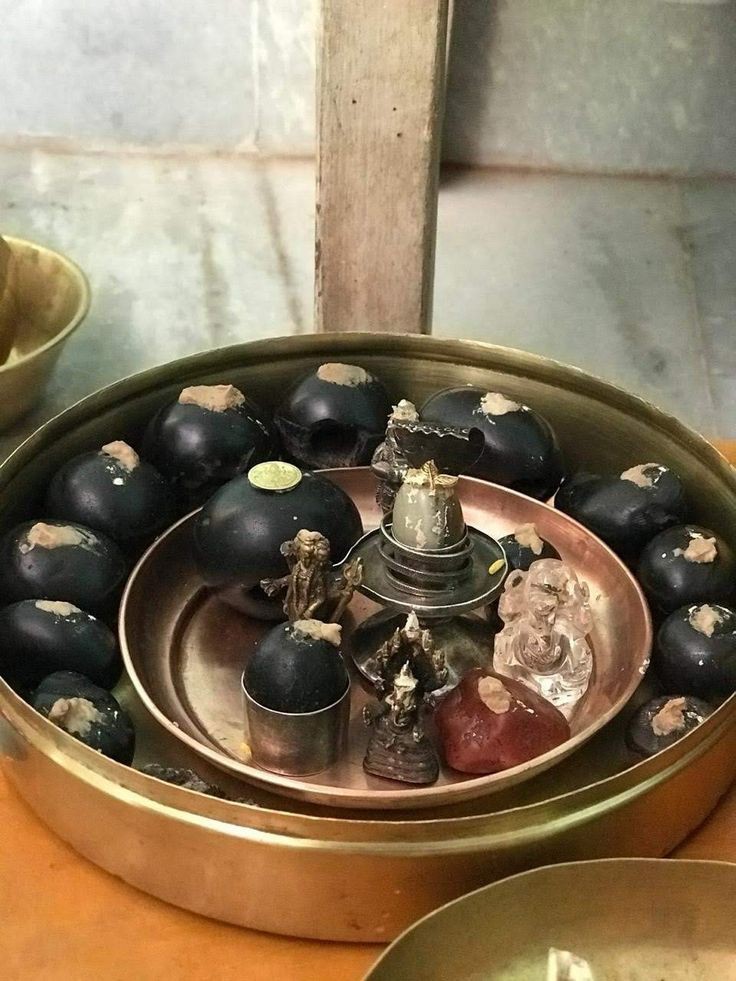
🌺11. Rajarajeshwara: Middle in size, having seven circular marks and also the marks of an umbrella and grass (or quiver) on its body.
🌺12. Lakshminrisimha: Having a big opening with two circular marks, and also marked with a vanamala.
🌺12. Lakshminrisimha: Having a big opening with two circular marks, and also marked with a vanamala.
🌺13. Vaasudeva: Evenly shaped and charming to look at, having two circular marks at the front of its opening.
🌺14. Pradyumna: With the colour of a new cloud, and having a small circular mark and several small holes on its body.
🌺14. Pradyumna: With the colour of a new cloud, and having a small circular mark and several small holes on its body.
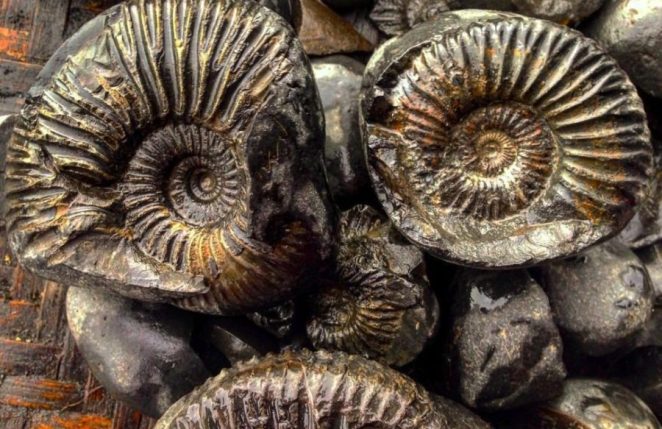
🌺15. Aniriddha: Round in shape, glaced and charming to look at, and having the yellowish colour.
🌺16. Kumaramurthi: Big in size, blue in colour and printed with three linear marks and one or more dots.
🌺16. Kumaramurthi: Big in size, blue in colour and printed with three linear marks and one or more dots.
🌺17. Vaikuntha: Blue in colour, printed with a lotus and a circular mark, and glittering like a gem.
🌺18. Matsya: Long in shape & printed with a lotus & two linear marks.
🌺19. Trivikrama: Green in colour, with a circular mark on left side & a linear mark on right side.
🌺18. Matsya: Long in shape & printed with a lotus & two linear marks.
🌺19. Trivikrama: Green in colour, with a circular mark on left side & a linear mark on right side.
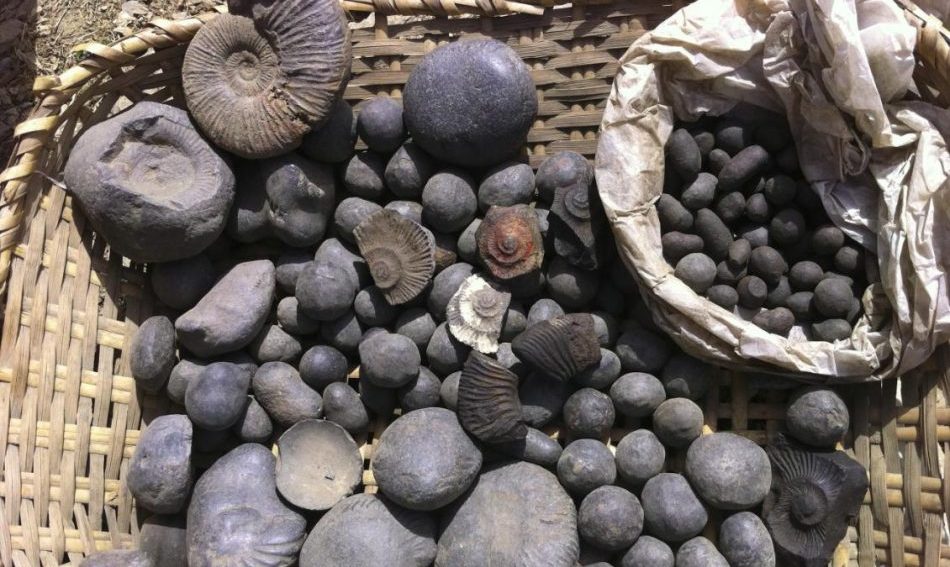
🌺20. Madhusudana: Round in shape, middle in size, and charming to look at. It has two circular marks and a footprint of a cow on its body.
🌺21. Prthu: Printed with a long linear mark, a circular mark and a lotus, and having one or more holes.
🌺21. Prthu: Printed with a long linear mark, a circular mark and a lotus, and having one or more holes.
🌺22. Narayana: Black in colour with three linear marks at the opening.
🌺23. Brahman: Red in colour with a small opening.
🌺24. Kapila: It holds three dot-like marks on its body or at its opening.
🌺25. Varahashaktilinga: It holds two circular marks of unequal size.
🌺23. Brahman: Red in colour with a small opening.
🌺24. Kapila: It holds three dot-like marks on its body or at its opening.
🌺25. Varahashaktilinga: It holds two circular marks of unequal size.
🌺26. Krishna: Round in shape with a flat upper side.
🌺27. Shridhar: Printed with five linear marks and a mace.
🌺28. Lakshmijanaardan:The above type without the mark of vanamala.
🌺29. Dadhivamana:Very small in size with 2 circular marks &having the colour of a new cloud.
🌺27. Shridhar: Printed with five linear marks and a mace.
🌺28. Lakshmijanaardan:The above type without the mark of vanamala.
🌺29. Dadhivamana:Very small in size with 2 circular marks &having the colour of a new cloud.
🌺30. Shridhar: The above type with an additional mark of vanamala.
🌺31. Sudarshan: With single circular mark.
🌺32. Gadadhara: With a hidden circular mark.
🌺33. Ananta: Big in size with the colour of a new cloud and having many (12+) circular marks on its body.
🌺31. Sudarshan: With single circular mark.
🌺32. Gadadhara: With a hidden circular mark.
🌺33. Ananta: Big in size with the colour of a new cloud and having many (12+) circular marks on its body.
Amongst these varieties all the types except the last two are just the same as given in the above list. The difference is that, according to this authority a Shaligram holding twelve circular marks is called "Dwadashaatman"
and that with thirteen or more marks is called Ananta (Garuda Purana, part I: 45:30).
Popular Shaligram is a pure black color one with the symbol of Chakra. Possession of it provides the owner with prosperity, happiness, health and children.
Popular Shaligram is a pure black color one with the symbol of Chakra. Possession of it provides the owner with prosperity, happiness, health and children.
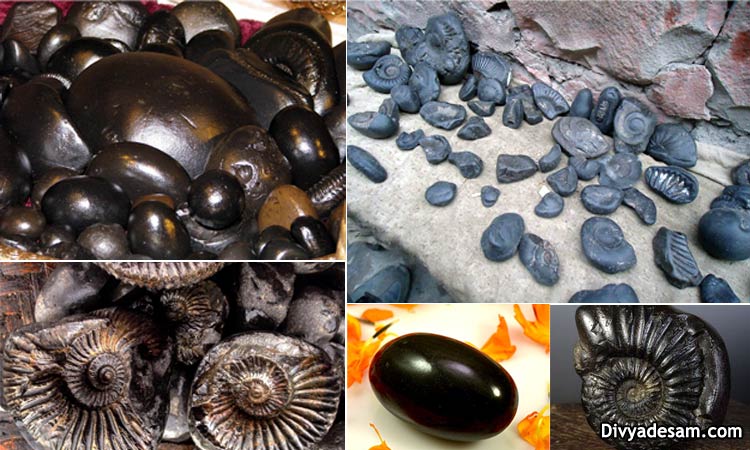
Unique Shaligram is the one with green color on the left side. It is believed to help in redemption of sins. Some believe that its very presence helps in staying away from committing sins.
Yellow color Shaligrams are believed to represent the Devas (demigods).
Yellow color Shaligrams are believed to represent the Devas (demigods).
Red color Shaligram represents the Narasimha Avatar of Sri Vishnu. It is believed that the possession of it will help in attaining liberation or Moksha.
Auspicious types of Shaligram are those that have the shape of an umbrella and fully circular one.
Auspicious types of Shaligram are those that have the shape of an umbrella and fully circular one.

According to the popular tradition, the Vaasudeva types only are preferred to be worshipped by the brahmanas; the Sakarshan types by the kshatriyas; Pradyumna types by the vaishyas and Aniruddha types by the shudras(Hemadri quoted in Praanatoshanitantra, 357.)
Loading suggestions...