

Last year, BharatPe made Rs 5594 Cr in losses on a revenue of Rs 321 Cr!
In just 4 years, Ashneer Grover took this startup from ZERO to a $2.85B company.
But, their business screams RISK!
Here's how BharatPe disrupted UPI QR code payments while losing MILLIONS of VC money 🧵
In just 4 years, Ashneer Grover took this startup from ZERO to a $2.85B company.
But, their business screams RISK!
Here's how BharatPe disrupted UPI QR code payments while losing MILLIONS of VC money 🧵
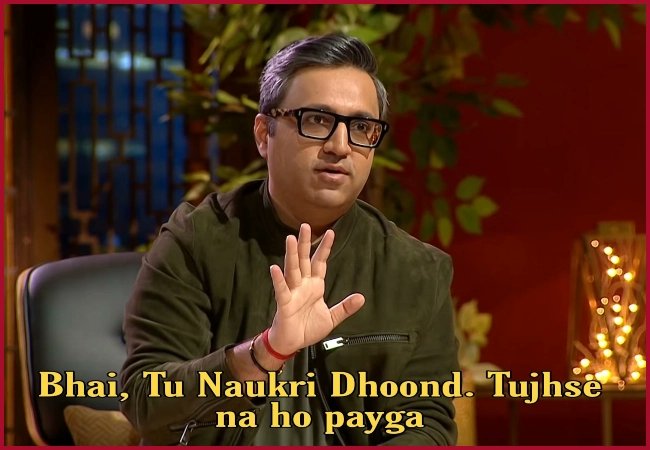
Structure:
1. BharatPe's founding journey
2. Putting interoperability in the UPI QR code business
3. How does BharatPe make money?
4. Trouble: BharatPe's super-risky foundation
5. More shady stuff!
1. BharatPe's founding journey
2. Putting interoperability in the UPI QR code business
3. How does BharatPe make money?
4. Trouble: BharatPe's super-risky foundation
5. More shady stuff!
1/ BharatPe's founding journey
Back in 2018, the idea of BharatPe was conceived by 23-year-old Shashvat Nakrani and Bhavik Koladiya.
In contrast to the 23-year-old, Ashneer Grover already had an illustrious career.
This IIT, IIM grad had worked as the CFO of Grofers.
(contd.)
Back in 2018, the idea of BharatPe was conceived by 23-year-old Shashvat Nakrani and Bhavik Koladiya.
In contrast to the 23-year-old, Ashneer Grover already had an illustrious career.
This IIT, IIM grad had worked as the CFO of Grofers.
(contd.)
The 2 young founders reached out to Grover for angel investment.
The latter then joined them as the 3rd founder.
Soon enough, BharatPe's team was raising millions in funding in hopes of - in their own words - tackling a crucial problem.
But, what problem was that?
The latter then joined them as the 3rd founder.
Soon enough, BharatPe's team was raising millions in funding in hopes of - in their own words - tackling a crucial problem.
But, what problem was that?
2/ Putting interoperability in the QR business
In the beginning, the young founders realized a crucial pain point that all merchants face in India.
Problem 1 ⇒ Lack of Funds
1. You see, India has over 10 Cr merchants and only a small segment of them are online.
(contd.)
In the beginning, the young founders realized a crucial pain point that all merchants face in India.
Problem 1 ⇒ Lack of Funds
1. You see, India has over 10 Cr merchants and only a small segment of them are online.
(contd.)
2. These merchants are usually under a cash crunch.
3. They need quick access to loans for expansion, buying stocks, and extra capital.
Problem 2 ⇒ Missing interoperability
1. Before BharatPe, most QR codes only accepted a certain payment app.
(contd.)
3. They need quick access to loans for expansion, buying stocks, and extra capital.
Problem 2 ⇒ Missing interoperability
1. Before BharatPe, most QR codes only accepted a certain payment app.
(contd.)
2. If a local store has Paytm's QR code and a customer only has the Google Pay app, the transaction won't go through. The customer would have to pay via cash.
3. UPI's main feature, interoperability, was missing here. This also went against the digitization goal.
(contd)
3. UPI's main feature, interoperability, was missing here. This also went against the digitization goal.
(contd)
4. So, BharatPe introduced a single QR code that accepts several types of digital payments from different platforms.
The QR codes were interoperable with ZERO MDR (merchant discount rate - commission charged on payments).
RBI later made zero MDR into a rule.
(contd.)
The QR codes were interoperable with ZERO MDR (merchant discount rate - commission charged on payments).
RBI later made zero MDR into a rule.
(contd.)
BharatPe decided to solve both of these problems.
Soon enough, a huge BharatPe army went to the streets to onboard merchants and install the QR code in their shops.
Later, the other payment apps followed suit and joined the interoperability bandwagon.
Soon enough, a huge BharatPe army went to the streets to onboard merchants and install the QR code in their shops.
Later, the other payment apps followed suit and joined the interoperability bandwagon.
3/ But, how does BharatPe make money?
A) QR codes
The QR code payments business is their OG model.
But because of the ZERO MDR policy, they don't make any money from transactions.
So, how did they recover all that cash spent on installing QR codes? Well, they didn't.
(contd)
A) QR codes
The QR code payments business is their OG model.
But because of the ZERO MDR policy, they don't make any money from transactions.
So, how did they recover all that cash spent on installing QR codes? Well, they didn't.
(contd)
So, they had to get creative with their business model.
Instead of commissions, they turned to lending — more specifically they introduced the equated daily instalment model and P2P lending in their system.
Let me explain more!
(contd.)
Instead of commissions, they turned to lending — more specifically they introduced the equated daily instalment model and P2P lending in their system.
Let me explain more!
(contd.)
The initial monetization idea was to directly lend money to merchants.
They introduced the equated daily instalments scheme where merchants repay their dues through daily instalments taken out of their BharatPe account where QR transactions go.
(contd.)
They introduced the equated daily instalments scheme where merchants repay their dues through daily instalments taken out of their BharatPe account where QR transactions go.
(contd.)
B) POS machines
Next, they distributed free POS machines called Bharat Swipe to merchants.
The POS segment was already a crowded market with 6M POS machines in India.
But relying on just the ZERO commissions UPI transactions wasn't cutting it for BharatPe.
(contd.)
Next, they distributed free POS machines called Bharat Swipe to merchants.
The POS segment was already a crowded market with 6M POS machines in India.
But relying on just the ZERO commissions UPI transactions wasn't cutting it for BharatPe.
(contd.)
With POS machines, they gave merchants 2 options:
a. Either keep their POS transaction money with BharatPe for 15 days and pay ZERO commission
b. Or, pay a commission of 1-2%
Very few people opted for the first option. The second option barely made BharatPe any money.
(contd)
a. Either keep their POS transaction money with BharatPe for 15 days and pay ZERO commission
b. Or, pay a commission of 1-2%
Very few people opted for the first option. The second option barely made BharatPe any money.
(contd)
C) P2P Lending
Since, both the previous options were not highly lucrative, BharatPe, like many other fintech startups today, turned to P2P lending with its platform 12% Club.
Basically, the existing merchants on BharatPe lend to each other through the network.
(contd.)
Since, both the previous options were not highly lucrative, BharatPe, like many other fintech startups today, turned to P2P lending with its platform 12% Club.
Basically, the existing merchants on BharatPe lend to each other through the network.
(contd.)
Now, BharatPe doesn't have an NBFC license, so it partners with external P2P lending firms to run this.
The revenue split works like this:
Borrower ➝ pays 24% interest rate
12% ➝ Lender
12% ➝ BharatPe + P2P firm
P2P accounts for the majority of BharatPe's loan book.
The revenue split works like this:
Borrower ➝ pays 24% interest rate
12% ➝ Lender
12% ➝ BharatPe + P2P firm
P2P accounts for the majority of BharatPe's loan book.
4/ BharatPe's risky foundation
Our main takeaway is this — BharatPe's business runs on QR codes & POS but it is lending-dependent!
There are some inherent risks involved here.
- Firstly, the equated daily instalments model with QR codes has a glaring loophole.
(contd.)
Our main takeaway is this — BharatPe's business runs on QR codes & POS but it is lending-dependent!
There are some inherent risks involved here.
- Firstly, the equated daily instalments model with QR codes has a glaring loophole.
(contd.)
If merchants stop using BharatPe's QR code one day, they won't be able to recover the money they lent them.
- Same is the case with POS machines. BharatPe depends on the 15-day period. But, if the merchant switches to a different POS, it hurts BharatPe.
(contd.)
- Same is the case with POS machines. BharatPe depends on the 15-day period. But, if the merchant switches to a different POS, it hurts BharatPe.
(contd.)
Essentially, BharatPe's network and lending model depend on the hope that merchants won't switch to a different POS or QR!
On top of that, there are also many issues with P2P lending.
Although BharatPe claims that its non-performing assets (NPA) are very low.
(contd.)
On top of that, there are also many issues with P2P lending.
Although BharatPe claims that its non-performing assets (NPA) are very low.
(contd.)
According to a KEN article, during COVID, its NPA went as high as ~25%!
Plus the lenders on BharatPe's 12% Club platform have no visibility around the borrower risk profile.
Since a big part of lending is risk analysis, it's not clear how BharatPe avoids defaults.
(contd)
Plus the lenders on BharatPe's 12% Club platform have no visibility around the borrower risk profile.
Since a big part of lending is risk analysis, it's not clear how BharatPe avoids defaults.
(contd)
The 12% guaranteed return to lenders also goes against an RBI rule that strictly prohibits platforms from interfering in the P2P marketplace.
BharatPe also entered the consumer lending side with PostPe — essentially a buy now pay later product — again fraught with risk!
BharatPe also entered the consumer lending side with PostPe — essentially a buy now pay later product — again fraught with risk!
5/ More shady stuff!
Considering BharatPe's faulty model, high expenses and dependence on lending to save the day, the company seems very much under the water.
Top it off with the cherry that is controversy, lawsuits, and bungled finances, things couldn't get worse!
(contd)
Considering BharatPe's faulty model, high expenses and dependence on lending to save the day, the company seems very much under the water.
Top it off with the cherry that is controversy, lawsuits, and bungled finances, things couldn't get worse!
(contd)
Here are some of the top controversies surrounding BharatPe:
- The Ashneer Grover phone call screaming row with a Kotak employee.
- The controversy around funnelling funds. Ashneer and his wife were accused of practices that unethically enrich them with company funds.
(contd.)
- The Ashneer Grover phone call screaming row with a Kotak employee.
- The controversy around funnelling funds. Ashneer and his wife were accused of practices that unethically enrich them with company funds.
(contd.)
For example, practices like writing off a higher bill for merchandise, routing incentives to senior executives and more.
- Grover and his wife leaving BharatPe and top executive Sameer Suhail following suit.
- Original co-founder Bhavik Koladiya suing Grover and more!
(contd.)
- Grover and his wife leaving BharatPe and top executive Sameer Suhail following suit.
- Original co-founder Bhavik Koladiya suing Grover and more!
(contd.)
Given BharatPe's many problems, pulling the company out of controversy and losses is obviously a tough task.
But, the new management taking Grover's place is doing just that.
Recently, they have shut down cash backs, and closed merchant partnerships.
(contd.)
But, the new management taking Grover's place is doing just that.
Recently, they have shut down cash backs, and closed merchant partnerships.
(contd.)
They have also closed new investments in its P2P lending firm, 12% Club.
While other startups are ramping up their P2P game, BharatPe is looking elsewhere.
With the closure of many of its risky models, it would be interesting what new route BharatPe explores.
(contd.)
While other startups are ramping up their P2P game, BharatPe is looking elsewhere.
With the closure of many of its risky models, it would be interesting what new route BharatPe explores.
(contd.)
Given its $2.85B valuation, there is a lot of shareholder money and "interest" at stake.
BharatPe could ditch its disruptor past and embrace financial practices that are less "risky".
But, with so much chaos brewing, it's really up to the fintech gods to save BharatPe's future.
BharatPe could ditch its disruptor past and embrace financial practices that are less "risky".
But, with so much chaos brewing, it's really up to the fintech gods to save BharatPe's future.
If you liked what you read,
Give us a follow
Retweet the first tweet :)
Give us a follow
Retweet the first tweet :)
Loading suggestions...