

Chuck Akre is one of the greatest Investment Thinkers of all time!
His Fund returned 15,3% p.a. over 23(!) years.
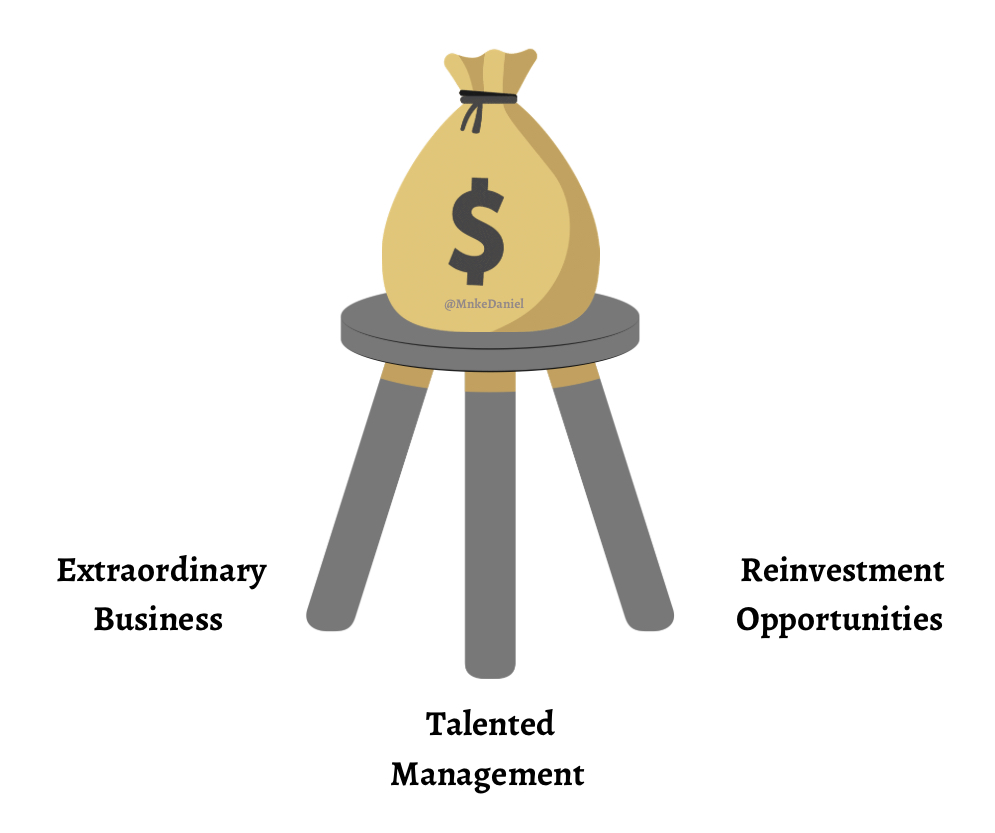
His secret to investing is the “Three-Legged Stool.”
Here’s how it works👇🏼
His Fund returned 15,3% p.a. over 23(!) years.
His secret to investing is the “Three-Legged Stool.”
Here’s how it works👇🏼

1. The Three-Legged Stool
The concept describes what boxes Akre is checking in an investment.
1) Extraordinary Business
2) Talented Management
3) Great Reinvestment Opportunities and History
But let’s figure out what this means in detail.
The concept describes what boxes Akre is checking in an investment.
1) Extraordinary Business
2) Talented Management
3) Great Reinvestment Opportunities and History
But let’s figure out what this means in detail.
1. Extraordinary Businesses
1.1 High Returns
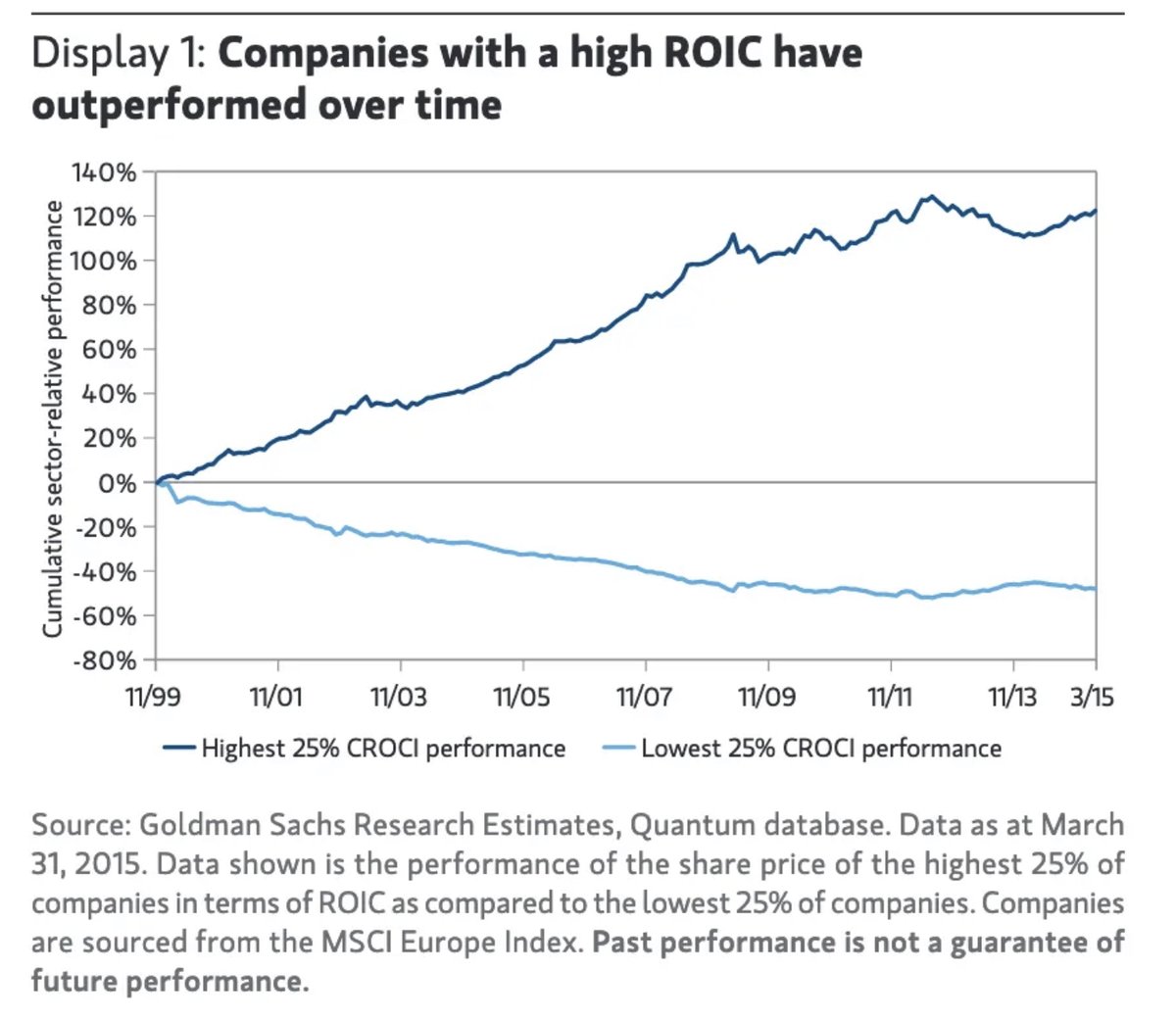
In the long run, your return will mimic the ROIC of that company.
A stock outperforming its business is very rare. If anything, it underperforms.
Chuck Akre only invests in companies with a sustainable(!), high return on capital.
1.1 High Returns
In the long run, your return will mimic the ROIC of that company.
A stock outperforming its business is very rare. If anything, it underperforms.
Chuck Akre only invests in companies with a sustainable(!), high return on capital.
1.2 Competitive Advantages (Moats)
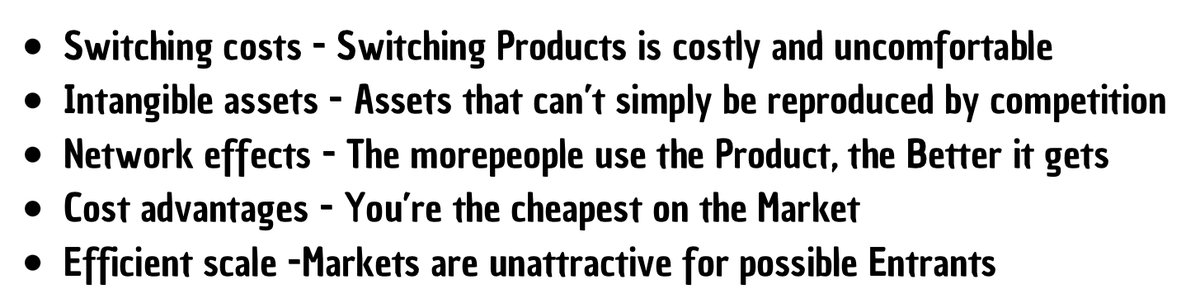
Every great business has to have sustainable competitive advantages.
Without them, declining revenues, earnings, and returns on invested capital are only a matter of time.
The 5 Forms of Moats:
Every great business has to have sustainable competitive advantages.
Without them, declining revenues, earnings, and returns on invested capital are only a matter of time.
The 5 Forms of Moats:
1.3 Per Unit of Ownership
Akre looks very carefully at all numbers concerning the unit of ownership.
Basically, what the shareholders get from the company’s profits.
Too often, the company is doing great, but little value is added for shareholders.
Akre looks very carefully at all numbers concerning the unit of ownership.
Basically, what the shareholders get from the company’s profits.
Too often, the company is doing great, but little value is added for shareholders.
2. Talented Management
2.1 Integrity & Skill
Assessing management is among the most challenging parts of investing.
That’s why Buffett likes to buy companies that even an idiot could run.
Unfortunately, in reality, it’s hard to assess what companies fulfill that criterion.
2.1 Integrity & Skill
Assessing management is among the most challenging parts of investing.
That’s why Buffett likes to buy companies that even an idiot could run.
Unfortunately, in reality, it’s hard to assess what companies fulfill that criterion.
The more practical way is to put a lot of focus on the history of the management.
Gather information about:
- Past Performance
- Past Goals and if they were reached
- Past Promises and if they were held
- Past Communication with shareholders
Gather information about:
- Past Performance
- Past Goals and if they were reached
- Past Promises and if they were held
- Past Communication with shareholders
2.2 Partners of their Shareholders
As mentioned, Akre looks at the per unit of ownership numbers.
For him, a crucial part of assessing an investment is whether he, as a shareholder, feels treated like a partner.
As mentioned, Akre looks at the per unit of ownership numbers.
For him, a crucial part of assessing an investment is whether he, as a shareholder, feels treated like a partner.
Is it a priority for the management to make investors participate in the company’s success?
If not, even the highest returning businesses will be bad investments.
There are many ways to keep profits in the company without adding value to ordinary shareholders.
If not, even the highest returning businesses will be bad investments.
There are many ways to keep profits in the company without adding value to ordinary shareholders.
Look for the company’s strategy to make shareholders participate in the company’s success.
Those could be dividends and buybacks, but also reasonable investments in growth.
Once again, check the management’s history for clues.
Those could be dividends and buybacks, but also reasonable investments in growth.
Once again, check the management’s history for clues.
3. Reinvestments Opportunities
Historically high returns on capital do not ensure future returns.
Check the company’s plan for future reinvestments and assess whether the same success can be expected.
Historically high returns on capital do not ensure future returns.
Check the company’s plan for future reinvestments and assess whether the same success can be expected.
Summary: What makes a Great Investment?
- High Returning Business Models
- Moats that protect these Returns
- Aligning interests of Management and Shareholder
- Great Reinvestment Opportunities
- High Returning Business Models
- Moats that protect these Returns
- Aligning interests of Management and Shareholder
- Great Reinvestment Opportunities
That’s it!
I hope you learned something new!
If so, please Like and Retweet this Thread so more people can see it.
Follow me @MnkeDaniel to learn more about Investing.
Thanks and have a great day!
I hope you learned something new!
If so, please Like and Retweet this Thread so more people can see it.
Follow me @MnkeDaniel to learn more about Investing.
Thanks and have a great day!
If you are interested in more in-depth research and further articles, check out my Website.
I've planned lots of new content starting in two weeks.
Subscribe for free and never miss out on any new articles:
danielmnke.substack.com
I've planned lots of new content starting in two weeks.
Subscribe for free and never miss out on any new articles:
danielmnke.substack.com

Loading suggestions...