

I have a new Substack post on why some countries have a lot of slums, and others hardly any at all.
anupmalani.substack.com
anupmalani.substack.com
While poverty is relevant, there is not a simple relationship between poverty and slums. Slum populations seem to rise and then decline with per capita income.
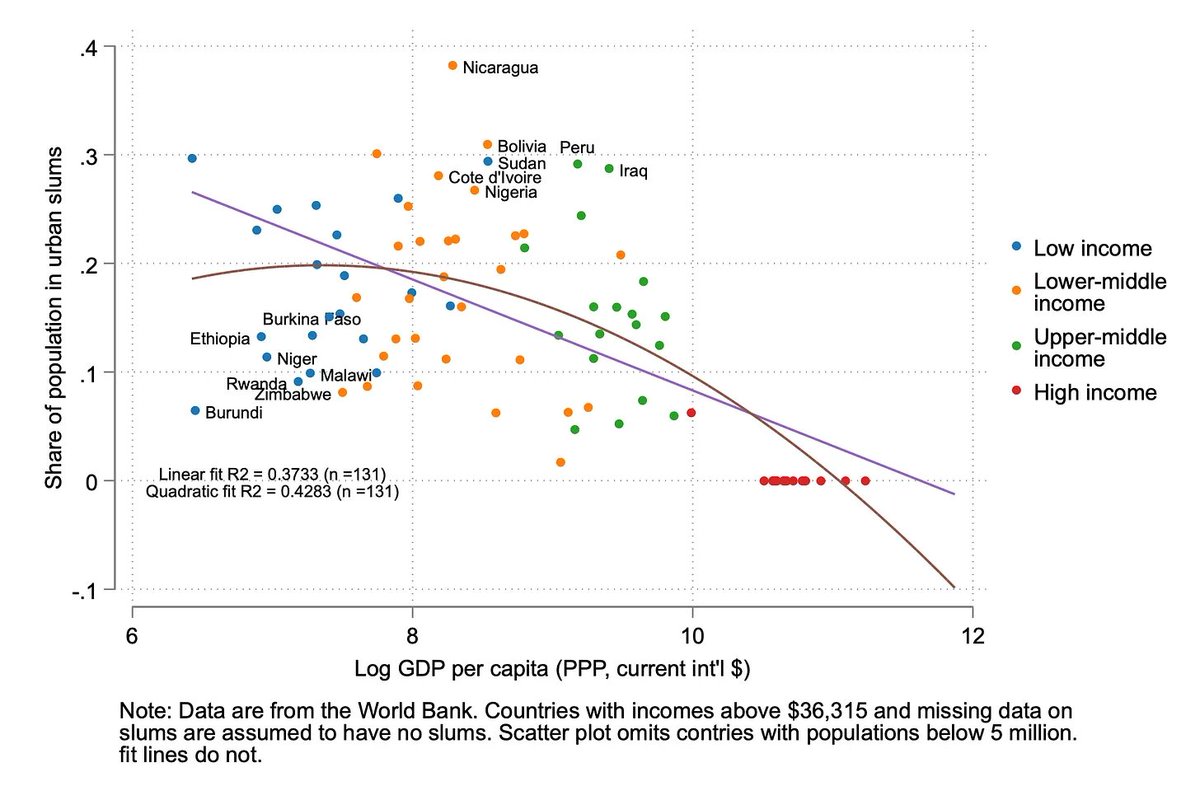
To understand this, it helps to decompose the share of a population in slums into the share in cities and the share of cities in slums.

While the share of a population in cities RISES with per capita income
The share of a city in slums FALLS with per capita income.
The share of the total population in slums is the sum of these countervailing forces.
The share of a city in slums FALLS with per capita income.
The share of the total population in slums is the sum of these countervailing forces.
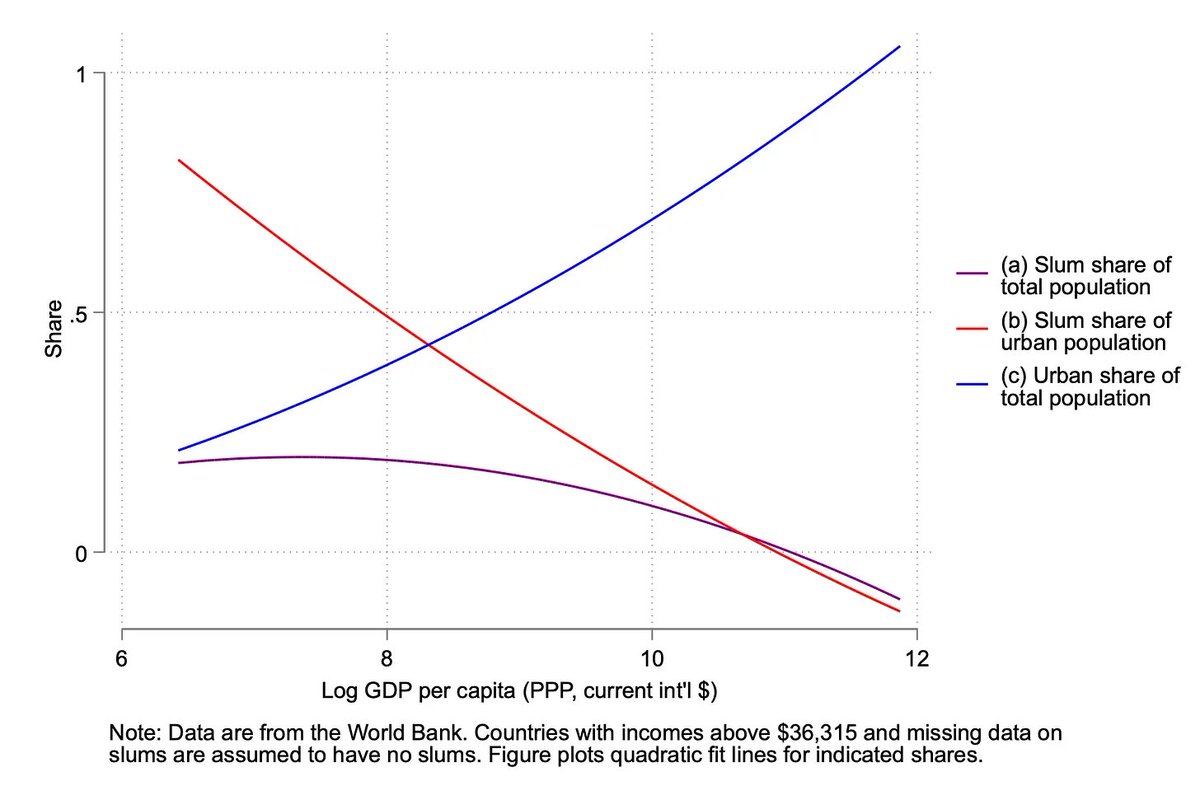
Why is this important? First. the upward-sloping portion of the relationship between the share of a population in slums and per capita income explains the "slums are a step up on the ladder of social mobility" view.
Second, this decomposition can help us predict slum populations and growth, at least a function of GDP and population growth. That is a topic for a future Substack post.
Third, while this analysis is NOT CAUSAL, it helps understand why economic growth, and not just better housing policy, is necessary to eliminate slums. As cities build better low-income housing or give land rights, they'll attract more rural migrants, and see new slums emerge.
So slum re-development may seem like a Sisyphean task: new slums just replace old slums. But if incomes -- including rural incomes -- grow, new migrants will be able to afford formal housing right away rather than after some time in cities.
If you like this thread, consider following me, or subscribe to my Substack, Research Notes. I use the substack to post discrete ideas that will hopefully find their way into my academic papers.
anupmalani.substack.com
anupmalani.substack.com
Loading suggestions...