

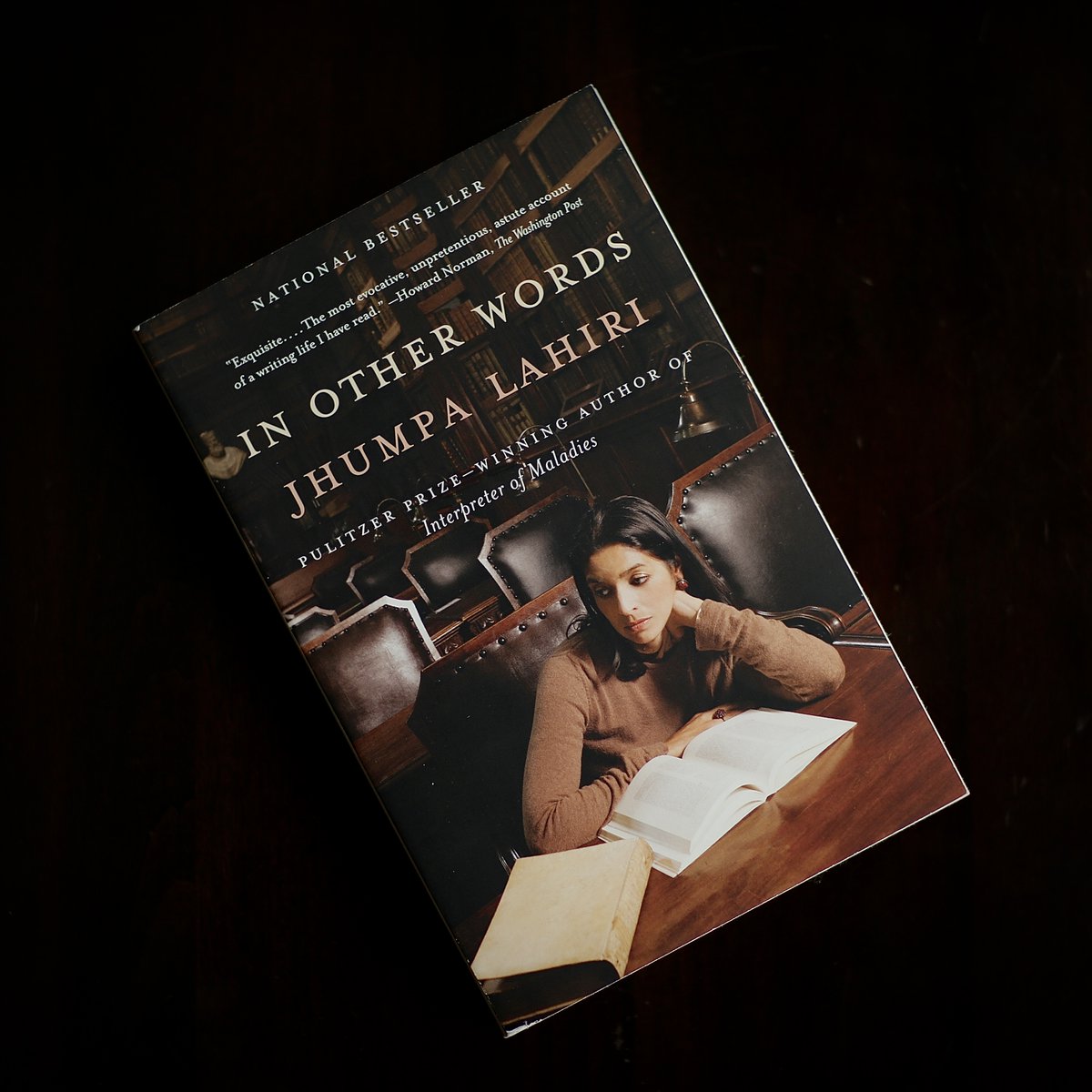
"In Other Words by Jhumpa Lahiri"
Very authentic, sincere, and thoughtful linguistic self-portrayal of her love with the Italian language, her journey of learning the language and writing this book.
As much a work of poetry as prose – Beautiful!
10 Lessons from the book 🧵
Very authentic, sincere, and thoughtful linguistic self-portrayal of her love with the Italian language, her journey of learning the language and writing this book.
As much a work of poetry as prose – Beautiful!
10 Lessons from the book 🧵
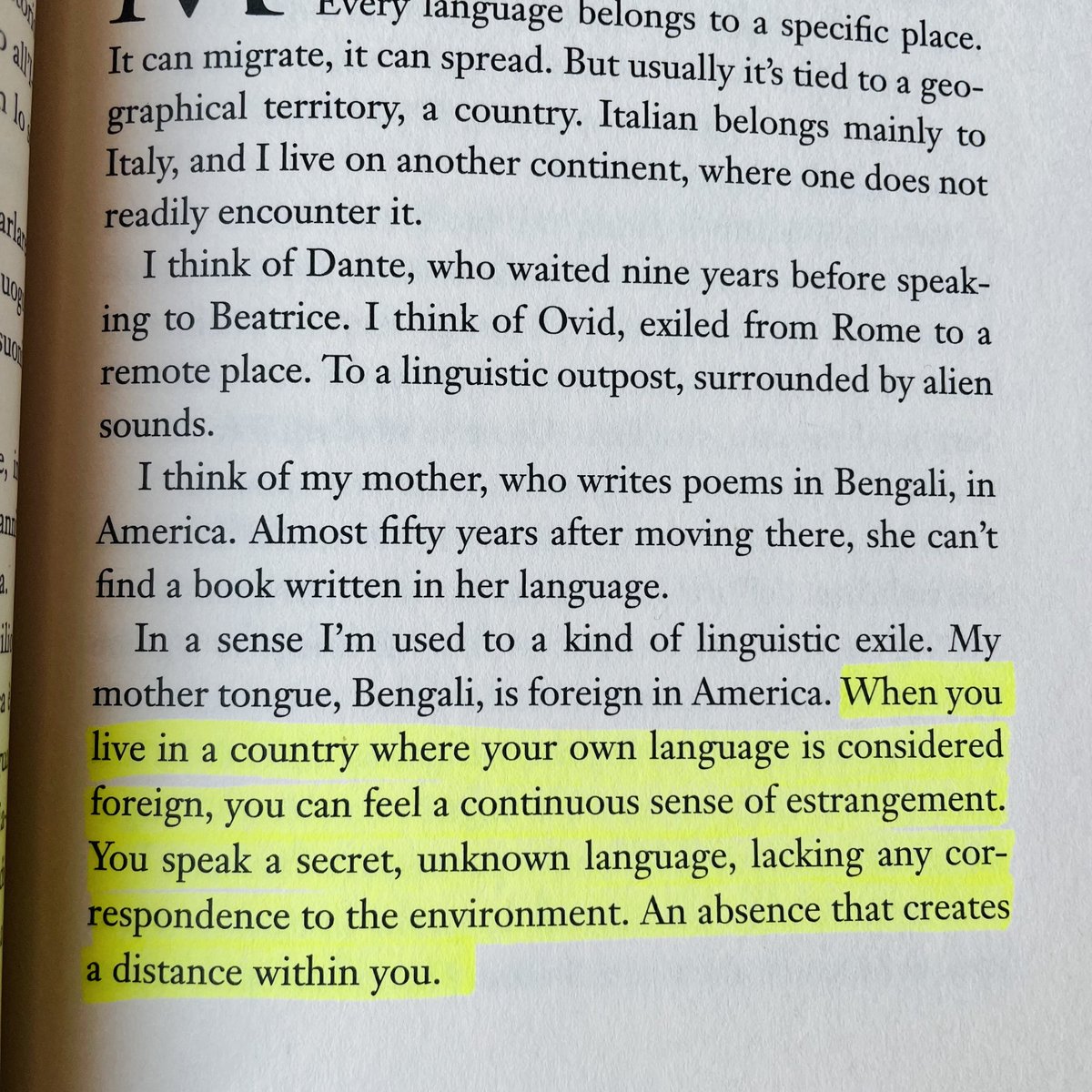
1) When you live in a country where your own language is considered foreign, you can feel a continuous sense of estrangement.
You speak a secret, unknown language, lacking any correspondence to the environment. An absence that creates a distance within you.
You speak a secret, unknown language, lacking any correspondence to the environment. An absence that creates a distance within you.
2) In the end to learn a language, to feel connected to it, you have to have a dialogue, however childlike, however imperfect.
3) A writer should observe the real world before imagining a non-existent one.
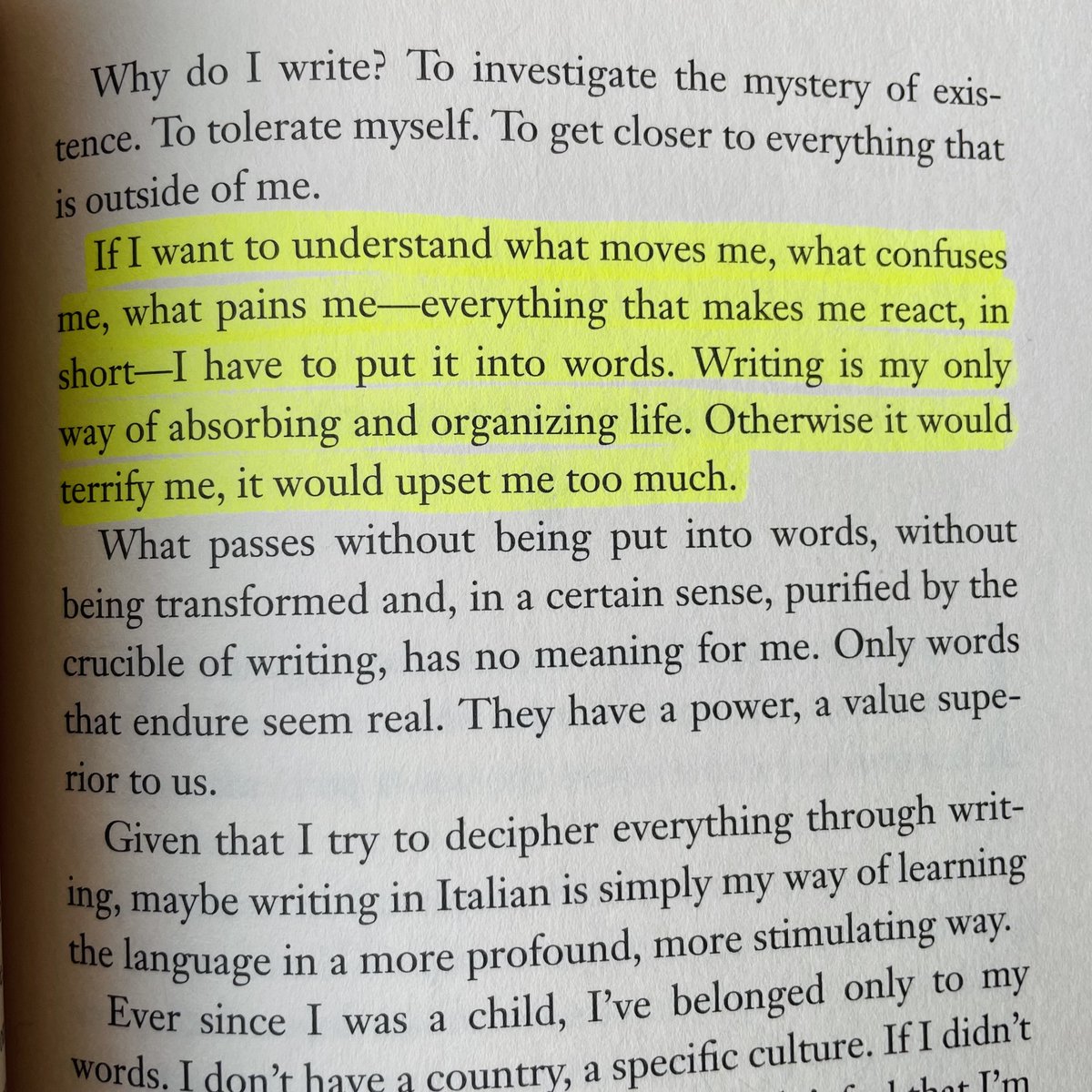
4) If I want to understand what moves me, what confuses me, what pains me – everything that makes me react, in short – I have to put into words.
Writing is my only way of absorbing and organizing life. Otherwise, it would terrify me, it would upset me too much.
Writing is my only way of absorbing and organizing life. Otherwise, it would terrify me, it would upset me too much.
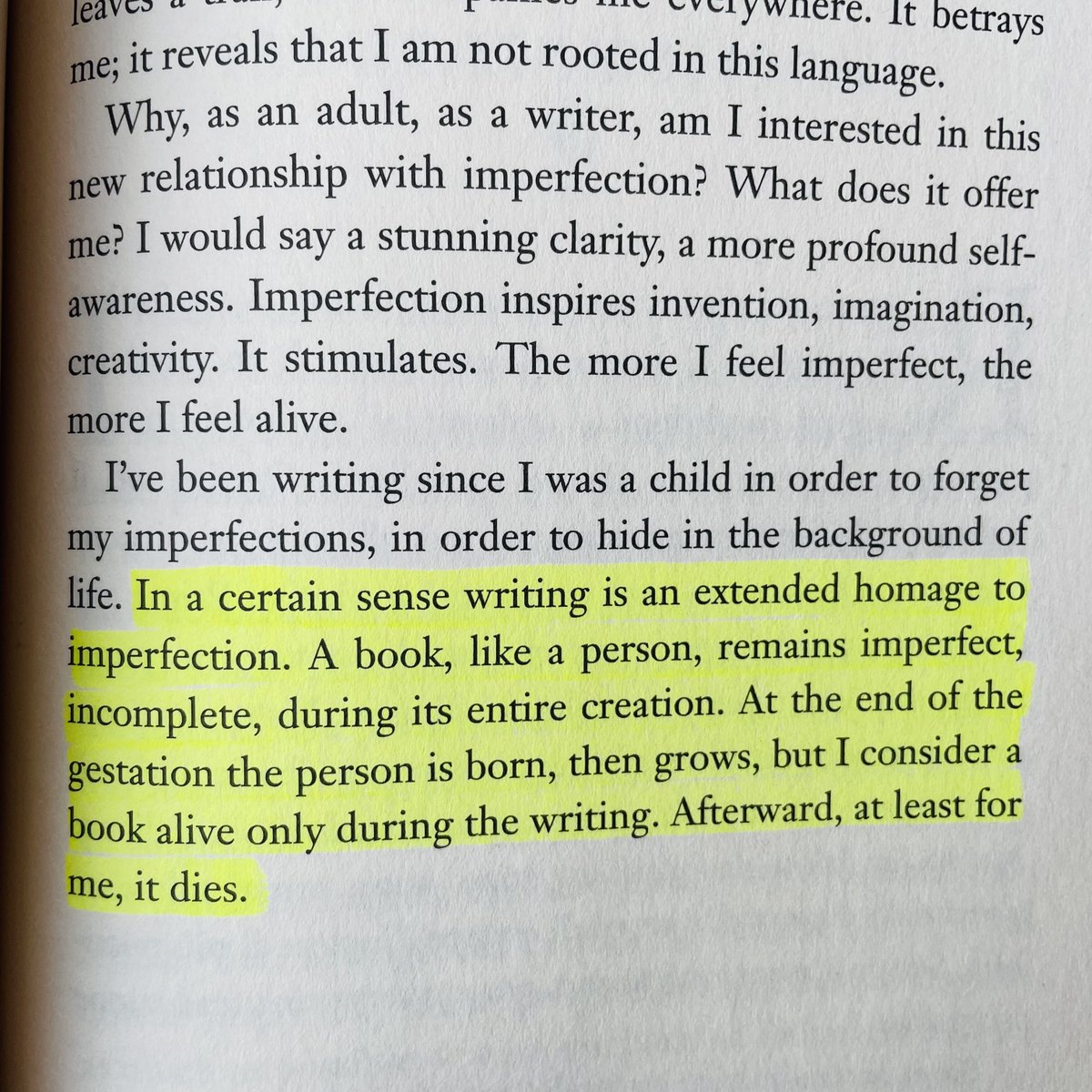
5) A book, like a person, remains imperfect, incomplete, during its entire creation.
At the end of the gestation the person is born, then grows, but I consider a book alive only during the writing.
Afterward, at least for me, it dies.
At the end of the gestation the person is born, then grows, but I consider a book alive only during the writing.
Afterward, at least for me, it dies.
6) When you live without your own language you feel weightless and, at the same time, overloaded.
You breathe another type of air, at a different altitude. You are always aware of the difference.
You breathe another type of air, at a different altitude. You are always aware of the difference.
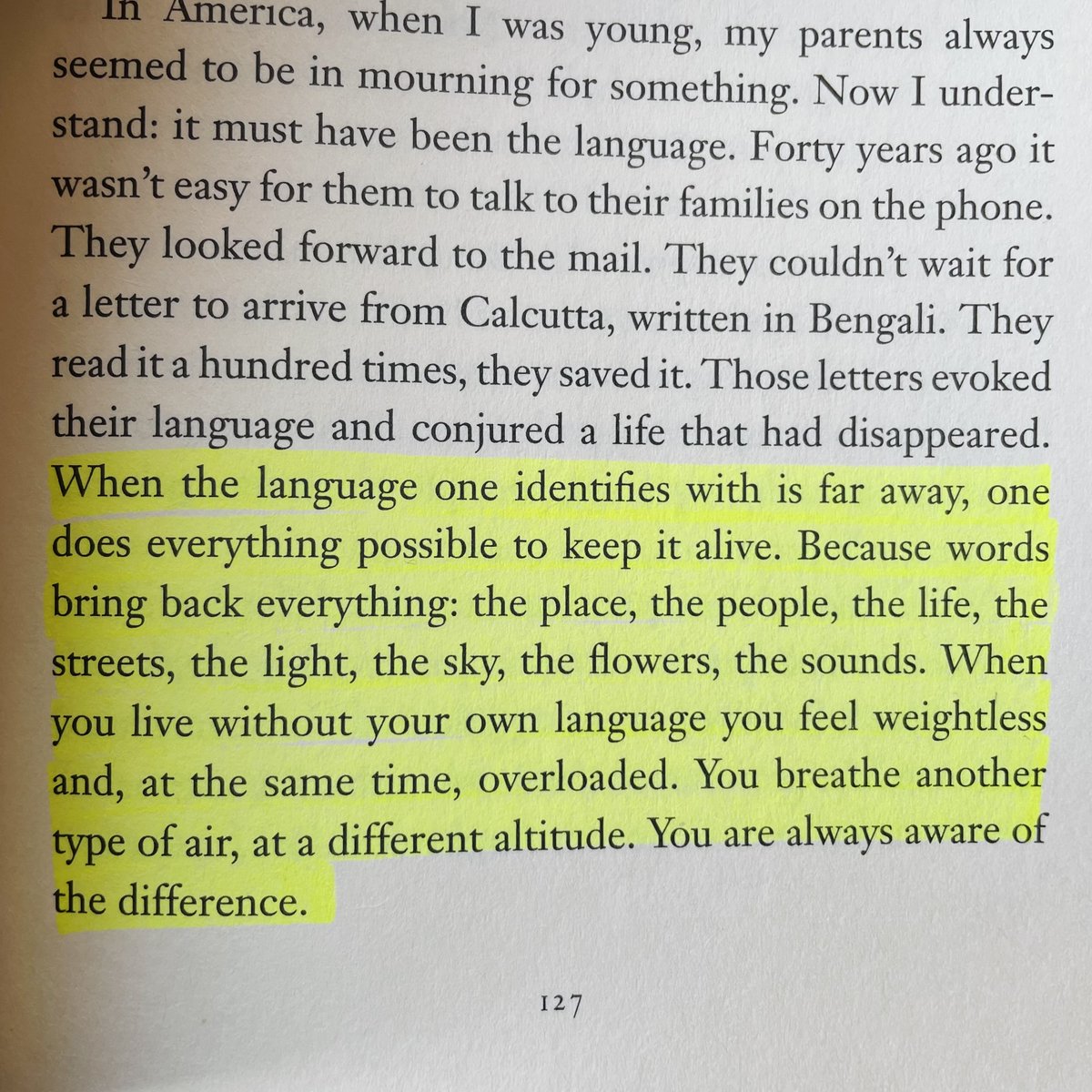
7) A foreign language is a delicate, finicky muscle. If you don’t use it, it gets weak. The manner of speaking, the sounds, the rhythms, the cadences, seem uprooted, out of place.
The words seem irrelevant, without a meaningful presence. They seem like castaways, nomads.
The words seem irrelevant, without a meaningful presence. They seem like castaways, nomads.
8) Books are the best means – private, discreet, reliable – of overcoming reality.
9) It's extremely useful to know that there are certain heights one will never be able to reach.
These heights have a dual, and substantial, role for writers: they make us aim at perfection and remind us of our mediocrity.
These heights have a dual, and substantial, role for writers: they make us aim at perfection and remind us of our mediocrity.
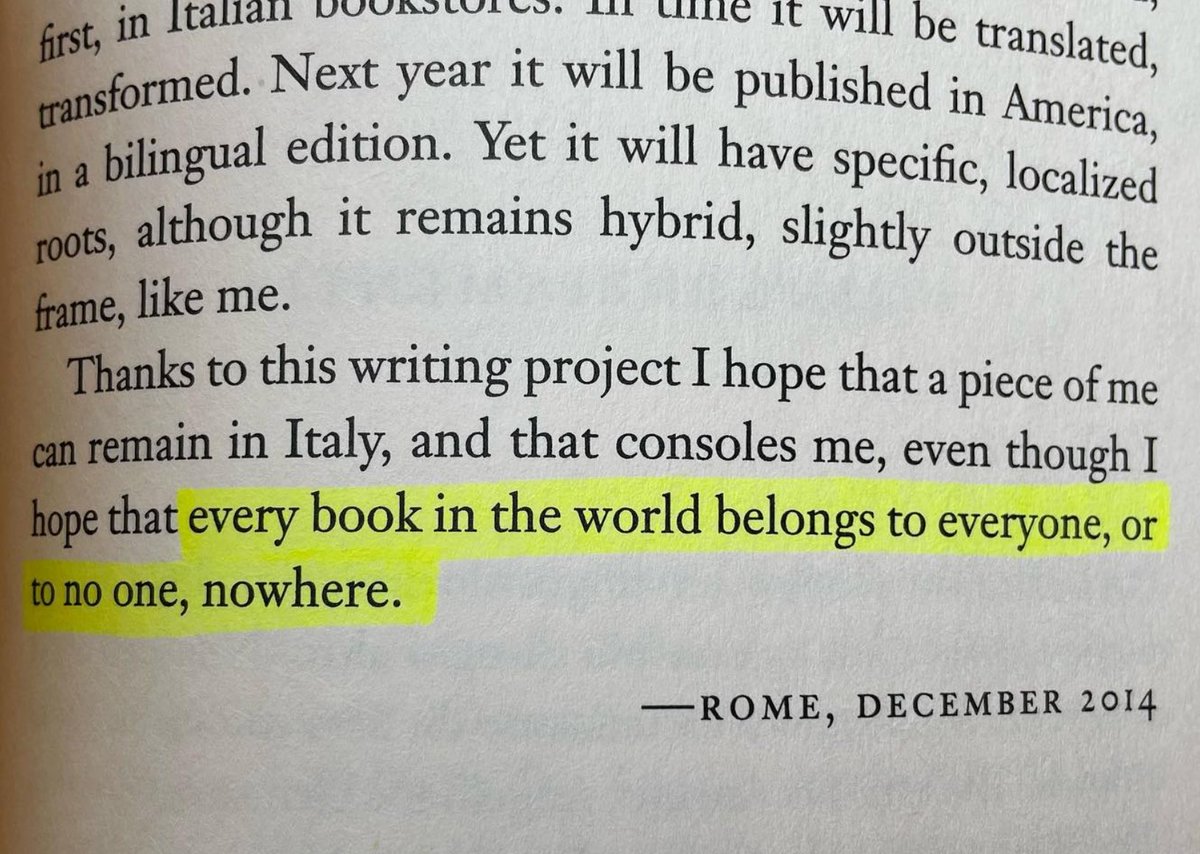
10)Every book in the world belongs to everyone, or to no one, nowhere.
On a post college visit to Florence, Pulitzer Prize winning author Jhumpa Lahiri fell in love with the Italian language. Twenty years later, seeking total immersion, she and her family relocated to Rome, where she began to read and write solely in her adopted tongue.
A startling act of self-reflection, In Other Words is Lahiri’s meditation on the process of learning to express herself in another language and the stunning journey of a writer seeking a new voice.
Thank you for going through the thread. Follow me at @readswithravi for more book learning, reviews, and lessons. Teach or share with others what you learn, that's how we grow.
Retweet the first tweet so you can share it with others.
Retweet the first tweet so you can share it with others.
Loading suggestions...