

5 Principles for building wealth:
(This will change your perspective on money completely)
(This will change your perspective on money completely)

1. Create a budget
You need the insight to spend right.
You need to know how much money is coming in.
But it's even more important to know how much is going out.
Inflows vs Outflows.
You need the insight to spend right.
You need to know how much money is coming in.
But it's even more important to know how much is going out.
Inflows vs Outflows.
Keep it simple.
It doesn't have to be perfect the first time.
Just write down an estimate, start tracking it for a few months.
Figure out if you're spending too much on things you don't really need.
You can control your outflows much more than you can control your inflows.
It doesn't have to be perfect the first time.
Just write down an estimate, start tracking it for a few months.
Figure out if you're spending too much on things you don't really need.
You can control your outflows much more than you can control your inflows.
2. The herd is wrong
People buy stuff because others have them.
Things people want but don't need:
- Fancy jewelry
- Expensive cars
- Mansions
- Designer clothes
People buy stuff because others have them.
Things people want but don't need:
- Fancy jewelry
- Expensive cars
- Mansions
- Designer clothes
Change your perspective:
They want money to buy things.
We want money to buy freedom.
Freedom from work, and things we don't want to do.
They want money to buy things.
We want money to buy freedom.
Freedom from work, and things we don't want to do.

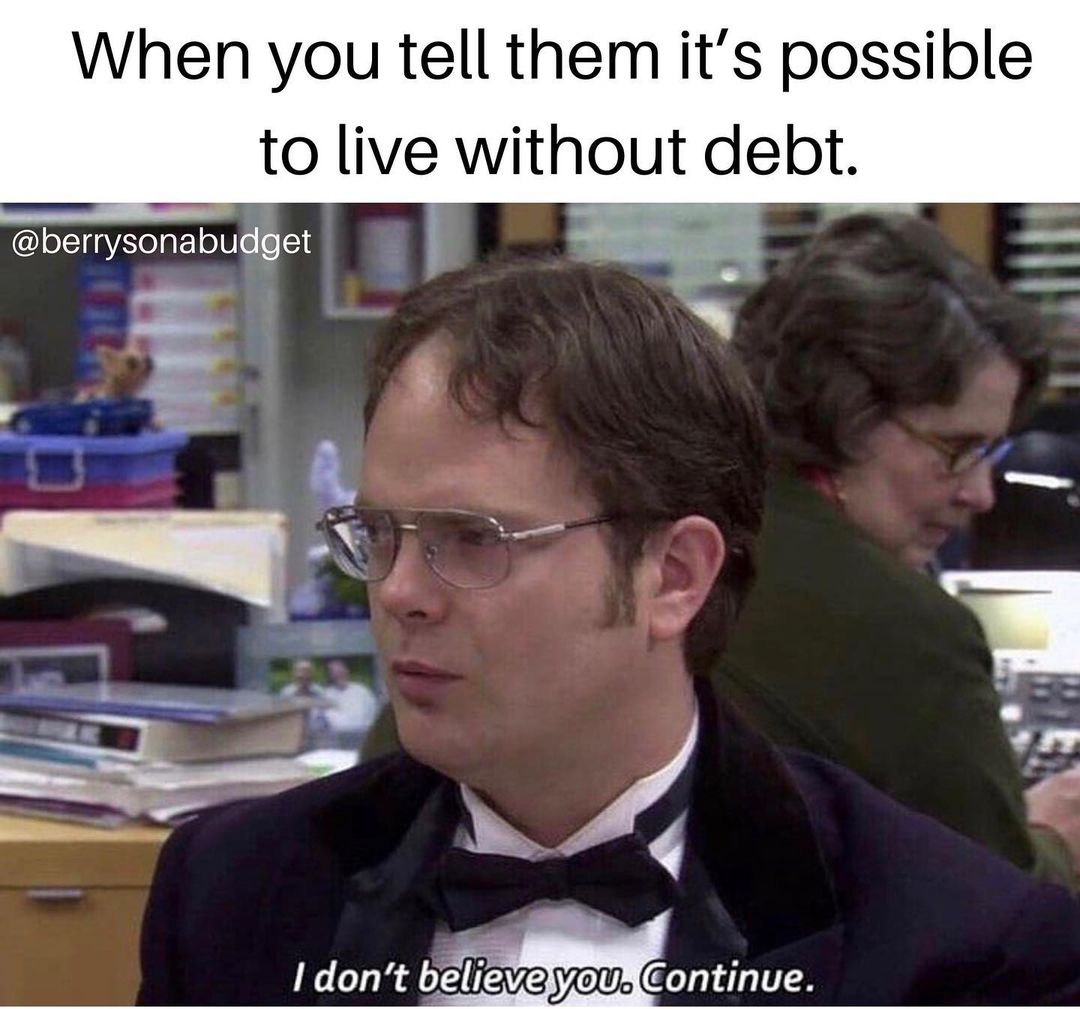
3. Eliminate (bad) debt as soon as possible
Good debt:
- Mortgage loans
- (Small) business expenses
- Student loans
Bad debt:
- Car loans
- Credit Card
- Payday Loan
Good debt:
- Mortgage loans
- (Small) business expenses
- Student loans
Bad debt:
- Car loans
- Credit Card
- Payday Loan
Bad debt gives you short-term pleasure.
Good debt gives you long-term leverage through assets and knowledge.
We all have debt, but it's the bad debt that needs to go first
Good debt gives you long-term leverage through assets and knowledge.
We all have debt, but it's the bad debt that needs to go first
4. Set up 3 buckets
- A spending bucket: A checking account which your salary comes in and you pay your expenses with.
- An emergency bucket: A savings account with 4-8 months' worth of expenses.
- An investment bucket: Everything that's left goes here to invest.
- A spending bucket: A checking account which your salary comes in and you pay your expenses with.
- An emergency bucket: A savings account with 4-8 months' worth of expenses.
- An investment bucket: Everything that's left goes here to invest.
How you begin each month (example):
1. Last month's salary: $2,500
2. Deduct your budget: $1,500
3. You have $1000 leftover
4. If you have little money in your emergency bucket, start adding big, say 80%
5. That $200 you have left goes to your investment bucket
1. Last month's salary: $2,500
2. Deduct your budget: $1,500
3. You have $1000 leftover
4. If you have little money in your emergency bucket, start adding big, say 80%
5. That $200 you have left goes to your investment bucket
You fill those buckets at the beginning of each month, not at the end.
This way you don't get tempted to spend it on things you don't need.
Once you have enough in your emergency bucket, you can invest everything.
This way you don't get tempted to spend it on things you don't need.
Once you have enough in your emergency bucket, you can invest everything.
5. Invest aggressively
It's as simple as that.
Don't spend it.
Don't save it.
You need to be:
It's as simple as that.
Don't spend it.
Don't save it.
You need to be:
Investing is a long-term game, but one that pays off big in the end.
$81.5 billion of Warren Buffett’s $84.5 billion net worth came after his 65th birthday.
Start today, to help your future self.
$81.5 billion of Warren Buffett’s $84.5 billion net worth came after his 65th birthday.
Start today, to help your future self.
Don't know what to invest in?
Again, keep it simple.
Diversify: buy everything.
A few ETFs allow you to easily own everything from stocks to commodities.
You don't have to look for the needle when you can buy the haystack.
Again, keep it simple.
Diversify: buy everything.
A few ETFs allow you to easily own everything from stocks to commodities.
You don't have to look for the needle when you can buy the haystack.
Good long-term investing is 1% buying and 99% waiting.
As they say:
"Time is money"
Investing gives you time.
As they say:
"Time is money"
Investing gives you time.
If you enjoyed this thread, please RT the first tweet.
This account exists to provide you with:
Knowledge of how to achieve financial freedom through investing and smart money habits.
Follow @ctrlyourwealth to keep building knowledge and wealth.
This account exists to provide you with:
Knowledge of how to achieve financial freedom through investing and smart money habits.
Follow @ctrlyourwealth to keep building knowledge and wealth.
Real wealth is not about money.
Real wealth is not having to go to meetings, not feeling like you have to say ‘yes’, sit in traffic, or worry about others claiming your time and energy.
Real wealth is about freedom.
Time freedom.
Real wealth is not having to go to meetings, not feeling like you have to say ‘yes’, sit in traffic, or worry about others claiming your time and energy.
Real wealth is about freedom.
Time freedom.
Loading suggestions...