

Barcelona vs Manchester United, Xavi Hernández vs Erik ten Hag, two *ELITE* tacticians go head to head.
Below, in my longest thread *ever*, I break down the tactical match-up in finite detail to determine the most likely winner.
Here we go... 🚨
🔴🟣 50-TWEET TITAN-THREAD 🟣🔴
Below, in my longest thread *ever*, I break down the tactical match-up in finite detail to determine the most likely winner.
Here we go... 🚨
🔴🟣 50-TWEET TITAN-THREAD 🟣🔴
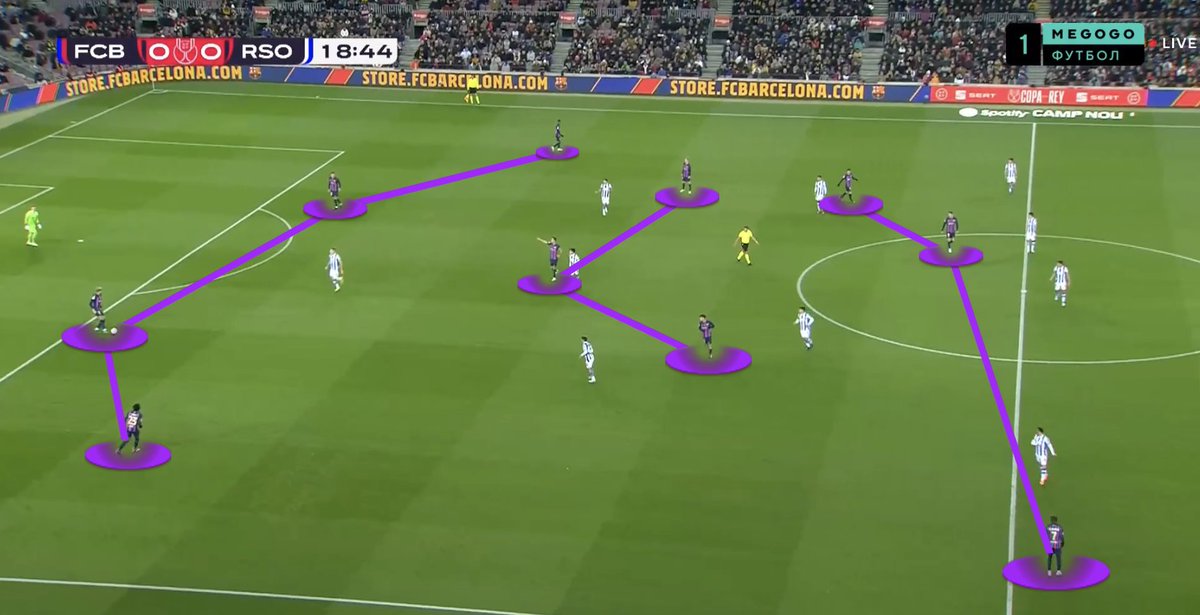
Xavi utilises similar shapes and coaching principles to that of the elites as Barca fluctuate between a 4-2-4 and a 4-3-3 in the first phase of build-up before transitioning into a 3-2-5 or a 3-1-6 in the final third, most like Pep's City right now.
Barcelona are a special team.
Barcelona are a special team.
Their starting XI dynamics include a team primarily consisting of ter Stegen; Koundé, Araujo, Christensen, Baldé; Busquets, Pedri, De Jong; Dembélé, Lewandowski, Gavi.
The shape resembles a 4-3-3 but De Jong often drifts into the build-up alongside Busquets to create a 4-2-4.
The shape resembles a 4-3-3 but De Jong often drifts into the build-up alongside Busquets to create a 4-2-4.
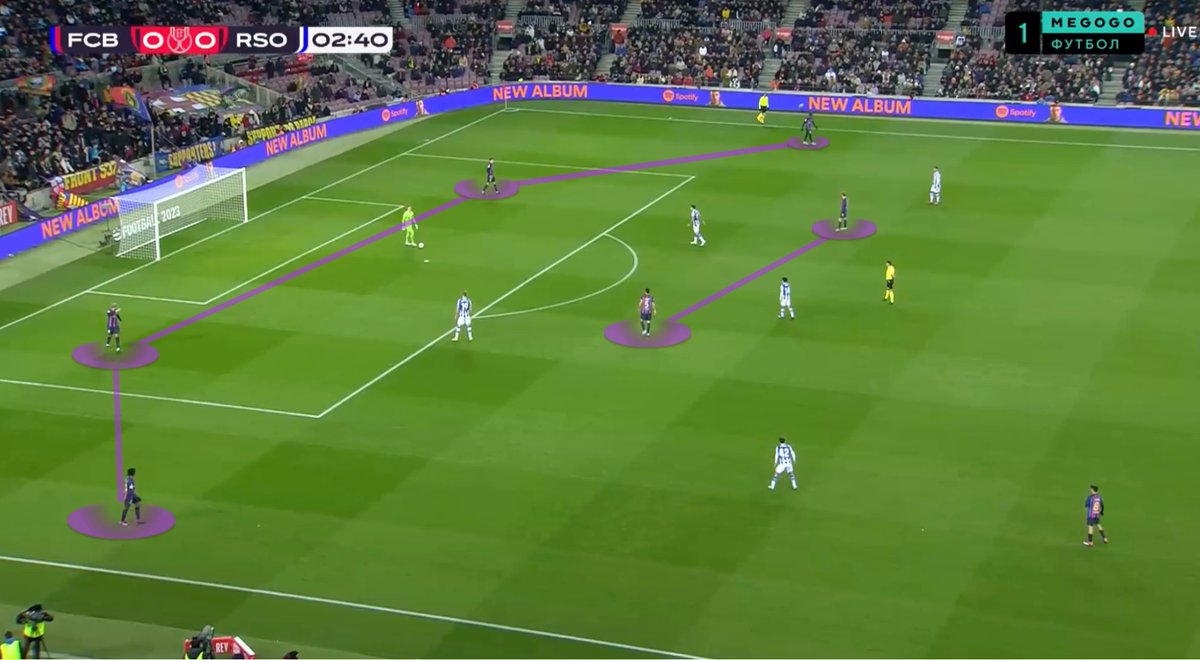
Then, as Barca progress play out of their build-up phase, Koundé is conservative in his positioning and tucks in alongside Araujo & Christensen in the back two to form a back 3.
Baldé then pushes high onto the left wing from left back with Gavi coming inside into the half space.
Baldé then pushes high onto the left wing from left back with Gavi coming inside into the half space.
That's where the 3-2-5 and 3-1-6 comes into play as Frenkie will either A) continue to operate alongside Busquets or B) roam high in between the lines to create a 6 man attack.
Xavi also enables Gavi and Pedri to drift where he sees fit due to their technical quality.
Xavi also enables Gavi and Pedri to drift where he sees fit due to their technical quality.

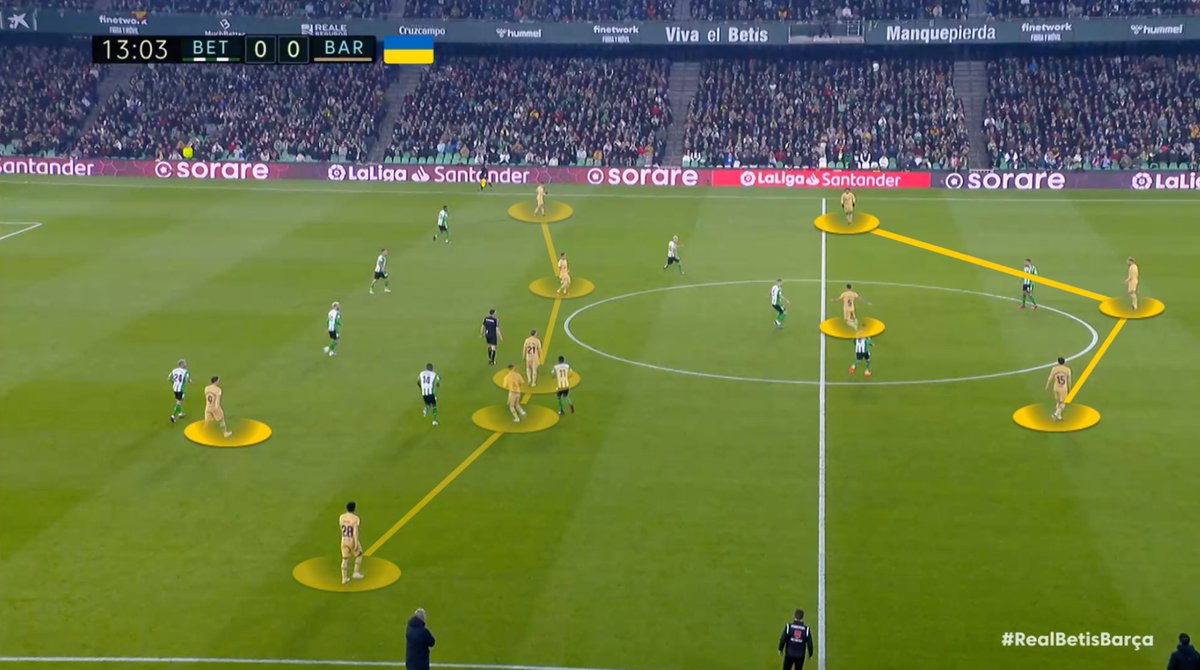
Their role primarily consists of sticking between the lines, but they have license to drift deep or even swap sides to get touches on the ball and influence the game with their technical quality, although this fluid license can sometimes negatively impact Barca's positional play.
That general fluid approach can be applied to all Barca players and although it's not a debilitating factor for the team, it's certainly a facet of their game that can result in either A) a lack of numbers between the lines or B) a lack of compactness in defensive transition.
If Frenkie or Kessié in the #8, for example, drift high & between the lines leaving Busquets isolated in midfield should play break down, that is a clear issue, but oftentimes Koundé is present centrally to help nullify that situation, but the general fluidity breeds uncertainty.
There's no denying I'm nitpicking here because the principles in general are special, but careless giveaways when there's not enough players high to counterpress or in midfield to block opposition transitions and a guy like Marcus Rashford can kill you in defensive transition.
However, Barca are typically excellent out of possession despite that minor flaw.
They press in a 4-4-1-1 with the principles of the very best presses in the sport as they invert their wide players to ensure effective pressure is applied *EVERYWHERE*.
They press in a 4-4-1-1 with the principles of the very best presses in the sport as they invert their wide players to ensure effective pressure is applied *EVERYWHERE*.

Barca invert their wide players to press the opposition centre backs with the fullbacks backing the press up. Then the centre back + #6 communicate to manage the ball-side wide midfielder & attacker.
When successful, they have the quality to punish teams.
When successful, they have the quality to punish teams.

Xavi also sets his team up effectively to match up against a back 3. The wingers invert onto the outside centre backs, the #8's mark the opposition pivot, Busquets protects between the lines, and the defenders man-mark the opposition wingbacks & forwards who drop deep to receive.
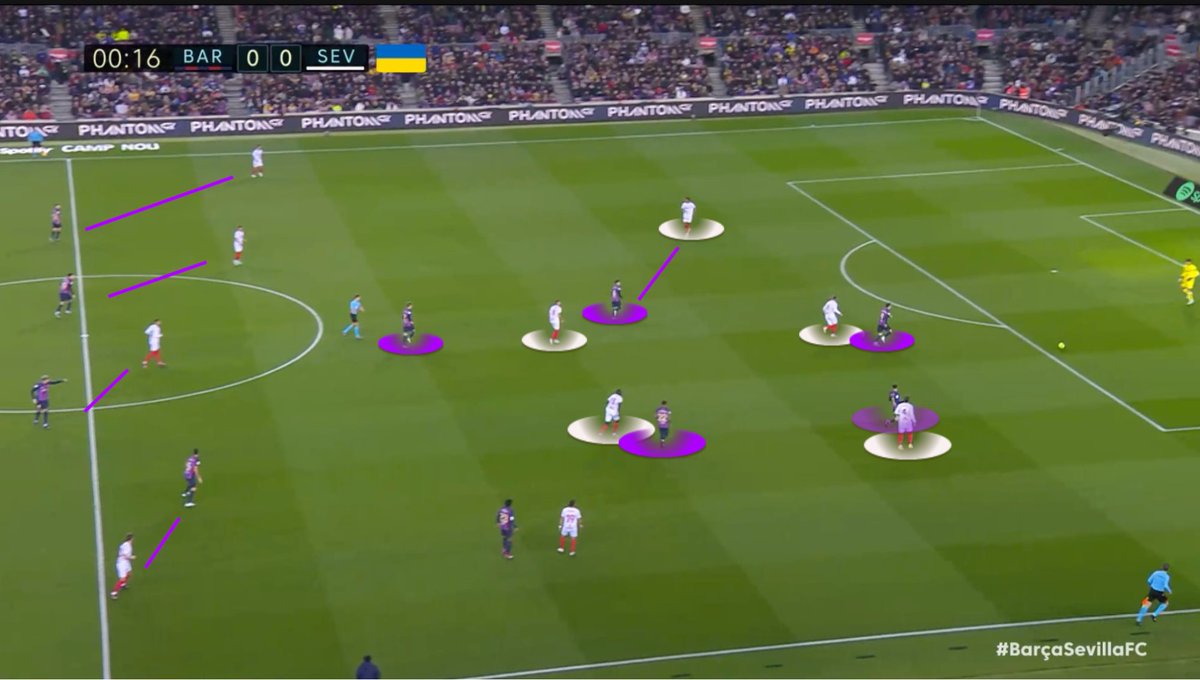
However, although the pressing principles within the structure are elite, the sheer fact that Barca utilise a zonal approach leaves the press vulnerable to being overloaded on occasion.
If the players get their rotations wrong, Barca can be exploited and largely nullified.
If the players get their rotations wrong, Barca can be exploited and largely nullified.
So, for example, in this instance, Gavi inverted to press the centre back but one of Villarreal's double pivot was free behind him and Pau Torres had the quality to pick him out. This is a consequence of a failed rotation as the midfield failed to match up & Gavi was caught out.
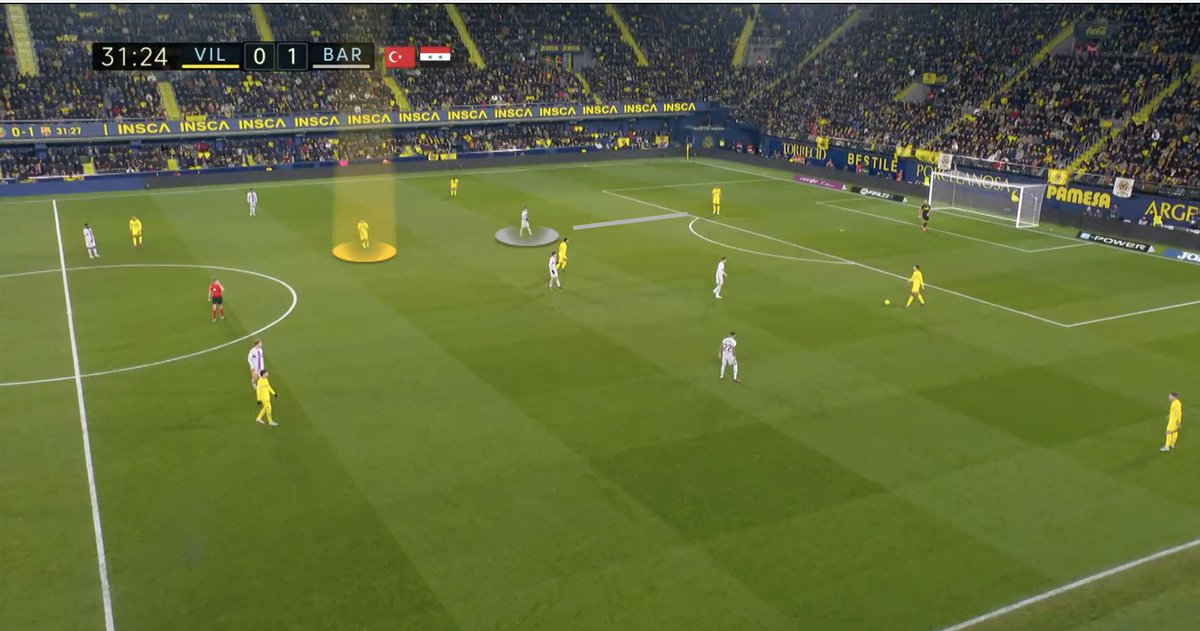
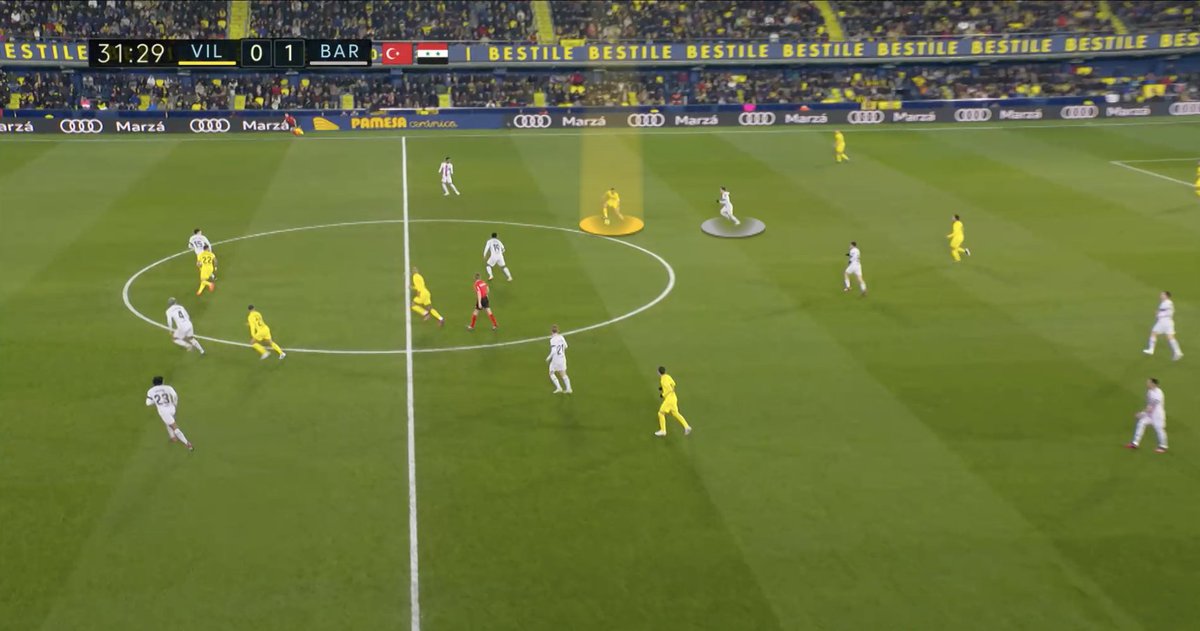
Barca's press being bypassed isn't a regular occurrence because they're a special technical team, but when that technical quality isn't present, their press suffers, and that occurred in their last match day against Villarreal due to Busquets' absence.
Let me explain further.
Let me explain further.
Kessié came into the XI in Busquets absence in the #8. Frenkie is a suitable alternative to displace Busquets in the #6, but Kessié isn't a 'Barca' player. Their entire culture, philosophy, & system is centred around technical quality, yet that's the area where Kessié is weakest.
Xavi played a midfield three of de Jong, Kessié, and Pedri against Villarreal and Barca averaged only 46% of the ball.
Listen, Villarreal are and always have been a sensational technical team, but that percentage is *NOT* the Barca way, & it wouldn't have occurred with Busquets.
Listen, Villarreal are and always have been a sensational technical team, but that percentage is *NOT* the Barca way, & it wouldn't have occurred with Busquets.
When Barca kept the ball they weren't as difficult to dispossess as they typically are, and not because Kessié is woeful technically, but more so because his profile isn't a nimble & agile #8 (de Jong) who drops deep alongside Busquets.
He's more so a box-to-box runner profile.
He's more so a box-to-box runner profile.
A staple for any quality pressing side is to dominate the ball so when possession breaks down it does so in the oppositions final third. Then the defensive block can counterpress high as opposed to tracking back if possession is lost deep.
Barca didn't tick that box against VIL.
Barca didn't tick that box against VIL.
Barca's general approach in possession was a little too direct, and they didn't create game themes where they could use their positional play and possessional quality.
It's all well & good having structural advantages on paper but what does it matter if that theme isn't present?
It's all well & good having structural advantages on paper but what does it matter if that theme isn't present?
Barca's general structure and team dynamics are heavily reliant on 'total control'. Just look at the physical and stylistic make up of their team.
They don't have a single physical outlet in the starting XI outside of their right winger (Dembélé or Raphinha) - they need control!
They don't have a single physical outlet in the starting XI outside of their right winger (Dembélé or Raphinha) - they need control!
Not only that, but the fact that Gavi holds the width in the build-up in the 4-3-3 shape is also cause for concern because if the game becomes transition-based he can become lost. His role works with Baldé if Barca dominate the ball because he tucks in and Baldé provides width.
However, if Barca don't dominate the ball there's no natural width on the left wing and Gavi lacks the physicality to make up for that imbalance.
Barca dominate 95% of the games they play through technical prowess, but Busquets' absence is a *HUGE* blow for them to achieve that.
Barca dominate 95% of the games they play through technical prowess, but Busquets' absence is a *HUGE* blow for them to achieve that.
This is where Manchester United come into play.. Just like Xavi, Ten Hag is a coach who wants to implement total control, but he's fully aware that this United team is only half a season into its process, and he has no problem on relying 'disruption' and transitions to win games.
We've seen that all season with United as they have taken a more defensive approach than ten Hag would arguably like to due to the player quality at his disposal, but he's done so to great success.
United have beaten Arsenal, City, & Liverpool this season thanks to transitions.
United have beaten Arsenal, City, & Liverpool this season thanks to transitions.
This isn't to say United will sit back behind the ball all game and rely on counter-attacks.
They will still try to play out from the back, for example, where possible. Here, though, is where United have to be careful thanks to Barca's (typically) excellent pressing structure.
They will still try to play out from the back, for example, where possible. Here, though, is where United have to be careful thanks to Barca's (typically) excellent pressing structure.
Ten Hag's United build in a variety of shapes such as a 4-1, a 3-2, and a 3-1. But, as discussed, Barca are an excellent structural pressing team against both four & three at the back systems, so United should only build out from the back in settled play as opposed to goal kicks.
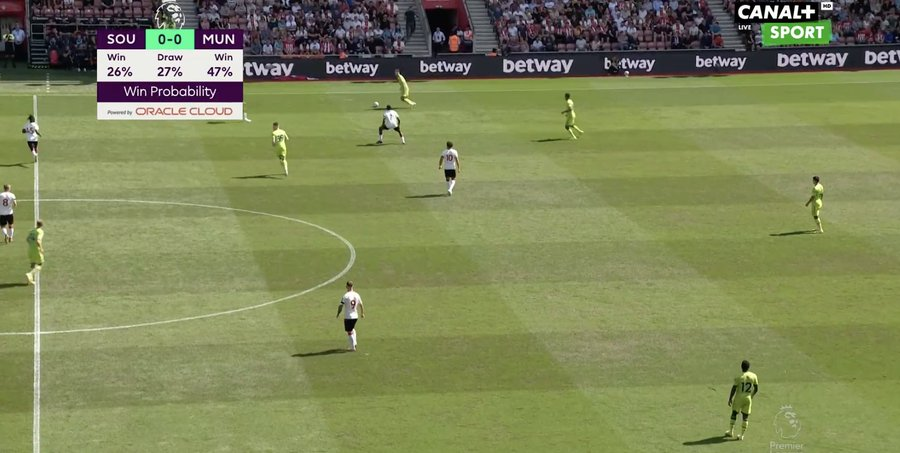
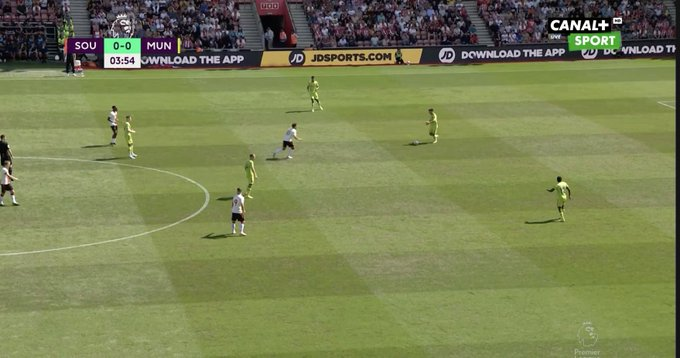
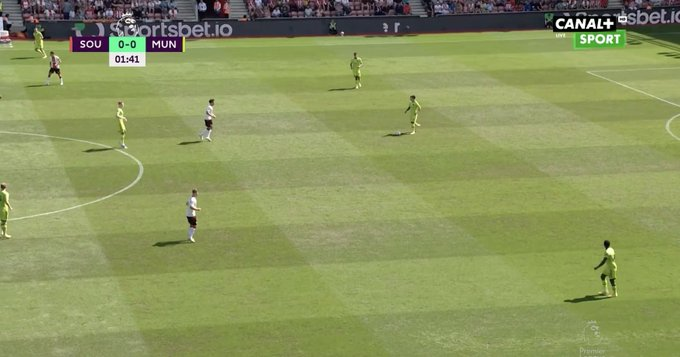
De Gea's technical quality is limited in the first phase but it's also easier for teams to press closer to the oppositions goal than it is in settled play, so what United should do is go long from goal kicks where they can battle for duels and make decisions off the back of that.
United are a more physical team than Barca as a whole so they can use that to their advantage by winning first/second balls & either A) directly exploiting the opposition in transition (Rashford) or B) recycling to retain possession against the Barca mid-block.
That's sensible.
That's sensible.
This is an approach ten Hag has implemented with regularity throughout the season, & it gives United an opportunity to mitigate where the opposition are often strong (pressing high) & United are weak (building from inside their own box). Then, higher up, they can 'play football'.
United are no scrubs technically and that's why they are capable of going toe-to-toe with the very best teams. They're not on the elite level, but when they get midfield possession they can keep it.
Then, when they do sustain attacks, their positional play is well & truly elite.
Then, when they do sustain attacks, their positional play is well & truly elite.
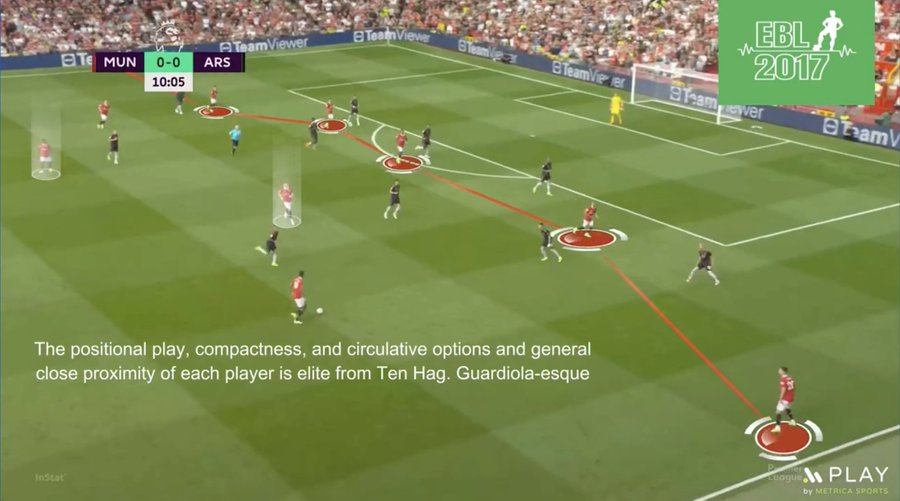
United consistently create overloads against opposition defences whilst maintaining compactness due to the inversion of one of the fullbacks.
Ten Hag is similar to Xavi in the sense that fluidity is encouraged, though, & they can be vulnerable in transition on occasion.
Ten Hag is similar to Xavi in the sense that fluidity is encouraged, though, & they can be vulnerable in transition on occasion.
However, because United's counterpress is largely compact, it means that when they do sustain attacks they can create chances AND stay high because of that.
Their settled pressing structure, though, isn't quite as good as Xavi's Barca's is just yet despite similar principles.
Their settled pressing structure, though, isn't quite as good as Xavi's Barca's is just yet despite similar principles.
United press in a 4-4-1-1 with the wide players inverting to press the centre backs, but their fullbacks rarely back up the press, and this means ter Stegen will be able to clip balls out to the fullbacks OR the centre backs will have time on the ball.

*This* facet of the game is the biggest deal breaker - Barca's build-up. What's clear is that Barca will likely have more of the ball in general because of the nature of their team, the venue, and where United are at in their project, but the quality of that possession is key.
If Busquets was fit, I would fear the worst for United in this sense because Barca would A) have the necessary technical quality to build through United's somewhat flawed press and B) the positional play in the final third to break United's back four down via overloads.
Not only that, but Barca are also largely compact in defensive transition & are excellent in the press (when technically secure) because they can counterpress high & their settled pressing structure is similarly impressive in such instances.
It would have been tough for United.
It would have been tough for United.
However, Kessie's likely inclusion in midfield is a big bonus for United because of his low pass volume and all-action profile.
It means that one of Barca's biggest build-up weapons (de Jong in the #8 dropping alongside Busquets) is not quite as effective, but they're still 🔝
It means that one of Barca's biggest build-up weapons (de Jong in the #8 dropping alongside Busquets) is not quite as effective, but they're still 🔝
Ter Stegen, Araujo, Koundé, Christensen, Baldé, and de Jong are all elite technically, so it's not like United will be facing a massively worse version of Barca.
They can still hurt United's passive press, even from the 1st phase with long balls from deep.
They can still hurt United's passive press, even from the 1st phase with long balls from deep.

Not only that, but Barca can also play through United's press and directly hurt them in transition or pin them back into a low block & use their sensational attacking structure in the final third to overload United's back four, just like they did to Atleti.

However, despite those qualities, do not underestimate the difference between Busquets and Kessié and the impact that has on Barca's total control.
It gives United a much better chance, but they still have to prevent Barca from implementing total control which is a tough task.
It gives United a much better chance, but they still have to prevent Barca from implementing total control which is a tough task.
United may have beaten City and Arsenal this season, but they lost both games away from home, and that was largely because their pressing structure was played through which ultimately saw them get killed in transitions or when defending deep and being overloaded in the last line.
Barca are on a very similar level to both Arsenal and City, and they play a very similar way, so if Busquets was present United would be quite reliant on someone like Rashford to bail them out like he did his best to at the Emirates, but the collective couldn't quite hang on.
However, Barca are much less physical and much less devastating in transition than both City & Arsenal are, so if United can create a chaotic theme like they did at the Emirates for large periods, they can really make a top game of this on Thursday night.
They have the quality..
They have the quality..
United need to nail the basics to have the optimal chance of winning. They need to go long from goal kicks to evade Barca's fantastic press, they need to win duels in midfield to use Rashford in transition, they need to keep the ball when they get it, and make the game chaotic.
If United successfully do all of these things then they will maintain a threat in each facet of play.
Ten Hag's pressing structure may be flawed (for now) in the sense that the fullbacks don't back up the press with reliability, but it's still enough to get exert OK pressure.
Ten Hag's pressing structure may be flawed (for now) in the sense that the fullbacks don't back up the press with reliability, but it's still enough to get exert OK pressure.
However, that 'OK' pressure can turn into good pressure if United win duels, pin Barca back through technical quality, and (counter)press high.
The more they do that, the more that when they inevitably do defend deep that they prevent Barca from sustaining true pressure.
The more they do that, the more that when they inevitably do defend deep that they prevent Barca from sustaining true pressure.
Then they can use Rashford to much greater effect on the counter because Barca's sustained pressure isn't consistently applied. United will need to maintain those performance levels for 90 mins, too, because if they don't Barca will pin them back like Arsenal did at the Emirates.
If that occurs, Barca will have an overload vs the last line with guys like Raphinha tormenting Malacia or Luke Shaw at left back with his sensational 1v1 qualities and ability to drift in at the back post to utilise that overload.
They also have firepower off the bench.
They also have firepower off the bench.
All in all, United want transitions, and Barca don't. If United can create that game theme, they have a true chance of causing an upset at Camp Nou, and Busquets' absence absolutely gives them a large helping hand.
It'll be one hell of a spectacle, though, that much is clear! 🧵
It'll be one hell of a spectacle, though, that much is clear! 🧵
Loading suggestions...