

I have interviewed 300+ Senior Engineers, Tech Leads & Engineering Managers over the last 10 years of my career.
Here are the most actionable tips I learned on how you can do better on Behavioral Interviews as EMs/Staff+ and also some common pitfalls:
🧵🧵🧵
Here are the most actionable tips I learned on how you can do better on Behavioral Interviews as EMs/Staff+ and also some common pitfalls:
🧵🧵🧵
1. The STAR format is like a Three-Course Meal:
• The Situation/Task is the Appetizer,
• Your Actions are the Main Course,
• The Results are the Dessert, the cherry on top.
Don’t overfeed the interviewer at any point, otherwise…
• The Situation/Task is the Appetizer,
• Your Actions are the Main Course,
• The Results are the Dessert, the cherry on top.
Don’t overfeed the interviewer at any point, otherwise…
The same way that if a chef overfeeds a customer with too much food in a course, they are not going to be ready to eat the next one, you also don't want to overfeed the interviewer with too much information at any point.
Always assume that if they want more, they will ask for it
Always assume that if they want more, they will ask for it
As an interviewer, if I want more of the Appetizer, I will ask for it.
If I want more of the Entree, I will ask for it.
If I want more Dessert, I will ask for it.
In doubt, give less.
If I want more of the Entree, I will ask for it.
If I want more Dessert, I will ask for it.
In doubt, give less.

2) Stick to the headlines first.
Limit the Main Course to 3 Actions. Don't overfeed!
Never talk for more than 2 minutes non-stop.
Limit the Main Course to 3 Actions. Don't overfeed!
Never talk for more than 2 minutes non-stop.
Any opportunity that the interviewer has to zone out during a busy day of work, they will take it.
If you are talking for more than 2 minutes non-stop, they will likely go to a “meditating state”.
Maximize for Interactivity.
If you are talking for more than 2 minutes non-stop, they will likely go to a “meditating state”.
Maximize for Interactivity.
3) Use "I".
You show you are a team player by the actions you did, not by using "WE", "We", "we".
If you say "we did this", "we did that"...
The interviewer will ask:
> "Well, was this person driving the car or was this person just a passenger?"
You show you are a team player by the actions you did, not by using "WE", "We", "we".
If you say "we did this", "we did that"...
The interviewer will ask:
> "Well, was this person driving the car or was this person just a passenger?"
Remember: The interviewer is looking for someone that can steer the ship.
Be Data-Driven, not Emotions-Driven.
This tweet from @brunojdo captures it really well:
Be Data-Driven, not Emotions-Driven.
This tweet from @brunojdo captures it really well:
4) Don’t give extra information if not needed, especially if you have bad feelings about the situation or someone involved.
>
> Don't overfeed the interviewer!
>
>
> Don't overfeed the interviewer!
>
5) Think about the goal behind the question before answering it.
• What is the question trying to uncover?
• Why is it being asked?
• What might the interviewer be trying to assess with this question?
• What is the question trying to uncover?
• Why is it being asked?
• What might the interviewer be trying to assess with this question?
6) On Results, Have Data points. Be Data-centric, not Emotions-Driven. And, remember, don't overfeed!
• Are you putting any weight to the situation at hand?
• Are you telling the interviewer why was this important?
• What was the overall impact to your company?
• Are you putting any weight to the situation at hand?
• Are you telling the interviewer why was this important?
• What was the overall impact to your company?
Also, if you want to see how I applied this STAR method for one of FAANGs interviews that landed me an $650k+ TC offer, follow me on LinkedIn at “thiagoghisi” and check my full article below:
linkedin.com
linkedin.com
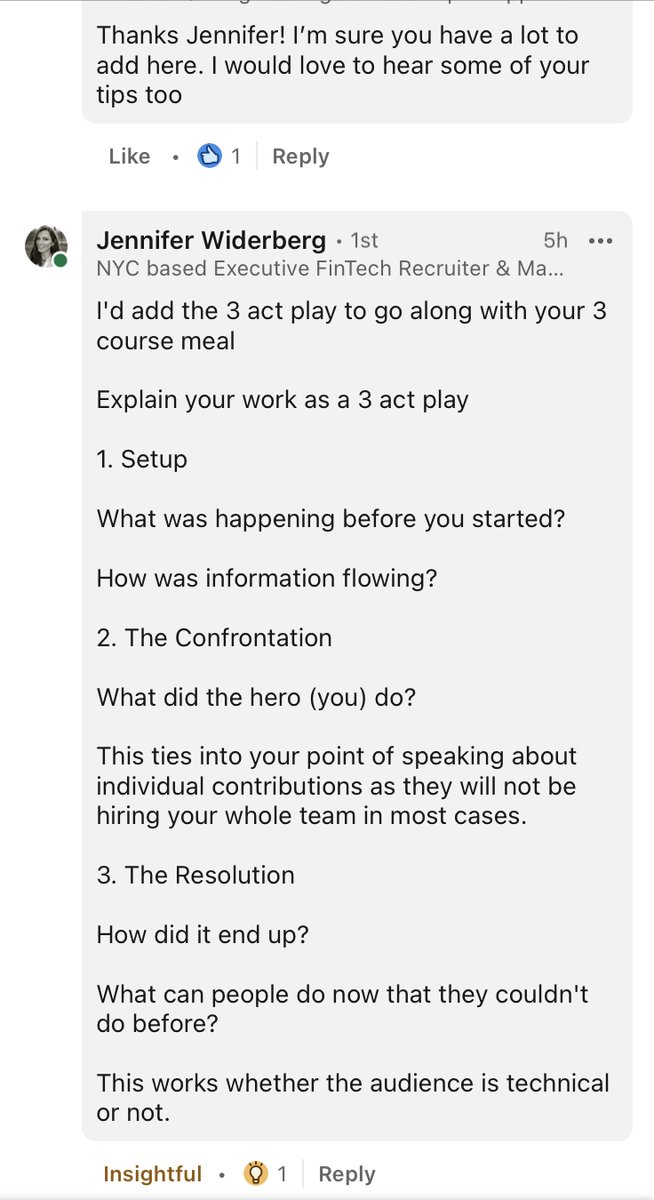
Want even more? @jenwiderberg made an awesome contribution:
Finally, remember this. Making things succinct and flowing is super super hard, that is why I always always recommend folks to have at least the outline of the most common behavioral questions ready to be reviewed by mentors and trusted peers on a Google doc.
Loading suggestions...