

72-year-old man
👉underwent arthroscopic repair of the rt shoulder
For postoperative pain, a supraclavicular catheter was placed for brachial plexus block
The next day👉 right-sided chest pain and mild shortness of breath
Diagnosis?
👉underwent arthroscopic repair of the rt shoulder
For postoperative pain, a supraclavicular catheter was placed for brachial plexus block
The next day👉 right-sided chest pain and mild shortness of breath
Diagnosis?
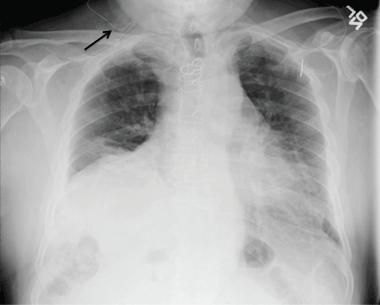
Answer
Phrenic nerve palsy
Phrenic nerve palsy
A 72-year-old man underwent elective ambulatory arthroscopic repair of the right shoulder rotator cuff.
To manage postoperative pain, a supraclavicular catheter was placed for brachial plexus block
To manage postoperative pain, a supraclavicular catheter was placed for brachial plexus block
👉he was sent home with a ropivacaine infusion pump.
The next day, he presented to the emergency department with right-sided chest pain and dysnea
The next day, he presented to the emergency department with right-sided chest pain and dysnea
Phrenic nerve paralysis induced by brachial plexus block
ccjm.org
ccjm.org
The ropivacaine infusion was stopped
👉 the supraclavicular catheter was removed under anesthesia
👉 over the course of 8 to 12 hours his shortness of breath resolved
👉 lung examination normalized
Repeat chest radiography 24 hours after 👇
👉 the supraclavicular catheter was removed under anesthesia
👉 over the course of 8 to 12 hours his shortness of breath resolved
👉 lung examination normalized
Repeat chest radiography 24 hours after 👇
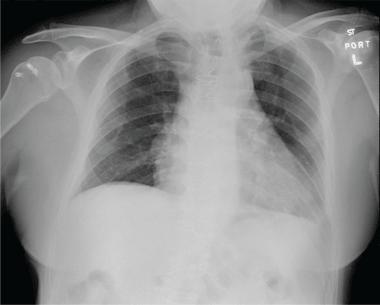
The scenario described here illustrates
👉 importance of recognizing symptomatic phrenic nerve paralysis as a result of local infiltration of anesthetic from supraclavicular brachial plexus block
👉 importance of recognizing symptomatic phrenic nerve paralysis as a result of local infiltration of anesthetic from supraclavicular brachial plexus block
Because these blocks anesthetize the trunks formed by the C5–T1 nerve roots
👉 infiltration of the anesthetic agent to the proximal nerve roots resulting in phrenic nerve paralysis is a common complication
👉 infiltration of the anesthetic agent to the proximal nerve roots resulting in phrenic nerve paralysis is a common complication
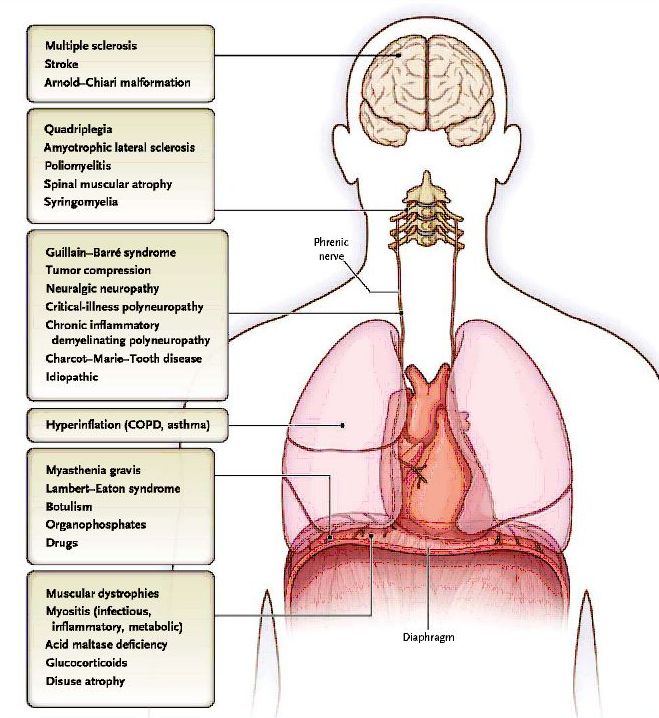
Contraindications to brachial plexus block include
severe lung disease
previous surgery
interventions with the potential for phrenic nerve injury that could result in bilateral paralysis of the diaphragm
severe lung disease
previous surgery
interventions with the potential for phrenic nerve injury that could result in bilateral paralysis of the diaphragm
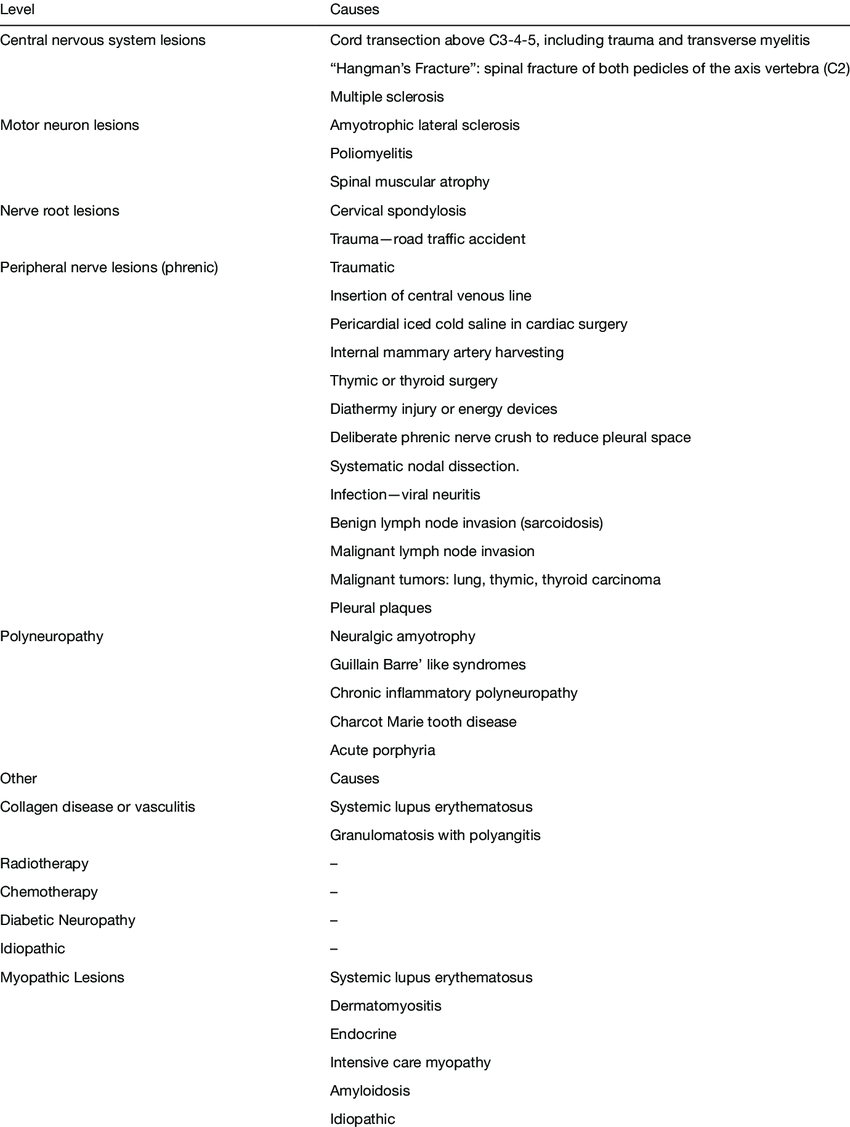
Phrenic nerve palsy
Loading suggestions...