

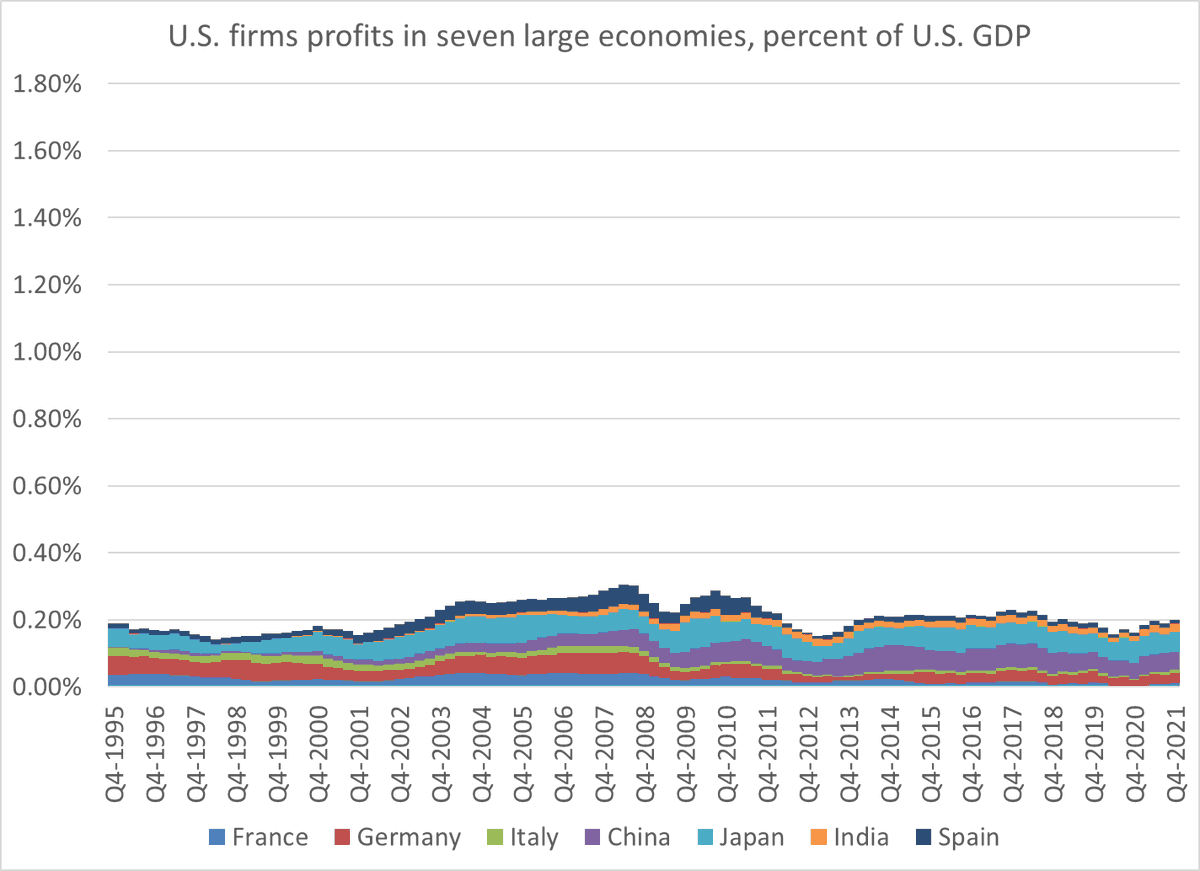
I am a little worried that the United States' big global companies have lost interest in globalization, and started to deglobalize prematurely. Their profits in seven of the world's largest economies have not really increased since 2007 ...
(just kidding-- a thread, on tax)
(just kidding-- a thread, on tax)
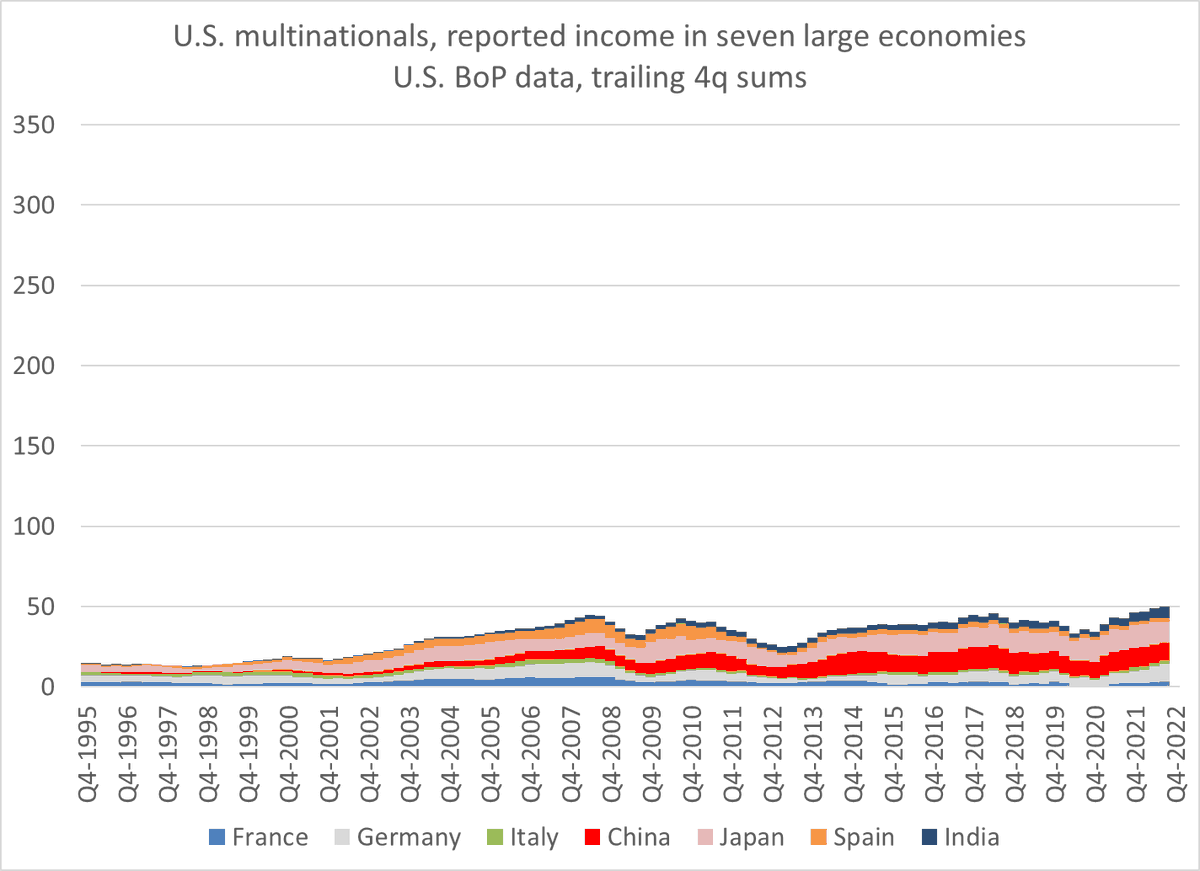
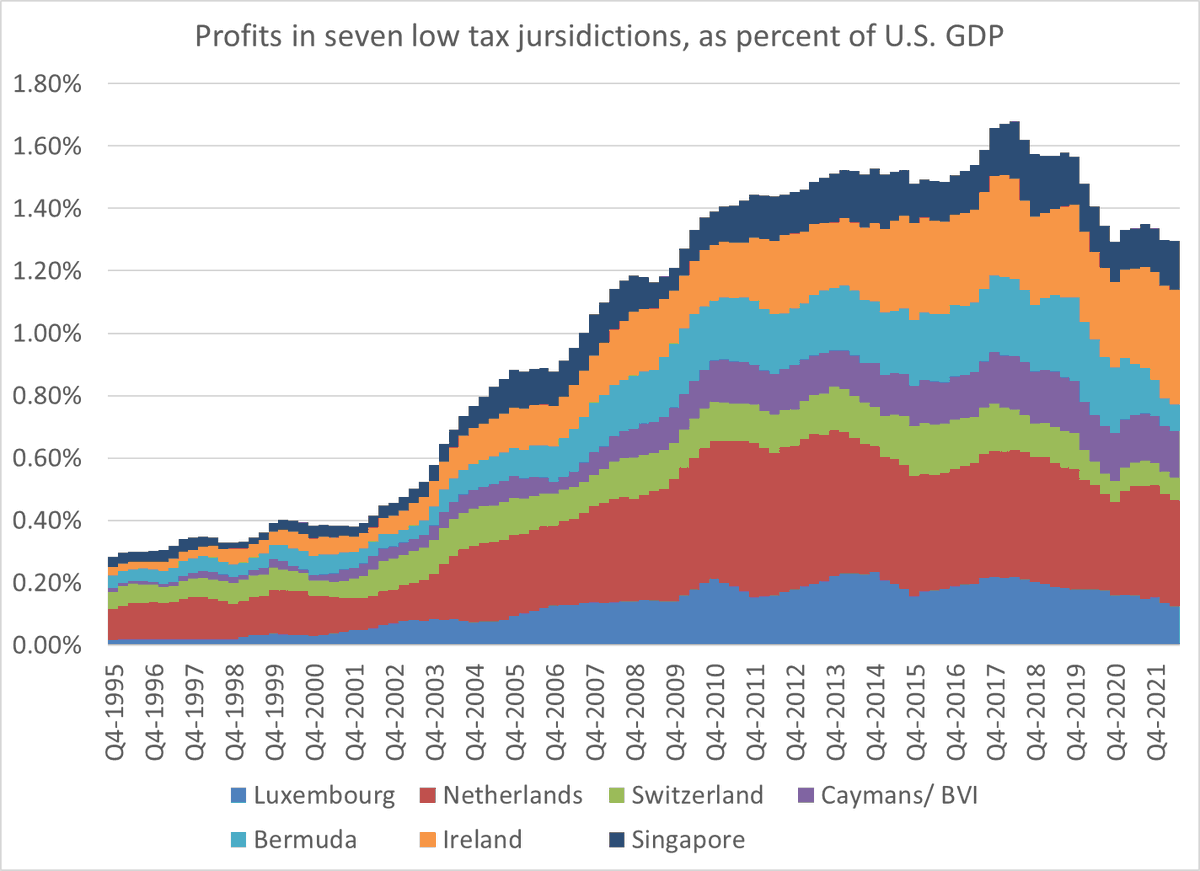
The reason why the reported profits of US companies in the world's big economies are so low is, of course, (legal) tax avoidance. Here are the reported profits of the same companies in seven low tax jurisdictions (one might say centers of corporate tax avoidance)
2/
2/
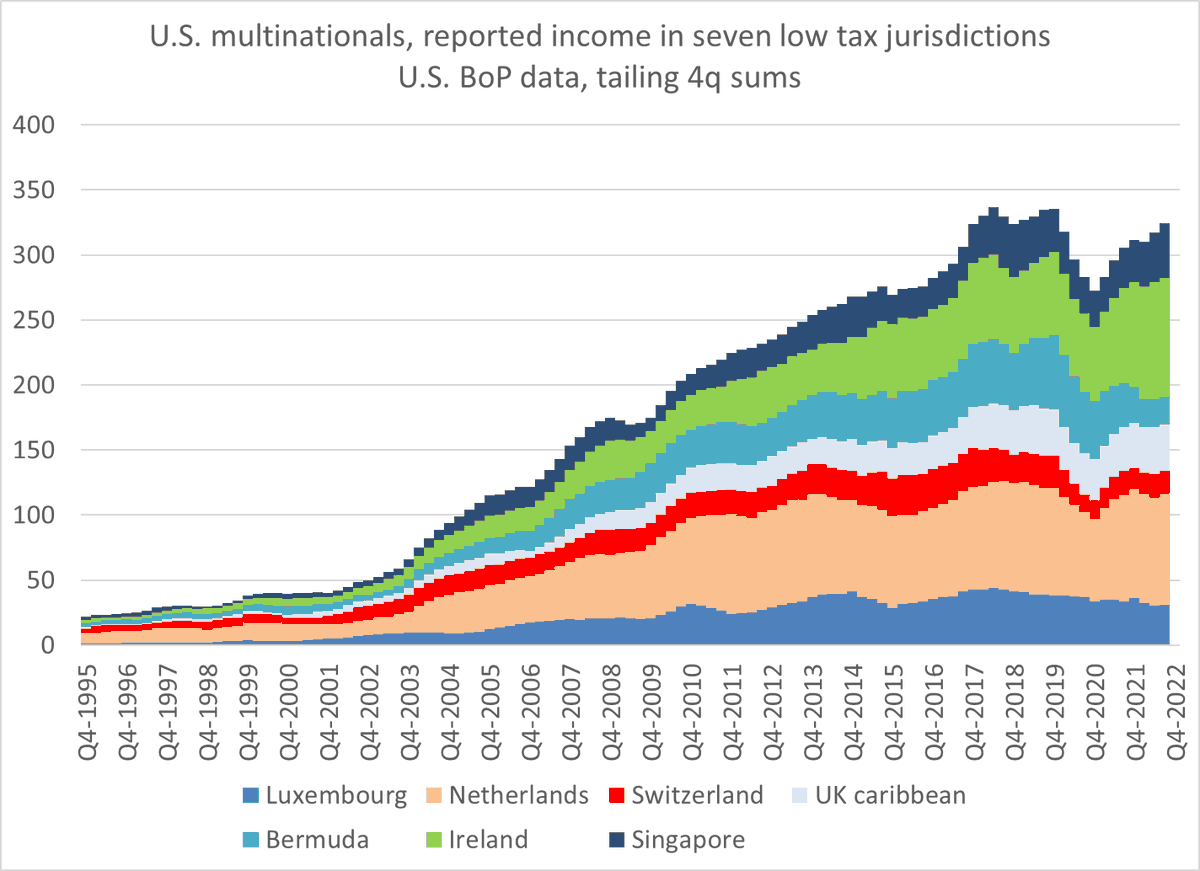
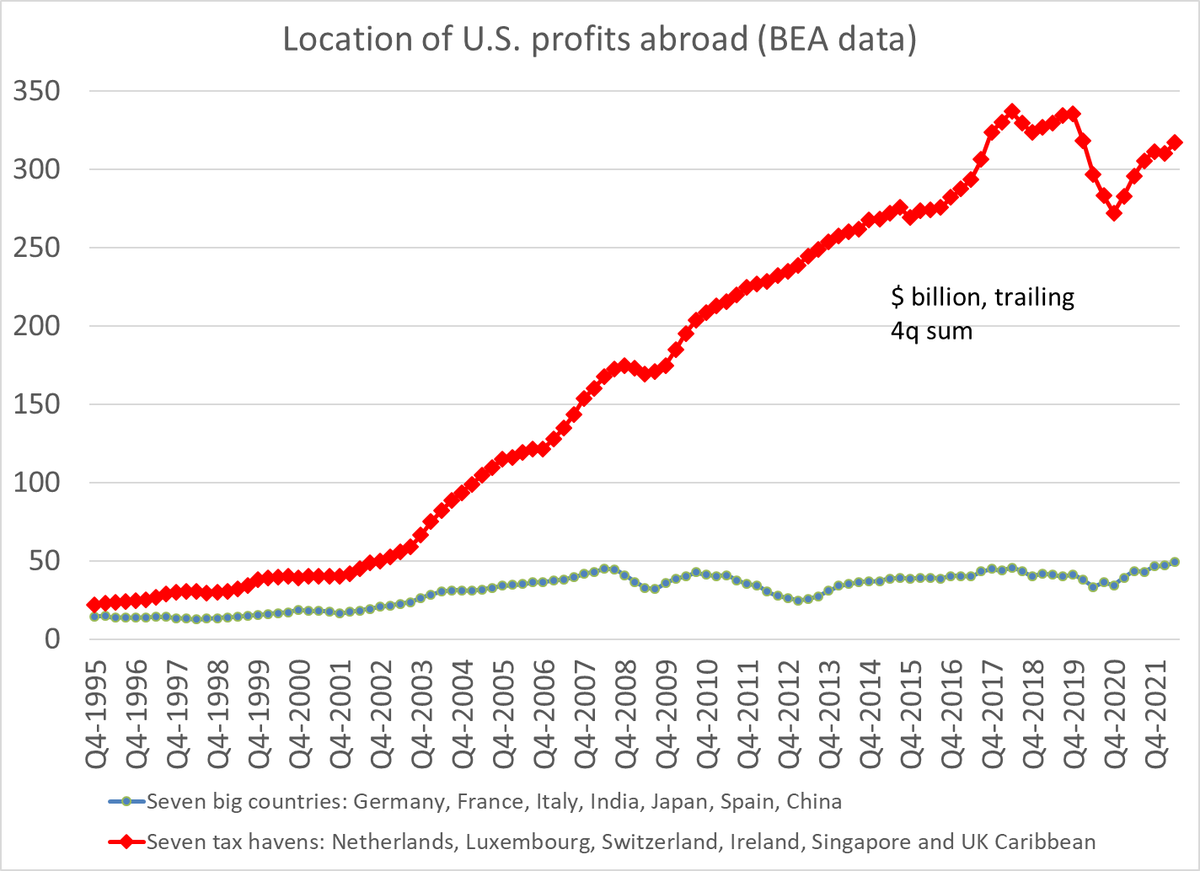
the numbers are pretty stark --
$50b in profits the world's really big and important economies (0.2 pp of US GDP) v $300-350b (well over a pp of US GDP) in the tax havens.
3/
$50b in profits the world's really big and important economies (0.2 pp of US GDP) v $300-350b (well over a pp of US GDP) in the tax havens.
3/
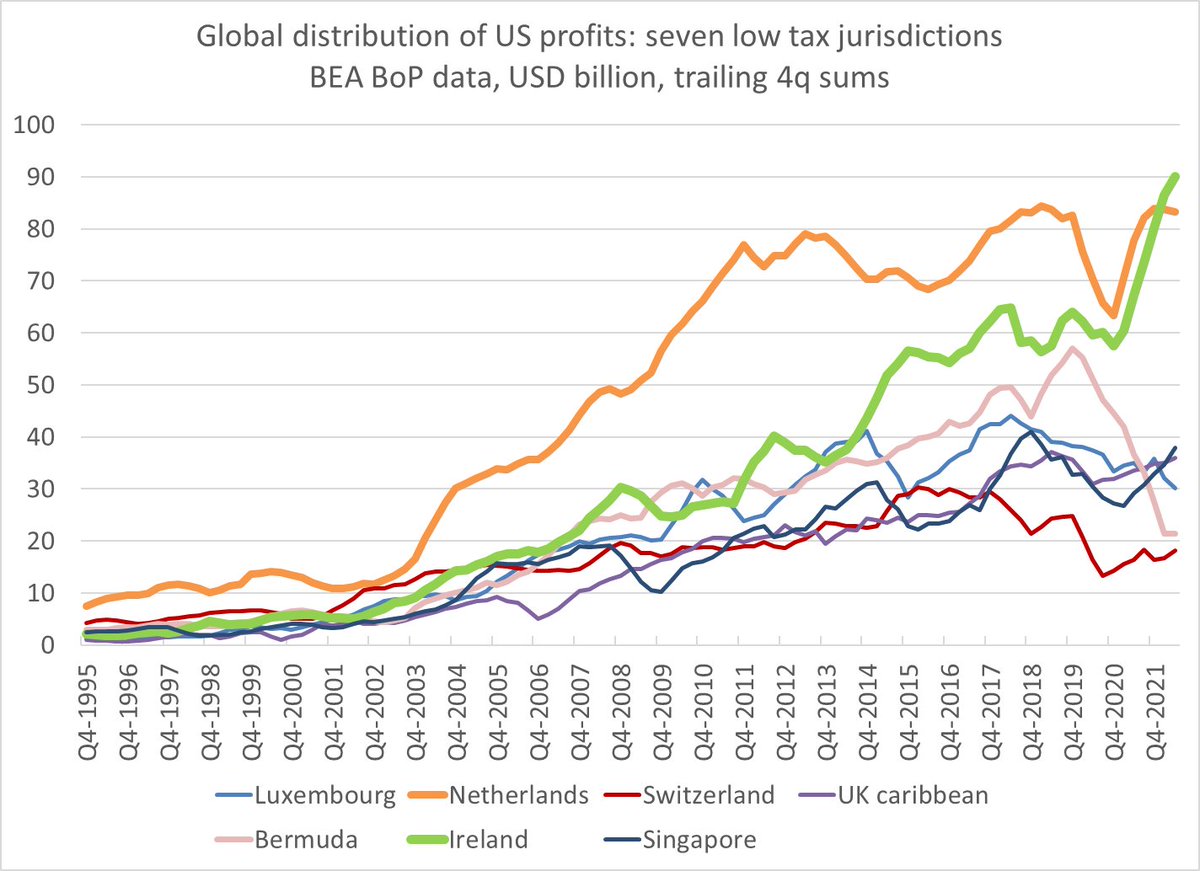
The big international tax reforms of the last 10 years -- BEPS, the end of permanent deferral in the US with the Tax Cuts and (Irish) Jobs Act, and the like haven't had a big aggregate impact.
Irish profits are way up, Bermuda profits are down -- but that's about it.
4/
Irish profits are way up, Bermuda profits are down -- but that's about it.
4/
As a share of GDP profits in the main centers of corporate tax avoidance are down a bit --
Which makes sense.
The TCJA's special low tax rate on "foreign derived intangible income" was intended to encourage firms to export IP from the US rather than book profits abroad.
5/
Which makes sense.
The TCJA's special low tax rate on "foreign derived intangible income" was intended to encourage firms to export IP from the US rather than book profits abroad.
5/
And we know (from data in their 10-Ks) that Google, Qualcomm and Facebook have repatriated IP rights previously held in the Caribbean or Singapore, and thus reduced their offshore profits.
But the aggregate effect has been modest ...
But the aggregate effect has been modest ...
The 10-Ks for a lot of big firms (Apple, Microsoft, most of big Pharma, the chip design houses, the chip equipment manufacturers) suggest that they continue to book a large share of their profits offshore ...
which maps to the BoP data.
7/
which maps to the BoP data.
7/
The "accountants" argued that profits booked in the Netherlands in particular aren't necessarily a sign of tax avoidance, as many firms have Dutch holdcos that aggregate profits earned all around the world (Pfizer for example has this structure) ...
8/
8/
But there isn't actually evidence that these holdcos are aggregating profits from high tax jurisdictions (France, Germany and the like). Rather the 10-Ks indicate they often aggregate income from other low tax jurisdiction ... (Pfizer is an example)
9/
9/
I have looked at the 10-Ks of a lot of US firms -- and they suggest that the jurisdictions whose tax rates matter are places like Ireland and Singapore (and Puerto Rico), not France of Germany ...
10/
10/
With the exception of Coca-Cola (which pays roughly the US tax rate on its foreign income), I couldn't find a big company that was clearly aggregating income from high tax jurisdictions in its Dutch holdco (or a similar structure).
But perhaps I missed something!
11/11
But perhaps I missed something!
11/11
Loading suggestions...