

⚠️ Trigger warning ⚠️
⚠️ Trigger warning ⚠️
⚠️ Trigger warning ⚠️
This is a case of 47 year old, M who was brought dead to casualty with sudden onset chest pain and breathlessness.
The deceased was a known case of hypertension with on and off medication since last 5 years.
⚠️ Trigger warning ⚠️
⚠️ Trigger warning ⚠️
This is a case of 47 year old, M who was brought dead to casualty with sudden onset chest pain and breathlessness.
The deceased was a known case of hypertension with on and off medication since last 5 years.
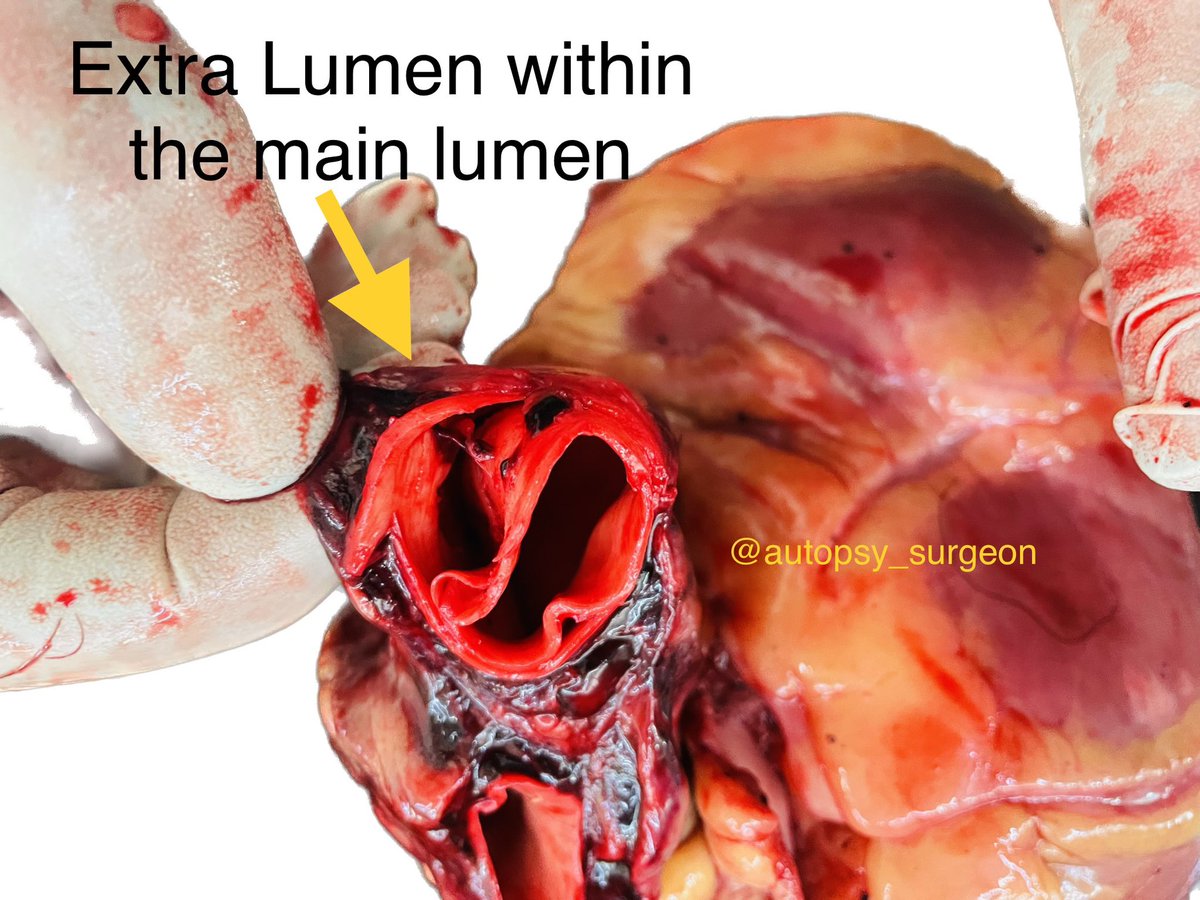
On autopsy, upon opening pericardial cavity there was e/o blood clot in pericardium. On further exploration, there was e/o rupture of ascending aorta with aortic dissection. Final opinion regarding cause of death was given as cardiac tamponade due to rupture of aortic dissection.
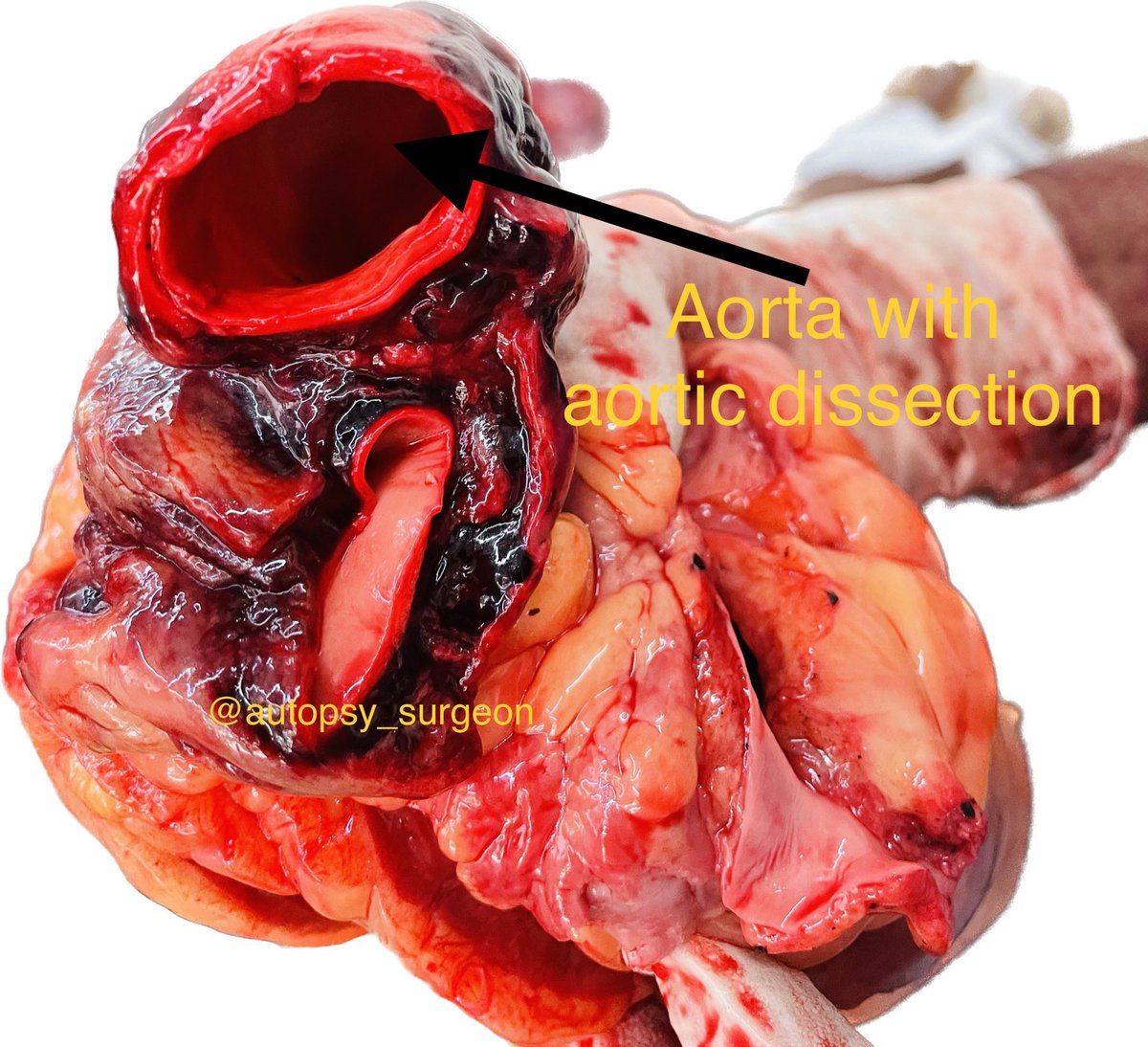
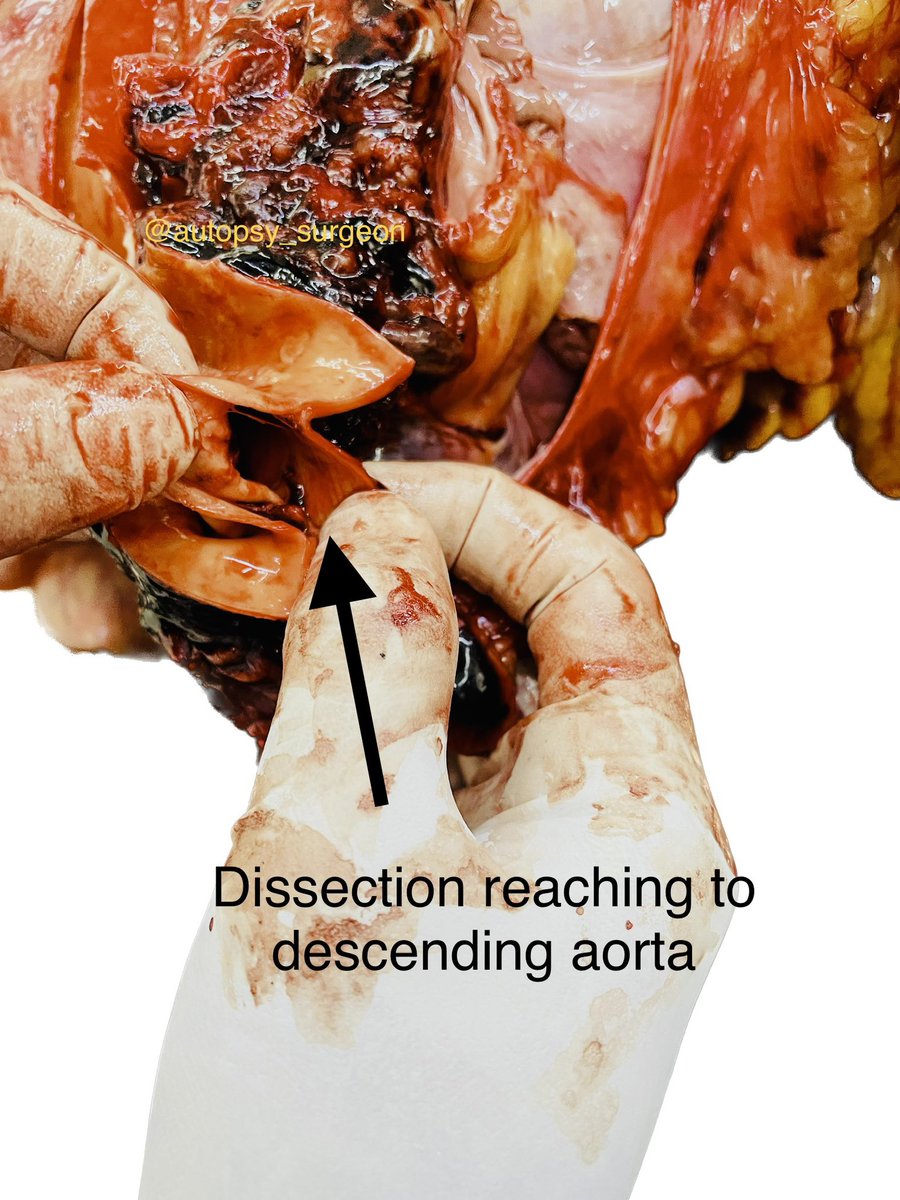
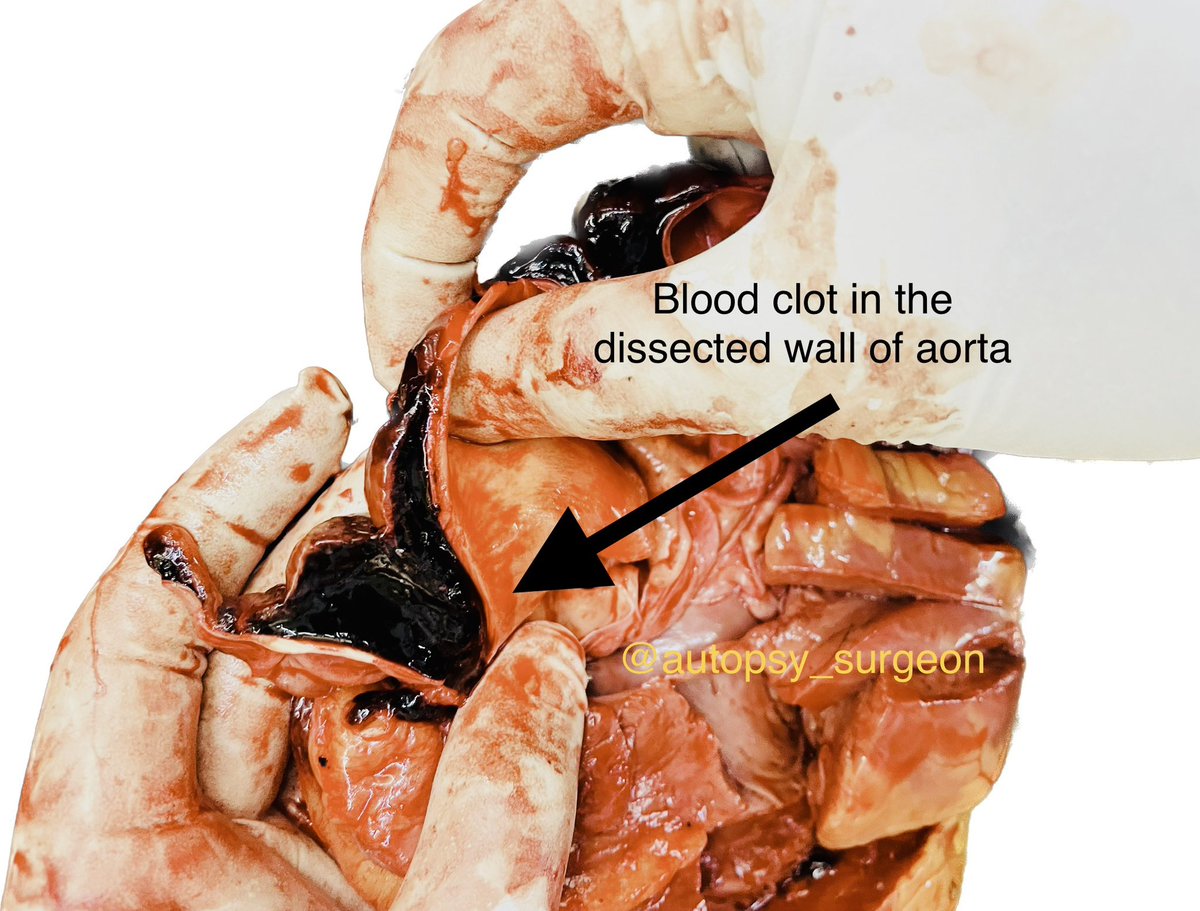
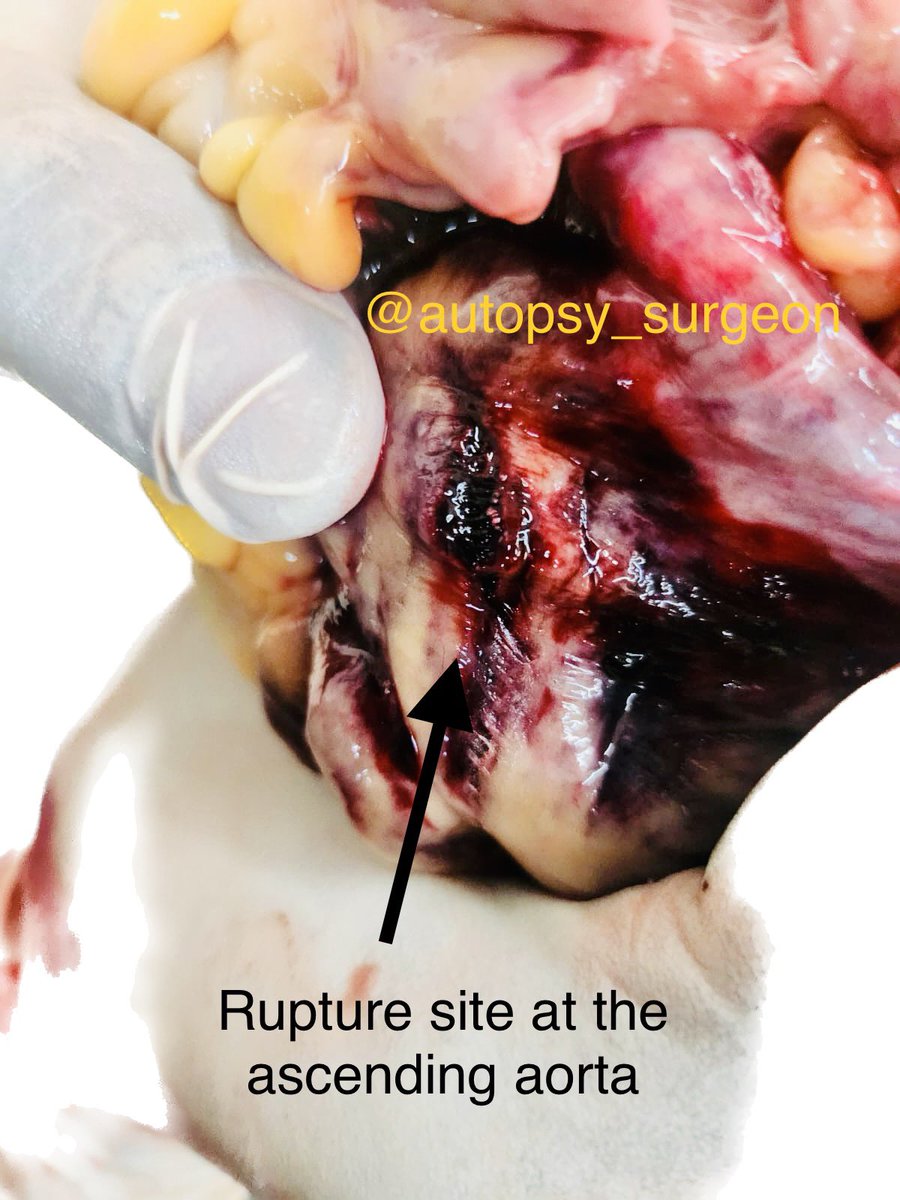
Aortic dissection is a medical condition that occurs when there is a tear in the inner lining of the aorta, the main artery that carries oxygen-rich blood from the heart to the rest of the body.
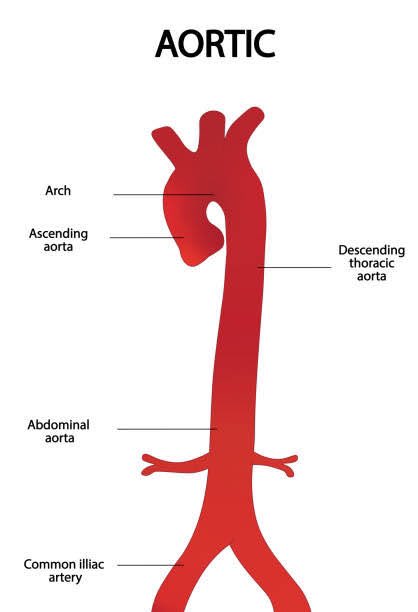
This tear can cause blood to flow between the layers of the aortic wall, creating a false channel or lumen. This can lead to a separation of the layers of the aortic wall, compromising the structural integrity of the artery.
Aortic dissection can be a life-threatening medical emergency, and requires prompt diagnosis and treatment. Symptoms may include sudden and severe chest pain that may radiate to the back, shortness of breath, sweating, rapid pulse, and a sense of impending doom.
Aortic dissection can also cause complications such as aneurysm, heart failure, stroke, and damage to other organs such as the kidneys. There are two main types of aortic dissection: Type A and Type B. The classification is based on the location of the tear in the aorta.
1. Type A aortic dissection: This type of aortic dissection involves the ascending aorta, which is the portion of the aorta that begins at the heart and extends upward. Type A aortic dissection is a medical emergency and requires immediate surgical intervention.
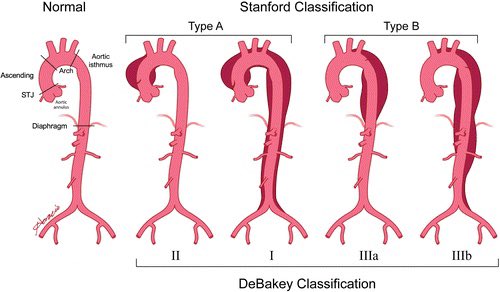
2. Type B aortic dissection: This type of aortic dissection involves the descending aorta, which is the portion of the aorta that extends from the level of the left subclavian artery to the diaphragm. Type B aortic dissection may be managed medically.

The risk factors for aortic dissection include high blood pressure, aortic aneurysm, genetic disorders that affect the connective tissue such as Marfan syndrome, and a history of aortic valve surgery.
Treatment typically involves urgent surgery to repair the tear in the aortic wall, and may also include medication to lower blood pressure and control pain.
Preventative measures for aortic dissection include controlling blood pressure, avoiding tobacco use, and maintaining a healthy weight. Regular check-ups are important for identifying any potential risk factors and for early detection of any changes in the aorta. #medtwitter



Loading suggestions...