

random discretionary trading "alpha"
aka, something you can use as a framework to think about what a market is doing, when it might change and why you could potentially make money off of it:
Fair value (a thread)
aka, something you can use as a framework to think about what a market is doing, when it might change and why you could potentially make money off of it:
Fair value (a thread)
this is a chart, on a timeframe, of a thing. It doesn't actually matter for the sake of our discussion what the timeframe or thing actually is.
All that matters is understanding what it is doing, and figuring out how that knowledge might help us make money in the future.
All that matters is understanding what it is doing, and figuring out how that knowledge might help us make money in the future.

Clearly, this thing is ranging. This means it is not moving up or down on net, it is bouncing around a particular area.
Why would it do that?
I don't give a shit, who cares.
All that matters is that this asset currently likes trading around a certain price area.
Why would it do that?
I don't give a shit, who cares.
All that matters is that this asset currently likes trading around a certain price area.
we can put a thing on this chart called a volume profile.
This volume profile shows the amount of volume this asset has traded at each level within the time period we select.
It also shows the price at which the *most* volume has been traded during that time period.
This volume profile shows the amount of volume this asset has traded at each level within the time period we select.
It also shows the price at which the *most* volume has been traded during that time period.
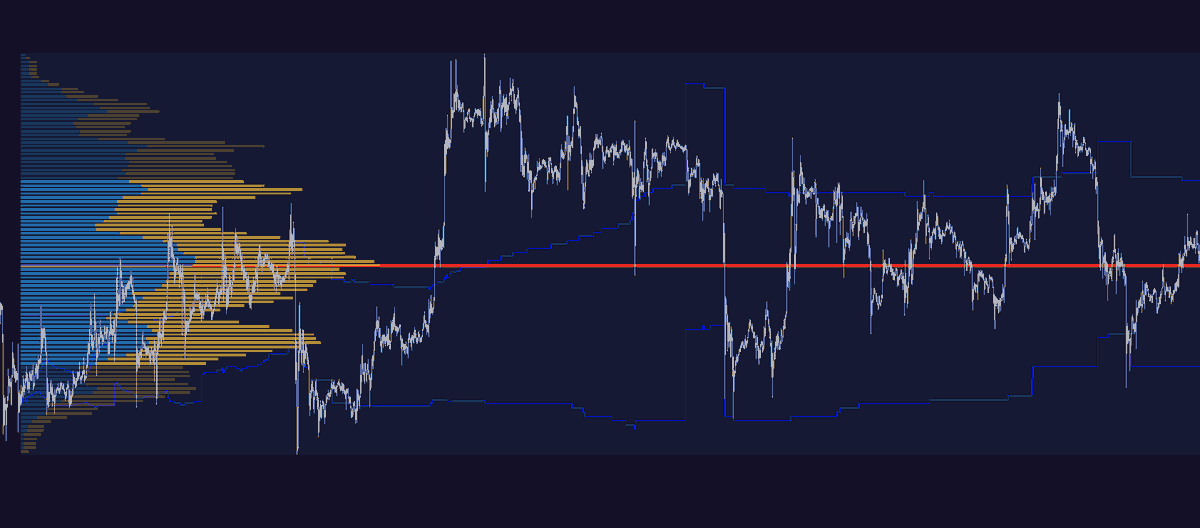
That price (denoted by a red line here) is called the point of control, or POC
Now think about it
if an asset is trading within a specific price range
and we can see the price level at which the most volume is traded in that range
it stands to reason...
Now think about it
if an asset is trading within a specific price range
and we can see the price level at which the most volume is traded in that range
it stands to reason...
...that the highest-volume area on the chart is most likely the price at which the highest number of participants agree that this thing is fairly valued
fair value of an asset is where the largest number of people agree to trade it, whether they are buying or selling
fair value of an asset is where the largest number of people agree to trade it, whether they are buying or selling
If the price goes above that fair value (the POC), sellers are getting a good deal.
They can sell rich (above the fair value) and will drive the price down
Buyers are getting a good deal anywhere below the fair value line
so who decides where that fair value is to begin with?
They can sell rich (above the fair value) and will drive the price down
Buyers are getting a good deal anywhere below the fair value line
so who decides where that fair value is to begin with?
Unsurprisingly, the market itself does.
That fair value point will always be determined by discovering the equilibrium price between buyers and sellers
fair value is always set at the point at which both sides of the market believe they are getting a good price to trade
That fair value point will always be determined by discovering the equilibrium price between buyers and sellers
fair value is always set at the point at which both sides of the market believe they are getting a good price to trade
understanding this gives us an opportunity as discretionary traders
it should already seem obvious, but if we know the fair value for the market is price x
...we should probably sell the asset any time it is trading above price x right?
it should already seem obvious, but if we know the fair value for the market is price x
...we should probably sell the asset any time it is trading above price x right?
conversely, we ought to be buying any time the asset trades below price x
often, we can simply buy and sell the asset back to the fair value price
but if the fair value price is known, why does the asset not just... trade at that price all the time?
often, we can simply buy and sell the asset back to the fair value price
but if the fair value price is known, why does the asset not just... trade at that price all the time?
idk, have you ever tried to get 10 people to agree on something?
what about 100
or a million
or however many of you fucking idiots are out there trading DogeShitPerpCumInuMoon coin
point is, good luck trying to get everyone to always agree on the same price for something
what about 100
or a million
or however many of you fucking idiots are out there trading DogeShitPerpCumInuMoon coin
point is, good luck trying to get everyone to always agree on the same price for something
Fair value is always a giant question mark
in some tradfi market assets, there's actually something close to a definitive mathematical answer for fair value
those assets don't move much and the people trading them are way smarter than me or anyone reading this fucking thread
in some tradfi market assets, there's actually something close to a definitive mathematical answer for fair value
those assets don't move much and the people trading them are way smarter than me or anyone reading this fucking thread
but in the more nebulous markets, fair value is always in flux
which means that buyers and sellers are always trying to push price away from the established fair value price
and we get to tell them they are wrong
which means that buyers and sellers are always trying to push price away from the established fair value price
and we get to tell them they are wrong
...until they aren't.
eventually price stops ranging.
Sometimes bulls get exhausted, price starts barely returning to the established fair value
or fails to rebound to it entirely
eventually, price might fall below the established range
eventually price stops ranging.
Sometimes bulls get exhausted, price starts barely returning to the established fair value
or fails to rebound to it entirely
eventually, price might fall below the established range
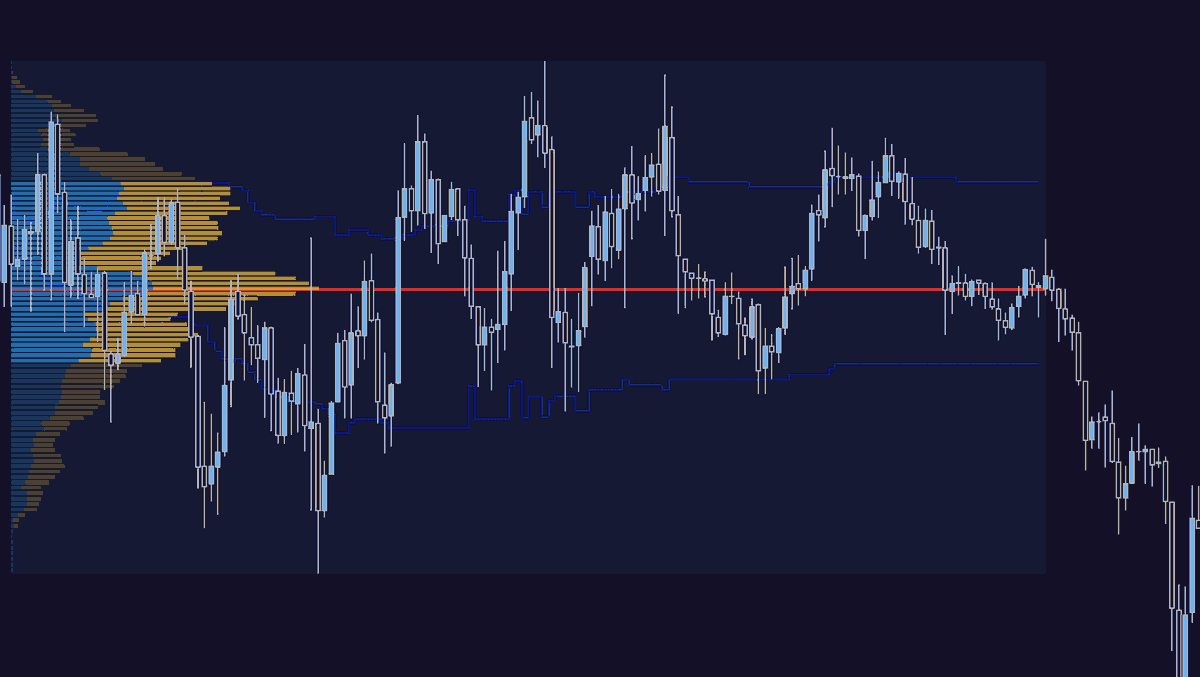
obviously, this means that the previous fair value... isn't any more
there aren't as many people who see price as "cheap", as there are people who see it as "expensive"
why? again, who fucking cares, we're traders not mind readers.
all we need to know is that value has moved
there aren't as many people who see price as "cheap", as there are people who see it as "expensive"
why? again, who fucking cares, we're traders not mind readers.
all we need to know is that value has moved
If we can see that fair value has moved, or is moving, that's useful information
do we know what the new fair value is? Of course not ya dingus, but neither does anybody else.
so we can just trade with the side of the market which seems to be winning at the moment
do we know what the new fair value is? Of course not ya dingus, but neither does anybody else.
so we can just trade with the side of the market which seems to be winning at the moment
Eventually the market will figure its shit out and everyone will get back to agreeing on price (more or less)
and we can get back to telling them when they're bidding above or selling below whatever that new fair value price happens to be
and we can get back to telling them when they're bidding above or selling below whatever that new fair value price happens to be
Now, before I finish off with a few concrete trading tips, it's important to remember a few things
- we aren't predicting jack shit
- we aren't deciding on fair price (and neither is anyone else in particular)
- we make money off people who fight the market
- so don't be one
- we aren't predicting jack shit
- we aren't deciding on fair price (and neither is anyone else in particular)
- we make money off people who fight the market
- so don't be one
Now with all of that said, here's what it looks like in my trading.
those little blue bands are called the value area
they represent the area in which roughly 1 standard deviation of selected volume is happening
those little blue bands are called the value area
they represent the area in which roughly 1 standard deviation of selected volume is happening
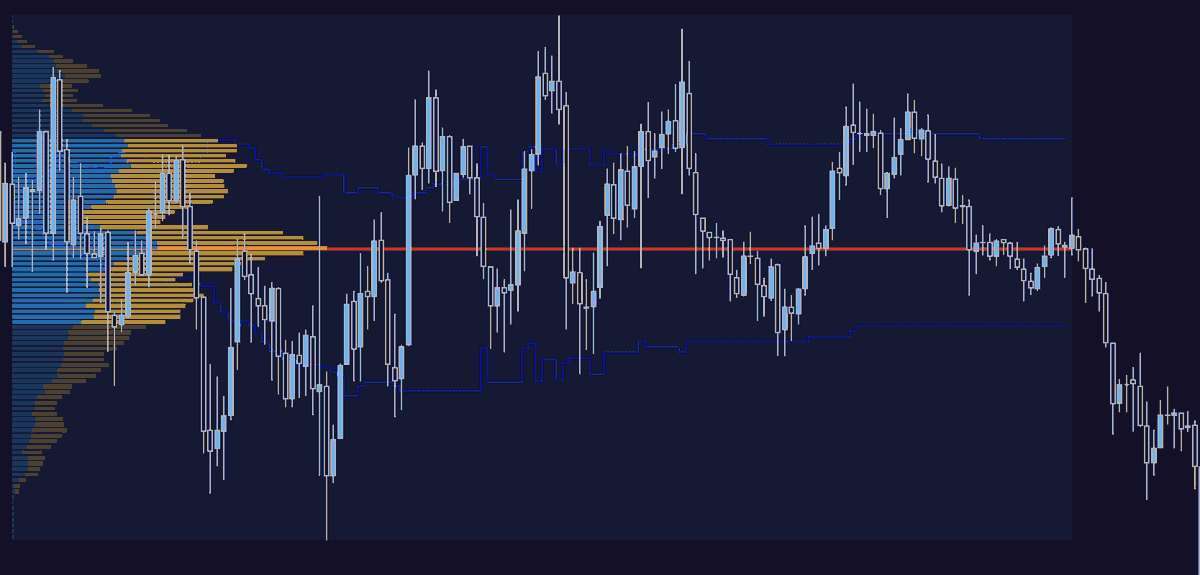
I like to add a second band, representing the second standard deviation
one stdev means that roughly 68% of all volume (assuming a normal distribution) ought to fall within the range
2 stdevs *should* encompass 95% of volume
one stdev means that roughly 68% of all volume (assuming a normal distribution) ought to fall within the range
2 stdevs *should* encompass 95% of volume
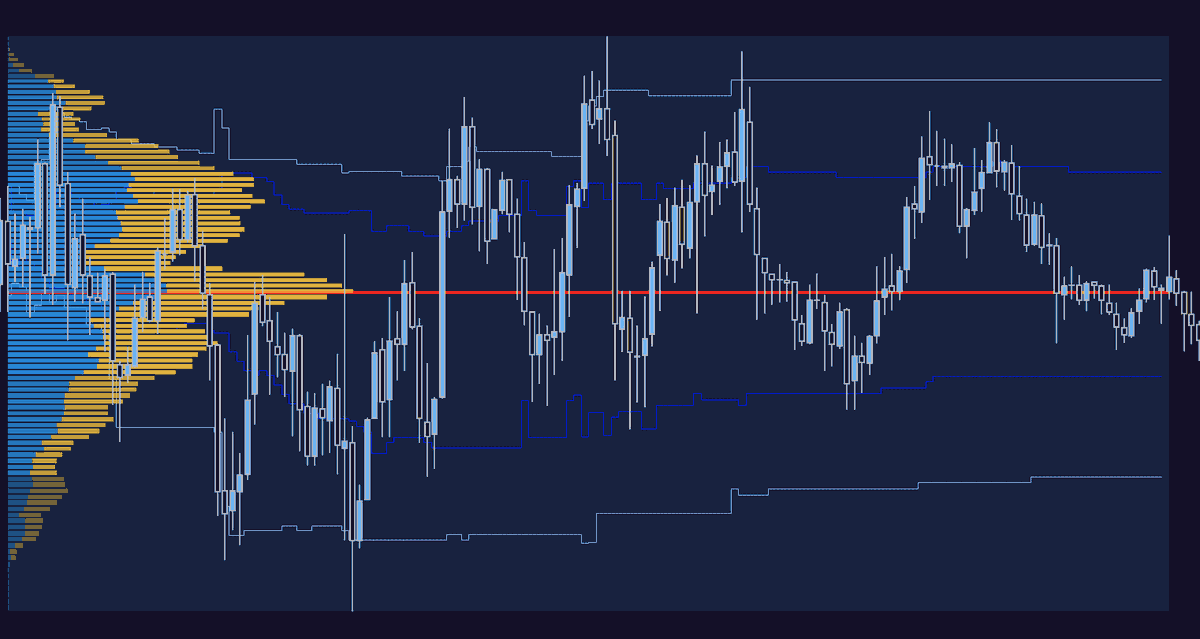
I usually stagger sells between the top two bands and target the POC.
I usually bid between the bottom two bands, same target.
If price moves much outside of them, chances are good that that fair value I'm targeting... probably isn't any more.
I usually bid between the bottom two bands, same target.
If price moves much outside of them, chances are good that that fair value I'm targeting... probably isn't any more.
If we're generally trending up? That fair value is probably gonna shift upward on a regular basis
maybe don't be selling shit
same is true in reverse of a bear trend
maybe don't be selling shit
same is true in reverse of a bear trend
last but not least, you can use a VWMA to approximate the fair value price *on average* over the last (whatever number you pick) candles.
can be useful during trends to see whether the dominant side of the market is staying that way
can be useful during trends to see whether the dominant side of the market is staying that way
anyways, that's the end of the thread
it was long
maybe useful
you can either like and rt or you can just go do something else, I'm not particular
cya nerds
it was long
maybe useful
you can either like and rt or you can just go do something else, I'm not particular
cya nerds
P.S.
while all this is magic line on chart go boing, the concept of fair value and making money by trading reversion to it is a large part of many quantitative strategies as well
thinking of a market in terms of fair value leads to sustainable alpha
prediction is just gambling
while all this is magic line on chart go boing, the concept of fair value and making money by trading reversion to it is a large part of many quantitative strategies as well
thinking of a market in terms of fair value leads to sustainable alpha
prediction is just gambling
@zuqkah (I have to draw it twice, one on each template on top of each other)
Loading suggestions...