

I submitted four single-authored journal articles during my PhD (defended May 2022).
All four were published. Acceptance rate: 100%
Here's how I did it:
All four were published. Acceptance rate: 100%
Here's how I did it:
A bit of background: My field is comparative literature, and I specialize in World Literature and South Asian Literature.
This is important because academic publishing works differently for different fields.
This is important because academic publishing works differently for different fields.
Let me start with my first article since that's the hardest.
Like most grad students, my first article was based on a seminar that I took in Fall 2018.
The seminar was titled "World Literature from a Historical Perspective."
Like most grad students, my first article was based on a seminar that I took in Fall 2018.
The seminar was titled "World Literature from a Historical Perspective."
In Oct '18, I saw the Journal of World Literature's call for papers for a special issue on "World Literature and Postcolonial Studies."
I discussed the call with my supervisor and told her I wanted to write a seminar paper that I could submit to the journal.
I discussed the call with my supervisor and told her I wanted to write a seminar paper that I could submit to the journal.
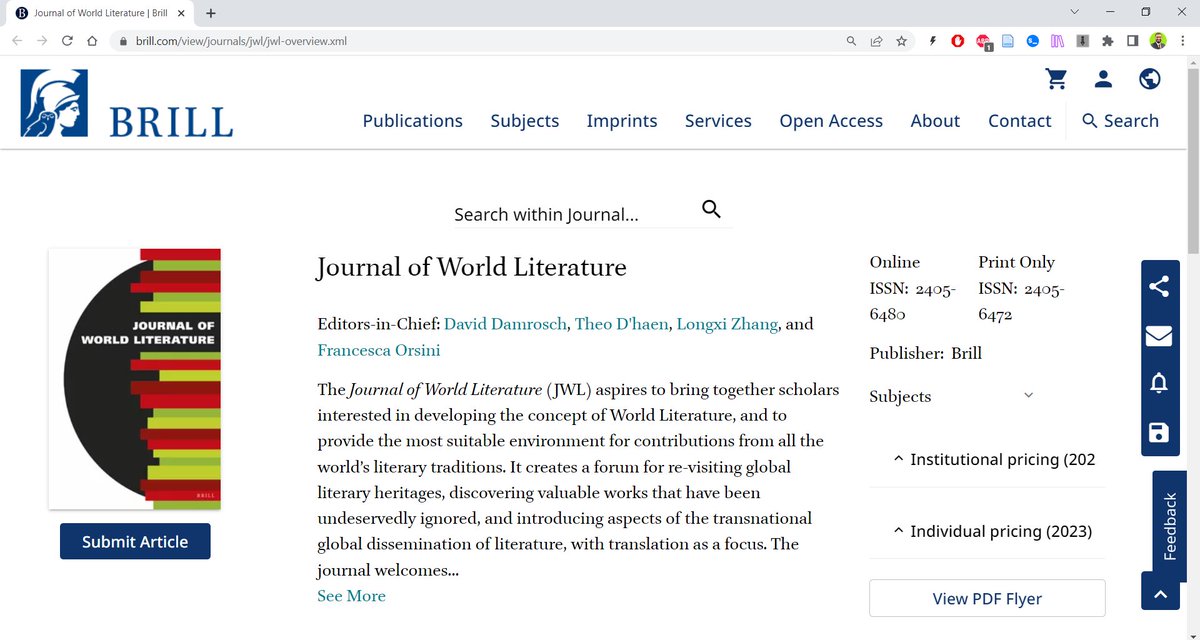
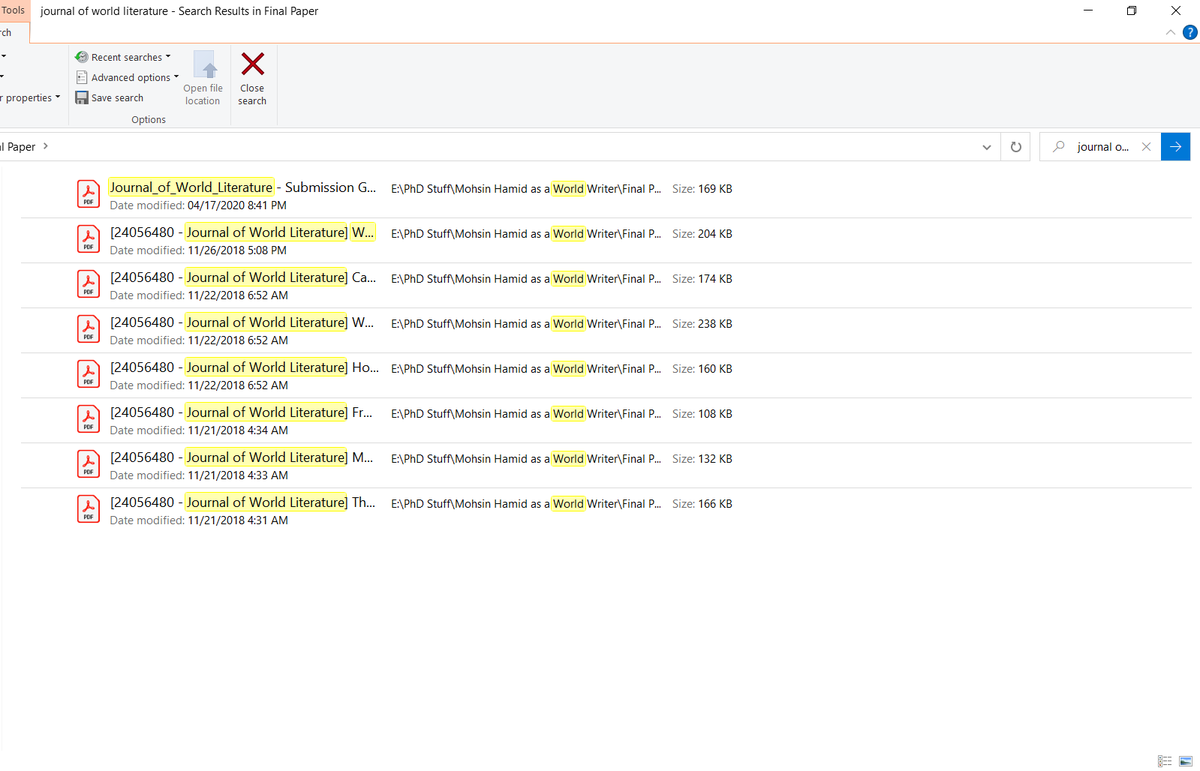
Then I went and downloaded seven articles the Journal of World Literature had recently published.
I closely read them and took extensive notes.
If you want to read about my note-taking method, here's a thread on that:
I closely read them and took extensive notes.
If you want to read about my note-taking method, here's a thread on that:
Reading these articles closely did two things for me:
1. I learned about the kind of scholarship that the journal published
2. I became familiar with the current debates going on in the field
1. I learned about the kind of scholarship that the journal published
2. I became familiar with the current debates going on in the field
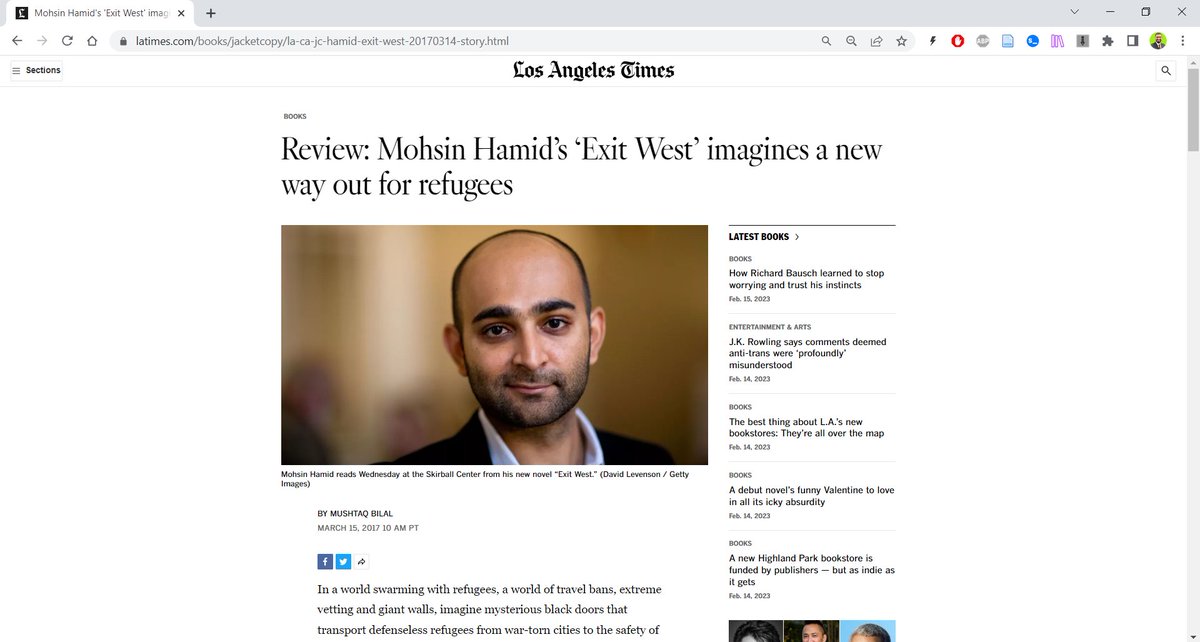
I selected a novel that I had already read: Mohsin Hamid's (Exit West).
I had reviewed the novel for LA Times when it came out in 2017.
I had reviewed the novel for LA Times when it came out in 2017.
I prepared a short proposal (two paragraphs) and emailed it to one of the journal's editors.
Because I had read several articles from the journal I knew what the editors were looking for.
The editor liked the proposal and asked me to submit my paper by Dec '18.
Because I had read several articles from the journal I knew what the editors were looking for.
The editor liked the proposal and asked me to submit my paper by Dec '18.
A lot of folks first write a generic kind of article, which they then submit to several journals.
I don't think this is a smart way of doing things.
The smart thing is to pick a journal, read it thoroughly, and then write an article specifically for that journal.
I don't think this is a smart way of doing things.
The smart thing is to pick a journal, read it thoroughly, and then write an article specifically for that journal.
I prepared a first draft of the article and requested my professor and a colleague to give me some tough-love feedback.
I revised the article in light of the feedback and submitted.
I revised the article in light of the feedback and submitted.
The editor liked my article but said that I could make my argument sharper.
He sent me two single-spaced pages of his critical comments.
I revised my article and resubmitted it.
He sent me two single-spaced pages of his critical comments.
I revised my article and resubmitted it.
How to read critical evaluation of your work and incorporate feedback requires training and patience.
I could do a separate thread on it if there are enough people interested in reading it.
I could do a separate thread on it if there are enough people interested in reading it.
My revised draft was sent out for peer review, which I received a few months later.
The reviewers were both generous and exacting.
The liked my argument but also asked me to make major structural changes to the paper.
The reviewers were both generous and exacting.
The liked my argument but also asked me to make major structural changes to the paper.
This meant I had to rewrite the more than half the paper again.
I did that and submitted the revised draft, which got published.
First Draft: Dec 2018
Published: June 2020
Total number of drafts: 4
I did that and submitted the revised draft, which got published.
First Draft: Dec 2018
Published: June 2020
Total number of drafts: 4
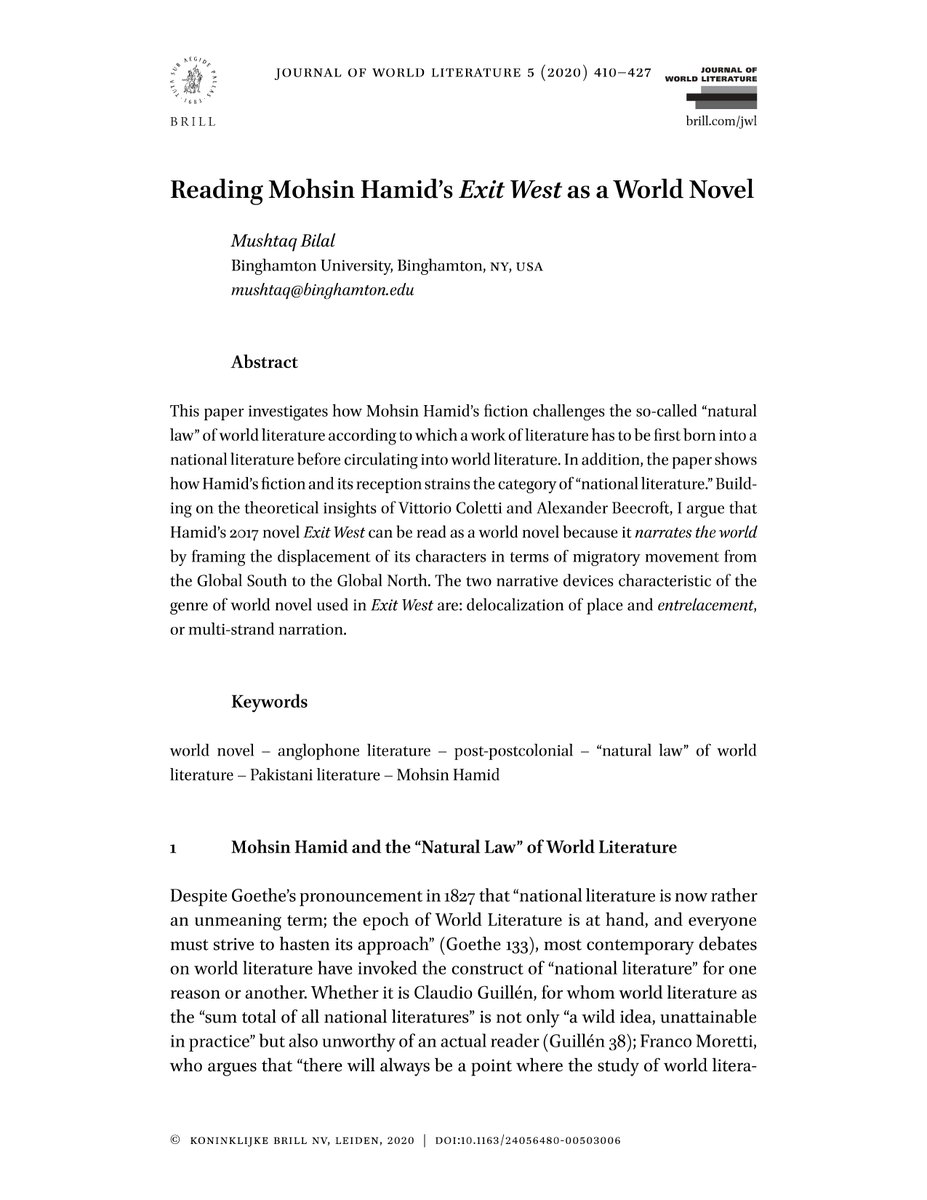
I submitted this article as a writing sample when I applied for a postdoc at the University of Southern Denmark (SDU).
I make an original argument in the paper about how literature circulates in the world.
I make an original argument in the paper about how literature circulates in the world.
Scholars at SDU found my argument so interesting that they are now using my work to look at how Hans Christian Andersen's stories circulate in world literature.
After my first article came out, things became a lot easier.
A colleague in France was putting together a special issue on Pakistani literature and he invited me to contribute an article.
A colleague in France was putting together a special issue on Pakistani literature and he invited me to contribute an article.
I took another seminar paper I had written, revised it thoroughly and submitted it.
The review report I received was quite flattering.
The review report I received was quite flattering.
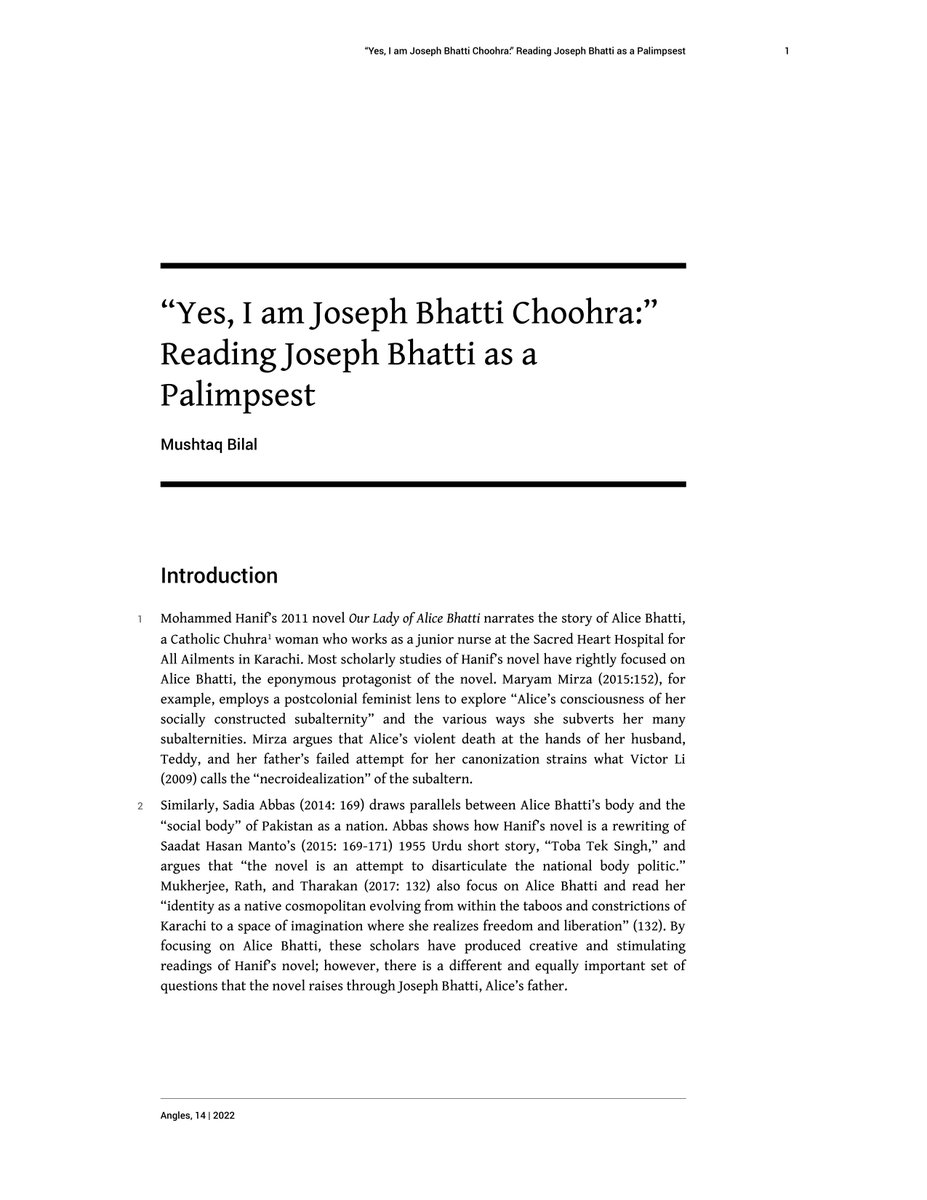
My third journal article grew out of a newspaper article I had written for Dawn.
The editor who had published my first article in the Journal of World Literature organized a seminar during the annual conference of the American Comparative Literature Association.
The editor who had published my first article in the Journal of World Literature organized a seminar during the annual conference of the American Comparative Literature Association.
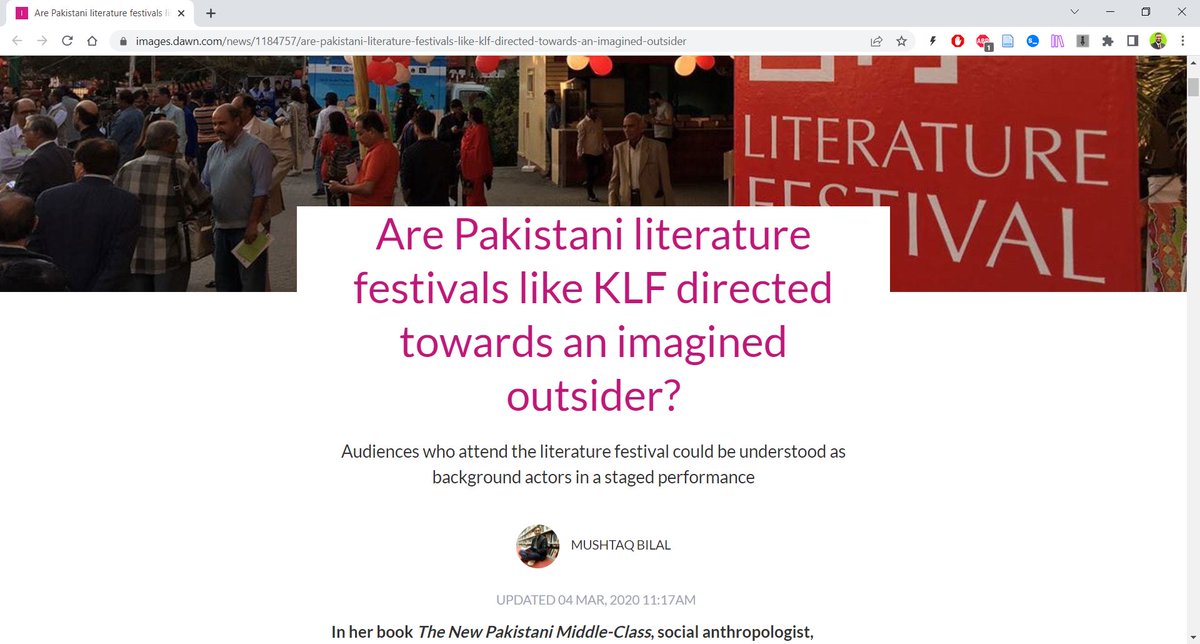
I submitted the newspaper article as a conference paper.
After the conference, the editor invited all presenters to convert their papers into journal articles.
I did that and submitted an 8,000 words article.
Newspaper article > Conference Paper > Journal Article
After the conference, the editor invited all presenters to convert their papers into journal articles.
I did that and submitted an 8,000 words article.
Newspaper article > Conference Paper > Journal Article
This is the first, and perhaps the only, article of its kind on Pakistani literature festivals.
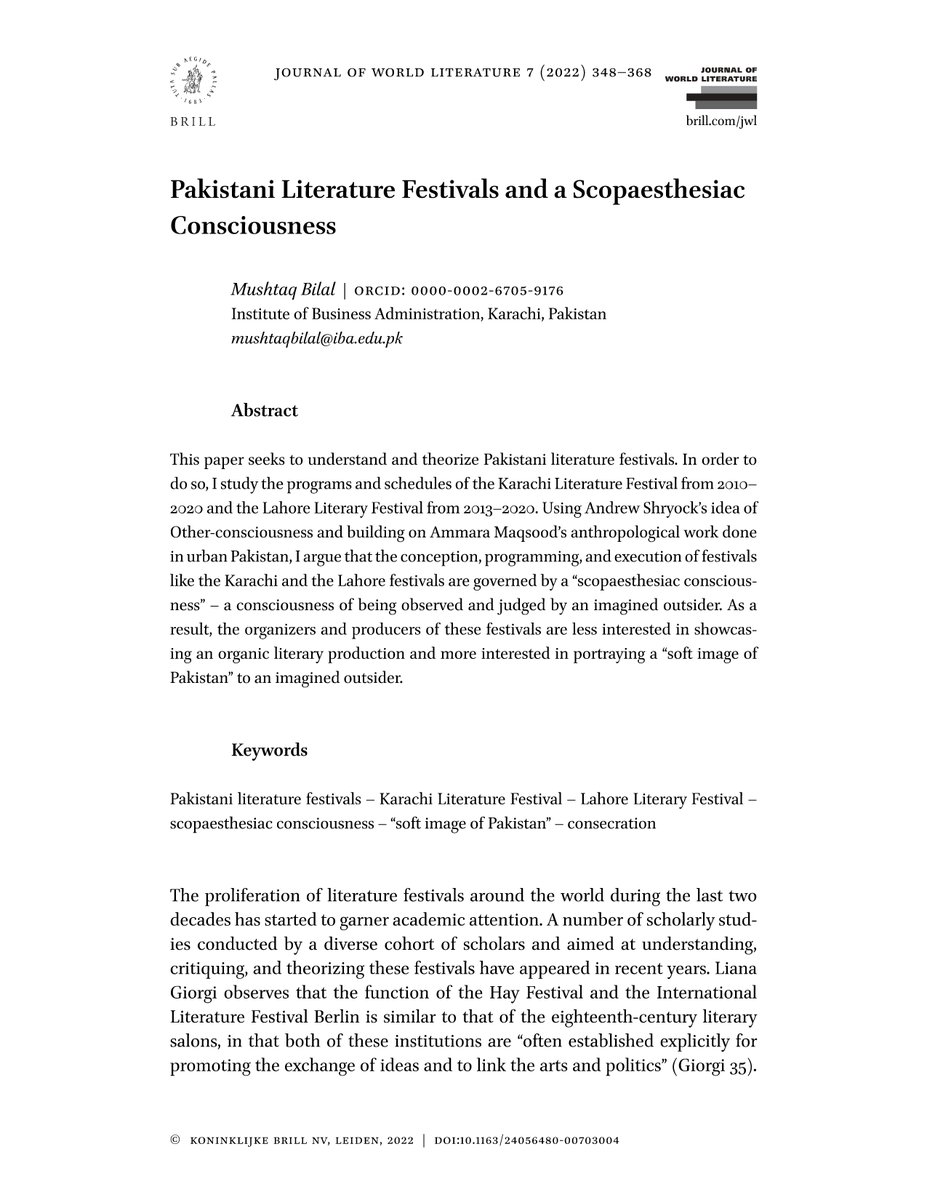
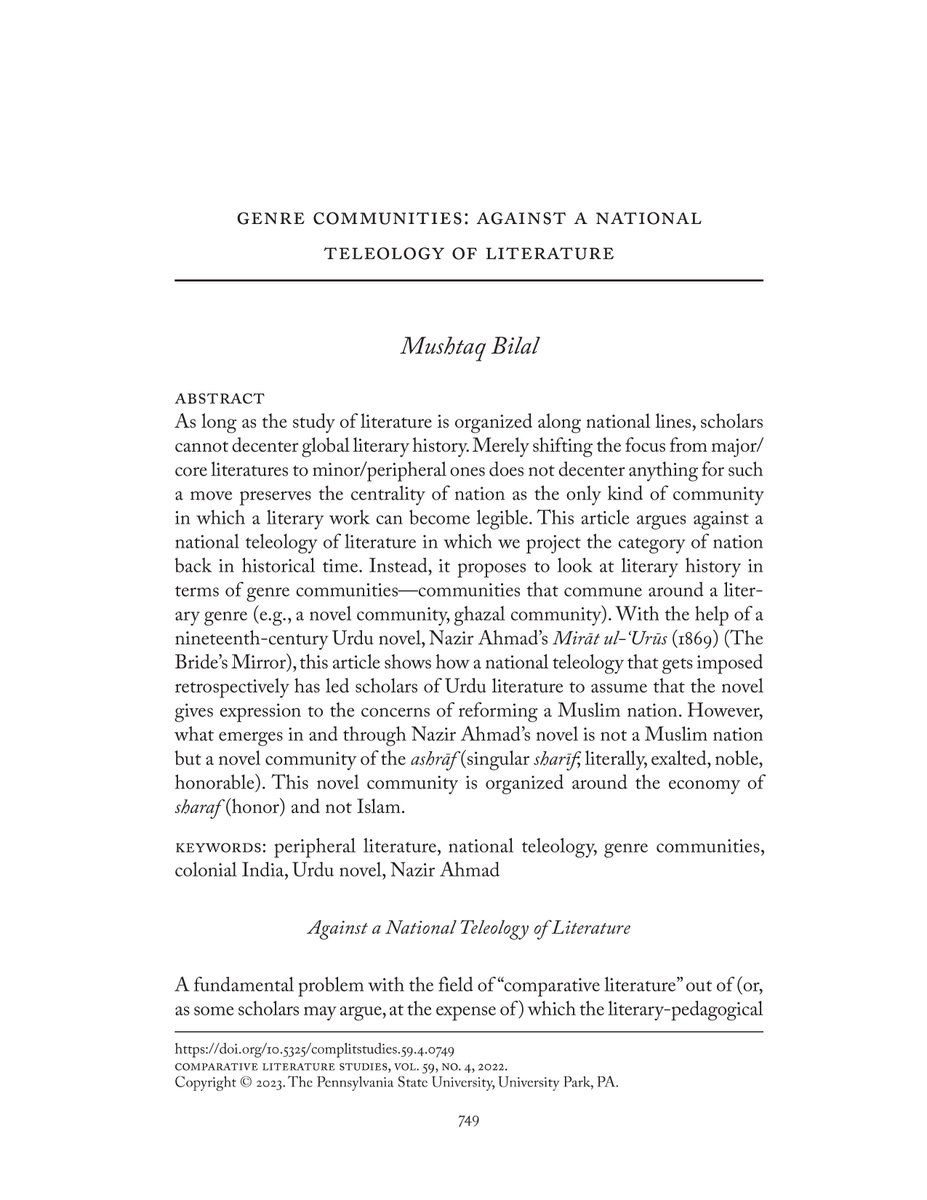
My fourth article grew out of my dissertation and I wrote it in only two weeks.
It's for a special issue of the "Comparative Literature Studies" journal, which is one of the two flagships journals of the American Comparative Literature Association.
It's for a special issue of the "Comparative Literature Studies" journal, which is one of the two flagships journals of the American Comparative Literature Association.
This is my most theoretically ambitious article yet.
Because of it ambition, it received really detailed feedback from reviewers.
But all the feedback was useful.
One reviewer said the article was so interesting they "couldn't put it down."
Because of it ambition, it received really detailed feedback from reviewers.
But all the feedback was useful.
One reviewer said the article was so interesting they "couldn't put it down."
If you are planning on publishing journal articles, here's my advice:
1. Start small: write for a student magazine, newspapers, or your blog.
Hone your writing skills by doing multiple drafts of the same piece.
There is no shortcut to practice.
1. Start small: write for a student magazine, newspapers, or your blog.
Hone your writing skills by doing multiple drafts of the same piece.
There is no shortcut to practice.
2. Read, read, read, and then read some more. Learn to read actively.
Pay attention to how an argument gets constructed in and through prose.
Take notes and discuss them with your colleagues/professors.
Here's a thread on how to read actively:
Pay attention to how an argument gets constructed in and through prose.
Take notes and discuss them with your colleagues/professors.
Here's a thread on how to read actively:
3. Build a supportive writing community around yourself.
Become critique partners with someone and learn to:
• Critique other people's work
• Respond to critiques of your work
Become critique partners with someone and learn to:
• Critique other people's work
• Respond to critiques of your work
4. Remember that critique of your work is not a criticism of you as a person.
Don't get defensive when someone (constructively) critiques your argument.
Don't get defensive when someone (constructively) critiques your argument.
5. Academic publishing has more to do with patience and perseverance than smartness or intelligence.
Publishing an article usually takes months and sometimes years.
Learn to be patient.
Publishing an article usually takes months and sometimes years.
Learn to be patient.
Found this thread helpful?
1. Scroll to the top and hit the "Like" button on the first tweet.
2. Follow me @MushtaqBilalPhD for regular threads on academic writing.
1. Scroll to the top and hit the "Like" button on the first tweet.
2. Follow me @MushtaqBilalPhD for regular threads on academic writing.
Want to receive more tips like this in your email?
Sign up below for my newsletter. It's FREE!
keepwriting.beehiiv.com
Sign up below for my newsletter. It's FREE!
keepwriting.beehiiv.com
Loading suggestions...