

Despite European, North American and Japanese companies exiting Russia over its actions in Ukraine, the impact on Russian consumers is minimal, although delivery times can be longer and some goods more expensive.
reuters.com
reuters.com
As supply chains broke down, Russia legalized so-called parallel imports, allowing retailers to bring in products from abroad without the trademark owner's permission.
E-commerce sites sell a wide range of imported goods, and sellers often advertise that they bring products from abroad.
In one Moscow supermarket, three cans of Coca-Cola were on sale for three different prices, imported from Denmark, Poland and Britain respectively.
China-Russia trade hit a record 1.28 trillion yuan ($186 billion) last year, while Turkey's exports to Russia jumped 61.8% to $9.34 billion and Kazakhstan's rose 25.1% to $8.78 billion.
High prices for its energy exports helped cushion the blow from sanctions aimed at isolating Russia economically, while capital controls saw the rouble strengthen to a seven-year high.
reuters.com
reuters.com
Rising expenditure and slumping revenues led to a $25 billion budget deficit in January, while the current account surplus more than halved from a year earlier.
Wow...
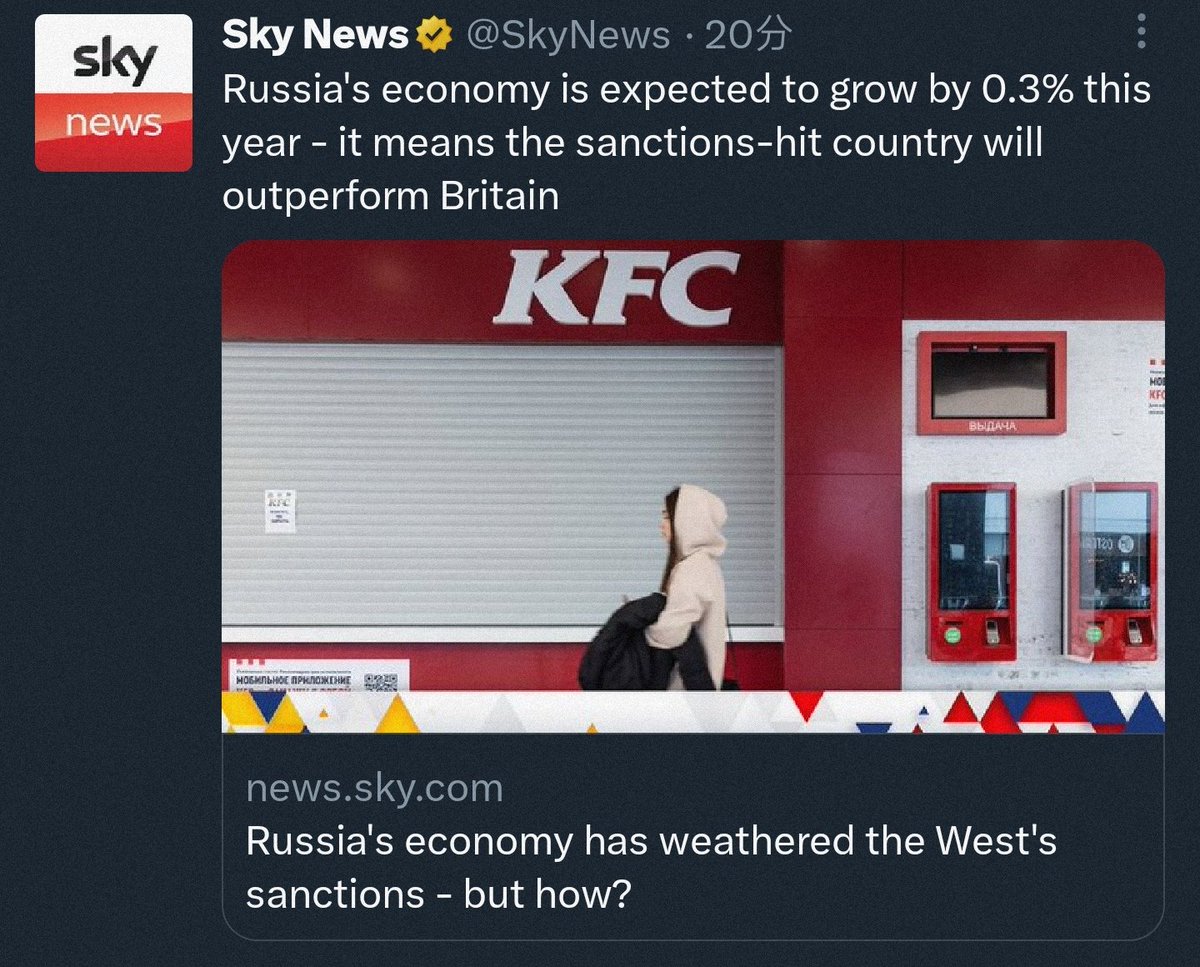
Russia will beat Britain in growth rate in 2023.
Russia will beat Britain in growth rate in 2023.
Now Medvedev is being braggadocious,
“Over half a million – by some estimates as many as a million – Russians have left their country, fleeing conscription, political persecution or hopelessness.”
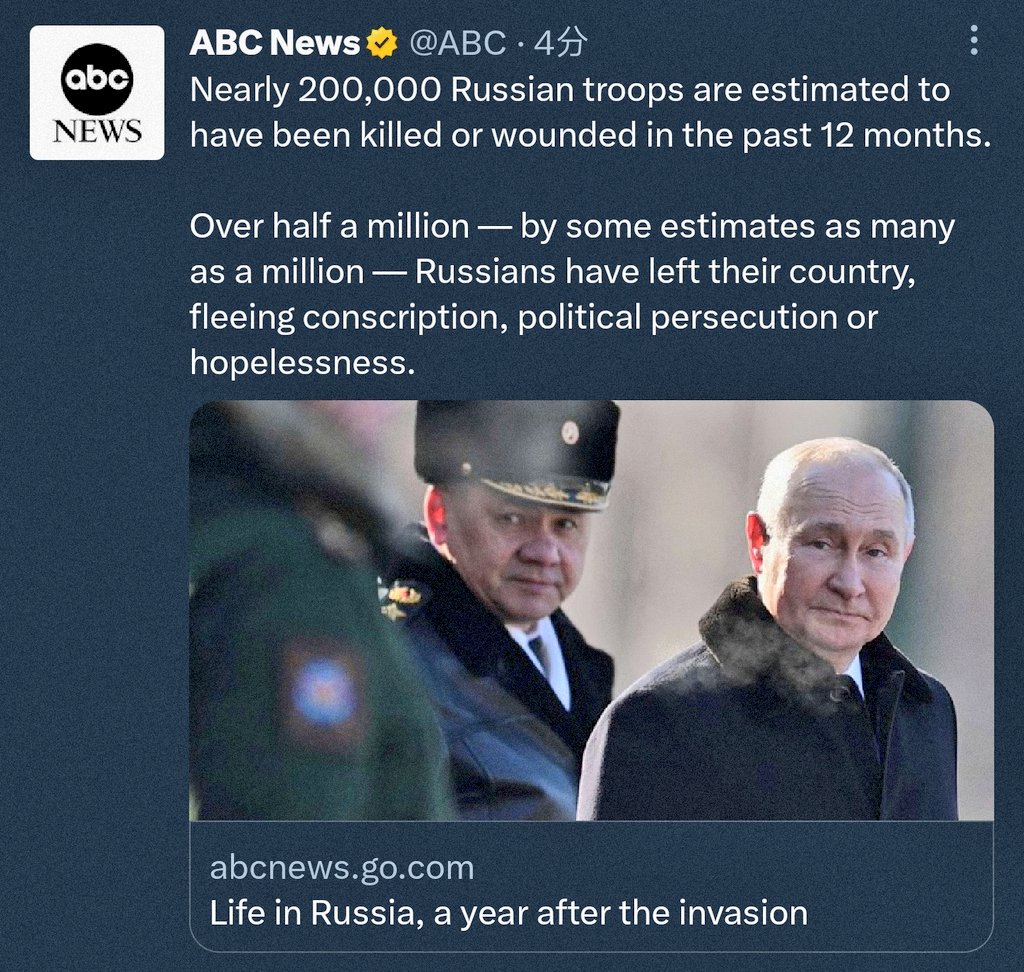
But in Moscow, on the surface it can seem little has changed. The Russian capital looks as it did, still sparkling with street decorations, its shops and restaurants bustling with people.
Brief protests were snuffed out by police at the start of the war and now are all but non-existent. Virtually all prominent political opposition figures are either jailed or in exile and most independent media has been driven abroad.
In Moscow, many have plastered "Z" stickers, a pro-war symbol, to their cars. The claim that Russia is defending victimized Russian-speakers and that Kyiv provoked the war is a welcome one to many.
Russia's economy has shrunk from between 4.5% according to the World Bank or as little as 2.2% by the IMF's assessment. The IMF believes it may even grow very slightly by 0.3%.
While Russia wants to sell more gas to Asia, it could take a decade to reorient its pipelines east, with the gasfields that once supplied Europe not connected to the line it uses to feed China.
One year on from Russia’s invasion of Ukraine and the rouble’s value against the dollar is close to where it was at the start of the conflict — although there have been plenty of twists along the way.
With Russia’s capital account all but closed for major hard currencies, “the exchange rate does not perform its forward-looking role based on expectations, it only reflects day to day trade flows, most of which is energy trade,” said Commerzbank analyst Tatha Ghose.
Over the past 12 months, the US spent 0.21% of GDP on military support for Ukraine. That is slightly less than it spent in an average year on in its ill-fated Afghanistan intervention.
China is being extremely cautious in its support for Russia. And though Europe and America are rhetorically all in, judged by historical standards their aid for Ukraine is very modest.
To see the Europeans doing more, you only need to go back to 1991. To support the American-led operation to oust Saddam Hussein from the oilfields of Kuwait, Germany gave three times as much as it is offering to Ukraine in bilateral aid.
Loading suggestions...